
 3 hours ago
14
3 hours ago
14
During a week that saw new trailers for Final Fantasy 7 Revelation, Kingdom Hearts 4, and Persona 6, I was surprised to see that one of the most talked-about reveals of Summer Game Fest was Final Fantasy Resonance. Just a few years ago, the prospect of Square Enix upcycling a lowly mobile game into HD-2D would have prompted howls of scandalized disapproval from many of the same weebs currently hopping on the hype train. But the buzz around Resonance does speak to a growing appetite for mid-sized experiences that feel plucked directly from the 16- and 32-bit eras — and The Adventures of Elliot: The Millennium Tales exemplifies that trend in the best possible way.
Co-developed by Team Asano (a team within Square Enix) and Claytechworks, The Adventures of Elliot feels like playing a lost SNES or PS1-era classic for the first time. I can’t say that it does anything particularly revolutionary by the standards of 2026. But the pacing is tight, the boss fights are wonderfully varied, the puzzles are just crunchy enough, and the music and visuals bring to mind a fairy-tale storybook. While the game spans four distinct time periods, the compact map and 25-hour runtime invite exploration without ever feeling daunting.
There’s a Ghibli-esque earnestness to the storytelling in Adventures of Elliot, which comes off a little hokey at first but won me over eventually. The story opens in the Kingdom of Huther, and Elliot has volunteered to retrieve a “valuable item” for an older gentleman. (Turns out, it’s just a lost comb from his deceased wife.) Elliot may be an adventurer by trade, but we soon learn he’s far more of a boy scout than a treasure-hunting rogue. He’s a kindly big-brother figure to the residents of the town orphanage, alternating tales of derring-do with cautious lessons about weapon handling. The tale kicks off in earnest when the King asks Elliot to investigate some newly discovered ruins, and then to thwart a villain who travels back in time to seize the forgotten power of magic.
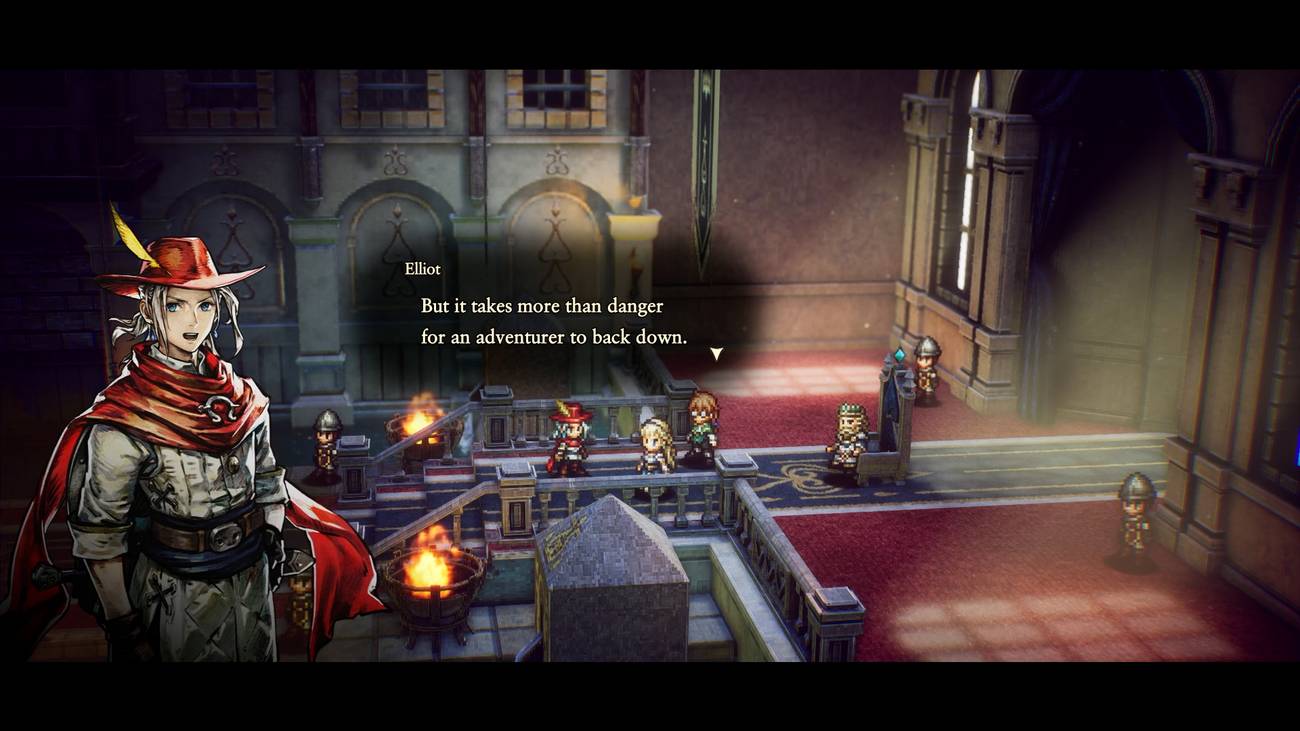 Image: Square Enix
Our hero accepts the task without hesitation. “My family believes me to be the greatest adventurer in the world. I’d hate to disappoint them,” he says. It’s a moment that sets the tone for the game the whole way through. If you’re looking for a 2deep4u protagonist in the vein of Final Fantasy 7’s Cloud Strife, you’re not going to find that here. The Adventures of Elliot is an unambiguously chipper experience, where even seemingly calamitous plot twists can be overcome by chatting with cordial townsfolk or revisiting a familiar dungeon.
The Adventures of Elliot is Team Asano’s first action RPG. (The team has mostly stuck to turn-based games, though it took a swing at the tactics subgenre with 2022’s Triangle Strategy.) Like the SNES-era Zelda games that partially inspired it, there’s a heavy emphasis on exploration, particularly using new skills and weapons to explore areas that had previously been out of reach. Elliot can break open conspicuously cracked walls with a well-placed bomb, whomp stakes into the ground with his hammer, and trigger distant switches with a carefully aimed arrow or boomerang.
Elliot’s fairy sidekick, Faie, has several nifty tricks of her own. (You may have already heard that she yaps a lot, and mercifully there is an option in the settings menu to make her talk less.) These abilities include lighting fires to illuminate dark spaces, warping Elliot over vast gaps, and creating an illusory double of Elliot, which can be used to solve puzzles as well as in combat.
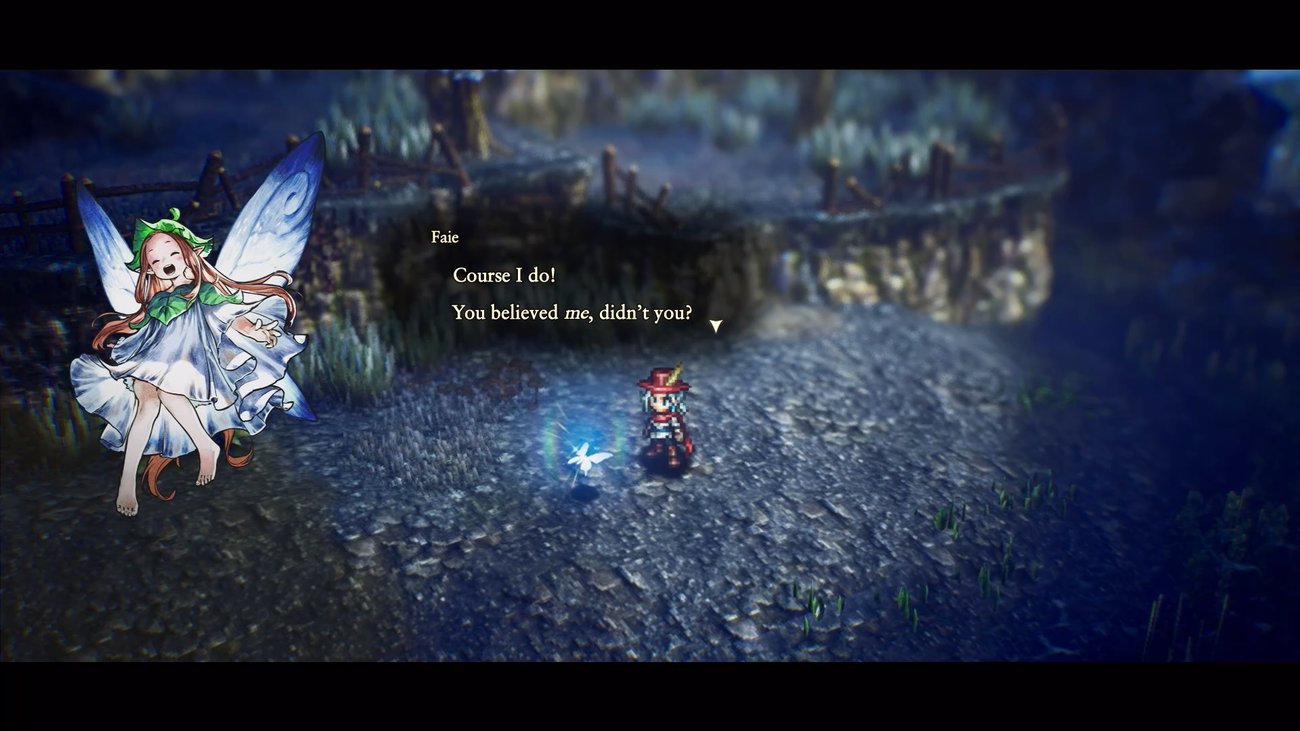 Image: Square Enix
Since the story spans four time periods, you’ll be revisiting the same locations a lot, and they’re all populated by the same handful of enemies. The overworld map is largely identical between time periods, and dungeons have only minor variations. And all of those dungeons are quite short, since you'll visit them more than once. This works out far better in practice than it sounds on paper, thanks to a generous fast-travel system both within and outside dungeons that makes the repetition a lot less irritating than it would be in less considerate hands.
For instance, if a dungeon has a story-essential item in one time period, returning in another era might yield a nice optional item, like a weapon upgrade or Shard of Life (i.e., a legally distinct Zelda heart container fragment). In the other two periods, walls will have collapsed, preventing you from venturing deeper. If there’s nothing to find in a given location, Faie will let you know as soon as you enter or once you’ve reached a dead end, so you don’t whip yourself into a lather searching for a puzzle solution or key that doesn’t exist. The few times I felt annoyed by having to retrace my steps — or “rediscover” a place I’d already visited in every other time period — it rarely took more than 10 or 15 minutes.
Given that The Adventures of Elliot invites Chrono Trigger comparisons with its era-hopping, I was hoping that would open up some interesting possibilities where exploration was concerned. If you drain a flooded dungeon in the past, will new areas open up in the future? Well, no. There’s not really any of that. Your actions in the past don’t have a tangible impact on future exploration. It feels like a major missed opportunity, especially when the maps are so similar from era to era.
Time travel really only serves a storytelling purpose in The Adventures of Elliot, and it does so very simply. Our hero eagerly blabs about his era-hopping to literally everyone he meets, including numerous people who turn out to be consequential historical figures. No one seems to think him meddling with the past is a problem, and it never actually is. I can see why it may not be a great fit with the story's sunny vibes, but I would have appreciated more attention to the unintended consequences of Elliot altering the past — even if it was handled in a lighthearted way.
Secret of Mana and The Legend of Zelda: A Link to the Past offer more flattering points of comparison. Like those games, The Adventures of Elliot doesn’t have an experience-based progression system, which means random encounters are mostly breezy and even entirely skippable later on. On the other hand, you’re encouraged to mix up your strategies and think creatively when it comes to boss fights. Sometimes you’ll need to deflect attacks back toward your opponent with your shield. Other enemies might be vulnerable to bombs, but you’ll have to be careful about your timing. Thankfully, the game never locks you into one way of doing things.
It helps that your weapons aren’t the only tools at your disposal in a challenging fight. One boss encounter pits Elliot against a snail in an icy shell. Entirely by accident (I had meant to use the dash ability), I realized that Faie’s torch-lighting skill could be used for small but consistent chip damage against the ice-elemental baddie. When I struggled to time my bomb tosses to crack its shell, I used Faie’s duplication skill, allowing the boss to sidestep (side-slime?) my projectile and bumble straight into the path of my doppelganger’s explosive. When other bosses started throwing massive area-of-effect attacks my way, I adapted by leaning on Faie’s warp skill to quickly get behind the enemy and whale on its unprotected rear. Rather than just spamming my strongest spells or attacks, I came away from these battles buzzing with kooky new ideas I wanted to try.
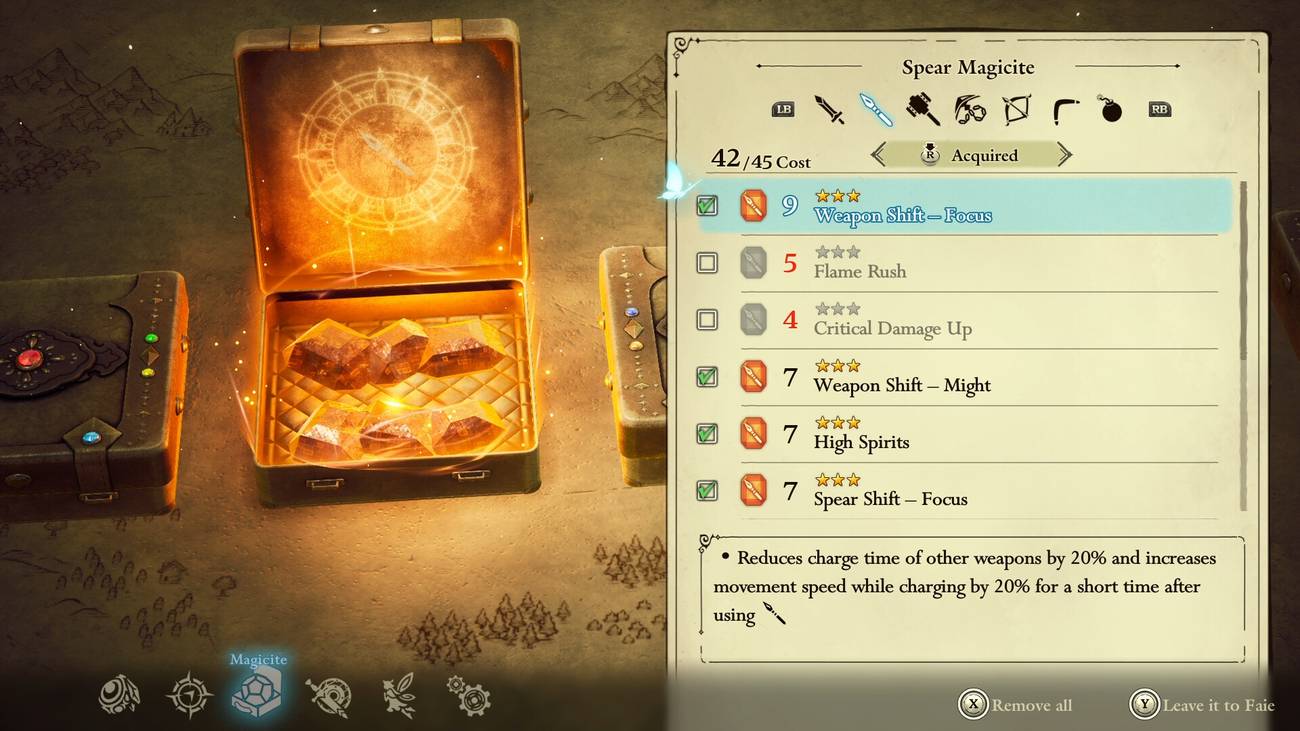
The magicite system also opens up a ton of combat customization options, allowing you to lean into the strengths of your favorite weapons and find new uses for your backup options. You can use magicite shards to create randomly generated accessories for each weapon, and to increase how many of those accessories you can equip. I most appreciated the magicite that offered new riffs on familiar abilities, like increasing the number of boomerangs in each throw, making bombs take longer to detonate, or adding elemental attributes to my hammer and sickle. Each weapon has 15 types of magicite that mostly boost stats, like increased critical rate, higher base damage, or decreased charge time. But by mid-game, I’d pretty much tinkered with all of them and settled on a consistent loadout. After that point, adding more magicite capacity felt nice to have, but not essential.
While a couple late-game side quests overstay their welcome, a big part of this game’s appeal is that it can easily be enjoyed in shorter sessions. You can’t really drop in on Tears of the Kingdom or Persona 5 for 30 minutes and make meaningful progress, but you absolutely can in The Adventures of Elliot. Though the scope of the story is compact, I was pleasantly surprised by the way the stakes ratcheted up over time to reach a thrilling conclusion. While I do wish the time-travel aspects had more depth, if you have fond memories of Secret of Mana and/or A Link to the Past — or are simply craving a satisfying RPG experience that won’t take over your life — you’ll have a fantastic time with The Adventures of Elliot. It’s an easy game to pick up and a hard one to put down.
The Adventures of Elliot comes to Nintendo Switch 2, PlayStation 5, Windows PC, and Xbox Series X on June 18. The game was reviewed on Switch 2 using a prerelease download code provided by Square Enix. You can find additional information about Polygon’s ethics policy here.
 Related
JRPG fans are eating well this year
From Final Fantasy 7 Revelation to Kingdom Hearts 4, JRPG fans are about to have a feast







 English (US) ·