
 3 hours ago
10
3 hours ago
10
High-end SSDs have always been a luxury, but this is becoming the default state of affairs lately. Having more options, especially affordable ones, is becoming increasingly important. Adata took this to heart with its XPG Mars 980 Blade, delivering an understated yet fast drive with none of the compromises of earlier solutions. It’s an affordable luxury with good performance and power efficiency, all under a basic but effective heatspreader. It checks the PCIe 5.0 box and delivers next-gen numbers at the lowest price in its class.
This doesn’t come without cost. Yeah, it doesn’t require a heatsink like earlier drives in this class, and it’s not making pit stops at 10 and 12 GB/s as it tries to push the PCIe 5.0 interface. This is a power-efficient, high-performance drive, but to bring the price down, it has to make a sacrifice somewhere. This trade-off is in the flash – older, 232-Layer Micron TLC that isn't as performant as subsequent iterations. This translates to some performance quirks that keep it from being a really fast drive. However, the price savings might be worth it in the current market.
Adata XPG Mars 980 Blade Specifications
Swipe to scroll horizontally
Pricing | $159.99 | $319.99 | |
Form Factor | M.2 2280 (DS) | M.2 2280 (DS) | M.2 2280 (DS) |
Interface / Protocol | PCIe 5.0 x4 | PCIe 5.0 x4 | PCIe 5.0 x4 |
Controller | Silicon Motion SM2508 | Silicon Motion SM2508 | Silicon Motion SM2508 |
DRAM | DDR4 | DDR4 | DDR4 |
Flash Memory | Micron 232-Layer TLC | Micron 232-Layer TLC | Micron 232-Layer TLC |
Sequential Read | 14,000 MB/s | 14,000 MB/s | 14,000 MB/s |
Sequential Write | 10,000 MB/s | 13,000 MB/s | 13,000 MB/s |
Random Read | 1,600K | 2,000K | 1,950K |
Random Write | 1,650K | 1,650K | 1,650K |
Security | N/A | N/A | N/A |
Endurance (TBW) | 740TB | 1,480TB | 2,960TB |
Part Number | SMAR-980B-1TCS | SMAR-980B-2TCS | SMAR-980B-4TCS |
Warranty | 5-Year | 5-Year | 5-Year |
The Adata XPG Mars 980 Blade is available at 1TB, 2TB, and 4TB. At the time of review, only the 1TB was in stock, but recent pricing has the drive at $104.99, $159.99, and $319.99. This makes it extremely affordable compared to other drives in the high-end PCIe 5.0 SSDs class. It’s even less expensive than the Lexar NM1090 Pro, which has similar hardware. Given the current rise in SSD prices, the XPG Mars 980 Blade, or 980 Blade for short, is in a great place if you want a PCIe 5.0 drive. We caution that pricing and availability will be increasingly volatile, so comparable drives might offer a better deal at certain points in time.
The drive can deliver on the performance front. It’s capable of achieving up to 14,000/13,000 MB/s for sequential reads and writes, and up to 2,000K/1,650K random read and write IOPS. The drive peaks at 2TB. We’d recommend the Crucial T710 if you want a drive in this class that can reach high speeds at just 1TB. The 980 Blade includes a standard five-year warranty, with up to 740TB of writes per TB of capacity, backed by Adata. This is higher than the typical 600TB per TB, so if you’re a buyer focused on endurance ratings, this drive might be worth a second look.
Adata XPG Mars 980 Blade Software and Accessories
Adata’s SSD Toolbox for XPG drives is your typical multi-function Windows storage application. Toolboxes allow you to inspect drive health, run diagnostics, update firmware, secure erase, benchmark, and optimize your drives. Many manufacturers also offer an OEM version of Acronis True Image, which lets you back up and restore data or clone drives, which is useful when upgrading your storage. We also recommend MultiDrive, a free alternative, which was recently updated. For non-Windows users, there is Clonezilla.
Adata XPG Mars 980 Blade: A Closer Look
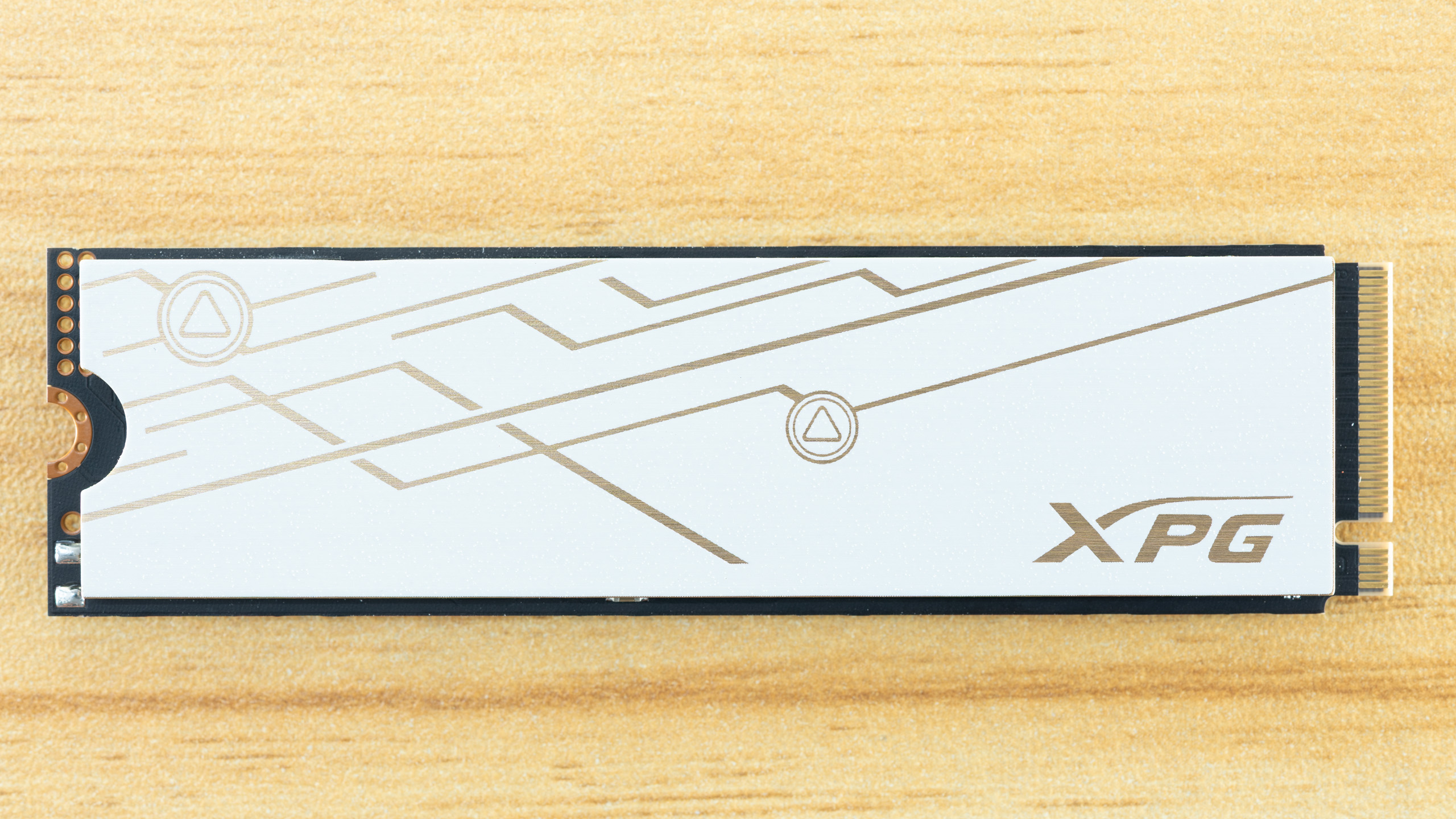
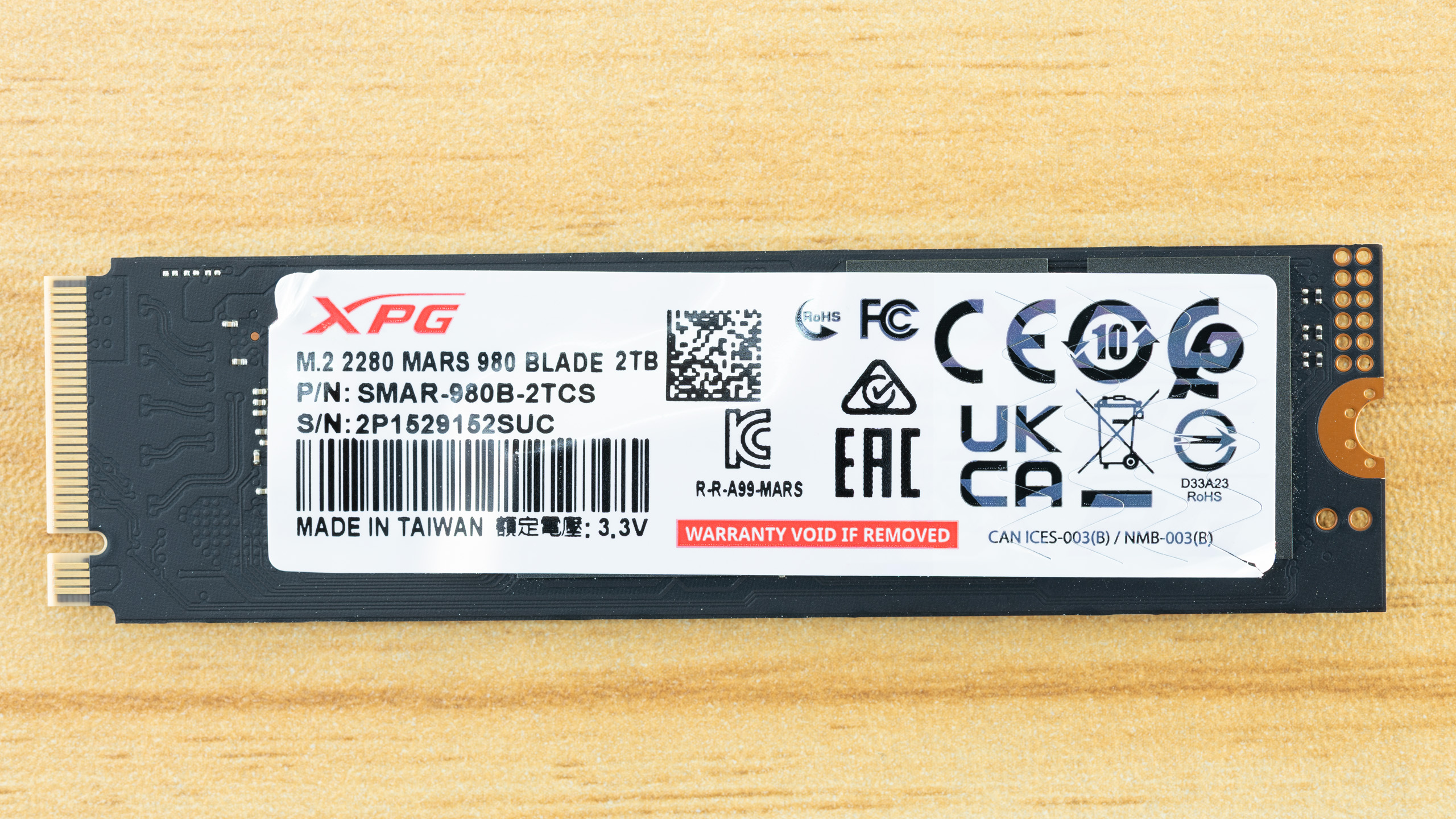
The 980 Blade is simplicity itself: a double-sided drive adorned by a heatspreader of basic design. Given that the XPG series has sometimes had lots of flair with over-the-top designs, we cannot forget the XPG Gammix S70 Blade that had an irremovable heatsink that prevented the drive from fitting in almost all systems and enclosures, this is a welcome change. While we would prefer a single-sided drive, we recognize that an SSD of this caliber is most likely to find itself in a desktop with room to spare. Most of the heat from the drive will come from the controller, and half the remaining componentry will be on the heatspreader side, so additional cooling might not be needed even if it ends up in a laptop.
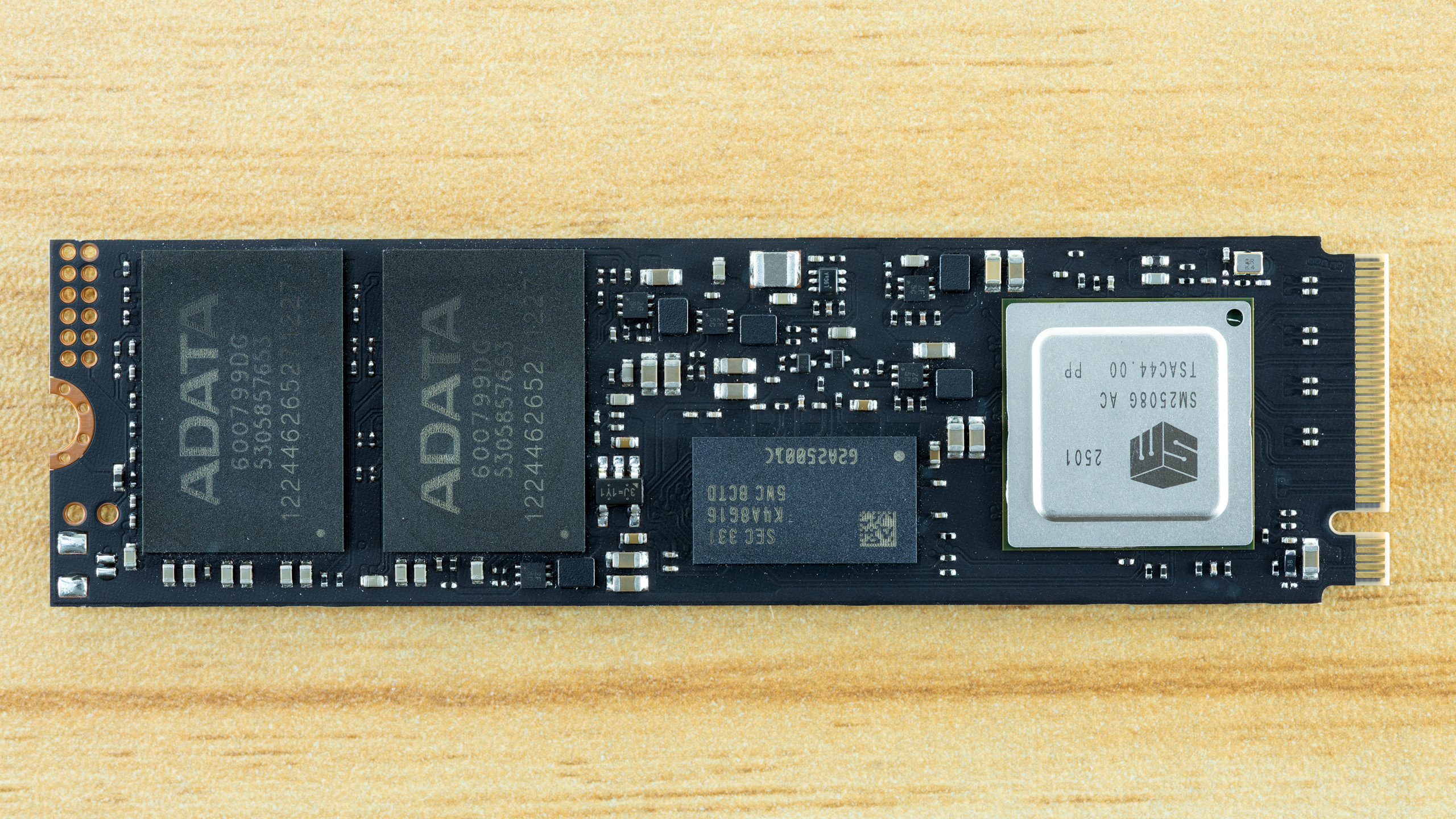
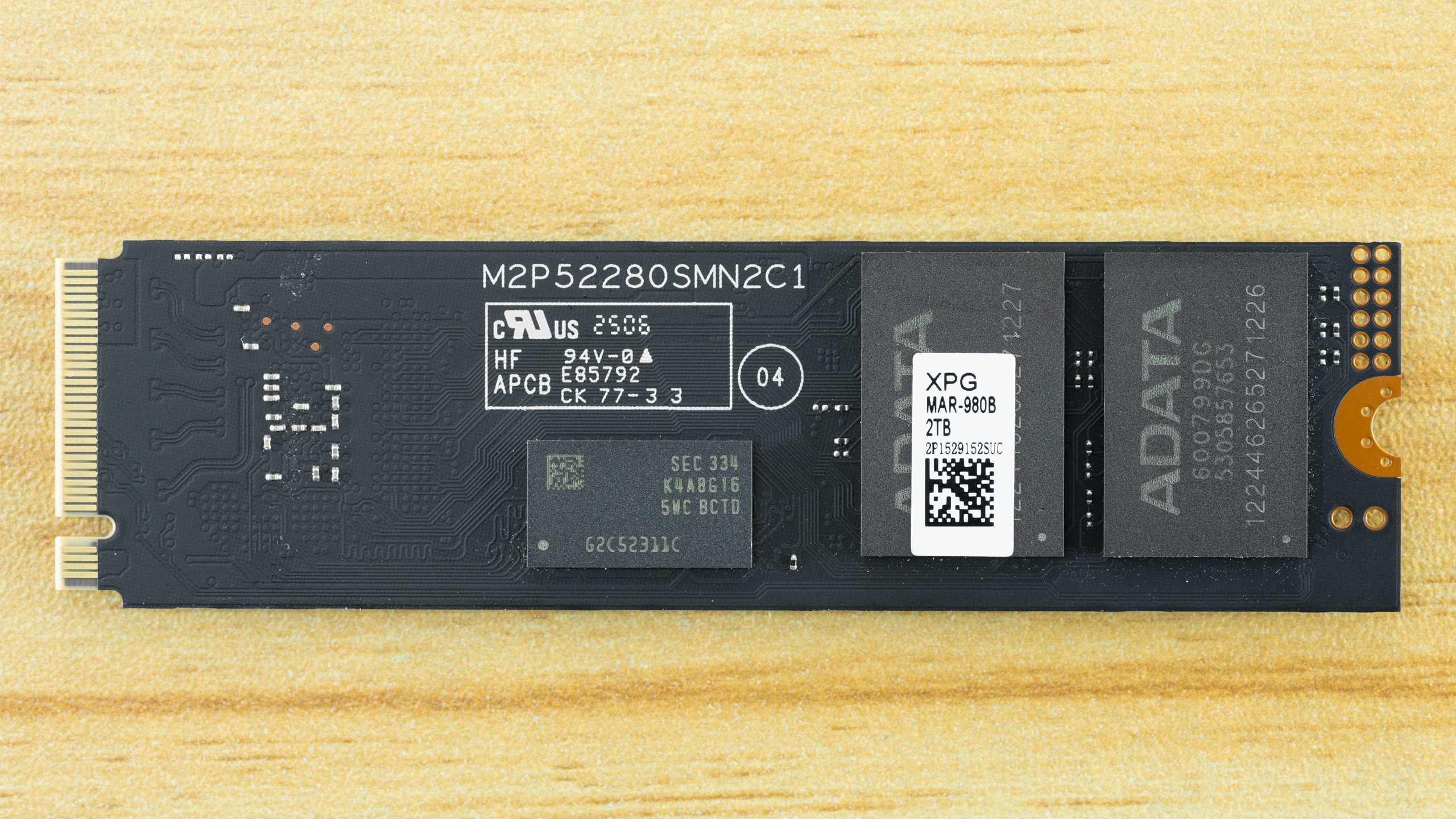
The 2TB 980 Blade sports an SSD controller, two DRAM packages, and two NAND flash packages. The DRAM is Samsung DDR4, and these are 16-bit, 8 GB packages. That makes a total of 2GB of DRAM, which fits the expected memory ratio for a high-end drive. Some drives in this class use LPDDR instead, which can improve power efficiency.
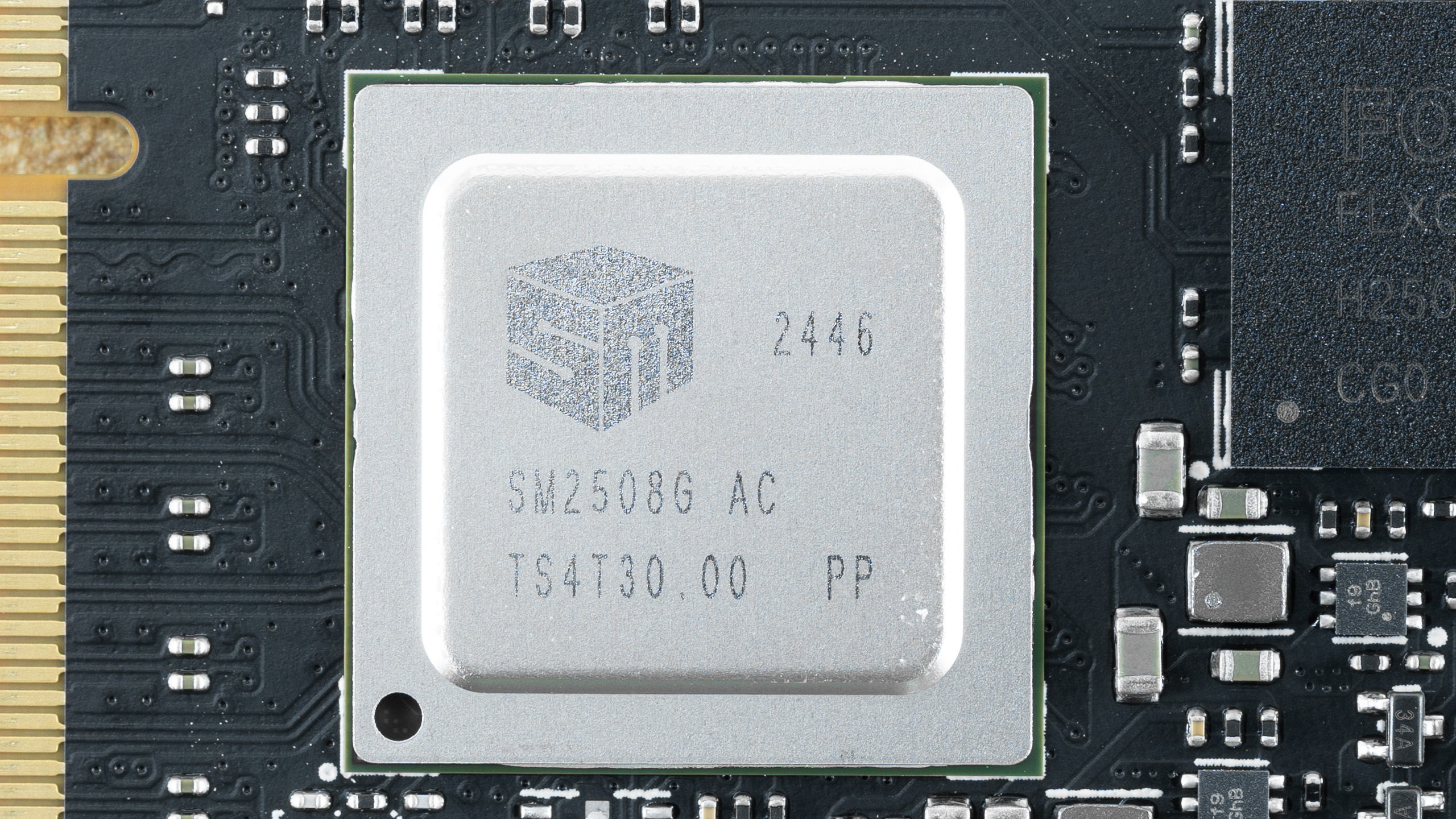
The SMI SM2508 SSD controller needs no introduction. It’s a fast, power-efficient PCIe 5.0 solution that’s good enough for SanDisk/WD and good enough for us, too. It’s given some real competition to Phison, forcing a catch-up with the E28. In general, we don’t prefer one solution or another, but we would recommend avoiding the older E26 unless your needs are specific. The newer controllers are worth the cost in most cases.
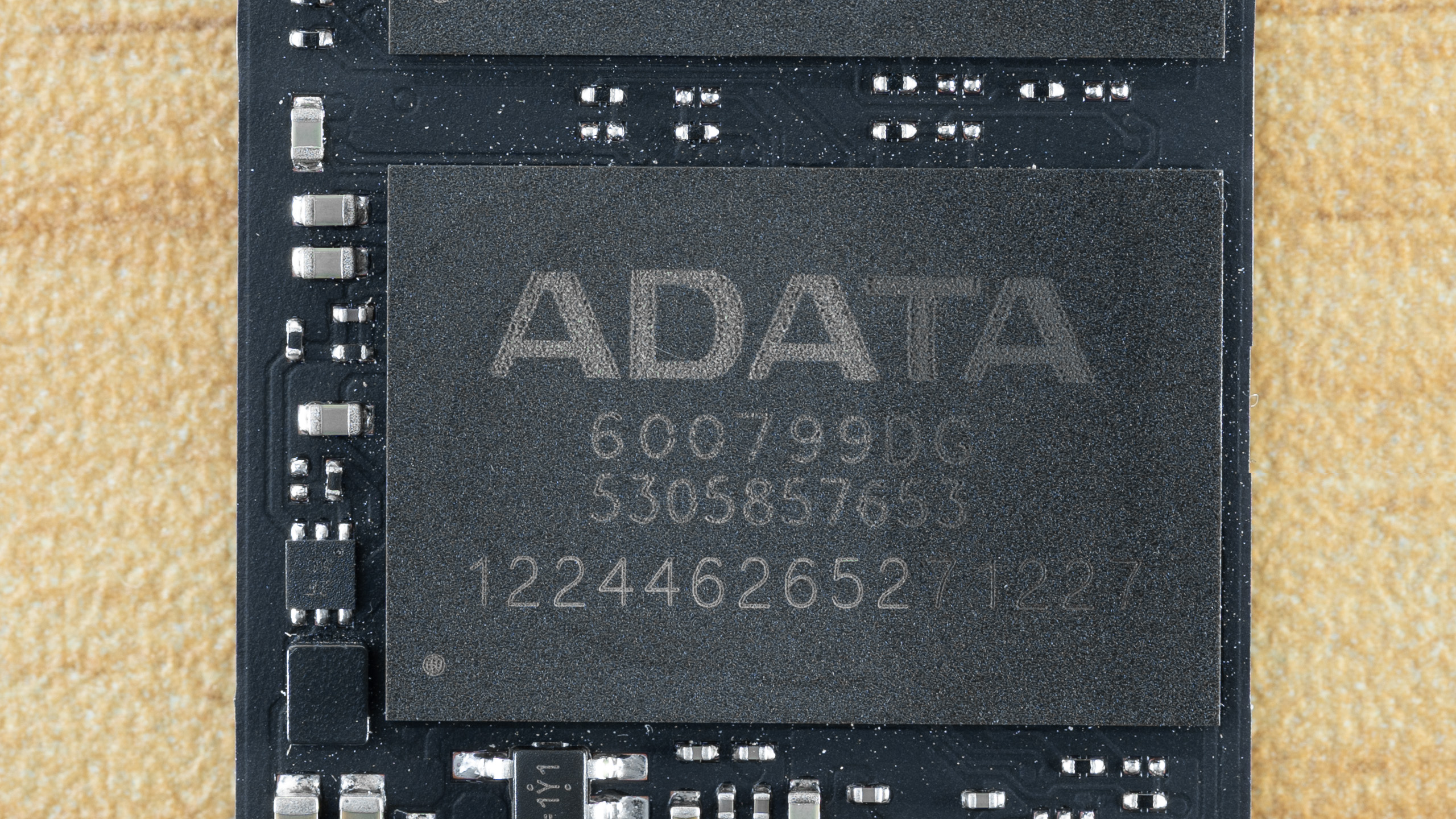
As for the flash, it’s Adata encoded, but we have a pretty good idea of what’s inside. The SM2508 typically comes with three TLC flash variants: Kioxia/SanDisk’s 218-Layer BiCS8, Micron’s 276-Layer, and Micron’s last-generation 232-Layer. BiCS8 seems to have the best latency, but Micron’s flash can push more bandwidth at lower capacities thanks to having more planes per die. The 232-Layer version is less performant and has been seen on “cheaper” SM2508 SSDs like the Acer Predator GM9000. This combination is a half-solution in that it defeats any older, E26-based drive while achieving savings by using older flash.
We say “cheaper” in quotation marks because we’re still talking about a high-end, Gen 5 SSD. It’s true, though, as drives with newer flash do cost more. The double-sided nature of the 980 Blade – the Predator GM9000 we tested is single-sided – also gently points to it being more budget-oriented than it could be. Suddenly, the understated heatspreader makes sense. This drive is firmly intended to give those high-end marks with an edge over earlier E26-based drives while being the least expensive option available. Given the pricing we noted above, it meets this criteria.
MORE: Best SSDs
MORE: Best External SSDs





 English (US) ·