
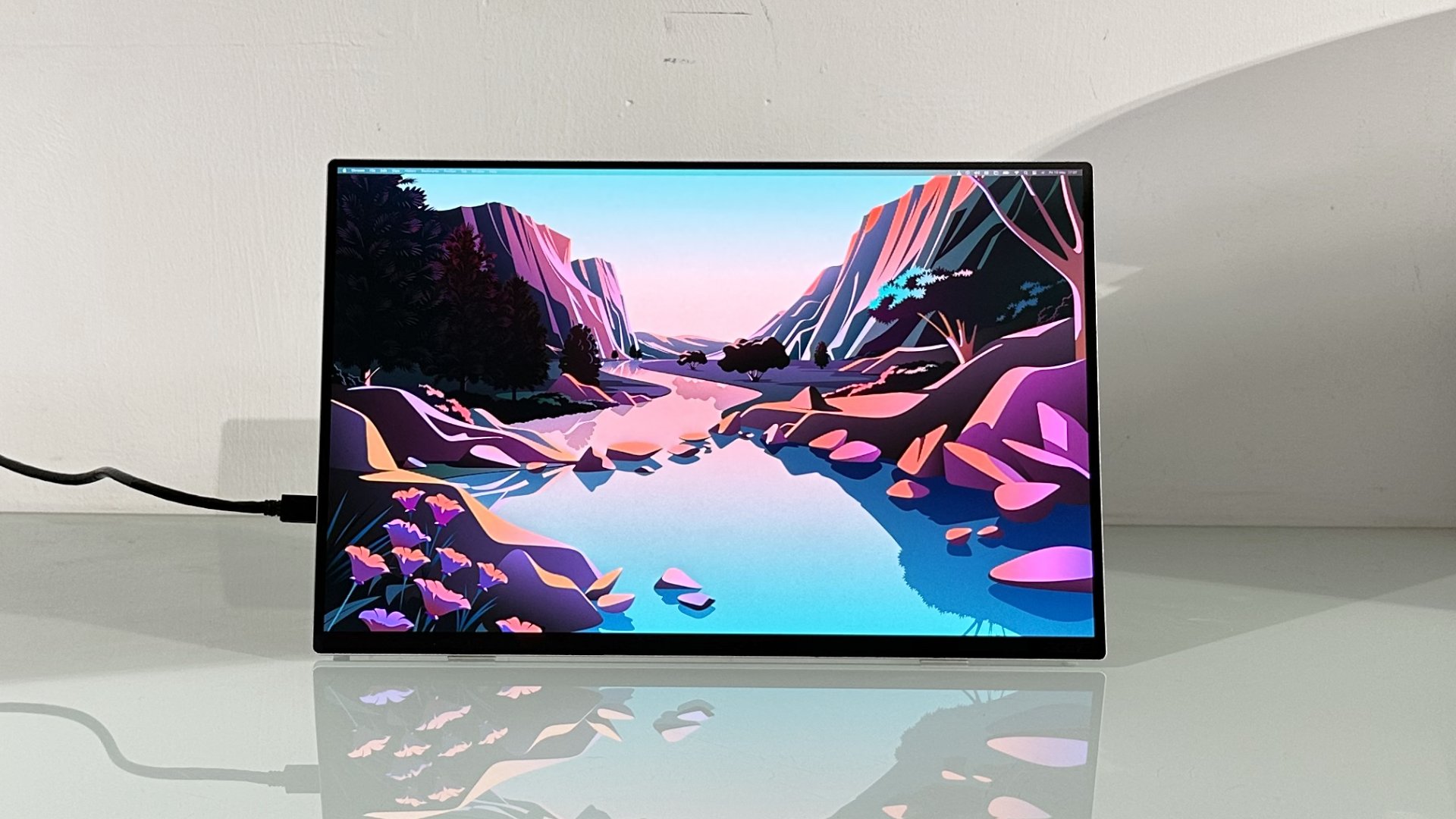
Portable monitors tend to have two problems. They're usually low quality displays and also low resolution. Give it up, therefore, for the new Acer PE160WUT. It's a 16-inch portable monitor with not only 2.8K native resolution, but also OLED panel technology.
That's a pretty good start, but add 120 Hz refresh and touchscreen functionality into the mix and this compact display is a seriously appealing proposition. It promises an external monitor solution that's at least as good, if not better, than the built-in display of most premium laptops.
There's also the tantalising prospect, albeit without official support, of adding touchscreen functionality for Apple MacBook laptops. Apple, of course, doesn't do touchscreen MacBooks. And it's all wrapped up in a fairly slick, slim-bezel chassis that's surprisingly light.
Latest Videos From

As with the entries in our guide to the best portable monitors, the Acer PE160WUT should also be widely compatible with most modern PC laptops. It connects via USB-C primarily, though it does have HDMI fall-back connectivity, too.
Just note that this is not a battery-powered display. It takes power via USB-C, so when you are away from mains power it will be drawing energy from your laptop's battery.
Acer ProDesigner PE160WUT: Design and features
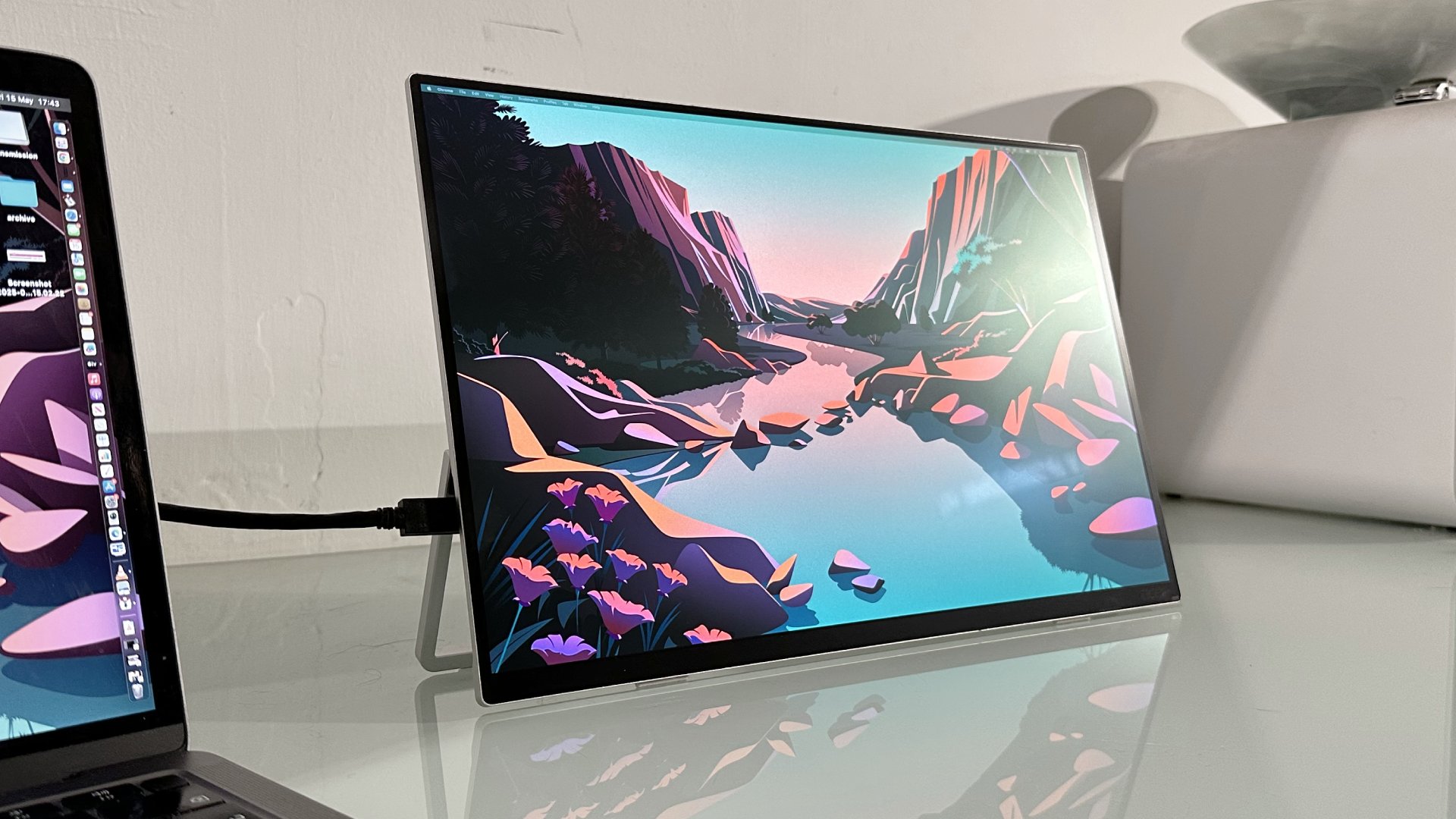
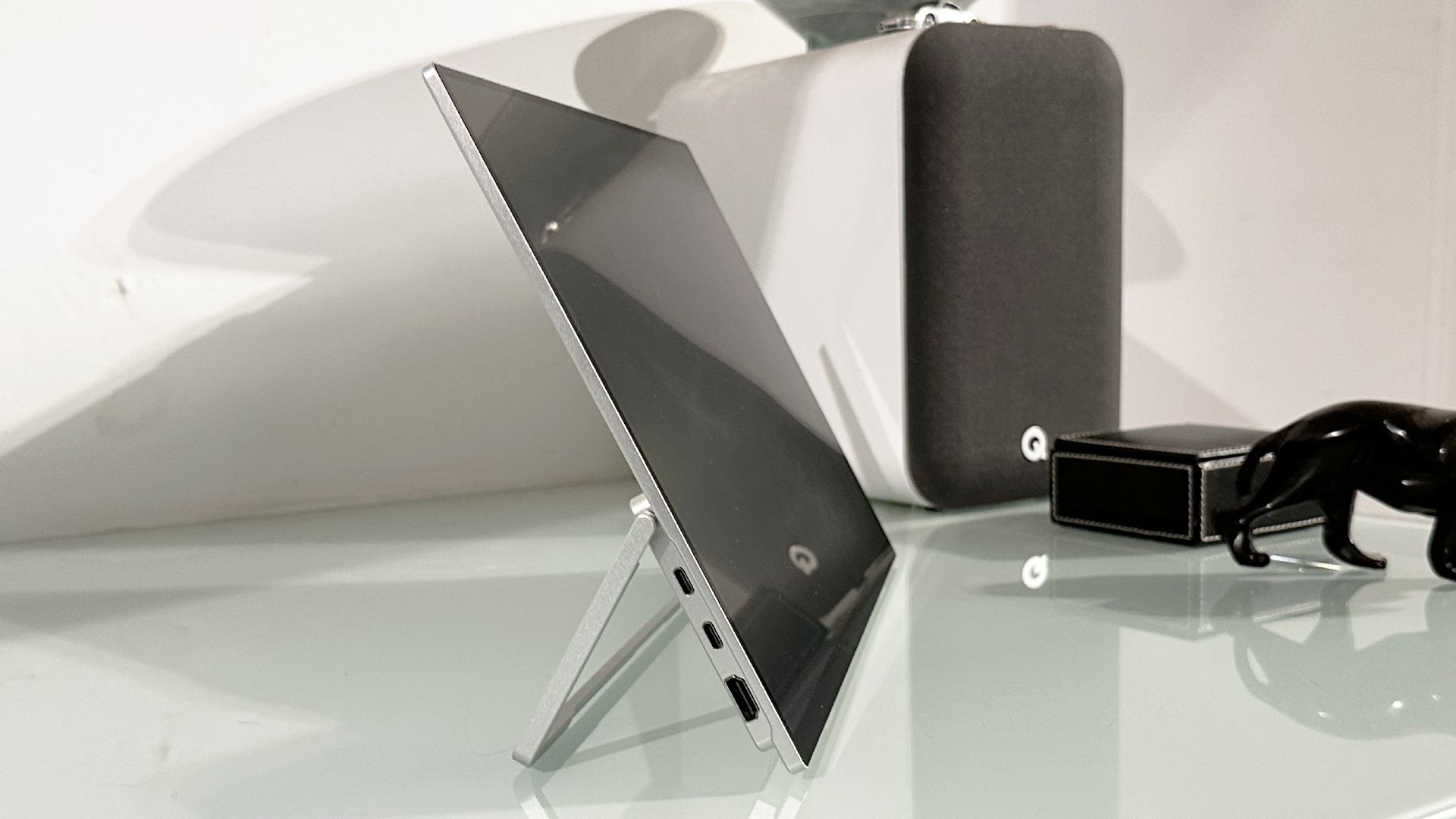
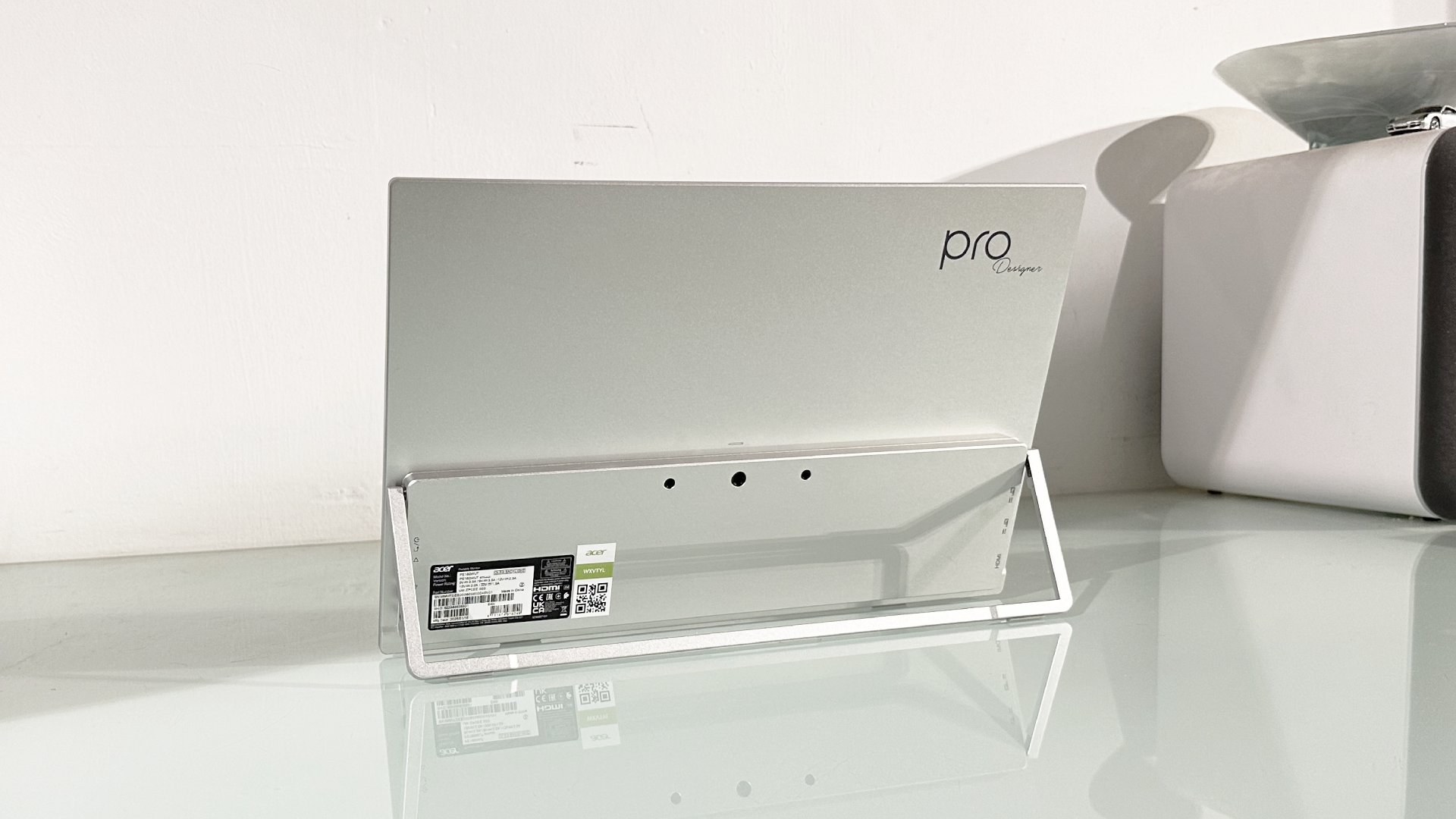
- Compact and light
- 2.8K OLED display
- No integrated battery
Specs
Panel size: 16-inch
Panel type: OLED
Resolution: 2,880 x 1,800
Brightness: 350 nits
Contrast: 1M:1
Pixel response: 1ms
Refresh rate: 120Hz
Color coverage: 100% DCI-P3
HDR: HDR10
VESA: 75mm x 75mm
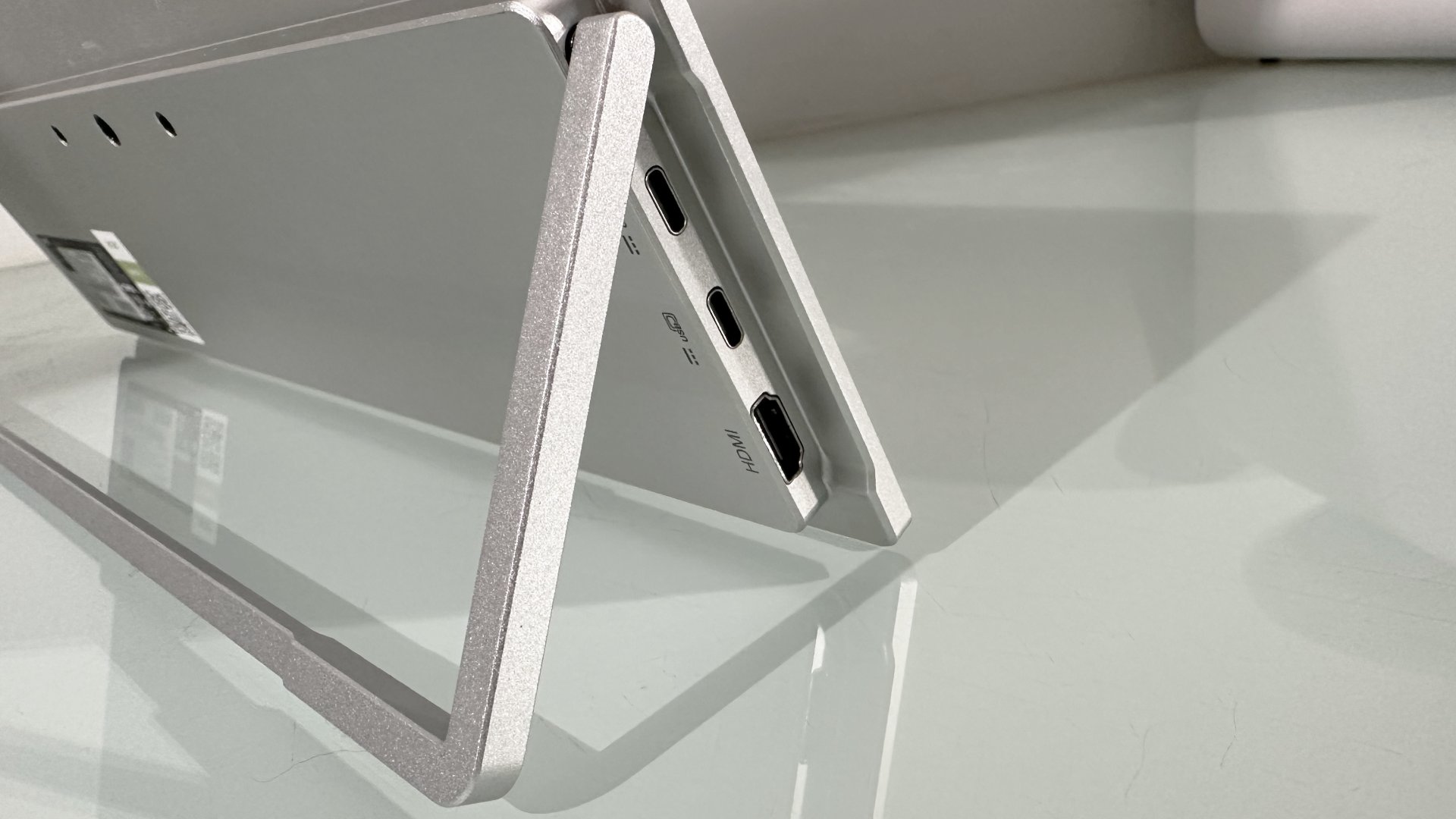
Connectivity: HDMI 2.1 x1, 2x USB-C
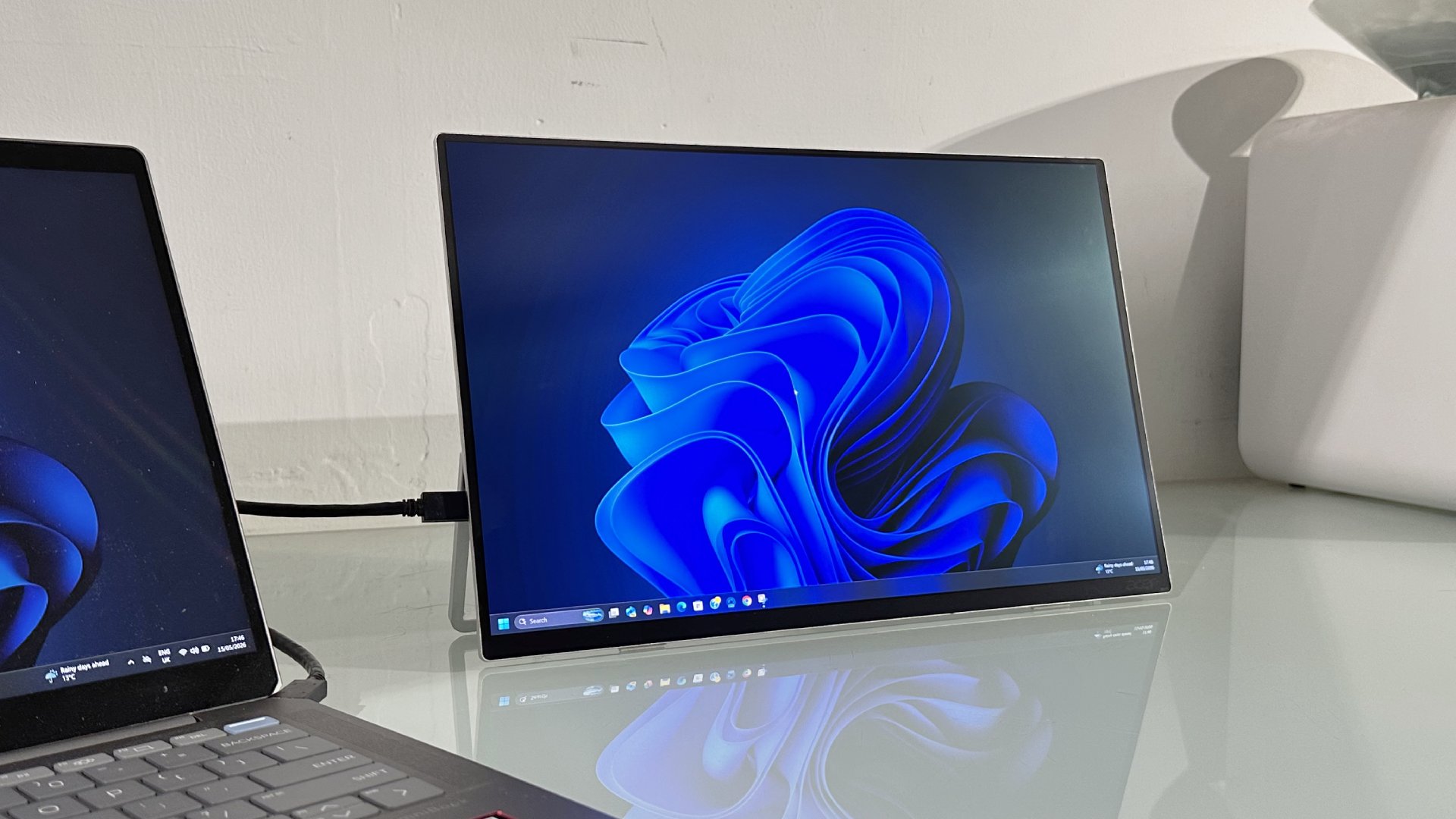
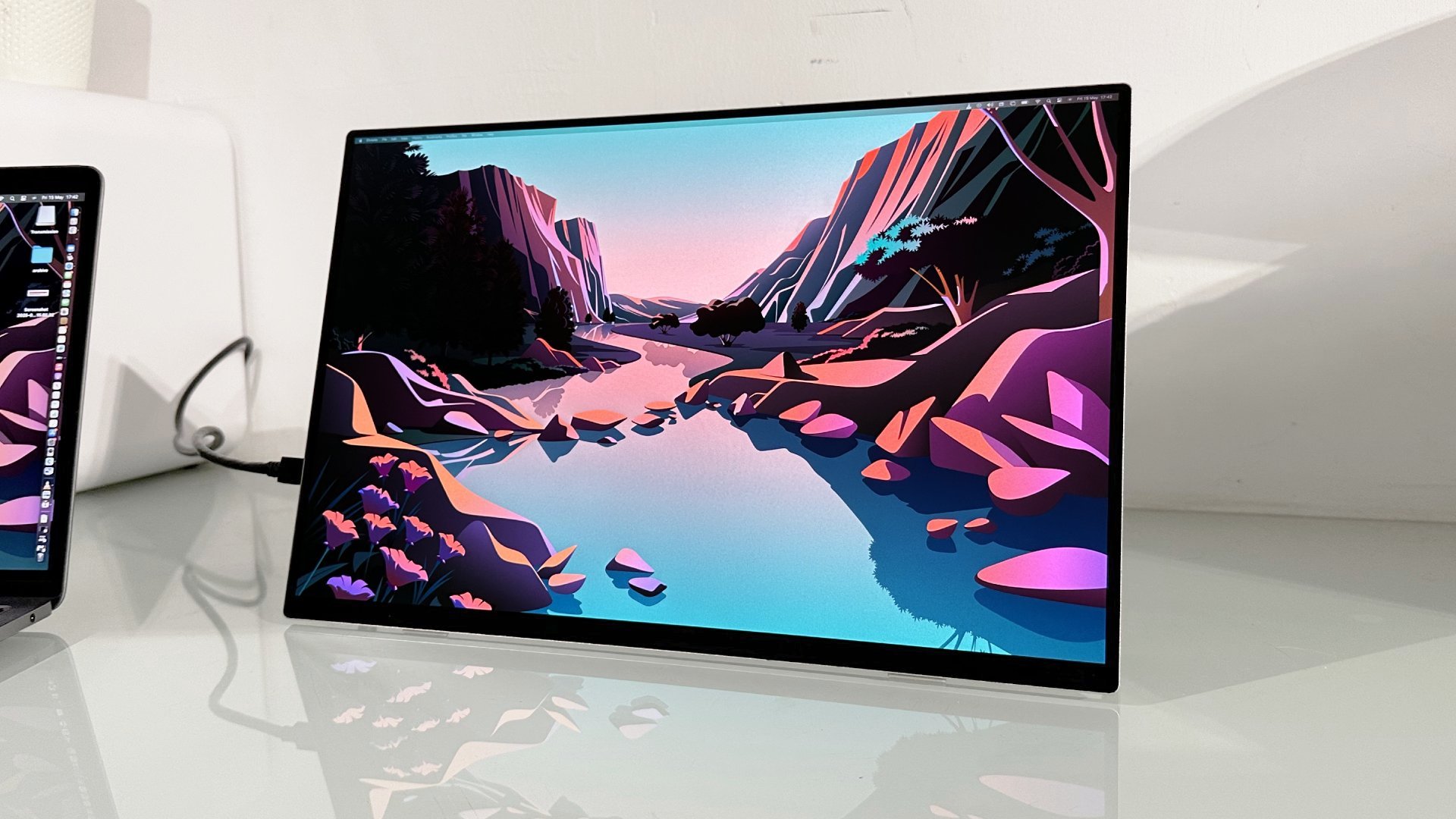
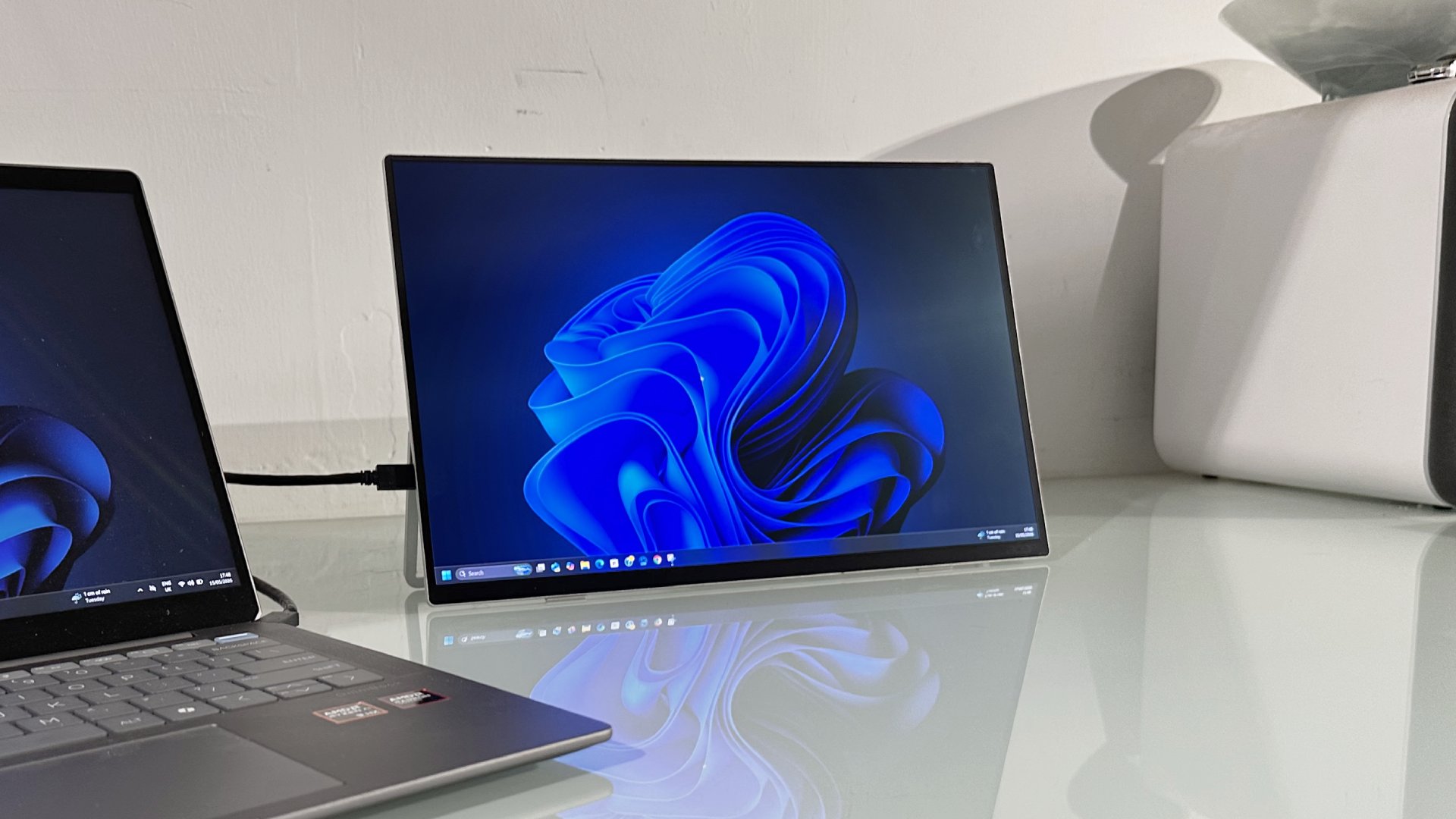
Imagine detaching the display from a 16-inch laptop and you'll get a pretty good idea of the look and feel of the Acer PE160WUT. Just like a lot of laptops, it has slim bezels on three sides of its display, plus a slightly larger chin.
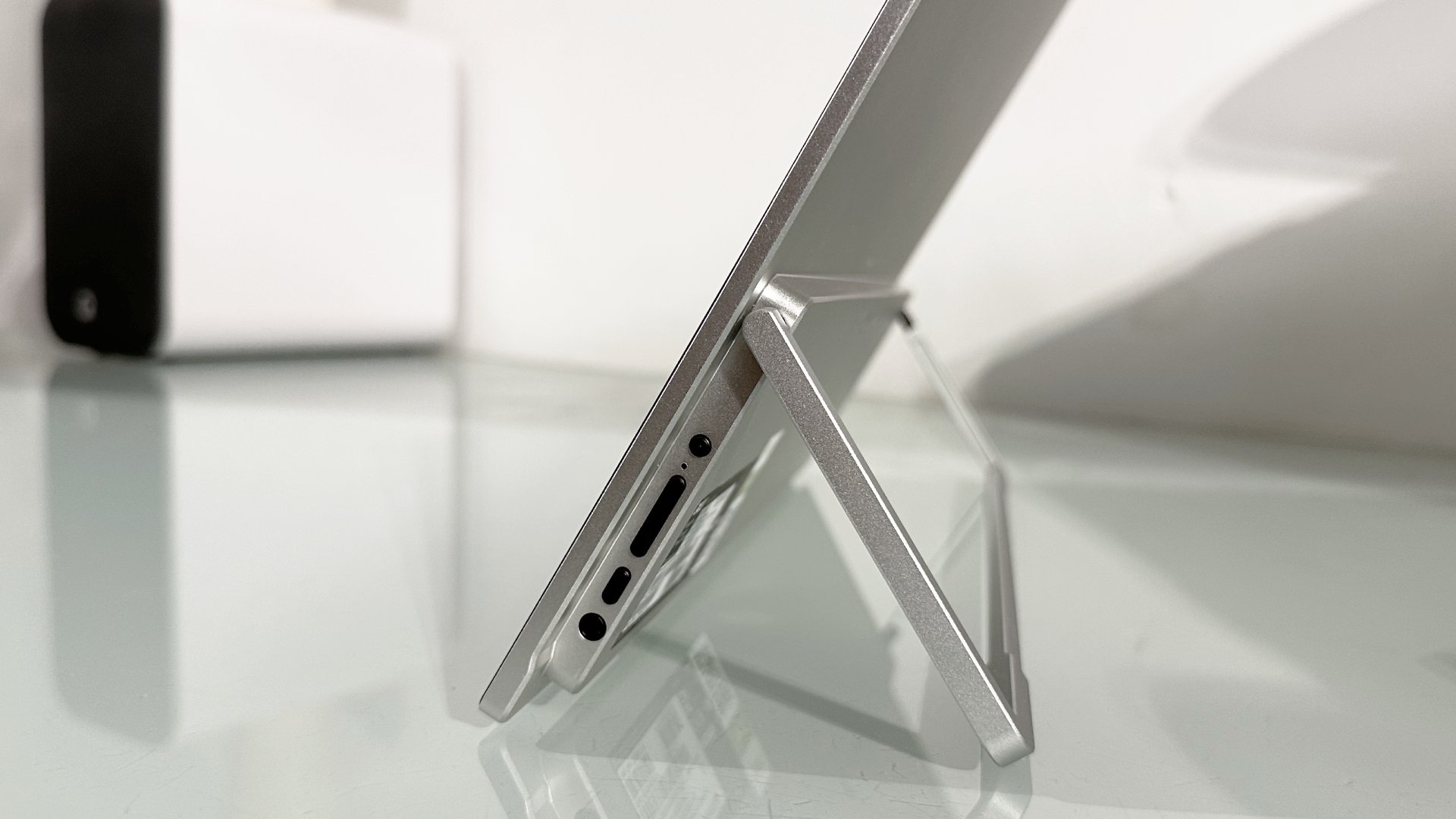
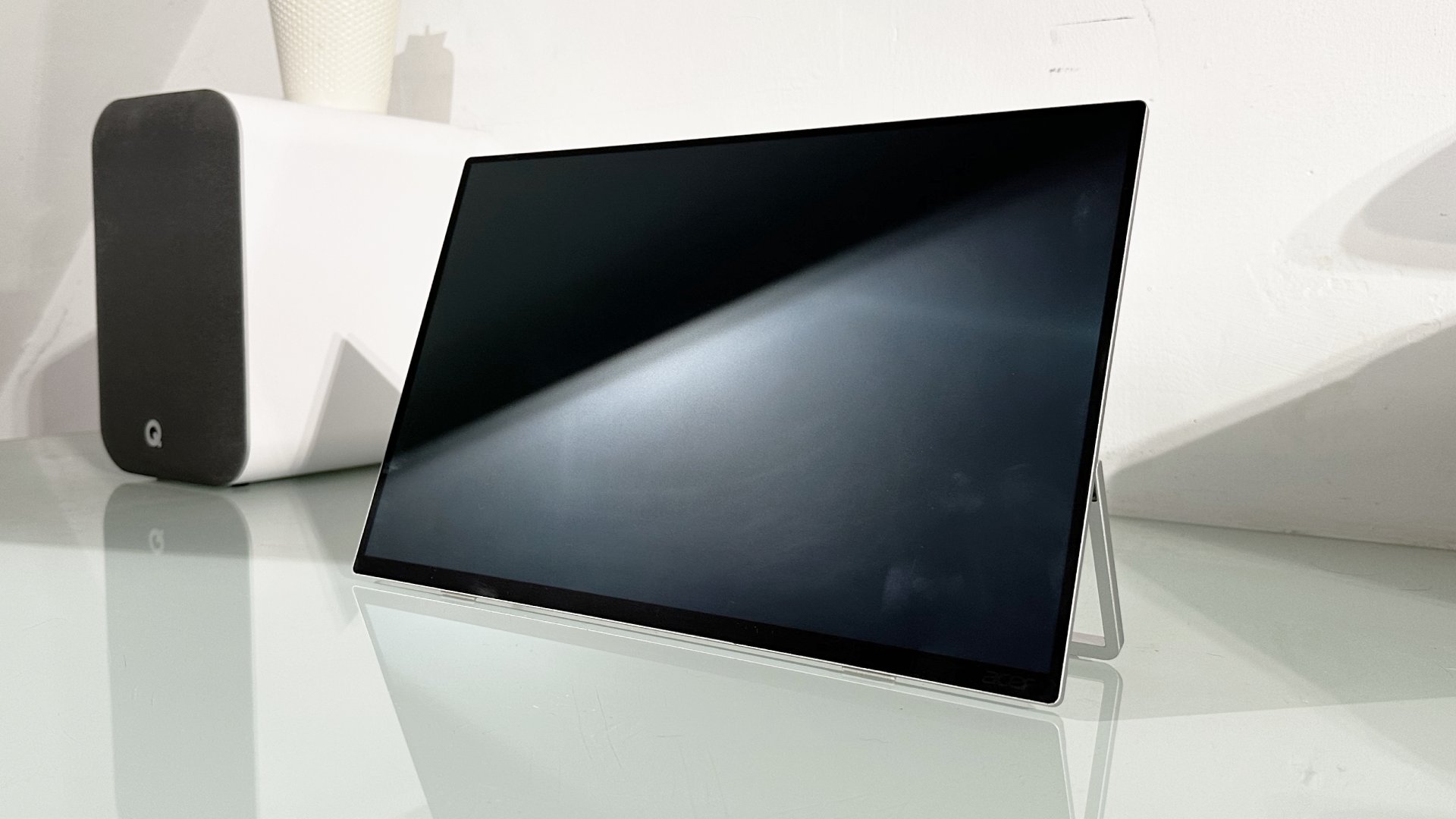
For the most part, it's about as thin as a laptop lid, too. The exception is a thicker section on the bottom third on the rear of the chassis. This houses the electronics, connectivity and hinged kickstand.
The latter allows the Acer PE160WUT to sit pretty comfortably on any flat, firm surface, though it's less useful for, say, propping the display up on your laptop. All told, this portable monitor comes in at just 0.65kg, making it conspicuously light and pretty portable. If you're already carrying a laptop and power supply, this extra monitor is a pretty plausible addition in pure portability terms.
Of course, a big part of the reason why it's so light is the lack of a built-in battery. The display is powered via USB-C and designed to take that directly from a laptop. If that's a boon for portability, it's not so great for battery life away from the mains.
Of course, the main attraction is the 16-inch OLED display. With a native resolution of 2,880 by 1,800 pixels, it offers a pixel density of around 212 DPI. That's a little lower than the 224 DPI of a MacBook Air or 254 DPI of a MacBook Pro. But it's still pretty decent.
What no MacBook can offer, of course, is OLED panel technology or, indeed, touchscreen tech. That's a combination several PC notebooks include, of course. But by any reasonable metric, this is a highly specified portable display.
Acer ProDesigner PE160WUT: Performance
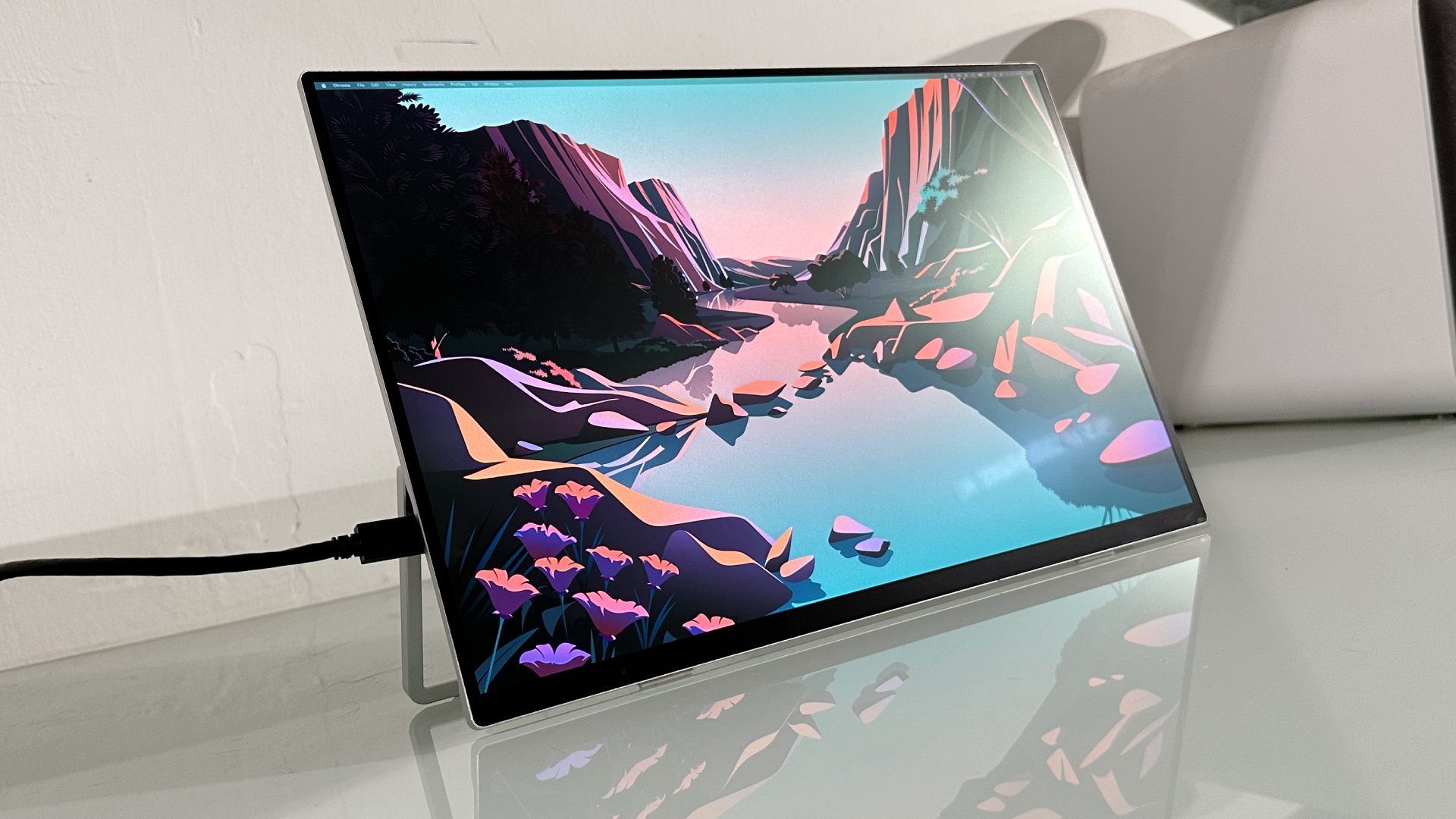
- Bright and vivid OLED panel
- Smooth 120 Hz refresh
- Not quite as crisp as you'd hope
The 2.8K native resolution, 120 Hz refresh and OLED panel tech set up some pretty lofty expectations. The Acer PE160WUT doesn't quite nail all of them.
There's a lot to like, starting with the punchiness and vividness of the OLED panel. With a rating of 350 nits full screen, it gets plenty bright enough. But to that it adds OLED's usual advantages of perfect per-pixel lighting and outstanding pixel response speed.
This isn't a gaming panel, but the 120 Hz refresh makes it feel very slick and responsive, too. Those aspects are a real treat. Even LCD panels with full-array local dimming can't come close to matching the lighting precision of OLED.
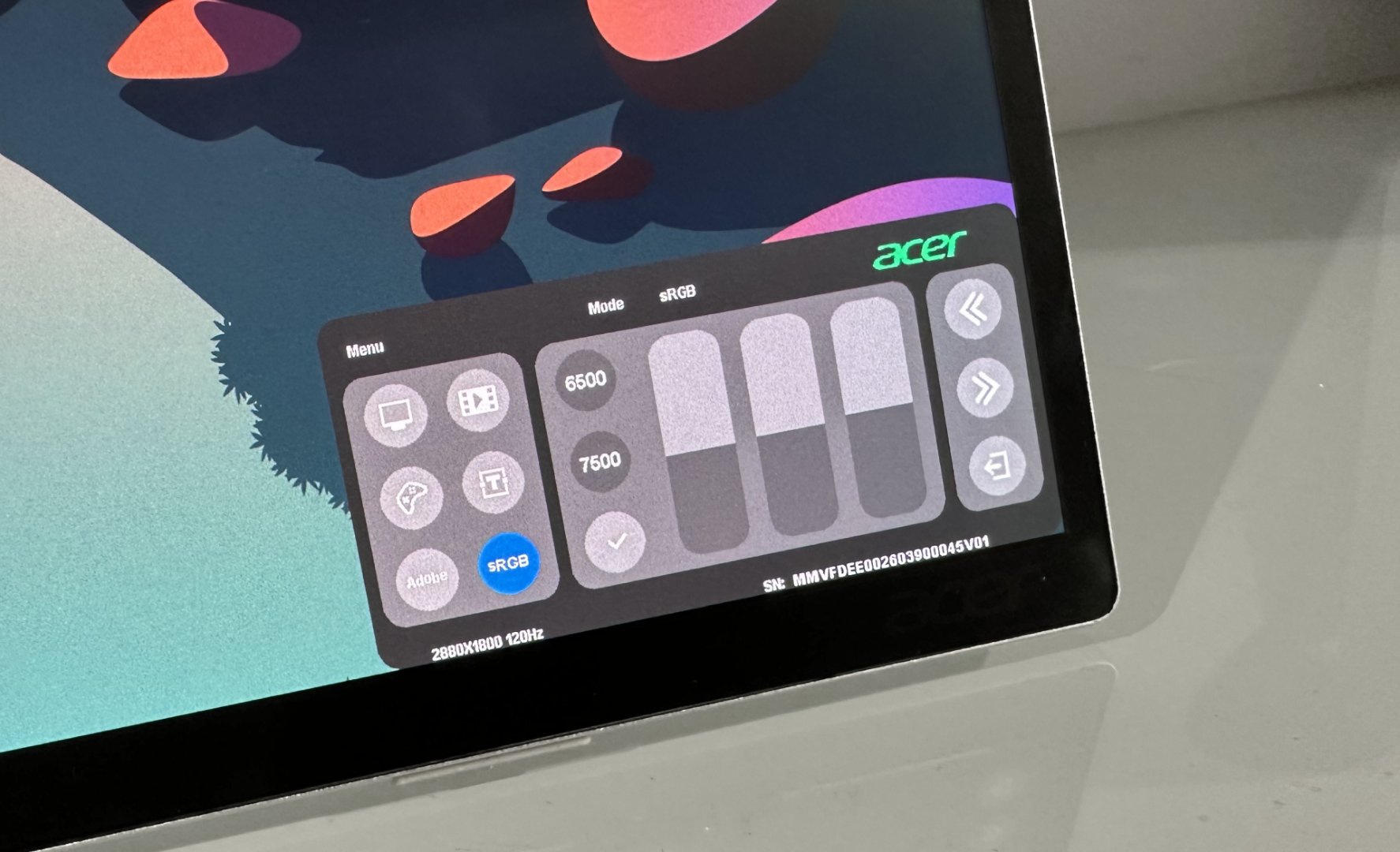
However, there are some limitations, too. For starters, the brightness isn't adjustable in the otherwise nicely calibrated sRGB or Adobe RGB presets, which is a pity. You might want to ramp it up in some ambient light conditions and the default user mode isn't terribly well calibrated.
Short of DIY calibration, a work around is to run the panel in HDR mode, in which setting SDR content is actually well calibrated. But that brings us to two further snags. First, the HDR performance is underwhelming.
Acer doesn't provide detailed specs, but it very much looks like HDR brightness is capped at the panel's 350 nit full-screen brightness, or thereabouts. What's more, running in HDR mode consumes additional power. And power consumption is a definite issue with this monitor, which again does not have its own integrated battery and takes power over USB-C, typically from a laptop.
By way of example, with this OLED panel connected to an Apple MacBook Air with both the MacBook's screen and this panel set to half brightness, the combination consumed 10% of the MacBook's battery in just 15 minutes.
And the MacBook running on its own? 15 minutes of comparable running eats up 2% of battery life. In other words, there's a heavy battery life penalty of using this display. And that's in SDR mode. HDR would be even worse.
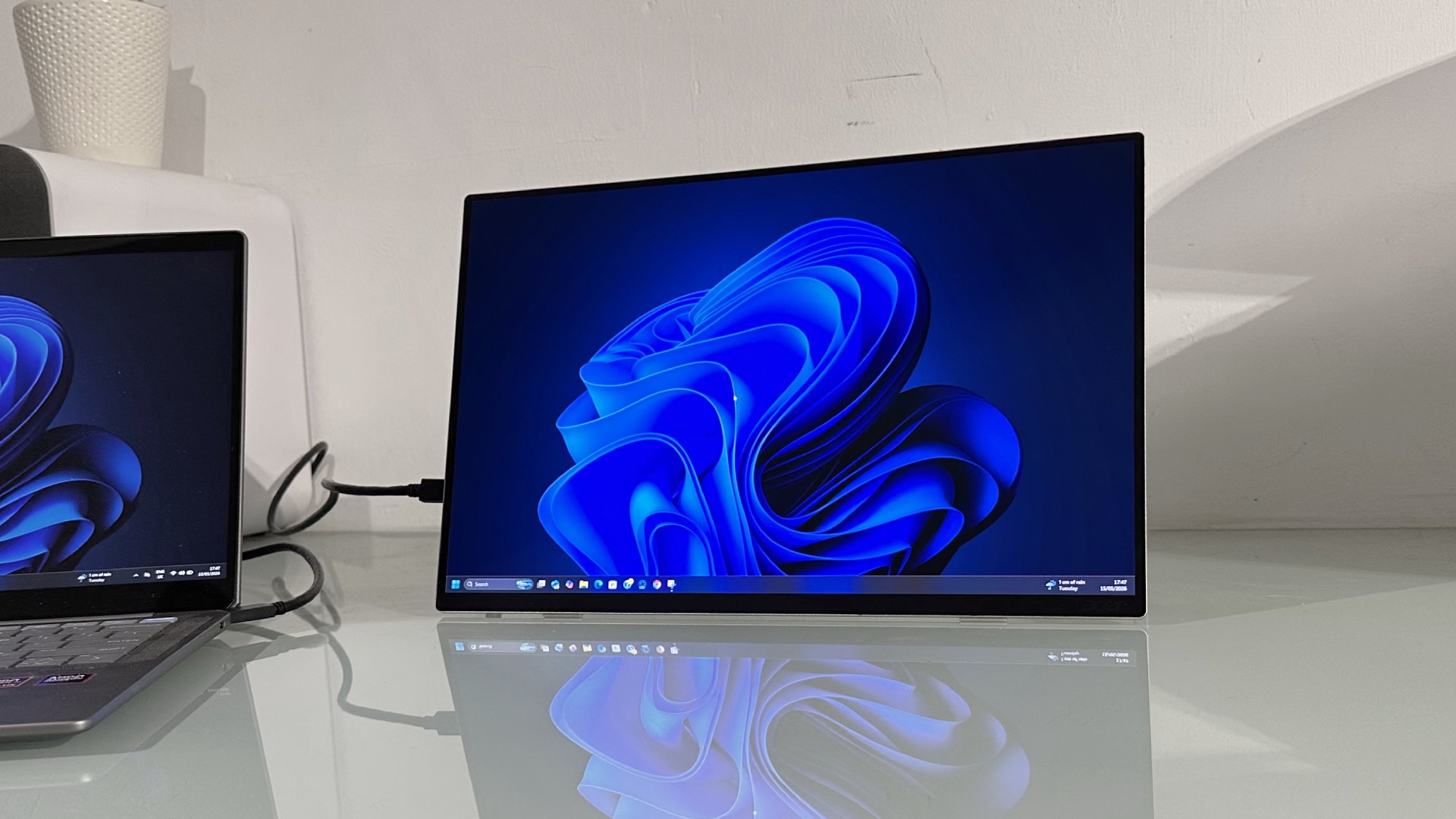
Speaking of connecting a MacBook, the touchscreen functionality only has limited, clunky support to the extent that it's not really usable. Meanwhile, the highest properly DPI-scaled resolution is 1,400 by 900 pixels, which is a little low for a 16-inch panel. It will run at the full 2,880 by 1,800 native, of course, but at that setting fonts and icons are absolutely tiny. For the record, in Windows the touch functionality works pretty well, aided by the nippy 120 Hz refresh.
But the biggest issue is the screen's anti-glare coating. It's matte and quite coarse with some distinctly visible sparkle. It definitely detracts from the crispness and precision of the display. Fonts and text, for instance, look a little soft and blurry as a consequence. It's not a total deal breaker, but this little OLED panel deserves a much better anti-glare coating.
Acer ProDesigner PE160WUT: Final verdict
There's a lot to like about the Acer ProDesigner PE160WUT. It's certainly novel to have an OLED panel in a portable monitor like this. The 2.8K resolution and 120 Hz refresh are likewise exactly what you'd want to see. Too many portable monitors are low resolution and low refresh.
It's also very compact and lightweight. At just 0.65kg, it really is plausible to chuck this thing in your bag with whatever laptop you have. And in terms of image quality, there are plenty of pros. The Acer ProDesigner PE160WUT is pretty punchy, with great colours and generally very good calibration.
OK, the HDR performance disappoints. But for colours and contrast, this display will beat most laptop panels. Add in the touchscreen functionality and you have a compelling proposition, albeit the touchscreen feature really only works well on PC laptops, rather than Apple MacBooks.
The one real issue, then, is the screen's coarse anti-glare coating. It definitely compromises the precision of the image quality and detracts from what is otherwise a very sweet little portable OLED panel. It's also worth bearing in mind that the lack of an integrated battery means that your laptop's battery will take a hammering when using this display away from the mains.
All that said, the Acer ProDesigner PE160WUT retains plenty of appeal. Even with the overly coarse anti-glare coating, it's still one of the best portable monitors we've seen.
For more displays, we've reviewed the best business monitors and the best 5K and 8K monitors.








 English (US) ·