
Following an awkward transition into narrative filmmaking with 2024’s fact-inspired but melodrama-leaning “In Her Place,” “A Child of My Own” sees Chilean director Maite Alberdi returning to documentary cinema — albeit of the same fuzzily defined, playfully genre-infused variety that scored her an Oscar nomination for “The Mole Agent.” Based on the case of a Mexican nurse incarcerated for abducting another woman’s baby from the hospital where she worked, the film devotes much of its running time to a bright, stylized dramatization of events from the perpetrator’s perspective, casting her actions in a very different light from how they appear in cold black and white. Once documentary framing takes over in the film’s second half, so do manifold uncertainties and ambiguities.
Humanizing a tale that was sordid tabloid fodder in Mexico for a short time, the film’s compassionate approach comes as no surprise from Alberdi — a delicate, feeling-forward documentarian who also scored a second Oscar nod for her lyrical Alzheimer’s study “The Eternal Memory.” But something in her candy-hued, semi-comic foregrounding of her protagonist’s account rankles in “A Child of My Own,” which presents the stark legal facts of the case as a kind of twist, with the audience given only limited access to modifying perspectives. As the film works toward a concluding note of uplift that brings as many questions as answers, one wonders if a straighter documentary telling would be more rewarding.
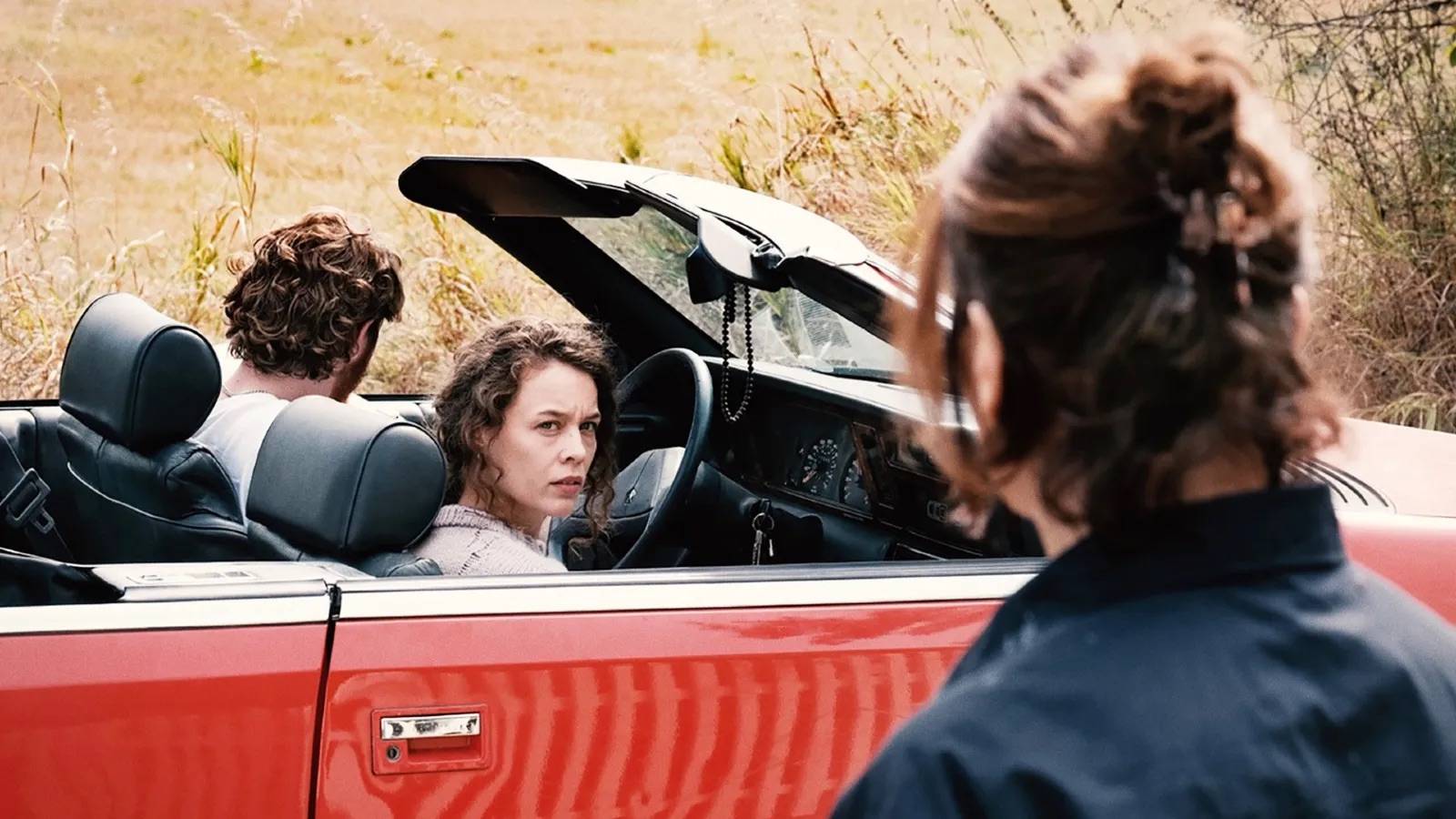
After “In Her Place” was released worldwide by Netflix, “A Child of My Own” continues Alberdi’s relationship with the streamer — an association that seems almost like an ironic in-joke given how the film plays on a practically patented Netflix true-crime format, with carefully staggered talking heads giving way to slick reconstructions. Here, however, the dramatizations are so glossy — relentlessy color-coded in bubblegum hues by DP Sergio Armstrong and production designer Estefania Larran de la Cerda — as to tilt away from realism entirely, and into the possibly fantasist headspace of protagonist Alejandra, appearing as her middle-aged self in interviews and played as a young woman by the appealingly wide-eyed Ana Celeste.
When she’s married at just 17 to the oafish but loving Arturo (Armando Espitia) — we see both grainy real-life video footage and a rose-tinted replica of their first dance to “Unchained Melody” — Alejandra is already beamingly pregnant, though she’s soon jolted by a miscarriage that turns out to be the first of three. The third time, she can no longer face the disappointment of her husband or the reproaches of her in-laws, who make no bones about their belief that a childless wife is an invalid one. By then working as a hospital nurse, she strikes up a chance connection in the waiting room with Mayra, a young, unhappily pregnant woman with no desire to keep her baby, and has a brainwave: She can secretly take Mayra’s child as her own once it is delivered, maintaining the illusion of her pregnancy until then. And so the women make a deal.
Or do they? The plan is so riddled with flaws — played very nearly for farce in some scenes, as when Alejandra somehow fakes her way through an ultrasound scan — that viewers may wonder if it’s entirely fictional,. Yet the film’s documentary components prove that she did indeed convince everyone of her pregnancy until the day of Mayra’s delivery, where everything went woefully wrong. From this point, conflicting narratives cut harshly into the story as played thus far, though the real-life Alejandra insists to this day on the truth of her far-fetched testimony. She’s a sympathetic figure in either event, and the film’s heart sticks with her even as her perspective is undermined. Some of the strongest footage here shows her everyday life and sisterly relationships built in the prison where she was confined for 14 years after the whole unfortunate affair.
Still, it’s hard not to feel that other, equally compelling points of view — not least that of Mayra’s real-life counterpart — are given shorter shrift in “A Child of My Own,” in part to maintain the film’s poignant mystery and its investment in Alejandra as a tragic naif. The film’s final passage, however, is affecting as the real-life Arturo admits his own sense of emotional culpability — if not legal complicity — in Alejandra’s crime, as he retracts his younger self’s cruel, heedless statement that he couldn’t love an adopted child. The wound at the heart of their relationship reaches a roundabout sort of closure in the film’s coda, though as with much in “A Child of My Own,” one senses untold narratives beneath the surface.






 English (US) ·