
 7 hours ago
8
7 hours ago
8
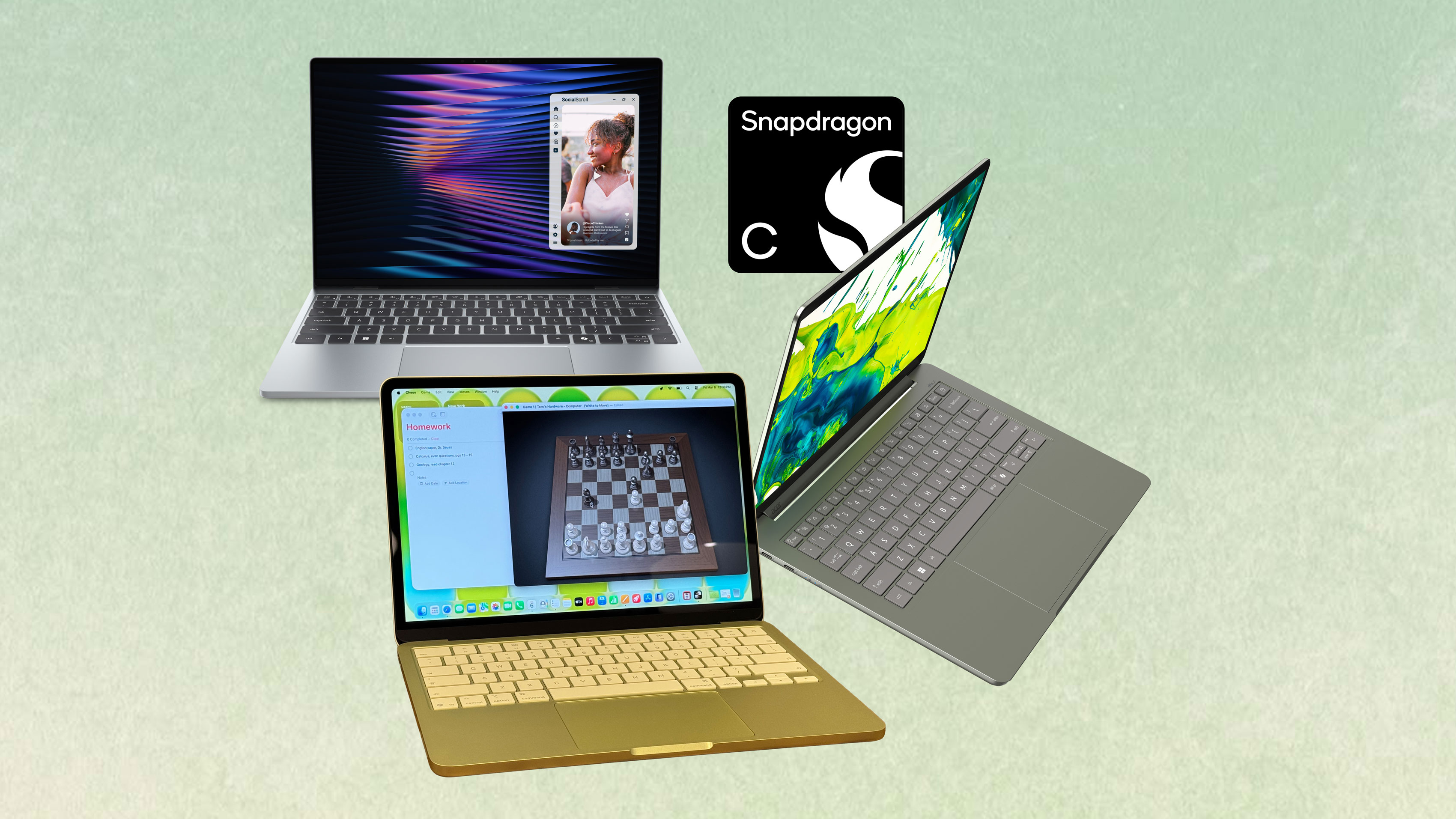
For a brief time from 2024 through 2025, it really seemed that 16GB of RAM was the new standard on mid-range and premium laptops. Microsoft made 16GB of memory a standard to be labeled a Copilot+ PC, and Apple made 16GB the minimum on all of its systems.
Then came the MacBook Neo. It was made of aluminum, looked and felt premium, and used a version of the A18 Pro system on a chip from the iPhone 16 Pro, which features 8GB of RAM.
While there was some blowback from the enthusiast community, most reviewers found that for the most basic workloads, 8GB is workable on macOS (though you'll likely run into swap and memory pressure if you overload it). For everyone else, 16GB is the standard on the MacBook Air and Pro.
But at Computex, we saw that the Windows PC industry is also moving to 8GB. The $699
Dell XPS 13, one of the standout products of the show, will start at 8GB of memory along with an
Intel Core Series 3 ("Wildcat Lake") processor. Acer, too, has a $699 Wildcat Lake-based system, the Swift Air 14, which will have an Intel Core 5 chip, 512GB of storage, and, yes, 8GB of RAM.
Ahead of the show, Chuwi announced its UniBook, with a weaker Core Series 3 304 CPU, 256GB of storage, and, you guessed it, 8GB of RAM. That's set to be the cheapest one so far, with Chuwi promising a launch "around $449."
And in May, when Microsoft announced its latest Surface for Business devices, it included a new Surface Laptop for Business 13-inch with 8GB of RAM starting at a whopping $1,299.99, so 8GB isn't just relegated to the budget space.
That's not to say everyone is doing it, at least yet. Some Wildcat Lake laptops are sticking to 16GB. For instance, the
$899.99 Lenovo IdeaPad Slim 3ihas 16GB of RAM, though it's clearly more expensive than what Apple, Dell, Acer, and Chuwi are offering. (As of this writing, Lenovo's website suggested it's 25% off an "estimated value" of $1,199.99.)
One interesting thing to note: the Windows laptops with 8GB of RAM still have Copilot keys. This doesn't make them Copilot+ laptops, which requires Windows 11, the Copilot key, and 16GB of RAM, but hey, cloud AI is still AI, I guess.
Go deeper with TH Premium: AI shortages
Intel's Wildcat Lake website has a long list of partners with new laptops, and I'm sure more of them will have 8GB. And we know more is coming. The
Acer Aspire Go 15, the first laptop with Qualcomm's upcoming budget-focused Snapdragon C, has "up to" 8GB of memory, according to Acer's press release, suggesting the possibility of even less memory. The minimum specs to run Windows 11 include 4GB of memory, after all.
Unlike some of my colleagues, I still believe 8GB of memory is workable for the right people (To be clear, it's not the route I would go). That's people who mostly use a web browser and light apps, don't use many tabs, and mostly do one or two things at a time. They do exist, and they should have options other than paying $1,500 for 16GB of RAM. We've seen that macOS can largely handle a premium-feeling experience with 8GB (and will hopefully move to 12GB with its next chip upgrade), so now it will be the Windows world's turn to prove the same.
But I also hoped the days where 8GB of memory could potentially bottleneck you were over. It is both unfortunate and ironic that it was the rush towards preparing devices for AI that pushed us away from a longstanding 8GB minimum, but it is because the price of memory to keep AI research going has pushed component prices so high that laptop makers have no choice but to go back so that people can afford entry and mid-tier systems.
If you thought we were past the days of 8GB systems, you're wrong. You don't have to get one (depending on what you do, perhaps you shouldn't), but for something affordable, at least there's an option at all. Maybe in a few years, the RAM crisis will have subsided, and we'll laugh about this on 16GB entry-level machines. But not anytime soon.

Follow Tom's Hardware on Google News, or add us as a preferred source, to get our latest news, analysis, & reviews in your feeds.





 English (US) ·