
 Image via Studiocanal

Published Apr 28, 2026, 7:52 AM EDT
Remus is a writer, editor, journalist, and author with an eye for detail and an extremely active imagination. He is an enthusiast of everything to do with the graphic medium, whether it's Western comics and their adaptations or manga and anime. Remus is also the author of the sci-fantasy novel Once Upon a Time in Hyperspace and several works of short fiction in the mystery, comedy, and horror genres.
Sign in to your Collider account
Thriller movies engage and entertain audiences through the use of suspenseful storytelling and unexpected twists. When executed well, these films leave audiences with a genuine “thrill” that lasts long after the credits roll. But the masterpieces of the genre are the films that deliver the same thrill every time you revisit them.
Some of these are films that are so dense and layered that they require multiple rewatches to decode their true meanings; others are movies that may not even seem all that good on first watch, but unfold previously unnoticed intricacies that elevate the experience on second viewing. Without further ado, here’s our handpicked selection of thriller movies that are even better the second time around (and don’t worry, we’ve kept the spoilers to a minimum).
1 ‘Fight Club’ (1999)
 Image via 20th Century Fox
Directed by David Fincher and adapted from the novel by Chuck Palahniuk, Fight Club is a psychological thriller that follows a disillusioned white-collar professional suffering an existential crisis that manifests as insomnia, depression, and anxiety. A chance encounter with a soap salesman, Tyler Durden, transforms his life in strange and dangerous ways as the two men create the titular underground club and embrace an intensely nihilistic worldview. Edward Norton stars as the unnamed protagonist and Brad Pitt as Tyler, with Helena Bonham Carter, Meat Loaf, Jared Leto, Zach Greiner, and Holt McCallany in other key roles.
A controversial and polarizing cult classic, Fight Club is a surreal, post-modern thriller that explores philosophical and social themes through a twisted psychological narrative. The film keeps the audience completely entranced throughout its moody, chaotic plot, leading up to a genuinely shocking twist that upends your entire understanding of its story. However, as amazing as that first experience is, it’s only with multiple rewatches that you can fully grasp the deeper meanings and easily missed symbolisms woven into Fight Club’s narrative.
2 ‘The Pale Blue Eye’ (2022)
 Image via Netflix
Written and directed by Scott Cooper and adapted from Louis Bayard’s 2006 novel, The Pale Blue Eye is a period mystery thriller that blends historical settings and people with a fictional story. Set in 1830, in and around the United States Military Academy in West Point, New York, the film follows retired detective Augustus Landor (Christian Bale) as he investigates a series of murders that appear to be linked to black magic rituals with the help of a charming if eccentric cadet by the name of Edgar Allan Poe (Harry Melling). The movie also features Gillian Anderson, Lucy Boynton, Charlotte Gainsbourg, Toby Jones, Harry Lawtey, Simon McBurney, Timothy Spall, and Robert Duvall in his final film appearance before his death.
A gripping Gothic thriller with an unexpected twist, The Pale Blue Eye initially appears to be an occult story, then transforms in the final act into a very different kind of narrative. While the shift can feel convoluted at first watch, revisiting the film with the twist in mind makes it a much better experience, revealing all the subtle clues and red herrings that the story employs in its earlier half. While the movie may have had mixed reviews, particularly in comparison to the novel, The Pale Blue Eye is still a gorgeously crafted Gothic mystery that’s worth a second watch.
3 ‘Mulholland Drive’ (2001)
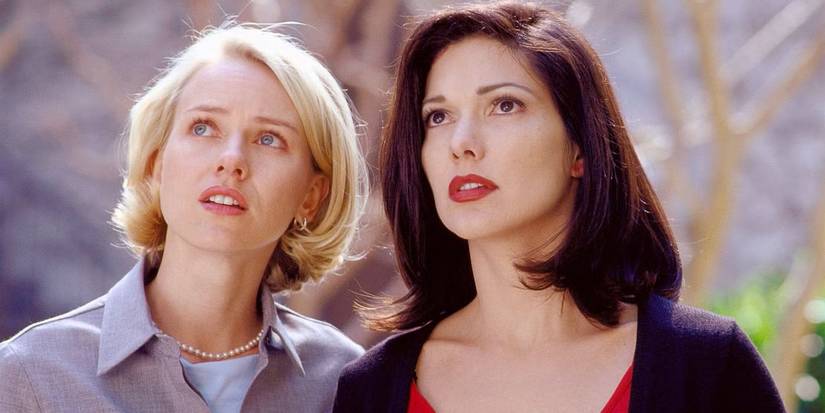 Image via Universal Pictures
Written and directed by David Lynch, Mulholland Drive is a surrealist neo-noir mystery thriller set in the magical world of Los Angeles. The film revolves around the bizarre story of aspiring actress Betty (Naomi Watts) and amnesiac accident victim Rita (Laura Harring), following their growing bond through an inexplicable, dreamlike narrative. The movie also features Justin Theroux, Ann Miller, Mark Pellegrino, Robert Forster, and more in supporting roles.
A surreal and chaotic thriller, Mulholland Drive doesn’t rely on any single twist; instead, it constantly subverts the viewer’s expectations by shifting the narrative, setting, and even the characters in unexpected ways. Arguably the most popular example of Lynch’s dream-logic approach to storytelling, the film is an unsettling blend of reality and fantasy that requires more than one watch to take in fully. To be completely honest, even a second watch may not be enough to grasp the uniquely Lynchian narrative and decipher all its hidden layers.
Collider Exclusive · Oscar Best Picture Quiz
Which Oscar Best Picture
Is Your Perfect Movie?
Parasite · Everything Everywhere · Oppenheimer · Birdman · No Country
Five Oscar Best Picture winners. Five completely different visions of what cinema can be — and what it can do to you. One of them is the film that was made for the way your mind works. Ten questions will figure out which one.
🪜Parasite
🌀Everything Everywhere
☢️Oppenheimer
🐦Birdman
🪙No Country for Old Men
FIND YOUR FILM →
01
What kind of film experience do you actually want? The best movies don't just entertain — they leave something behind.
ASomething that pulls the rug out — that makes me think I'm watching one kind of film and then reveals I'm watching another entirely. BSomething overwhelming — funny, sad, absurd, and genuinely moving, all at once. CSomething grand and weighty — a film that makes me feel the full scale of what I'm watching. DSomething formally daring — a film that pushes what cinema can even do. ESomething lean and relentless — pure tension with no wasted frame.
NEXT QUESTION →
02
Which idea grabs you most in a film? Great films are driven by a central obsession. What's yours?
AClass, inequality, and what people are willing to do when desperation meets opportunity. BIdentity, family, and the chaos of trying to hold your life together when everything is falling apart. CGenius, moral responsibility, and the catastrophic weight of a decision you can never take back. DEgo, legacy, and the terror of becoming irrelevant while you're still alive to watch it happen. EEvil, chance, and whether moral order actually exists or if we just tell ourselves it does.
NEXT QUESTION →
03
How do you like your story told? Form is content. The way a story is shaped changes what it means.
AGenre-twisting — I want it to start in one lane and migrate into something completely different. BMaximalist and genre-blending — comedy, action, drama, sci-fi, all in one ride. CEpic and non-linear — cutting between timelines, building a mosaic of cause and consequence. DA single unbroken flow — I want to feel like I'm living it in real time, no cuts to safety. ESpare and precise — every scene doing exactly what it needs to do and nothing more.
NEXT QUESTION →
04
What makes a truly great antagonist? The opposition defines the protagonist. What kind of opposition fascinates you?
AA system — invisible, structural, and almost impossible to fight because it has no single face. BThe self — the ways we sabotage, abandon, and fail the people we love most. CHistory — the unstoppable momentum of events that no single person can stop or redirect. DThe industry — the machinery of culture that chews up talent and spits out irrelevance. EPure, implacable evil — a force so certain of itself it becomes almost philosophical.
NEXT QUESTION →
05
What do you want from a film's ending? The final note is the one that lingers. What do you want it to sound like?
AShock and inevitability — a conclusion that recontextualises everything that came before it. BEarned emotion — I want to cry, laugh, and feel genuinely hopeful, even if the world is a mess. CDevastation and grandeur — an ending that makes me sit in silence for a few minutes after. DAmbiguity — something that leaves enough open that I'm still thinking about it days later. EBleakness — an honest refusal to pretend the world is tidier than it actually is.
NEXT QUESTION →
06
Which setting pulls you in most? Where a film takes place shapes everything — mood, stakes, what's even possible.
AA gleaming modern city with a hidden underside — beauty masking rot, wealth masking desperation. BA collapsing suburban life that opens onto something infinite — the multiverse of a single ordinary person. CThe corridors of power and science at a world-historical turning point — where decisions echo for decades. DThe grimy, alive chaos of New York and Hollywood — fame as both destination and trap. EVast, indifferent landscape — desert and highway where violence arrives without warning or reason.
NEXT QUESTION →
07
What cinematic craft impresses you most? Every great film has a signature — a technical or artistic element that makes it unmistakable.
AProduction design and mise-en-scène — every frame composed to carry meaning beneath the surface. BEditing and tonal control — the ability to move between registers without losing the audience. CScore and sound design — music that becomes inseparable from the dread and awe of what you're watching. DCinematography as performance — the camera not recording events but participating in them. ESilence and restraint — what's left unsaid and unshown doing more work than any dialogue could.
NEXT QUESTION →
08
What kind of main character do you root for? The protagonist is the lens. Who you choose to follow says something about you.
ASomeone smart and resourceful who makes increasingly dangerous decisions under pressure. BSomeone overwhelmed and ordinary who turns out to be capable of something extraordinary. CA brilliant, tortured figure whose gifts and flaws are inseparable from each other. DA self-destructive artist whose ego is both their superpower and their undoing. EA quiet, principled person trying to make sense of a world that has stopped making sense.
NEXT QUESTION →
09
How do you feel about a film that takes its time? Pace is a choice. Some films sprint; others let tension accumulate slowly, deliberately.
AI love a slow build when I know the payoff is going to be seismic — patience for a devastating reveal. BGive me relentless momentum — I want to feel breathless and emotionally spent by the end. CEpic runtime doesn't scare me — if the material demands three hours, give me three hours. DI want it to feel propulsive even when nothing is technically happening — restless energy throughout. EDeliberate and unhurried — I want dread to accumulate in the spaces between the action.
NEXT QUESTION →
10
What do you want to feel walking out of the cinema? The best films leave a mark. What kind of mark do you want?
AUnsettled — like I've just seen something I can't fully explain but can't stop thinking about. BMoved and energised — like the film reminded me what actually matters and gave me something to hold onto. CHumbled — like I've been in the presence of something genuinely important and overwhelming. DExhilarated — like I've just seen cinema doing something it's never quite done before. EHaunted — like a cold, quiet dread that stays with me for days.
REVEAL MY FILM →
The Academy Has Decided Your Perfect Film Is…
Your answers have pointed to one Oscar Best Picture winner above all others. This is the film that was made for the way your mind works.
Parasite
You are drawn to films that operate on multiple levels simultaneously — that begin in one genre and quietly, brilliantly migrate into another. Bong Joon-ho's Parasite is a film about class, desire, and the architecture of inequality that manages to be darkly funny, deeply suspenseful, and genuinely shocking across a single extraordinary running time. Your instinct is for cinema that hides its true intentions until the moment it's ready to reveal them. Parasite is exactly that — a film that rewards close attention and punishes assumptions, right up to its devastating final image.
Everything Everywhere All at Once
You want it all — and this film gives you all of it. The Daniels' Everything Everywhere All at Once is one of the most maximalist films ever made: action comedy, multiverse sci-fi, family drama, existential crisis, and a genuinely earned emotional core that sneaks up on you amid the chaos. You are someone who responds to ambition, who doesn't want cinema to choose between being entertaining and being meaningful. This film refuses that choice entirely. It is overwhelming by design, and its overwhelming nature is precisely the point — because the feeling of being crushed by infinite possibility is exactly what it's about.
Oppenheimer
You are drawn to cinema on a grand scale — films that understand history not as a backdrop but as a force, and that place their characters inside that force and watch what happens. Christopher Nolan's Oppenheimer is a film about the terrifying gap between what we can do and what we should do, told with the full weight of one of the most consequential moments in human history behind it. You want your films to feel important without feeling self-important — to earn their ambition through sheer craft and the gravity of their subject. Oppenheimer does exactly that. It is enormous, complicated, and refuses easy comfort.
Birdman
You are drawn to films that foreground their own construction — that make the how of the filmmaking part of the what it's about. Alejandro González Iñárritu's Birdman, shot to appear as a single continuous take, is cinema examining itself through the cracked mirror of a fading actor's ego. You respond to formal daring, to the feeling that a film is doing something that probably shouldn't be possible. Michael Keaton's performance and Emmanuel Lubezki's restless camera create something genuinely unlike anything else — a film that is simultaneously about creativity, relevance, self-destruction, and the impossibility of ever truly knowing if your work means anything at all.
No Country for Old Men
You are drawn to cinema that trusts silence, that refuses to explain itself, and that treats dread as a form of meaning. The Coen Brothers' No Country for Old Men is a film about the arrival of a new kind of evil — implacable, arbitrary, and utterly indifferent to the moral frameworks we use to make sense of the world. It is one of the most formally controlled films ever made, and its controlled restraint is what makes it so terrifying. You want your films to haunt you, not comfort you. You are not interested in resolution if resolution would be dishonest. No Country for Old Men is honest in a way that most cinema never dares to be.
↻ RETAKE THE QUIZ
4 ‘Oldboy’ (2003)
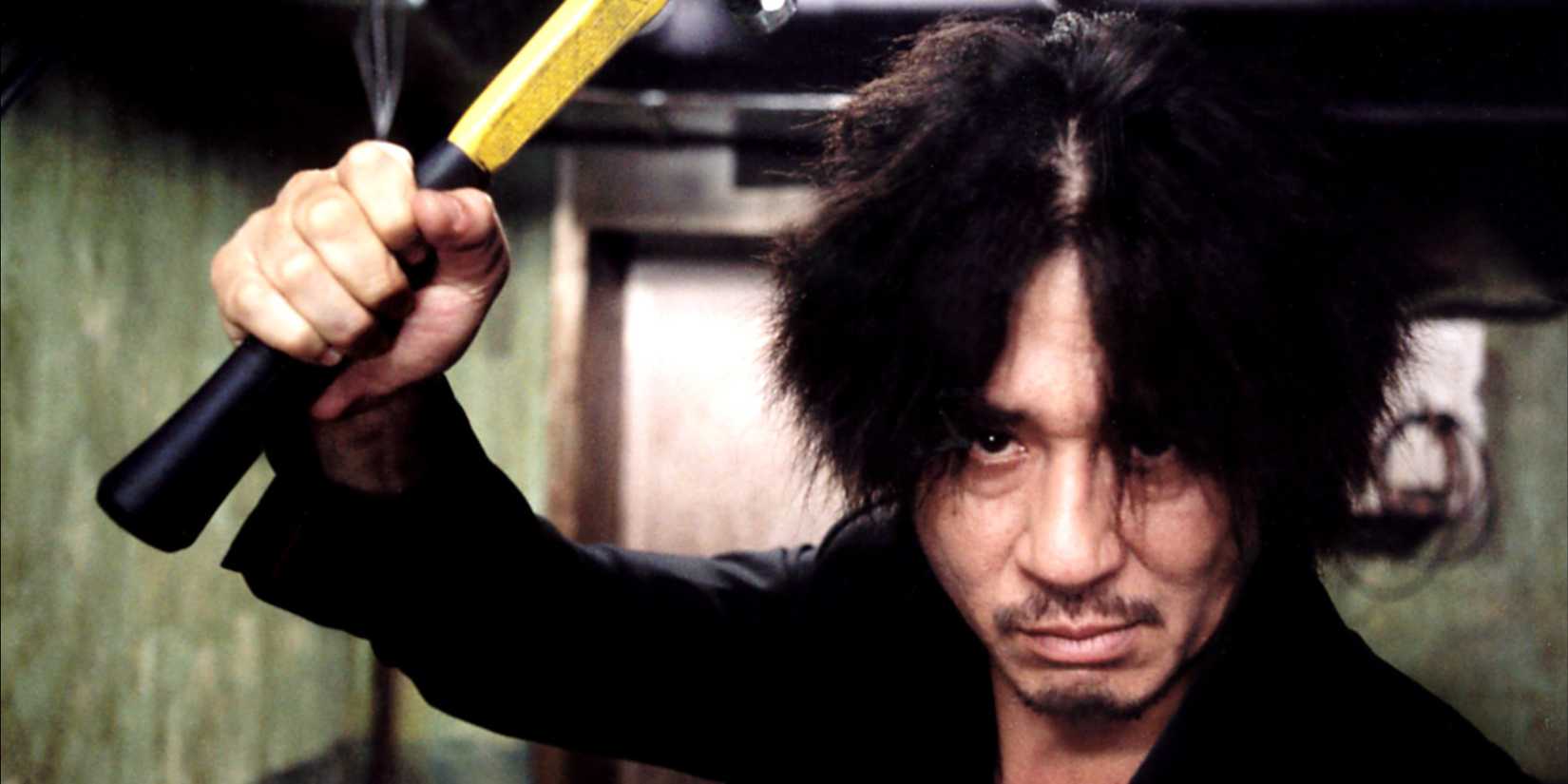 Image via Show East
Directed and co-written by Park Chan-wook and loosely adapted from the Japanese manga by Garon Tsuchiya and Nobuaki Minegishi, Oldboy is a South Korean action thriller film starring Choi Min-sik as Oh Dae-su, a man who is inexplicably imprisoned for 15 years and then released. Seeking revenge on his mysterious captor, Dae-su finds himself pulled into a complicated conspiracy. The movie also stars Yoo Ji-tae, Kang Hye-jung, Yoon Jin-seo, and Oh Dal-su in supporting roles.
An extremely grim, brutal, and dark revenge movie, Oldboy is a landmark thriller film that’s internationally renowned for its genuinely twisted story and impeccable action, particularly its highly influential fight sequences. Though the movie has inspired multiple remakes, none of those films had the guts to adapt the original’s sickening twist, which genuinely catches the viewer by surprise. And once you know the ending, every subsequent rewatch just makes the whole experience all the more dark and horrifying.
5 ‘The Silence of the Lambs’ (1991)
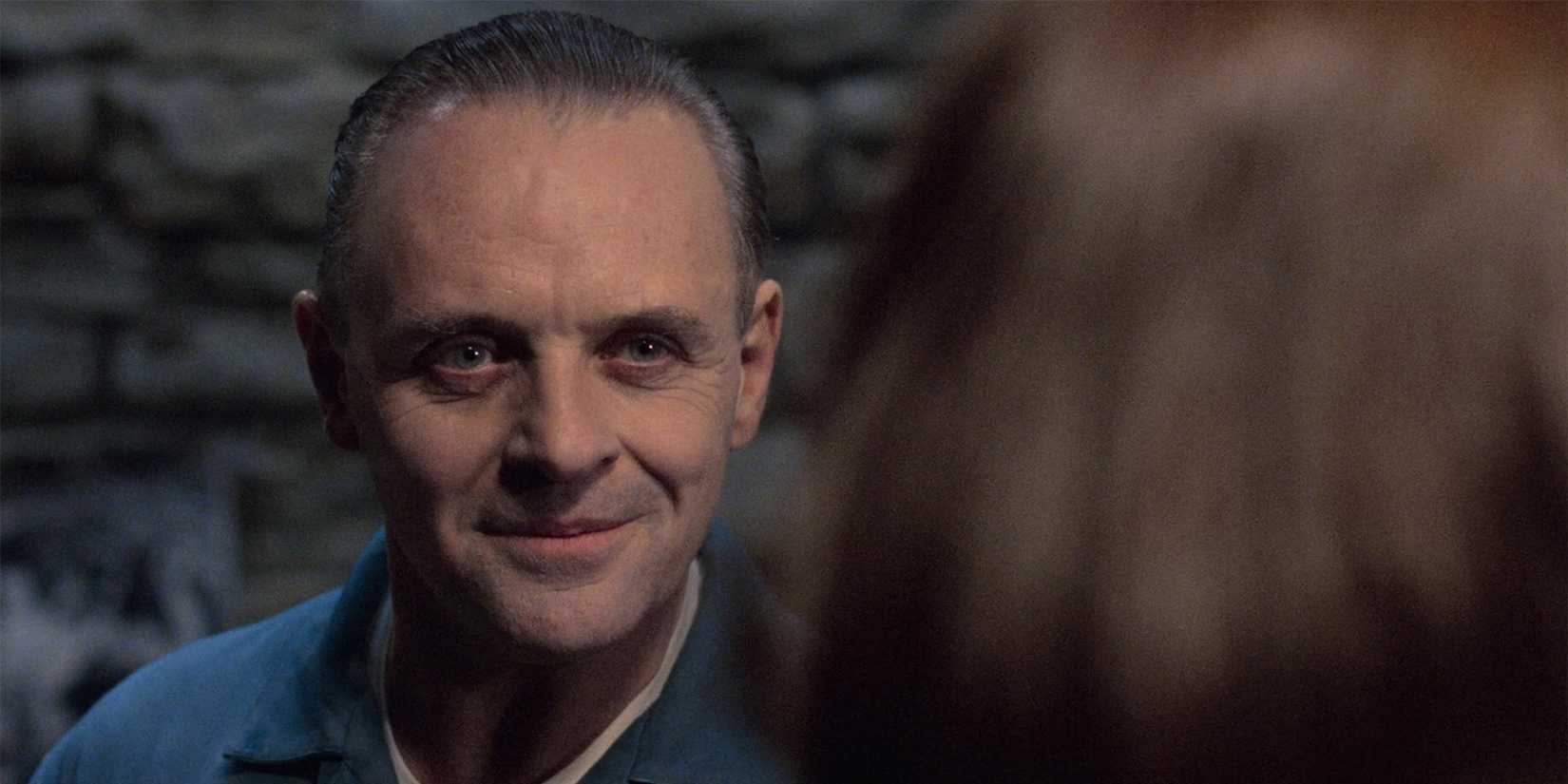 Image via Orion Pictures
Adapted from the novel by Thomas Harris and directed by Jonathan Demme, The Silence of the Lambs is a psychological horror thriller that follows Clarice Starling, an FBI trainee who is recruited to interview Dr. Hannibal Lecter, a brilliant psychiatrist and imprisoned serial killer. Hoping to use his insights to catch another killer, Clarice enters into a game of wits with Lecter, revealing her darkest secrets in exchange for his help. Jodie Foster stars as Clarice and Anthony Hopkins as Hannibal Lecter, with Scott Glenn, Anthony Heald, Kasi Lemmons, Ted Levine, and more in supporting roles.
The Silence of the Lambs is widely regarded as one of the greatest horror thrillers of all time, and it made history by becoming one of only three films to win all “Big Five” Academy Awards–Best Picture, Director, Actor, Actress, and Adapted Screenplay. What really strikes the viewer about the film, whether on the first watch or the second, isn’t the twist or the main investigation; rather, it’s the subtle foreshadowing and detailed performances, particularly Anthony Hopkins’s central performance as the movie’s iconic psychopath. The masterful pacing and cinematography make every rewatch just as enjoyable an experience as the first time you saw the movie.
6 ‘The Usual Suspects’ (1995)
 Image via MGM
Directed by Bryan Singer and written by Christopher McQuarrie, The Usual Suspects is an iconic crime thriller film that begins with a deadly massacre. As the police interrogate petty criminal Roger “Verbal” Kint, one of only two survivors of the incident, they learn the elaborate sequence of events that led to Kint and a group of other criminals falling on the wrong side of a legendary crime boss known as Keyser Söze. The film stars Kevin Spacey, Gabriel Byrne, Benicio del Toro, Stephen Baldwin, Kevin Pollak, Chazz Palminteri, and Pete Postlethwaite in lead roles.
The Usual Suspects is easily one of the most masterfully executed examples of the “unreliable narrator” trope, using the inconsistencies of Verbal’s account to create maximum suspense and unexpected twists, right until its final moments. The film’s puzzle is a scintillating experience the first time you watch it, but it’s only on the second watch that you notice all the small details and easily-missed clues that were hiding in plain sight all along.
7 ‘The Game’ (1997)
 Image via Walt Disney Studios Motion Pictures
Directed by David Fincher and starring Michael Douglas, The Game is a mystery thriller that follows successful yet lonely San Francisco man Nicholas Van Orton. Haunted by the death of his father, Nicholas dreads his 48th birthday, but on the day, he is visited by his estranged brother (Sean Penn), who gifts him an invitation to join a mysterious game, which soon begins to take over his life. Deborah Kara Unger, James Rebhorn, Peter Donat, and more appear in supporting roles.
Anchored by a stellar Michael Douglas performance, The Game is one of Fincher’s most overlooked '90s movies, but it’s every bit as thrilling a film as you would expect from the iconic auteur. Though its twist ending has been quite divisive with critics (and retrospectively criticized by Fincher himself), it’s still a startling, unpredictable turn that elicits a lot of shock at the moment. After the fact, however, you may find yourself questioning the twist, which is why it’s best to give the film a second watch, so you can see the subtle mechanisms that move the central character to the right place, time, and state of mind.
8 ‘Deathtrap’ (1982)
 Image via Warner Bros.
Directed by Sidney Lumet and based on Ira Levin’s 1978 play, Deathtrap is a black comedy suspense film starring Michael Caine, Christopher Reeve, and Dyan Cannon. Sidney Bruhl (Caine), a famous playwright whose recent plays have all been flops, reveals to his wife, Myra (Cannon), that he has received a promising manuscript from a student (Reeve) and that he’s considering killing the young man so he can claim it as his own. A deadly game of deception ensues where nothing is as it seems. Irene Worth, Henry Jones, and Joe Silver appear in supporting roles.
Despite comparisons to Caine’s 1972 film Sleuth, Deathtrap was generally well-received by most critics, and though it’s not very well-known these days, the film is easily one of the most deviously entertaining films of the '80s. A highly suspenseful thriller with a very twisted sense of humor, Deathtrap’s now-iconic twist and narrative shift were both quite divisive at the time of its release, but the film is now regarded as a landmark piece of queer cinema history. The reasons why are a huge spoiler, so let’s not get into it; suffice to say, it’s the sort of thing that makes you want to go back and see the whole movie all over again with fresh eyes.

Release Date March 19, 1982
Runtime 116 Minutes






 English (US) ·