8 Perfect Low Fantasy Books That I Knew Would Be Masterpieces From the First 10 Pages
2 days ago
10
Image via Cornerstone
Published Oct 7, 2026, 7:36 AM EDT
Luc Haasbroek is a writer and videographer from Durban, South Africa. He has been writing professionally about pop culture for eight years. Luc's areas of interest are broad: he's just as passionate about psychology and history as he is about movies and TV. He's especially drawn to the places where these topics overlap.
Luc is also an avid producer of video essays and looks forward to expanding his writing career. When not writing, he can be found hiking, playing Dungeons & Dragons, hanging out with his cats, and doing deep dives on whatever topic happens to have captured his interest that week.
Low fantasy has a particular advantage when it comes to hooking readers quickly. Rather than transporting us immediately to a completely invented world, forcing us to learn a ton of new information on the fly, these stories allow something impossible to intrude upon a reality that looks recognizably like our own.They derive a lot of their power from the collision between the mundane and magical.
This list looks at some of the finest low fantasy books ever, the ones that start strong and immerse us within a few pages—10, to be exact. Whether their magic and worldbuilding are whimsical, frightening, comedic, mythological, or even a bit of everything, they all announce their brilliance almost from page one and never slow down.
'The Golem and the Djinni' (2013)
Image via HarperCollins
"The Golem's life began in the hold of a steamship." Chava is a golem created in Poland to become the wife of a man emigrating to America. Her master dies during the Atlantic crossing, leaving a newly awakened supernatural creature alone in 1899 New York. Elsewhere in the city, tinsmith Boutros Arbeely accidentally releases Ahmad, a centuries-old jinni who has been imprisoned inside a copper flask. Chava needs routine and restraint; Ahmad chafes against both. Their eventual friendship forms the heart of the story.
Both characters draw on classic mythological figures, but the book makes them three-dimensional. Plus, instead of a mystical kingdom, their tales unfold across the crowded tenements of the Lower East Side, shifting between Jewish neighbourhoods and Little Syria. In the process, the protagonists' supernatural displacement becomes a metaphor for people attempting to build lives far from home, an encapsulation of the American Dream from the eyes of the most alien of refugees.
'Storm Front' (2000)
Image via Ace
"I heard the mailman approach my office door, half an hour earlier than usual." The opening entry in the marvelous Dresden Files. Harry Dresden is a professional wizard living in modern Chicago. He deals with rent, skeptical clients, police work, and ordinary professional frustrations while possessing abilities that most of the people around him aren't sure they believe exist. The plot kicks into gear after Lieutenant Karrin Murphy calls Harry to investigate a gruesome double murder apparently committed using magic.
At the same time, another client asks him to locate her missing husband. From here, author Jim Butcher spins a fun, fast-paced plot, confidently mixing detective noir with sorcery, potions, vampires, and demons. While there are a lot of memorable creatures and characters on offer here, the best of them is Harry himself. He's cocky and incapable of leaving a mystery alone, always ready to crack wise even in the face of supernatural danger.
'Charlie and the Chocolate Factory' (1964)
Image via Scholastic
"These two very old people are the father and mother of Mr Bucket." Perhaps the most well-rounded of all Roald Dahl's books. Our protagonist Charlie lives in poverty with his parents and four grandparents until a Golden Ticket sends him and four other lucky kids to the towering Wonka factory nearby. There, readers are charmed by chocolate rivers, Oompa-Loompas, Everlasting Gobstoppers, squirrels sorting nuts, and a host of other wacky creations.
Dahl wastes no time establishing his wicked sense of humor. Augustus Gloop, Veruca Salt, Violet Beauregarde, and Mike Teavee are exaggerated embodiments of bad behavior waiting to collide with a factory that seems almost designed to punish them. Charlie's decency consequently matters without making him boring. He's relatable, a great stand-in for the reader, and the perfect foil for the mayhem around him. Not for nothing, Charlie and the Chocolate Factory has continued to delight millions of readers for more than 60 years.
'That Hideous Strength' (1945)
Image via Scribner
"Matrimony was not a word that Jane Studdock often used." That Hideous Strength is one of the lesser-known novels by C.S. Lewis, serving as the conclusion to his Space Trilogy. Subtitled "A Modern Fairy-Tale for Grown-Ups," it fuses elements of fantasy, sci-fi, and dystopian satire, along with dashes of Arthurian legend. The plot focuses initially on the troubled marriage of Mark and Jane Studdock, two intelligent young people whose ambitions and frustrations gradually pull them toward opposite sides of a conflict neither initially understands.
The cosmic elements here include dark spiritual entities called Macrobes, as well as the wizard Merlin himself, not dead but resting in a timeless state, waiting to be reawakened. As always, the magic is used as a vehicle for Lewis' themes. Rather than an epic quest across a map, the primary battlefield here is the human psyche, and, in particular, how people compromise their principles for ambition.
'Harry Potter and the Prisoner of Azkaban' (1999)
Image via Bloomsbury Publishing
"Harry Potter was a highly unusual boy in many ways." Almost any of the Harry Potter books could have made this list, though Prisoner of Azkaban might be the most entertaining. The story grips you from the opening scenes: Harry hears reports mentioning an escaped prisoner named Sirius Black. Before long, the boy wizard loses his temper with Aunt Marge, inflates her like a balloon, and flees Privet Drive alone. Things just escalate from there.
Eventually, the story has expanded to include boggarts, time-travel, Patronuses, werewolves, animagi, betrayal, buried secrets, and, of course, the Dementors, the series' scariest addition up til that point. Darkness is creeping in at the edges of the wizarding world, and Harry himself is growing older and more willing to resist the adults controlling him. Throw in the Marauder's Map, Buckbeak, Hogsmeade, and one of the series' cleverest climaxes, and the result is the moment Harry Potterevolved from an excellent children's series into something considerably richer.
'American Gods' (2001)
Image via William Morrow, Headline
"Shadow had done three years in prison." There is nothing obviously magical about the beginning of American Gods. Shadow is approaching the end of a prison sentence when he learns that his wife Laura has died in a car accident. Instead of returning to the life he expected, Shadow meets an enigmatic stranger calling himself Mr. Wednesday, who offers him a job. Wednesday is, of course, far more than an eccentric con man. Shadow soon discovers an America populated by gods and mythological beings carried across the ocean by generations of immigrants.
Odin, Anansi, Czernobog, Thoth, Anubis, and countless others survive alongside newer deities reflecting television, technology, media, and contemporary obsessions. Their looming conflict turns a road trip across diners, motels, roadside attractions, and forgotten towns into an exploration of what Americans worship. It's a smart, compelling book, boasting fantastic prose the whole way through.
'The Magicians' (2009)
Image via Cornerstone
"Quentin did a magic trick. Nobody noticed." In many ways, The Magicians is the anti-Harry Potter. Its protagonist, Quentin Coldwater, is brilliant, unhappy, and obsessed with Fillory, the magical world from a series of children's novels he knows he should have outgrown. Then the book gives him what countless fantasy protagonists would consider the answer to everything: Quentin discovers that magic is real and gains admission to Brakebills College for Magical Pedagogy. The problem is that getting what you've always wanted doesn't necessarily make you happy.
Brakebills is fascinating, demanding, and genuinely magical, but Quentin carries his dissatisfaction through its gates with him, as do his classmates. Here, learning magic requires exhausting intellectual work rather than simply waving a wand, and some of its consequences are truly terrifying. Ultimately, The Magicians walks an amazingly fine line between serving up the genre's pleasures and also coldly deconstructing them.
'Jonathan Strange & Mr. Norrell' (2004)
Image via Bloomsbury
"Some years ago there was in the city of York a society of magicians." The opening scenes of Jonathan Strange & Mr. Norrell introduce a group of men who study magical history without actually performing magic. Then the reclusive Gilbert Norrell demonstrates that practical English magic isn't dead after all. From there, writer Susanna Clarke constructs one of modern fantasy's most convincing alternate histories, unfolding in an alternate version of the Napoleonic era.
At the eye of the storm is the complicated, volatile relationship between Norrell and his adventurous pupil Jonathan Strange, the only other person in the world who can perform magic. Hovering over both men is the forgotten legacy of the Raven King, John Uskglass, and a much older, wilder form of magic than Norrell wants to acknowledge. It's a fun, colorful story, one that Clarke tells with gorgeous prose, paying homage to classic writers like Jane Austenand Charles Dickens.

 Image via Cornerstone
 Image via HarperCollins
 Image via Ace
 Image via Scholastic
 Image via Scribner
 Image via Bloomsbury Publishing
 Image via William Morrow, Headline
 Image via Cornerstone
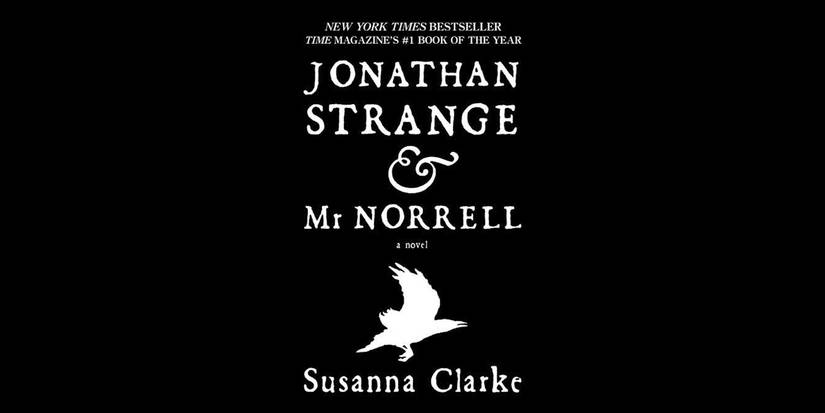 Image via Bloomsbury






 English (US) ·