
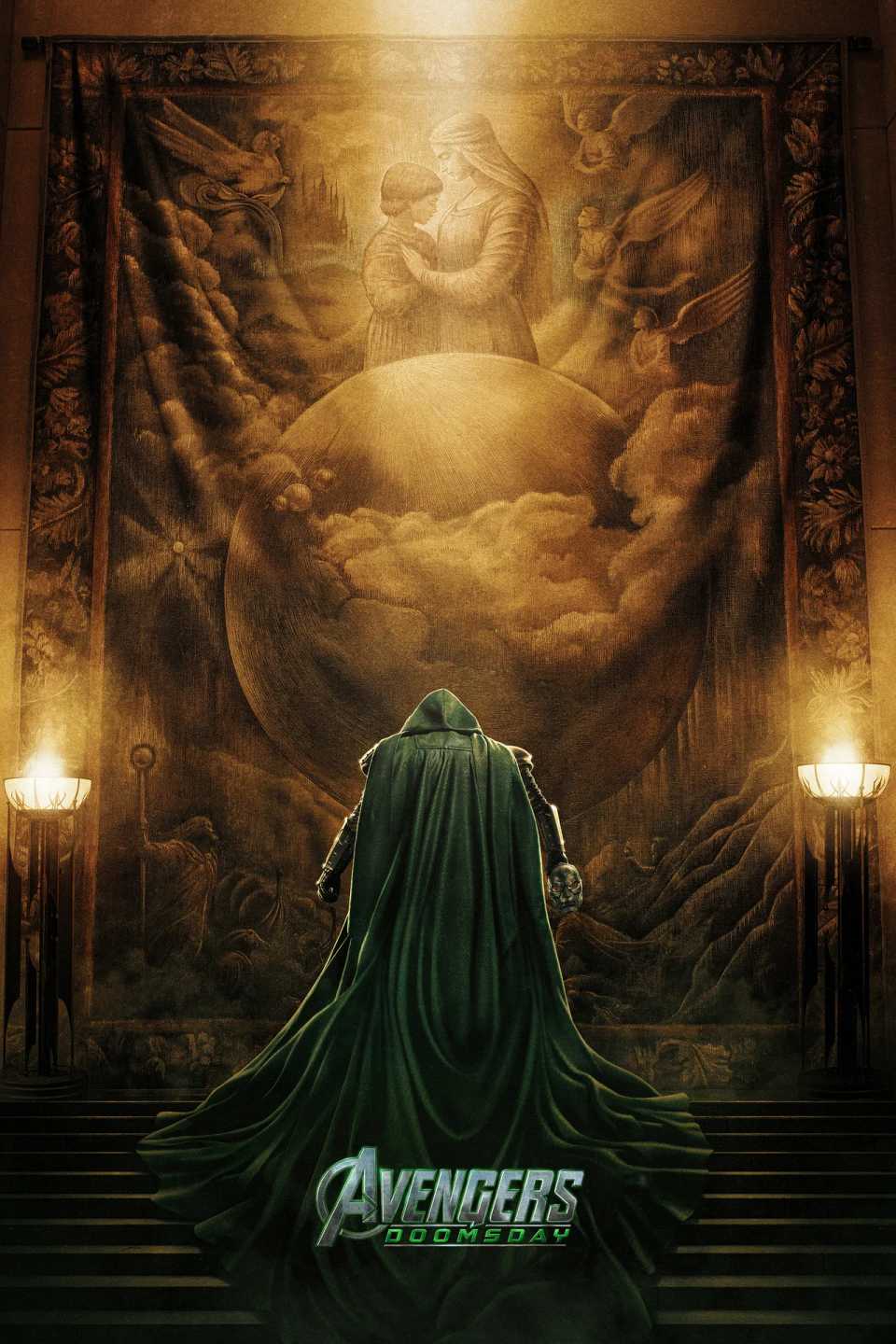
Marvel Studios' Avengers: Doomsday presents a multiversal conflict that involves over two dozen characters and several intertwined storylines, all of which have differing degrees of basis in the comics. Every Avengers movie in the MCU has borrowed from Marvel Comics to different degrees, though none has been a straightforward adaptation. The Avengers draws primarily from the original team's formation in Avengers #1 by Stan Lee and Jack Kirby, Avengers: Age of Ultron takes its title from the 2013 event of the same name but largely abandons that story's premise, and Avengers: Infinity War and Avengers: Endgame are quite close in spirit to Jim Starlin's The Infinity Gauntlet.
Compared to its predecessors, Avengers: Doomsday may end up being the Avengers movie with the fewest direct comic book inspirations. While its multiversal plot parallels Marvel's famous 2015 Secret Wars event, the nature of incursions, the characters involved, and the preceding events leading up to the multi-timeline conflict seem drastically different. Avengers: Doomsday features an unprecedented ensemble that places special focus on the New Avengers, and the realities set to clash through incursions feature very different histories and characters. The clearest examples are the Fantastic Four and the X-Men, who inhabit separate universes in the MCU.
Still, while Avengers: Doomsday is bound to be a mostly original story, several comics may provide key plot details that might appear on the big screen in some way, shape, of form.
8 Doctor Doom: Books Of Doom
(2005) Written by Ed Brubaker; Art by Pablo Raimondi

Doctor Doom: Books of Doom is the perfect summary of Doctor Doom's origins and motivations for die-hard fans and casual audiences alike. Ed Brubaker's 2005 story reconstructs Victor von Doom's life through personal testimonies and historical records that allow readers to understand how Victor's childhood in Latveria, his parents' tragic fates, his rivalry with Reed Richards, and his disastrous university experiment shaped every stage of his evolution into the world's greatest villain. Doctor Doom: Books of Doom also explores Doom's contradictions from a neutral perspective. Victor's arrogant conviction that only he possesses the vision necessary to save humanity is patent throughout his early days.
The MCU's Doctor Doom needs to have a dramatically different early story to his comic book counterpart due to his absence on Earth-616 and his mysterious resemblance to Tony Stark. However, the MCU's introduction of Latveria and a fully-formed Doctor Doom inevitably adapts several major elements from the villain's origins. Books of Doom presents Doom as someone who believes history has always misunderstood him, a perspective that could be central to Robert Downey Jr.'s portrayal in Avengers: Doomsday. Even if Avengers: Doomsday follows a completely original storyline, Books of Doom provides the essential context needed to understand Doctor Doom as a character.
7 Doctor Strange And Doctor Doom: Triumph And Torment
(1989) Written by Roger Stern; Art by Mike Mignola

Doctor Strange and Doctor Doom: Triumph and Torment explores Victor von Doom outside the pages of Fantastic Four through his desperate attempt to rescue his mother's soul from Mephisto's realm, the goal that has driven him since childhood and explains much of his fascination with both science and sorcery. Doctor Strange reluctantly agrees to accompany Doom after recognizing that only the Sorcerer Supreme has the magical expertise necessary for such an impossible mission. Their uneasy alliance reveals a side of Doom that many stories only hint at. Doom keeps his word and pursues a deeply human objective, yet his pride never disappears.
Although Doctor Strange isn't confirmed to return in Avengers: Doomsday, Triumph and Torment highlights Doctor Doom's command of magic, an aspect of the character that all previous live-action adaptations have treated as secondary despite its importance in the comics. Even if Doctor Doom's quest to save his mother's soul and Mephisto aren't addressed in Avengers: Doomsday directly, Triumph and Torment provides valuable insight into Victor's moral complexity and illustrates why he often stands apart from all other Marvel villains.
6 Jonathan Hickman’s Fantastic Four
(2009–2012) Written by Jonathan Hickman; Art by Dale Eaglesham, Neil Edwards, Steve Epting, Barry Kitson, Nick Dragotta, and Carmine Di Giandomenico

Jonathan Hickman's Fantastic Four introduces the Council of Reeds with a special focus on the significance of Marvel's countless alternate realities, develops Franklin and Valeria Richards into central figures of Marvel's First Family, and elevates Doctor Doom's place within Marvel's cosmic hierarchy. Reed and Doom's ideological conflict also reaches a new level, as each believes he alone possesses the vision necessary to secure humanity's future. This philosophical rivalry makes every encounter far more personal than a conventional battle.
Many of the central concepts of Jonathan Hickman's 2009-2012 Fantastic Four run became the foundation for Hickman's later Marvel saga that culminated in Secret Wars, and the MCU has already begun exploring several of those same ideas through the Multiverse Saga's parallel universes. Avengers: Doomsday may not have enough screentime to focus exclusively on the Fantastic Four's relationship with Doctor Doom, but it could draw upon the team and Doom's characterization. Hickman's run also captures the adventurous spirit and scientific curiosity that the MCU's Fantastic Four display in The Fantastic Four: First Steps.
5 Jonathan Hickman's The Avengers
(2013–2015) Written by Jonathan Hickman; Art by Jerome Opeña, Leinil Francis Yu, Dustin Weaver, Mike Deodato Jr., Salvador Larroca, Esad Ribić, and others

Jonathan Hickman's Avengers expands Earth's Mightiest Heroes to an unprecedented scale, turning the team into a global and eventually multiversal response force capable of confronting threats. Hickman's 2012-2015 run begins with Captain America's decision to dramatically increase the roster after the Builders' invasion, recruiting heroes such as Shang-Chi, Hyperion, Sunspot, Cannonball, Smasher, and Spider-Woman. This Avengers team soon faces the incursions, which places the main Avengers and the Illuminati under extraordinary moral pressure while saving reality. Doctor Doom also reenters the larger story during this period through his investigation of Molecule Man and the collapse of the multiverse.
Many of this Avengers run's central ideas already echo throughout the Multiverse Saga. The MCU has introduced incursions through Doctor Strange in the Multiverse of Madness (which also introduced its own Illuminati) and established multiple realities as a central concern, with new Avengers teams ready to face multiversal collapse ahead of Avengers: Doomsday. Hickman's run offers a detailed blueprint for how all these elements can converge. Each universe's desperate attempts to stop the incursions, the collapse of trust among Marvel's greatest heroes, and Doom's growing awareness of the multiverse all create natural avenues for adaptation.
4 Avengers: Time Runs Out
(2014–2015) Written by Jonathan Hickman; Art by Mike Deodato Jr., Stefano Caselli, Kev Walker, and Mike Perkins

Avengers: Time Runs Out is arguably the single most important Marvel comic to read before Avengers: Doomsday, since it presents many of the narrative ingredients the MCU is likely to explore. Set eight months after the collapse of the Illuminati, the story follows the final days of the multiverse as incursions reduce reality to its last surviving universes. Earth's heroes have fractured into competing factions, with Captain America leading the Avengers, Namor commanding the Cabal, Black Panther protecting Wakanda, and Doctor Doom quietly investigating the true cause behind reality's collapse.
Like Time Runs Out, Avengers: Doomsday places Doctor Doom at the center of the beginning of the end of the Marvel multiverse, presenting him as a complex leader whose unconventional methods spark conflict with Earth's heroes. Time Runs Out also highlights the emotional cost of impossible decisions, from Captain America and Iron Man's complicated friendship to Reed Richards' struggle to save his family and universe simultaneously. Most importantly, both Time Runs Out and Avengers: Doomsday pit heroes against one another, each universe desperately trying to save their own reality even if it means endangering the rest.
3 Secret Wars: Last Days
(2015) Written By Jonathan Hickman, Al Ewing, Gerry Duggan, Jason Aaron, And Others; Art By Mike Deodato Jr., Stefano Caselli, Valerio Schiti, And Others

Secret Wars: Last Days rarely receives the same attention as Time Runs Out or Secret Wars itself, but it offers one of the clearest pictures of what the Marvel Universe looks like during its final hours. Last Days follows several heroes and teams as they confront the knowledge that Earth-616 has only hours left before its final incursion with Earth-1610. Captain America leads a last stand against the approaching collision, the Fantastic Four desperately search for a scientific solution, the Punisher decides to spend humanity's final day eliminating criminals, and countless other characters choose their own way to face the apocalypse.
Large crossover events often focus on a handful of protagonists, but Last Days illustrates how a world-ending event affects every corner of a shared universe simultaneously. It also underscores the complete breakdown of normal superhero activity in an event as momentous as Avengers: Doomsday, as governments lose control, evacuation becomes impossible, scientific breakthroughs arrive too late, and Earth's greatest champions have no choice but to prepare for the inevitable. Last Days' closing moments prove especially relevant, as Earth-616 and the Ultimate Universe finally collide and only a handful of survivors escape aboard life rafts built by Reed Richards, the Cabal, and other key figures.
2 Jonathan Hickman's Secret Wars
(2015) Written by Jonathan Hickman; Art by Esad Ribić

Jonathan Hickman's Secret Wars will almost certainly be reserved as the primary source of inspiration for Avengers: Secret Wars, but it's still one of the most valuable comics to read before Avengers: Doomsday due to how closely the two stories are connected. Hickman's Secret Wars opens immediately after the multiverse's destruction, with Doctor Doom using the power stolen from the Beyonders through Molecule Man to assemble fragments of countless dead universes into Battleworld, where he rules as God Emperor. Hickman presents Doom at the height of his complexity, as a ruler who genuinely believes he saved existence.
Avengers: Doomsday could introduce many of Secret Wars' foundations before Battleworld takes shape on the big screen. Doomsday may begin exploring Victor von Doom's growing knowledge of the multiverse, his rivalry with Reed Richards, and the collapse of reality that eventually allows Battleworld to exist. The survival of select heroes beyond the final incursions and the creation of Battleworld may also take place at the end of Avengers: Doomsday. Reading 2015's Secret Wars comic event before watching Avengers: Doomsday is important to understand how the MCU is setting the stage for 2027's Avengers: Secret Wars.
1 Marvel Super Heroes Secret Wars
(1984–1985) Written by Jim Shooter; Art by Mike Zeck And Bob Layton

Jim Shooter's original Secret Wars may not provide the primary blueprint for the final chapter of the MCU's Phase 6. However, its influence reaches virtually every major multiversal crossover in Marvel Comics history, including Jonathan Hickman's 2015 Secret Wars. The original Secret Wars introduced the revolutionary concept of transporting Marvel's greatest heroes and villains into a single conflict orchestrated by an incomprehensibly powerful cosmic being, the Beyonder, on the patchwork planet known as Battleworld. More importantly for Avengers: Doomsday, the 1984 event established Doctor Doom as one of the main characters.
Although the MCU will likely reserve Battleworld for Avengers: Secret Wars, the original 1984 crossover could still shape the final stretch of Phase 6 in numerous ways. Avengers: Doomsday may borrow its concept of heroes and villains from different corners of reality converging against a shared catastrophe, as well as the conflict's gradual escalation into a multiversal struggle. Not to mention, major landmarks like Spider-Man's first encounter with the symbiote and Hulk's most impressive feat of strength may be referenced or adapted in either Avengers: Secret Wars and teased beforehand in Avengers: Doomsday.
Which comic would you like to see adapted in Avengers: Doomsday?
Which Marvel comic do you expect Avengers: Doomsday to adapt most accurately?
Release Date December 18, 2026
Runtime 165 Minutes
-

-

Vanessa Kirby
Sue Storm / Invisible Woman
-

Johnny Storm / Human Torch
-
Ebon Moss-Bachrach
Ben Grimm / The Thing



 English (US) ·