
 4 weeks ago
68
4 weeks ago
68

Let’s take a journey back to February 2016. DSLR cameras are a big thing, even Sony is still making them. Nikon announces the flagship D5 and the powerhouse D500. Nikon also unveils an all-new series of premium Type 1 compact cameras: the DL Series. But they never actually arrived.
Introducing the Nikon DL Series
On February 23, 2016, while still basking in the afterglow of unveiling the exceptional D5 and D500 DSLR cameras, Nikon took the wraps off its next big thing, three DL Series premium compact cameras.
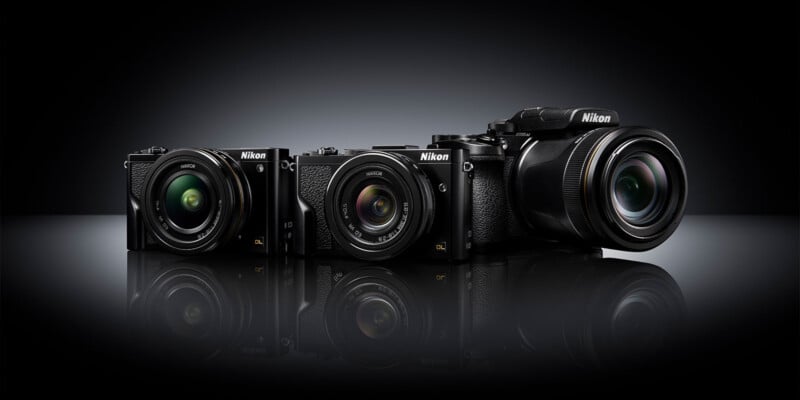 The Nikon DL Series of compact cameras were unveiled in February 2016. By the following February, after numerous delays, Nikon would cancel the project altogether. | Nikon
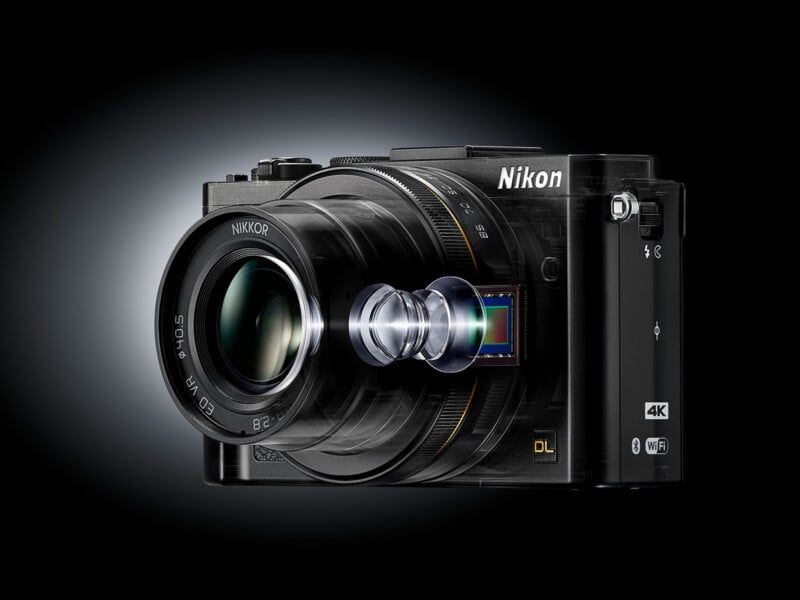
Nikon’s DL Series comprised the DL 18-50mm f/1.8-2.8, the DL 24-85mm f/1.8-2.8, and the DL 24-500mm f/2.8-5.6. Each camera featured the same 20.8-megapixel Nikon CX-format Type 1 BSI CMOS image sensor and Expeed 6A image processor. All three cameras promised continuous shooting at up to 60 frames per second, or 20 frames per second with continuous autofocus.
Each of the three Nikon DL Series cameras, especially the two with the shorter, faster lenses, embraced premium materials and high-end build quality. The two smaller point-and-shoots omitted an EVF, opting instead for an add-on accessory EVF, while the DL 24-500mm f/2.8-5.6 included one.
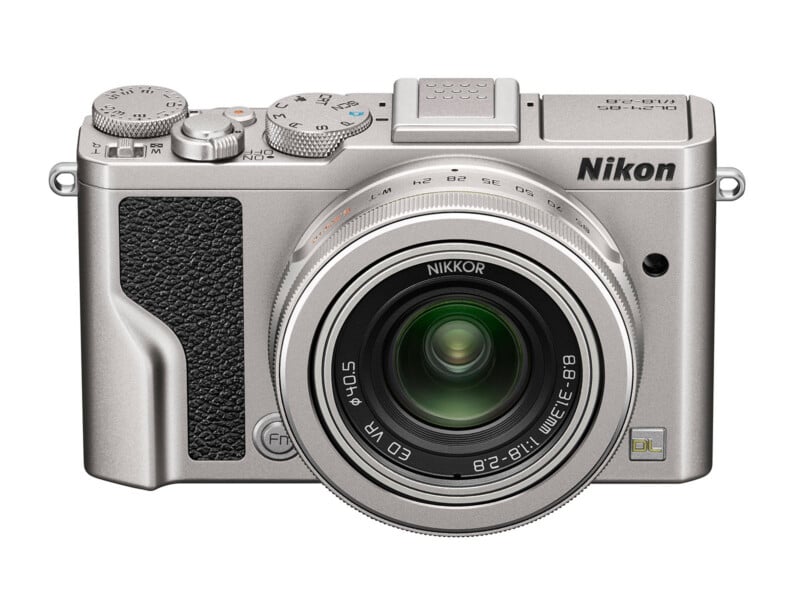 The Nikon DL 18-50 f/1.8-2.8 in its silver finish is a very striking camera.
It is worth briefly shouting out the Nikon DL designer, Kenji Abe, who crafted a truly beautiful series of compact cameras. Unfortunately, they never saw the light of day. By the way, Abe also designed the Nikkor Z 24-50mm, a compact zoom lens released in 2020.
The Nikon DL 18-50, DL 24-85, and DL 24-500 were expected to launch just a few months after their reveal for $850, $650, and $1,000, respectively.
Obviously that never happened.
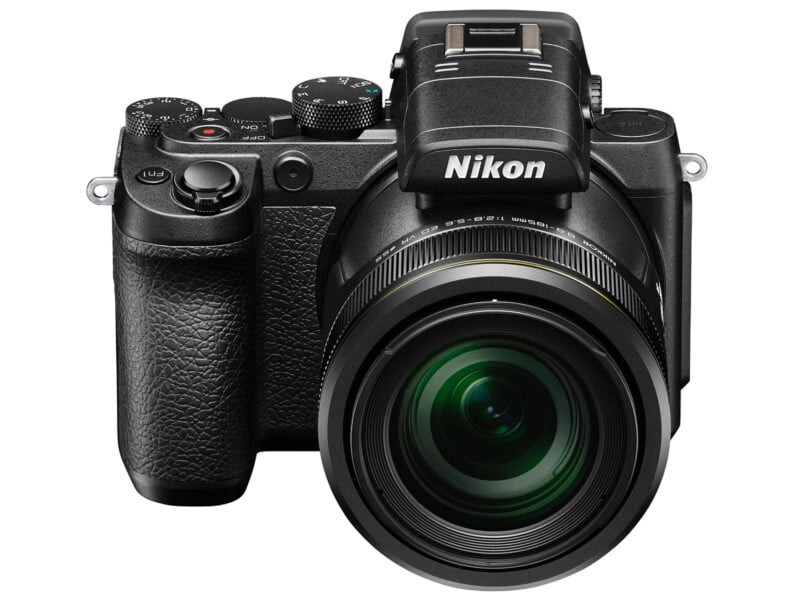 Even the chunky Nikon DL 24-500mm f/2.8-5.6 looked good.
Why the Nikon DL Series Died Before it Ever Truly Lived
The timing of the Nikon DL’s arrival could hardly have been worse. Less than one year after it unveiled its three debut DL cameras and after numerous delays, Nikon canceled them.
As CIPA’s 2016 data shows, nearly 12.6 million cameras with built-in lenses were shipped that year. That might sound like a lot, as that’s even more than the total number of cameras shipped last year, but it is about one-tenth the total number of cameras with built-in lenses that were shipped in 2010.
The compact camera market collapsed right around the same time Nikon unveiled its trio of DL Series cameras. The camera industry in general was really going through it right as Nikon unveiled its next big thing.
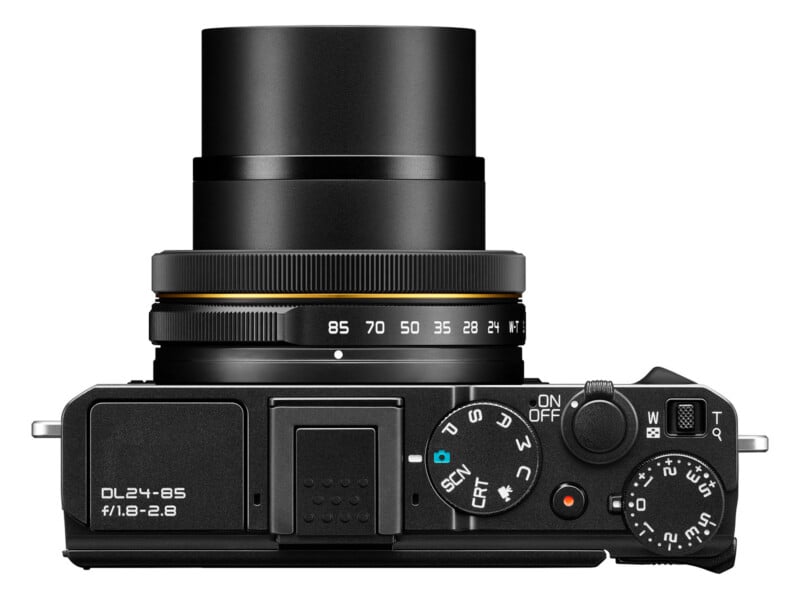 Nikon DL 24-85 f/1.8-2.8
While the bottoming-out compact camera market was a problem for the Nikon DL cameras specifically, another huge problem Nikon faced was that it was hemorrhaging money.
Sure, Nikon just lost a record amount of money last fiscal year, but that’s nothing compared to the dire financial straits Nikon was facing a decade ago. Everything was going wrong at the same time, and prospects looked grim.
Taking Nikon at its word, its own struggles are another big reason why it canceled the DL Series. Nikon’s cancellation notice from February 13, 2017, is even still online, which is not the case for the notice it published that same day about company-wide restructuring in the face of “extraordinary [financial] loss.”
“Nikon Corporation announced today that sales of the long-awaited DL series of premium compact camera, the DL18-50 f/1.8-2.8, DL24-85 f/1.8-2.8, and DL24-500 f/2.8-5.6, will be canceled,” Nikon said on February 13, 2017.
“A June 2016 release was originally planned for the DL series. However, with the identification of issues with the integrated circuit for image processing, release of the three cameras was delayed indeterminately.
“Since then, everyone involved has worked very hard to develop products with which our customers will be satisfied. However, it has been decided that sales of the DL series will be canceled due to concerns regarding their profitability considering the increase in development costs, and the drop in the number of expected sales due to the slow-down of the market.
“We sincerely apologize to all those affected by this decision, especially those customers who waited so long for the cameras to be released, retailers and others whose business will be affected, for the inconvenience this decision may cause.”
Cameras, especially brand-new ones, take years to develop, and I am hard-pressed to believe that Nikon could have picked a worse moment in the digital camera industry’s history to make three new premium compact cameras from scratch.
Was it bad luck or bad planning? It’s difficult to say, and it doesn’t necessarily matter very much.
The KeyMission Factor
I’d be remiss if I didn’t mention here that later in 2016, Nikon unveiled its full slate of KeyMission series action cameras. A big reason so many people today have forgotten about the failure of the Nikon DL Series is the even larger failure of the KeyMission series.
However, unlike the Nikon DL cameras, the KeyMission action cameras actually hit the market and promptly flopped.
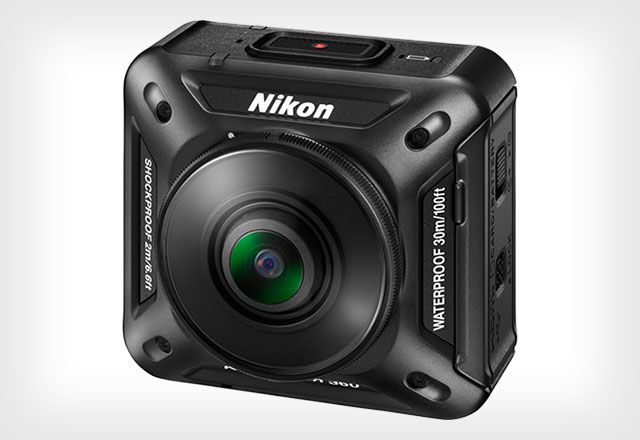 Nikon KeyMission 360 | Nikon
In 2024, writing about how Nikon had found its way back to profitability, I described the KeyMission cameras as Nikon’s “worst misstep of the 21st century.” I stand by that, and the colossal failure of KeyMission surely overshadowed the DL Series.
Less than three years after Nikon made its big KeyMission splash, the series was kaput. Even sooner than that, though, Nikon seemed keen to forget it ever happened. In its 2017 annual financial report, KeyMission was barely a footnote. An active, still-in-production camera series relegated to the margins just a year after it arrived. Oof.
Maybe the Time Is Right to Try Again
While the compact camera market has not come anywhere close to reaching the heights of its popularity again, there is no question that compact cameras are finding success today that would have seemed impossible even just five years ago.
Photographers are buying ultra-cheap and premium compact cameras alike in big numbers right now, and have been for a few years now.
There are the obvious smash hits like the Fujifilm X100V and X100VI, the latter of which remains hard to find in stock nearly two and a half years after its launch, and the Ricoh GR Series. But even very expensive cameras like the Leica Q3 models are selling well.
On the much lower end of the scale, Kodak-branded PixPro models are selling like hot cakes. The Kodak PixPro FZ55 was the best-selling digital camera of 2025 at Map Camera in Japan, for example. It’s not the exception to the rule, either. Compact cameras are very hot right now.
Would Nikon try again? Should Nikon try again? There are rumblings Nikon is contemplating a DL Series resurrection, prioritizing a premium build and fast, stacked Type 1 image sensor.
I would entirely understand if Nikon wants to be very conservative with any meaningful investment in the compact camera space. Nikon wouldn’t be the only one. Nikon’s financial situation is not exactly incredible right now, and the company has its hands full trying to sell Nikon Z-series mirrorless cameras and expand its cinema portfolio.
Those are great reasons for Nikon not to try its DL experiment again, not to mention the fact that the first attempt went so horribly, terribly wrong.
But there are also compelling reasons why Nikon might want to take another swing.
 The Nikon DL Series cameras had great designs and craftsmanship
The company’s vintage-inspired Zf and Zfc cameras have performed very well by leveraging Nikon’s rich heritage with relatively tame specifications. A compact, all-in-one camera with those same vibes could absolutely find an audience.
Nikon’s competitors have shown for years that there is still money to be made in the compact camera space, and you could just as easily use Nikon’s current financial situation as a reason why it should release a new compact camera, rather than a reason not to. Nikon needs money. Fujifilm and Ricoh are making it hand over fist by selling premium compact cameras that cost upwards of $2,000.
Nikon doesn’t even necessarily need to target that APS-C segment, either. There’s a real dearth of new premium, high-quality compact point-and-shoot cameras with smaller sensors.
Sony hasn’t released a new RX100 model since the RX100 VII in 2019. Canon’s PowerShot G7X Mark III, which continues to sell in absurd quantities, arrived that same year.
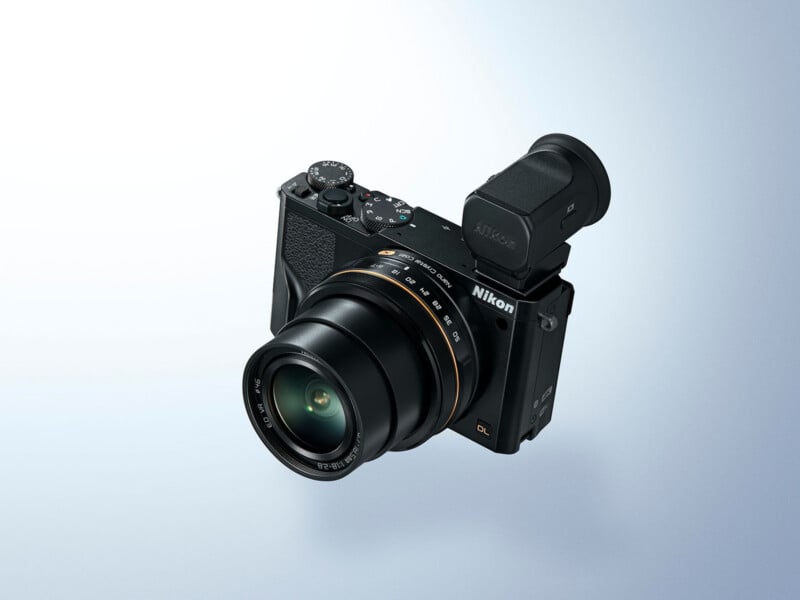 Nikon DL 18-50 f/1.8-2.8 with its optional EVF
Frankly, at that time, Canon and Sony alike were effectively trying to extricate themselves from the compact camera space, having witnessed the industry’s near-complete collapse. Now each company is trying to figure out how to get back in, and whether it’s worth it.
Perhaps Nikon could beat both to the punch with a new DL camera that combines a fast lens (think a 24-100mm f/2-2.8 type zoom), a vintage-inspired design, and premium materials for around $1,000. A camera with modern photo and video features, class-leading performance, and Nikon’s rich heritage could truly be something special. And if Nikon could implement an EVF, even if it’s a detachable one like Nikon was going to do with its DL cameras, that would be excellent. And bring back Kenji Abe to design it.
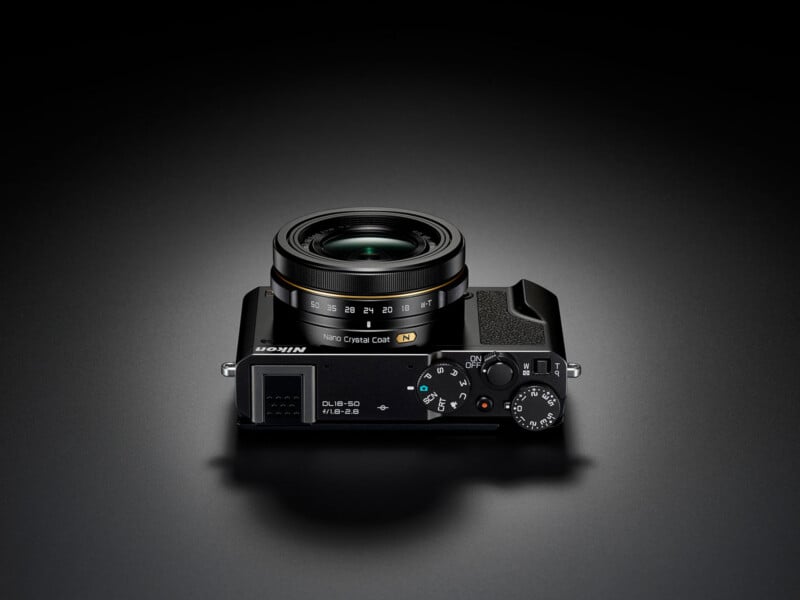 Kenji Abe crushed it with the Nikon DL designs
When the original Nikon DL Series models were announced and then subsequently canceled, Nikon was attempting to enter a crowded, collapsing market. Now the market is growing again, and there are far fewer players vying for a piece of the pie.
Nikon, the time to try again is now. The Nikon DL Series deserves a happier ending than the one it got.
Image creditsNikon. Header image created using an asset licensed via Depositphotos.com.





 English (US) ·