
 Image via HBO

Published May 9, 2026, 9:08 PM EDT
Jeremy has more than 2500 published articles on Collider to his name, and has been writing for the site since February 2022. He's an omnivore when it comes to his movie-watching diet, so will gladly watch and write about almost anything, from old Godzilla films to gangster flicks to samurai movies to classic musicals to the French New Wave to the MCU... well, maybe not the Disney+ shows.
His favorite directors include Martin Scorsese, Sergio Leone, Akira Kurosawa, Quentin Tarantino, Werner Herzog, John Woo, Bob Fosse, Fritz Lang, Guillermo del Toro, and Yoji Yamada. He's also very proud of the fact that he's seen every single Nicolas Cage movie released before 2022, even though doing so often felt like a tremendous waste of time. He's plagued by the question of whether or not The Room is genuinely terrible or some kind of accidental masterpiece, and has been for more than 12 years (and a similar number of viewings).
When he's not writing lists - and the occasional feature article - for Collider, he also likes to upload film reviews to his Letterboxd profile (username: Jeremy Urquhart) and Instagram account.
He has achieved his 2025 goal of reading all 13,467 novels written by Stephen King, and plans to spend the next year or two getting through the author's 82,756 short stories and 105,433 novellas.
Sign in to your Collider account
Since television is a way to tell an ongoing story across dozens – or even hundreds – of episodes, and across multiple years, it's possible to find certain shows that ended up being great, but took some time to find their footing. You could argue Better Call Saul started off good, but took a while to become great, and if you go into sitcom territory, you can find tons of shows where the first season was one of the weaker – or even weakest – ones (like Seinfeld, The Office, and arguably The Simpsons).
But to stick to the drama side of things, here are some shows that inspired confidence right out of the gate. Even more specifically than great pilots, these shows all had great opening scenes, which means that some opening episodes that end with a bang – like The Shield’s – might not necessarily be mentioned here. If a show had an instantly great hook, though, or opened in a way that, in hindsight, feels like a summation of the entire series, then it might well be mentioned below.
'The Wire' (2002–2008)
 Image via HBO
Admittedly, The Wire is one of those shows that gets better as it goes along, mostly since it takes a while to get the hang of what the whole show's going for. So it's less that The Wire took some time to find its footing, and more that it might take you some time to find your footing, because Season 1 throws you into the deep end, and some catch-up is required before things start truly hitting and resonating.
But the opening episode is still strong, and it begins with a conversation that really sets the tone going forward, with McNulty (Dominic West) talking to someone who witnessed a murder, but in a very different way to most crime/police procedurals. It instantly feels grounded, the acting is great straight away, and the dialogue is immediately compelling and easy to appreciate, so you feel confident early on that you're in good hands (and, given how great the rest of the show is, it turns out you really were).
'Game of Thrones' (2011–2019)
 Image via HBO
Say what you want about the final season, but for a while, Game of Thrones was a masterful drama series that also functioned as a fantasy/action/adventure series, albeit being all those things in a very dark way. When it had source material to rely on, it was a great adaptation, and problems started to emerge when Game of Thrones overtook most of the material found in the Song of Ice and Fire series.
But to focus on the good, the opening scene of Game of Thrones sets the stage well, since viewers are introduced to one of the main threats going forward (the White Walkers), and the tone is set by having some characters who feel like they could be important to die straight away. It's also a brutal and eerie prologue, cluing you in to the idea, early on, that this isn't exactly going to be a pleasant or "fun for the whole family" sort of fantasy story, by any means.
'Six Feet Under' (2001–2005)
 Image via HBO
Death is constant throughout Six Feet Under, occasionally for the main characters, but often for side/one-off characters. A death is seen at the start of almost every episode, which is fitting, considering the show's setting is mostly around a funeral home, and the first episode is no exception. Here, though, it's the death of the patriarch of the family who runs the funeral home who dies quite suddenly: Nathaniel Fisher Sr. (Richard Jenkins).
So, everyone else is thrown into chaos, and things shift, and continue to do so throughout Six Feet Under's five largely great seasons. There's stuff here about the absurdity of life and death, a great deal of tragedy, and some dark comedy, too, all of it established right in the opening moments of the show, and the events here really do reverberate and echo for dozens of episodes to come.
'Succession' (2018–2023)
 Image via HBO
Some people will say that Succession starts off a little wonky, but some people are wrong. Right from the jump, the characters here are flawed, pitiful, cringe-inducing, and yet still compelling all at once. The show's unique style of humor is found very early on; it establishes its visual style straight away; the writing (though it perhaps got even better) is already strong; and the impressive music is here, too (albeit a little pervasive; they used it slightly more sparingly later on).
As for the opening of the series premiere? "Celebration" sees Logan (Brian Cox) peeing on a carpet in the middle of the night, and then the next scene is Kendall (Jeremy Strong) being as embarrassing as ever, trying to hype himself up for a meeting by rapping along to music in the back of a car. It's chaotic, strange, uncomfortable, and kind of funny straight away, and these are all constants throughout the rest of Succession.
Collider Exclusive · Taylor Sheridan Universe Quiz
Which Taylor Sheridan
Show Do You Belong In?
Yellowstone · Landman · Tulsa King · Mayor of Kingstown
Four worlds. All of them brutal, complicated, and built on power, loyalty, and the price of survival. Taylor Sheridan doesn't write heroes — he writes people who do what they have to do and live with the cost. Ten questions will reveal which one of his worlds you were made for.
🤠Yellowstone
🛢️Landman
👑Tulsa King
⚖️Mayor of Kingstown
FIND YOUR WORLD →
01
Where does your power come from? In Sheridan's world, everyone has leverage. The question is what kind.
ALand, legacy, and a name that's been feared and respected for generations. BKnowing the deal better than anyone else in the room — and being willing to walk away first. CReputation. I've earned it the hard way, and everyone in the room knows it. DBeing the only person both sides will talk to. That makes me indispensable — and dangerous.
NEXT QUESTION →
02
Who do you put first, no matter what? Loyalty in Sheridan's universe is always absolute — and always costly.
AFamily — blood or chosen. The ranch, the name, the people who carry it with me. BThe company — or whoever's signing the cheques. Loyalty follows the contract. CMy crew. The men who stood with me when it counted — I don't abandon them for anything. DMy community — even when my community is a powder keg and I'm the only thing stopping it from blowing.
NEXT QUESTION →
03
Someone crosses a line. How do you respond? Every Sheridan protagonist has a line. What matters is what happens after it's crossed.
AQuietly, decisively, and in a way that sends a message to everyone watching. BI outmanoeuvre them legally, financially, and politically before they even know I've moved. CDirectly. Old school. You cross me, you hear about it to your face — and then you deal with the consequences. DI absorb it, calculate the fallout, and find the move that keeps the whole system from collapsing.
NEXT QUESTION →
04
Where do you feel most in your element? Sheridan's worlds are as much about place as they are about people.
AWide open land — mountains, sky, silence. Somewhere you can see trouble coming from a mile away. BThe oil fields of West Texas — brutal, lucrative, and indifferent to whoever happens to be standing on top of them. CA mid-size city where the rules haven't quite caught up yet — fertile ground for someone with vision and nerve. DA rust-belt town built around a prison — where everyone's life is shaped by what's inside those walls.
NEXT QUESTION →
05
How do you feel about operating in the grey? Nobody in a Sheridan show has clean hands. The question is how they carry the dirt.
AI do what has to be done to protect what's mine. I'll answer for it eventually — but not today. BGrey is just business. The line moves depending on what's at stake, and I move with it. CI have a code — it's not the law's code, but it's mine, and I don't break it. DI've made peace with it. Keeping the peace requires compromises most people don't have the stomach for.
NEXT QUESTION →
06
What are you actually fighting to hold onto? Every Sheridan character is fighting a war. The real question is what they're defending.
AA way of life that the modern world is doing everything it can to erase. BMy position — and the leverage that comes with being the person everyone needs to close a deal. CRelevance. I've been away, I've been written off — and I'm proving that was a mistake. DWhatever fragile order I've managed to build — because without it, everything burns.
NEXT QUESTION →
07
How do you lead? Authority in Sheridan's world is never given — it's established, maintained, and constantly tested.
ABy example and force of will. People follow me because they believe in what I'm protecting — and because they know what happens if they don't. BThrough negotiation and leverage. I don't need people to like me — I need them to need me. CBy being the smartest, most experienced person in the room and making sure everyone quietly knows it. DBy being the calm centre of a situation that would spiral without me — and accepting that nobody thanks you for it.
NEXT QUESTION →
08
Someone new arrives and tries to change how things work. Your reaction? Every Sheridan show has an outsider disrupting an established order. Sometimes that outsider is you.
AThey'll learn. Or they won't. Either way, the land was here before them and it'll be here after. BI figure out what they want, what they're worth, and whether they're an asset or a problem — fast. CI was the outsider once. I give them a chance — one — to show they understand respect. DNew players destabilise everything I've built. I assess the threat and manage it before it manages me.
NEXT QUESTION →
09
What has your position cost you? Nobody gets to where these characters are without paying for it. The bill is always personal.
AMy family's peace — maybe their innocence. The ranch demands everything, and I've let it take too much. BRelationships, time, any version of a normal life. The job eats everything that isn't nailed down. CYears. Decades in some cases. Time I can't get back — but I'm not done yet. DMy conscience, mostly. And the ability to ever fully trust anyone on either side of the wall.
NEXT QUESTION →
10
When it's over, what do you want people to say? Sheridan's characters all know the ending is coming. The question is what they leave behind.
AThat I held the line. That the land is still ours and everything I did was worth it. BThat I was the best at what I did and that no deal ever got closed without me at the table. CThat I built something real, somewhere nobody expected it, and I did it on my own terms. DThat I kept the peace when nobody else could — and that the town is still standing because of it.
REVEAL MY SHOW →
Sheridan Has Spoken You Belong In…
The show that claimed the most of your answers is the world you were built for. If two tied, both are shown — you're complicated enough to straddle two Sheridan universes.
🤠 Yellowstone
🛢️ Landman
👑 Tulsa King
⚖️ Mayor of Kingstown
You are a Dutton — or you might as well be. You understand that some things are worth protecting at any cost, and that the modern world's indifference to history, to land, to legacy, is not something you're willing to accept quietly. You lead from the front, you carry your family's weight without complaint, and when someone threatens what's yours, you don't escalate — you finish it. You're not cruel. But you are absolute. In Yellowstone's world, that combination of ferocity and loyalty doesn't make you a villain. It makes you the only thing standing between everything that matters and everyone who wants to take it.
You thrive in the chaos of high-stakes negotiation, where the money is enormous, the margins are thin, and the wrong word in the wrong room can cost everyone everything. You're a fixer — the person called when a situation is already on fire and needs someone with the nerve to walk into it. West Texas oil country rewards exactly what you are: sharp, adaptable, unsentimental, and absolutely clear-eyed about what people want and what they'll do to get it. You're not naive enough to think this world is fair. You're smart enough to be the one deciding who it's fair to.
You are a Dwight Manfredi — someone who has served their time, paid their dues, and arrived somewhere unexpected with nothing but their reputation and their wits. You adapt without losing yourself. You build loyalty through respect rather than fear, though you're not above reminding people that the two aren't mutually exclusive. Tulsa King is for people who are still standing when everyone assumed they'd be finished — who find, in an unfamiliar place, that they're more capable than the world gave them credit for. You don't need a throne. You build one, wherever you happen to land.
You carry the weight of a system that is broken by design, and you do it anyway — because someone has to, and because you're the only one positioned to do it without the whole thing collapsing. Mike McLusky's world is for people who are comfortable operating where there are no good options, only less catastrophic ones. You speak every language: law enforcement, criminal, political, human. That fluency makes you invaluable and it makes you a target. You've made your peace with both. Mayor of Kingstown belongs to people who understand that keeping the peace is not the same as being at peace — and who do the job regardless.
↻ RETAKE THE QUIZ
'Lost' (2004–2010)
Without a doubt, the pilot episode of Lost is one of the all-time greatest. It's cinematic in a way that no network drama had ever really been before then, and honestly, the scope here trumps most of the HBO-level shows that were airing around this time, too. It's a show that's initially about a plane crash on a very strange island, and it kicks off right in the thick of it, with the aftermath of the crash itself.
The opening sequence follows Jack (Matthew Fox), who's the closest thing Lost has to a main character, as he realizes what's happened and does what he can – in typical Jack fashion – to take charge and save people from the wreckage. You get small insights into various other important characters, all before the pilot episode jumps back to cover a little more by way of events leading up to the crash. It's immediately engrossing and intense stuff, and makes Lost exciting straight away. Also, one of the very first shots being mirrored at the very end of the series is neat (if you know, you know).
'Buffy the Vampire Slayer' (1997–2003)
 Image via The WB
Okay, Buffy the Vampire Slayer is a bit of a strange example to include here, since "Welcome to the Hellmouth" is a good opening episode, but maybe not a great one. It does what it needs to when it comes to introducing all the main characters, and you get the kind of humor, campy horror, and character interactions here you can expect going forward… but it's the start of the episode that hints at the greatness to come.
Buffy the Vampire Slayer is a show that's all about subversion and playing with conventions, and so opening with a scene that seems to put a young woman in danger, only to have her actually be the "monster", so to speak, transforming into a vampire and killing her male accomplice? It's Buffy the Vampire Slayer in a nutshell, even if it doesn't feature the titular character straight away (though Darla, played by Julie Benz, is ultimately fairly important for Buffy the Vampire Slayer, and then an even more vital piece of Angel later on).
'The Sopranos' (1999–2007)
 Image via HBO
Unlike some of the other shows mentioned here, The Sopranos doesn't have an episode that entirely sets up the show going forward. There are some oddities here with the soundtrack, for example, and the voiceover/narration, which isn't really a thing going forward. But thematically, The Sopranos lays its cards on the table straight away, and the ever-important dynamic between Tony (James Gandolfini) and his therapist, Dr. Melfi (Lorraine Bracco) is also instantly there.
The opening scene of The Sopranos also feels a little odd with its pacing, making viewers sit in silence with Tony as he waits for his first appointment, and then things bounce around more emotionally when he starts to talk about his fairly strange life, and even stranger personal problems. The Sopranos changes a bit after this, and finds its voice to some extent later on in an even stronger way, but the first episode is still fantastic, and establishes enough – with sufficient confidence – to make you feel like you're in for something pretty great.
'Breaking Bad' (2008–2013)
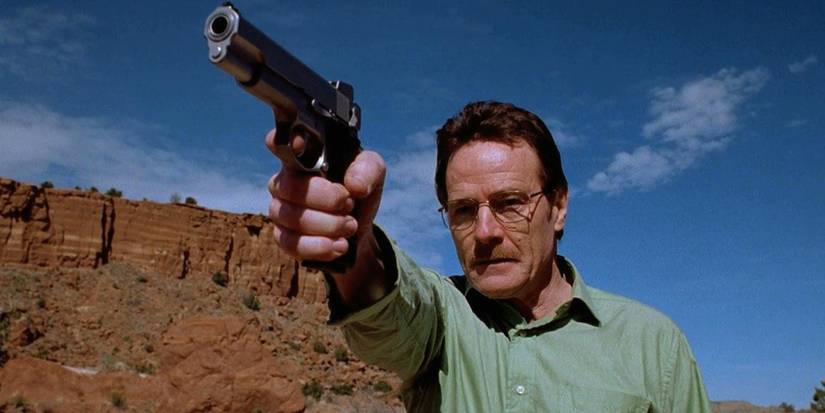 Image via AMC
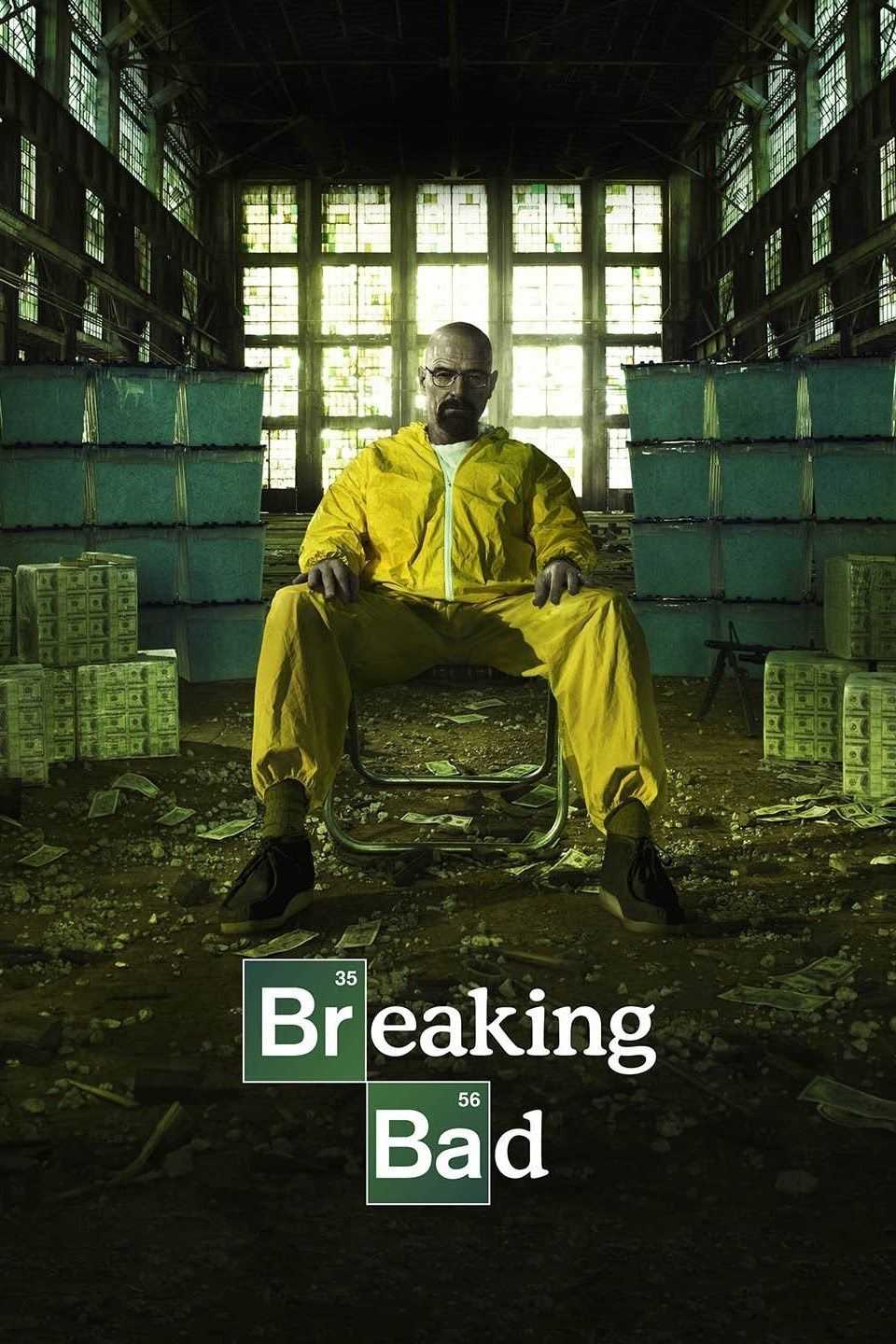
The pilot for Lost might be better overall, but if you're talking about the first 5 or 10 minutes of a TV show, then nothing trumps Breaking Bad. It's instantly chaotic, with Walter White (Bryan Cranston) in a wild situation that one expects the whole first season to build up to. But no, Breaking Bad is fast-paced enough that once it does flash back, it really doesn't take long to cover how things got to where they were.
And the chaos here is controlled, and in hindsight, Walt's whole character – and some of his flaws – are evident immediately. It's impossible to watch the opening scene here without instantly wanting to know what happened before everything went to hell, and doing that on top of setting up a complex main character, establishing a pace, and also introducing a bold visual style, all in minutes? Yep, Breaking Bad starts with the "bangiest" of bangs, and it's remarkable that the show itself somehow gets even better from here.
Breaking Bad
Release Date 2008 - 2013-00-00
Network AMC
Showrunner Vince Gilligan
Directors Vince Gilligan, Michelle Maclaren






 English (US) ·