
 Image via DreamWorks Pictures
Published Jul 19, 2026, 5:55 PM EDT
Marcel is a writer who is passionate about most movies and series. He will watch anything that's good. He is a content manager by day and a videographer when needed. Marcel used to work at a major streaming service based in Asia Pacific as a Content Specialist and was the Distribution Manager for a local movie distribution company.
Sign in to your Collider account
Steven Spielberg's career has spanned decades and he has no signs of slowing down anytime soon. He has already cemented his place as one of cinema's greatest directors, with movies like Jaws, Jurassic Park and Schindler's List. In the 21st century, he is still making great movies that deserve to be watched, discussed and studied. He continues to reinvent himself with an impressive range of movies, from quiet dramas like The Post to action extravaganza like Ready Player One, or even revisiting familiar themes with a new perspective like in Disclosure Day.
In this list, we take a look at his best movies of the 21st century. In these movies Spielberg collaborated with his trusted crew, like cinematographer Janusz Kaminski, editor Michael Kahn, and of course composer John Williams. Together, these movies have collected over 1.7 billion dollars and 24 Oscar nominations, and there are movies that still did not make the cut! From modern science fiction classics to Oscar-winning historical dramas, these are the best of his films that have been released since 2000.
8 'A.I.: Artificial Intelligence' (2001)
 Image via Warner Bros. Pictures
A.I.: Artificial Intelligence follows David (Haley Joel Osment), a childlike android programmed to love unconditionally. Adopted by a grieving couple whose biological son is critically ill, David experiences genuine affection for the first time. When the son recovers, David is abandoned and he goes on a journey to find someone who can make him a real boy.
Originally developed by Stanley Kubrick before Spielberg completed the project following Kubrick's death, AI combines the philosophical complexity of Kubrick with Spielberg's emotional warmth. Made before AI became what it is today, the film examines love and humanity through the eyes of a robot capable of real emotion. Haley Joel Osment delivers an astonishing performance that makes David's innocence and desperation deeply affecting. The film has incredible visual effects and a majestic John Williams score, both of which were nominated for Oscars.
7 'The Terminal' (2004)
 Image via Dreamworks Pictures
The Terminal centers on Viktor Navorski (Tom Hanks), a traveler from the Eastern European country of Krakozhia who becomes stranded inside New York's JFK Airport. As a political coup makes his country unrecognized by the US, Viktor is unable to legally enter the United States or return home, Viktor is forced to live inside the airport indefinitely.
After years of making either blockbusters or Oscar-winning movies, this smaller-scale movie is a reminder of Spielberg's gift for finding extraordinary humanity in ordinary situations. Tom Hanks gives one of the warmest performances of his career by making Viktor endlessly likable through kindness and patience. In its seemingly simple premise, the film is filled with masterful filmmaking, from its production design to acting. Spielberg transforms the airport into a vibrant miniature society where strangers become family, proving that compassion can flourish even in the most impersonal environments. The Terminal is often overlooked in Spielberg's rich filmography but it is one of his most heartfelt movies.
6 'The Adventures of Tintin' (2011)
 Image via Paramount Pictures
Based on Hergé's beloved comic series, The Adventures of Tintin follows young reporter Tintin (Jamie Bell) and his loyal dog Snowy after they purchase a model ship that holds the key to a centuries-old treasure of the Unicorn. Alongside Captain Haddock (Andy Serkis) whose ancestor used to captain the Unicorn, Tintin embarks on a globe-trotting adventure while being chased by Sakharine (Daniel Craig), who also wants the treasure.
Spielberg had wanted to make a Tintin film as far back as the 1980s. He was the only director that Hergé himself thought could do justice to adapting the comics. Collaborating with Peter Jackson, motion-capture animation was decided as the medium to capture the spirit of the books. The result is one of the most energetic and visually inventive animated films of the century. It blends the spirit of classic adventure stories with Spielberg's signature sense of wonder. Every chase sequence is meticulously choreographed, particularly the breathtaking one-shot pursuit through the streets of Bagghar, which remains a masterclass. The long-awaited sequel is confirmed to be moving forward, albeit slowly, as Jackson hinted that the film would be his next feature film.
5 'The Fabelmans' (2022)
 Image via Universal Pictures
Loosely inspired by Spielberg's own childhood, The Fabelmans tells the story of Sammy Fabelman (Gabriel Labelle), a young boy who discovers a lifelong passion for filmmaking while navigating the gradual collapse of his family's seemingly perfect life. His love for cinema becomes both an escape from painful realities and the very tool that forces him to confront them, especially as family secrets and personal heartbreak reshape his understanding of adulthood.
Spielberg brings honesty and vulnerability to The Fabelmans without being too sappy or self-indulgent. Rather than celebrating his legendary career, the film explores the emotional cost of becoming an artist and the sacrifices that often accompany creative ambition wrapped in a perfect coming-of-age story. Newcomer Gabriel LaBelle delivers an understated performance that captures youthful curiosity and heartbreak. He is supported by stellar performances from Michelle Williams and Paul Dano. Spielberg's love for filmmaking exudes from every frame, making it a must-see for every cinephile.
Collider Exclusive · Oscar Best Picture Quiz
Which Oscar Best Picture
Is Your Perfect Movie?
Parasite · Everything Everywhere · Oppenheimer · Birdman · No Country
Five Oscar Best Picture winners. Five completely different visions of what cinema can be — and what it can do to you. One of them is the film that was made for the way your mind works. Ten questions will figure out which one.
🪜Parasite
🌀Everything Everywhere
☢️Oppenheimer
🐦Birdman
🪙No Country for Old Men
FIND YOUR FILM →
01
What kind of film experience do you actually want? The best movies don't just entertain — they leave something behind.
ASomething that pulls the rug out — that makes me think I'm watching one kind of film and then reveals I'm watching another entirely. BSomething overwhelming — funny, sad, absurd, and genuinely moving, all at once. CSomething grand and weighty — a film that makes me feel the full scale of what I'm watching. DSomething formally daring — a film that pushes what cinema can even do. ESomething lean and relentless — pure tension with no wasted frame.
NEXT QUESTION →
02
Which idea grabs you most in a film? Great films are driven by a central obsession. What's yours?
AClass, inequality, and what people are willing to do when desperation meets opportunity. BIdentity, family, and the chaos of trying to hold your life together when everything is falling apart. CGenius, moral responsibility, and the catastrophic weight of a decision you can never take back. DEgo, legacy, and the terror of becoming irrelevant while you're still alive to watch it happen. EEvil, chance, and whether moral order actually exists or if we just tell ourselves it does.
NEXT QUESTION →
03
How do you like your story told? Form is content. The way a story is shaped changes what it means.
AGenre-twisting — I want it to start in one lane and migrate into something completely different. BMaximalist and genre-blending — comedy, action, drama, sci-fi, all in one ride. CEpic and non-linear — cutting between timelines, building a mosaic of cause and consequence. DA single unbroken flow — I want to feel like I'm living it in real time, no cuts to safety. ESpare and precise — every scene doing exactly what it needs to do and nothing more.
NEXT QUESTION →
04
What makes a truly great antagonist? The opposition defines the protagonist. What kind of opposition fascinates you?
AA system — invisible, structural, and almost impossible to fight because it has no single face. BThe self — the ways we sabotage, abandon, and fail the people we love most. CHistory — the unstoppable momentum of events that no single person can stop or redirect. DThe industry — the machinery of culture that chews up talent and spits out irrelevance. EPure, implacable evil — a force so certain of itself it becomes almost philosophical.
NEXT QUESTION →
05
What do you want from a film's ending? The final note is the one that lingers. What do you want it to sound like?
AShock and inevitability — a conclusion that recontextualises everything that came before it. BEarned emotion — I want to cry, laugh, and feel genuinely hopeful, even if the world is a mess. CDevastation and grandeur — an ending that makes me sit in silence for a few minutes after. DAmbiguity — something that leaves enough open that I'm still thinking about it days later. EBleakness — an honest refusal to pretend the world is tidier than it actually is.
NEXT QUESTION →
06
Which setting pulls you in most? Where a film takes place shapes everything — mood, stakes, what's even possible.
AA gleaming modern city with a hidden underside — beauty masking rot, wealth masking desperation. BA collapsing suburban life that opens onto something infinite — the multiverse of a single ordinary person. CThe corridors of power and science at a world-historical turning point — where decisions echo for decades. DThe grimy, alive chaos of New York and Hollywood — fame as both destination and trap. EVast, indifferent landscape — desert and highway where violence arrives without warning or reason.
NEXT QUESTION →
07
What cinematic craft impresses you most? Every great film has a signature — a technical or artistic element that makes it unmistakable.
AProduction design and mise-en-scène — every frame composed to carry meaning beneath the surface. BEditing and tonal control — the ability to move between registers without losing the audience. CScore and sound design — music that becomes inseparable from the dread and awe of what you're watching. DCinematography as performance — the camera not recording events but participating in them. ESilence and restraint — what's left unsaid and unshown doing more work than any dialogue could.
NEXT QUESTION →
08
What kind of main character do you root for? The protagonist is the lens. Who you choose to follow says something about you.
ASomeone smart and resourceful who makes increasingly dangerous decisions under pressure. BSomeone overwhelmed and ordinary who turns out to be capable of something extraordinary. CA brilliant, tortured figure whose gifts and flaws are inseparable from each other. DA self-destructive artist whose ego is both their superpower and their undoing. EA quiet, principled person trying to make sense of a world that has stopped making sense.
NEXT QUESTION →
09
How do you feel about a film that takes its time? Pace is a choice. Some films sprint; others let tension accumulate slowly, deliberately.
AI love a slow build when I know the payoff is going to be seismic — patience for a devastating reveal. BGive me relentless momentum — I want to feel breathless and emotionally spent by the end. CEpic runtime doesn't scare me — if the material demands three hours, give me three hours. DI want it to feel propulsive even when nothing is technically happening — restless energy throughout. EDeliberate and unhurried — I want dread to accumulate in the spaces between the action.
NEXT QUESTION →
10
What do you want to feel walking out of the cinema? The best films leave a mark. What kind of mark do you want?
AUnsettled — like I've just seen something I can't fully explain but can't stop thinking about. BMoved and energised — like the film reminded me what actually matters and gave me something to hold onto. CHumbled — like I've been in the presence of something genuinely important and overwhelming. DExhilarated — like I've just seen cinema doing something it's never quite done before. EHaunted — like a cold, quiet dread that stays with me for days.
REVEAL MY FILM →
The Academy Has Decided Your Perfect Film Is…
Your answers have pointed to one Oscar Best Picture winner above all others. This is the film that was made for the way your mind works.
Parasite
You are drawn to films that operate on multiple levels simultaneously — that begin in one genre and quietly, brilliantly migrate into another. Bong Joon-ho's Parasite is a film about class, desire, and the architecture of inequality that manages to be darkly funny, deeply suspenseful, and genuinely shocking across a single extraordinary running time. Your instinct is for cinema that hides its true intentions until the moment it's ready to reveal them. Parasite is exactly that — a film that rewards close attention and punishes assumptions, right up to its devastating final image.
Everything Everywhere All at Once
You want it all — and this film gives you all of it. The Daniels' Everything Everywhere All at Once is one of the most maximalist films ever made: action comedy, multiverse sci-fi, family drama, existential crisis, and a genuinely earned emotional core that sneaks up on you amid the chaos. You are someone who responds to ambition, who doesn't want cinema to choose between being entertaining and being meaningful. This film refuses that choice entirely. It is overwhelming by design, and its overwhelming nature is precisely the point — because the feeling of being crushed by infinite possibility is exactly what it's about.
Oppenheimer
You are drawn to cinema on a grand scale — films that understand history not as a backdrop but as a force, and that place their characters inside that force and watch what happens. Christopher Nolan's Oppenheimer is a film about the terrifying gap between what we can do and what we should do, told with the full weight of one of the most consequential moments in human history behind it. You want your films to feel important without feeling self-important — to earn their ambition through sheer craft and the gravity of their subject. Oppenheimer does exactly that. It is enormous, complicated, and refuses easy comfort.
Birdman
You are drawn to films that foreground their own construction — that make the how of the filmmaking part of the what it's about. Alejandro González Iñárritu's Birdman, shot to appear as a single continuous take, is cinema examining itself through the cracked mirror of a fading actor's ego. You respond to formal daring, to the feeling that a film is doing something that probably shouldn't be possible. Michael Keaton's performance and Emmanuel Lubezki's restless camera create something genuinely unlike anything else — a film that is simultaneously about creativity, relevance, self-destruction, and the impossibility of ever truly knowing if your work means anything at all.
No Country for Old Men
You are drawn to cinema that trusts silence, that refuses to explain itself, and that treats dread as a form of meaning. The Coen Brothers' No Country for Old Men is a film about the arrival of a new kind of evil — implacable, arbitrary, and utterly indifferent to the moral frameworks we use to make sense of the world. It is one of the most formally controlled films ever made, and its controlled restraint is what makes it so terrifying. You want your films to haunt you, not comfort you. You are not interested in resolution if resolution would be dishonest. No Country for Old Men is honest in a way that most cinema never dares to be.
↻ RETAKE THE QUIZ
4 'Minority Report' (2002)
 Image via 20th Century Studios
Minority Report is set in a world where murders are prevented before they happen through a law enforcement program known as PreCrime, which is powered by the psychic Precogs. Police chief John Anderton (Tom Cruise) is one of the system's best enforcer until the system predicts that he will commit a murder in the near future. Forced to go on a run, Anderton tries to uncover the truth and change his fate.
Spielberg takes Philip K. Dick's science fiction concept and turns it into one of the smartest blockbuster films of the century. The film may be remembered for its dazzling futuristic design, but it doesn't forget about its central themes about free will and surveillance, which remain relevant today. Tom Cruise balances his action chops with his dramatic performances in this film, and he's joined by a strong cast that includes Samantha Morton, Max von Sydow and Colin Farrell. It achieves that rare combination of a blockbuster film that is able to be thought-provoking and thoroughly entertaining. It's undoubtedly one of Spielberg's most thrilling movies.
3 'Munich' (2005)
 Image via Universal Pictures
Munich follows Avner Kaufman (Eric Bana), an Israeli Mossad agent tasked with leading a covert assassination team after the murder of Israeli athletes during the 1972 Munich Olympics. As Avner and his team hunt down individuals believed to be responsible for the attack, each mission becomes increasingly morally complicated.
Often considered one of Spielberg's most mature and politically complex films, Munich operates in the grey by not offering simple heroes or villains. Instead, it examines the endless cycle of revenge and asks difficult questions about justice. The film's refusal to provide easy answers is precisely what makes it so powerful. Eric Bana delivers a remarkably restrained performance as a man whose life spirals down because of his actions. On the filmmaking side, Spielberg unleashed his effectiveness and efficiency to show the urgency and stakes of the story through movements and editing. This is most evidenced in the much-discussed Paris assassination sequence. The film was lauded by critics and was nominated for five Oscars.
2 'West Side Story' (2021)
 Image via 20th Century Studios
Spielberg's adaptation of West Side Story revisits story of Tony (Ansel Elgort), who belongs to the Jets, and Maria (Rachel Zegler), whose brother is a Shark. They fall in love with each other despite the rivalry between the two gangs. Together, they try to overcome their differences and imagine a future together.
Many believed there was little reason to remake one of cinema's classic musicals, but Spielberg proves otherwise by bringing remarkable energy to every scene. His direction transforms the musical numbers into breathtaking visual spectacles. Every frame is just vibrant with color while allowing quieter moments to resonate just as strongly. Rachel Zegler wins a Golden Globe for her role, and Ariana DeBose delivers an Academy Award-winning performance, following Rita Moreno who won in the same role. Spielberg also places greater emphasis on the Puerto Rican community's perspective, making the film feel richer and more authentic. The film is often dubbed as one of the best musicals ever made.
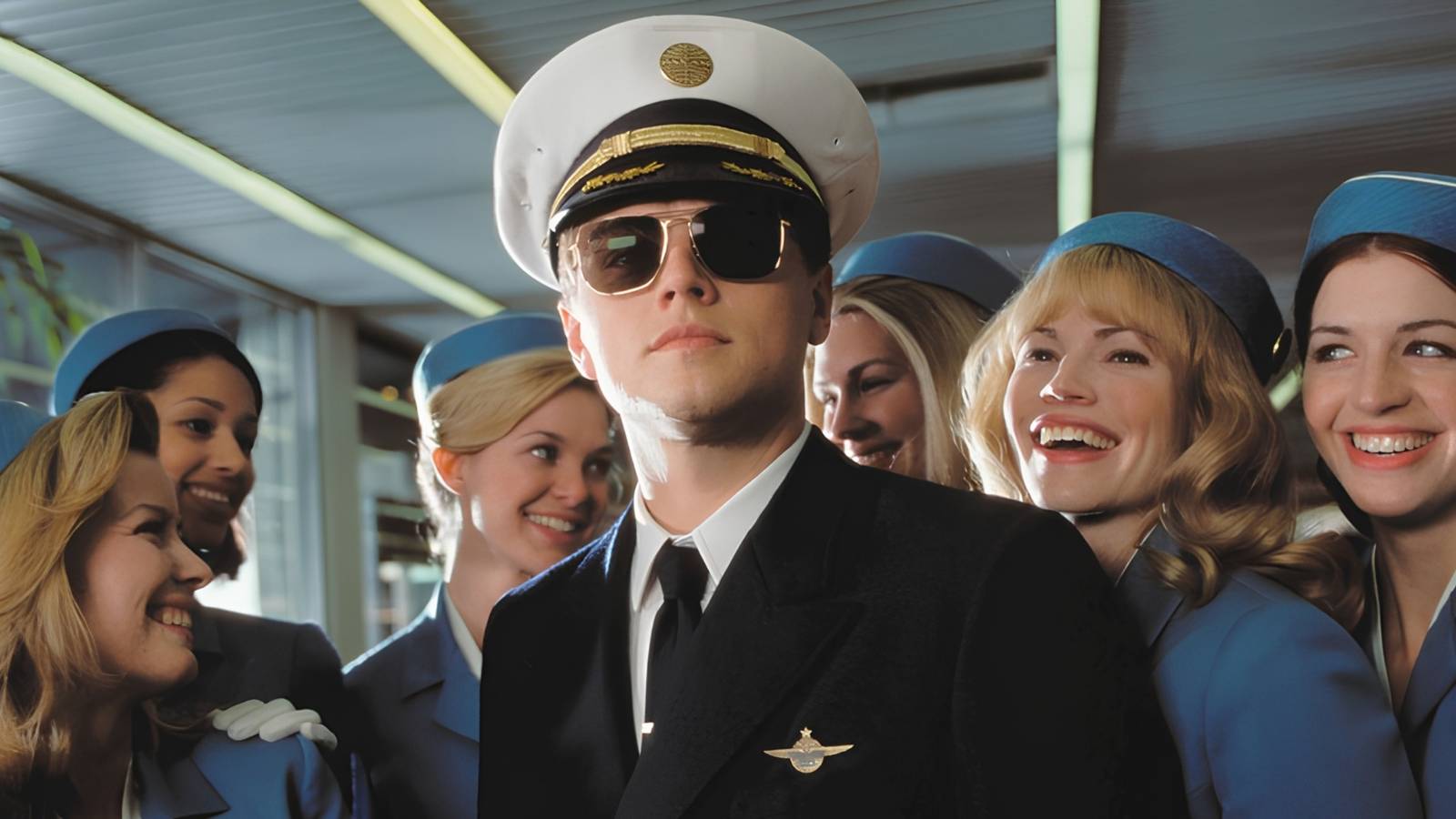
1 'Catch Me If You Can' (2002)
 Image via Dreamworks Pictures
Catch Me If You Can follows Frank Abagnale Jr (Leonardo DiCaprio), a teenage con artist who successfully impersonates a Pan Am pilot, doctor, and lawyer while cashing millions of dollars in forged checks. As Frank effortlessly reinvents himself across America, determined FBI agent Carl Hanratty (Tom Hanks) relentlessly pursues him to bring him to justice.
It may be one of Spielberg's lighter films, but Catch Me If You Can showcases his mastery of balancing entertainment with emotional depth. With Spielberg's direction and a smart screenplay, the film effortlessly blends comedy, crime, drama, and romance without ever losing momentum. It has a stylish 1960s setting, slick pacing, and memorable John Williams score. Leonardo DiCaprio and Tom Hanks deliver two of their most charming performances. Once again, the film feels personal for Spielberg as it deals with family and divorce. In another director's hand, it could just be a fun heist story, but with Spielberg, it becomes a heartfelt coming-of-age story. The film is a success, making more than seven times its budget.

Catch Me If You Can
Release Date December 25, 2002
Runtime 141 Minutes
Writers Frank Abagnale Jr., Stan Redding, Jeff Nathanson






 English (US) ·