
 Image via 20th Century Studios

Published Apr 12, 2026, 5:55 PM EDT
Sign in to your Collider account
People are too casual with action writing and its perception. People talk about action movies like the script is just a delivery system for stunts, gunfire, chases, impact, cool one-liners, maybe a villain speech, maybe some broken glass, and then everyone goes home happy. No. The truly great action movies are written with cruelty. They are engineered. They know exactly when to introduce a rule, exactly when to complicate it, exactly when to trap a character inside the consequence of an earlier choice, and exactly how to keep escalating without ever looking like they are straining. That is writing. Real writing. Ruthless writing.
And when an action movie is perfectly written, you can feel it in your body. Not just because the set pieces hit. Because the set pieces make sense as a story. Because every chase is a problem caused by character. Because every fight changes relationships, stakes, or identity. Because the script does not throw spectacle at weakness. It builds spectacle out of pressure. That is what separates the good from the untouchable. These eight action movies do not all operate in the same key but they’re perfectly written, and I’ve ranked them.
8 ‘Speed’ (1994)
 Image via 20th Century Studios
I will always defend Speed because it understands one of the hardest things in action writing: once you have the premise, you do not relax. You do not congratulate yourself. You do not start coasting on the hook. You keep making that hook worse for the characters in ways that feel immediate, physical, and psychologically credible. “The bus can’t drop below 50” is a machine that keeps generating new decisions. That is why the movie works so beautifully. Jack Traven (Keanu Reeves) gets off the elevator sequence already looking like someone who can solve impossible situations under pressure, which means the film has earned our trust before it hands him something even uglier.
Then it puts Annie Porter (Sandra Bullock) behind the wheel, turns ordinary passengers into a constantly shifting pressure system, and never lets the bus become merely a prop. The bus is the movie’s central dramatic condition. Every turn, every traffic problem, every frightened civilian, every bad idea, every hope of getting off it has to answer to that one rule. That is excellent writing. And what makes the script better than people sometimes admit is that it understands personality under stress. Speed is a perfect example of the kind of action script that looks simple only because it is doing everything right.
7 ‘Hard Boiled’ (1992)
 Image via Golden Princess Film Production
What makes Hard Boiled so special is that for all the chaos, all the gunfire, all the hospital carnage, all the doves and smoke and broken glass, the movie actually has a very clean emotional and structural spine. Tequila (Chow Yun-fat), a cool-guy shell for balletic violence, is driven by loss from the start, and the movie smartly gives that loss a face immediately. His partner dies in the tea house shootout, and from that point on the whole film runs on a specific anger rather than general cop-movie momentum. That matters, because John Woo’s action only really becomes transcendent when it is attached to emotional pressure. Tequila and Alan (Tony Leung Chiu-wai), a reckless cop and the other is an undercover operative buried too deep, are so compelling on-screen.
Alan cannot keep living in disguise without rotting from it. Tequila cannot keep blasting his way through the conspiracy without eventually needing someone who understands what is happening from the inside. Their alliance — the movie earns it through mutual damage. And the hospital section works because it is not just escalation for the sake of escalation. There are babies in the ward. There are hostages. There are split loyalties. There is a villain network that has turned a place of care into a kill box. Once the movie reaches that phase, every corridor has story inside it. Every bullet changes the tactical and emotional geometry. That is why Hard Boiled is not just brilliantly directed but written with a ferocious understanding of how to keep movement tied to stakes.
6 ‘Die Hard’ (1988)
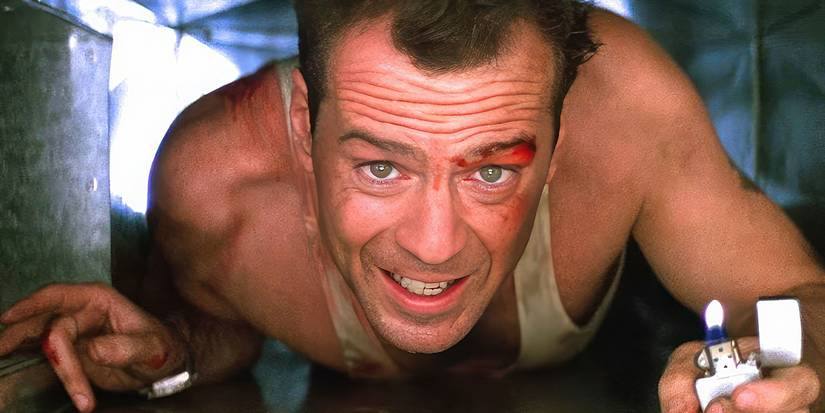 Image via 20th Century Studios
There is almost no part of Die Hard that is not doing useful work. That is what makes it so satisfying. It is funny, but never just pausing for jokes. It is building character, tension, vulnerability, or reversal almost every minute. The film follows John McClane (Bruce Willis) arrives in Los Angeles already carrying something messier than generic action-hero cool: marital strain, ego, discomfort, outsider energy, and just enough ordinary human irritation to make him relatable before he ever steps barefoot onto broken glass.
The reason the script is so good is that it keeps turning McClane’s weaknesses into structural assets. He is not a superman. He is one guy in a building, improvising, bleeding, lying, listening, baiting, surviving. The bare feet matter. The lack of shoes matters. The radio relationship with Powell matters. Holly Gennaro McClane (Bonnie Bedelia) being competent matters. Ellis (Hart Bochner) being a disaster matters. Every one of these things becomes pressure later. Even Hans Gruber (Alan Rickman) pretending to be a hostage works because the movie has already trained us to enjoy McClane’s instincts enough that when those instincts are tested, we feel the stakes immediately. And Hans Gruber is such a perfectly written villain. He is there to think. He adjusts. He recalculates. He has taste, contempt, and tactical patience. That gives the movie its real spark.
5 ‘Raiders of the Lost Ark’ (1981)
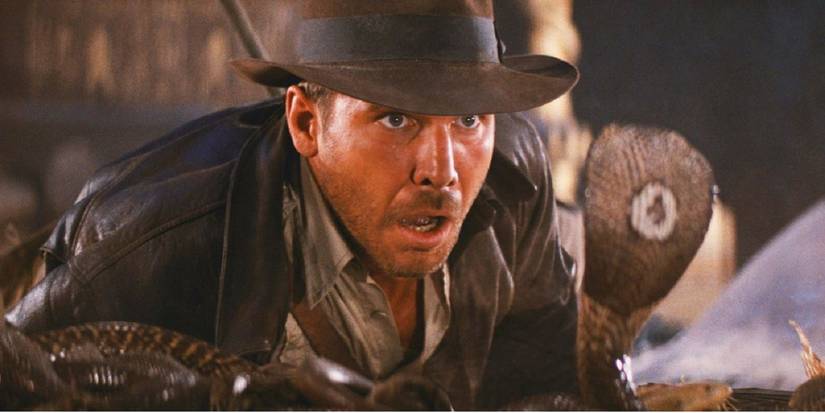 Image via Paramount Pictures
This movie is so effortlessly alive that people sometimes miss how tightly written it actually is. Raiders of the Lost Ark gives us Indiana Jones (Harrison Ford), one of the great adventure heroes. He is competent without being invulnerable, knowledgeable without being smugly all-knowing, and constantly just a half-step away from being flattened, shot, trapped, poisoned, or spiritually outmatched by the thing he is chasing. That balance is all over the writing.
What makes Raiders of the Lost Ark perfect on the page is how well it keeps turning pursuit into complication. Indy gets the idol, immediately loses it. He gets Marion Ravenwood (Karen Allen) back into the story, and now the movie has emotional friction as well as adventure momentum. He gets the medallion, but the Nazis are always close enough that success never feels stable. Cairo becomes a chain reaction of discoveries and failures. The truck chase is incredible not just because of the stunt work, but because the script has fully earned how much that Ark matters by then. You know what it means if it gets away. You know what it means if Indy fails. And then there is the supernatural restraint. This is one of the smartest things the movie does. Then there’s Belloq (Paul Freeman), who is written beautifully as the mirror Indy refuses to be, and that mirror makes the final warning to keep your eyes shut feel like more than a plot instruction. It feels like the moral endpoint of the whole chase.
4 ‘Terminator 2: Judgment Day’ (1991)
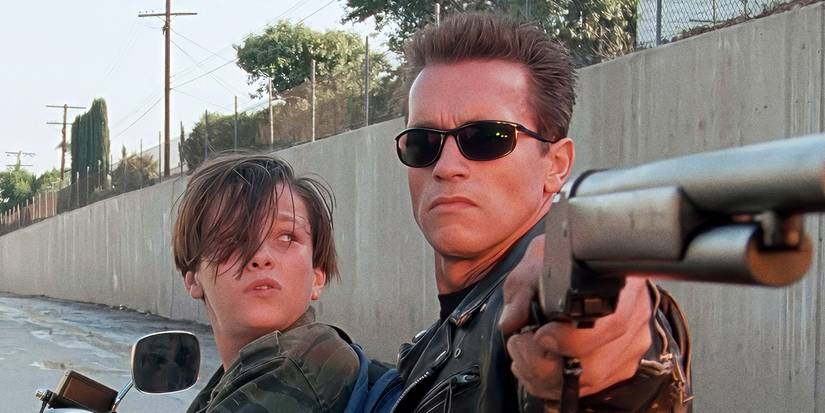 Image via Tri-Star Pictures
A lesser sequel would have simply scaled up the original. Bigger explosions, more guns, same fear. Terminator 2: Judgment Day does something much smarter. It reverses the emotional alignment of the first movie and then builds an entirely new story out of that reversal. The Terminator (Arnold Schwarzenegger) is now protector instead of pursuer. Sarah Connor (Linda Hamilton) is no longer innocent prey but a trauma-shaped warrior. John Connor (Edward Furlong) is no longer theoretical future hope but an actual kid with attitude, loneliness, and real emotional influence over the machine meant to guard him.
That is writing. That is not just good sequel logic but a total redesign of the emotional architecture. The early reveal in the hallway is one of the great script decisions in blockbuster history. The movie knows audience memory is part of its toolset. It lets us see the Terminator and immediately remember terror from the first movie, then yanks that expectation sideways. Suddenly the clean-cut cop is the monster, and the machine we feared is saying “Get down.” That switch powers the entire film. From there, every action beat grows out of conflicting priorities: survival, preventing Judgment Day, dealing with Sarah’s instability, protecting John, and confronting the possibility that history may not be fixed after all. And what I love most is how much character work the script embeds in the action. John teaching the Terminator slang, forbidding him to kill, trying to give him some version of human ethical shape — all of it is epic.
3 ‘The Matrix’ (1999)
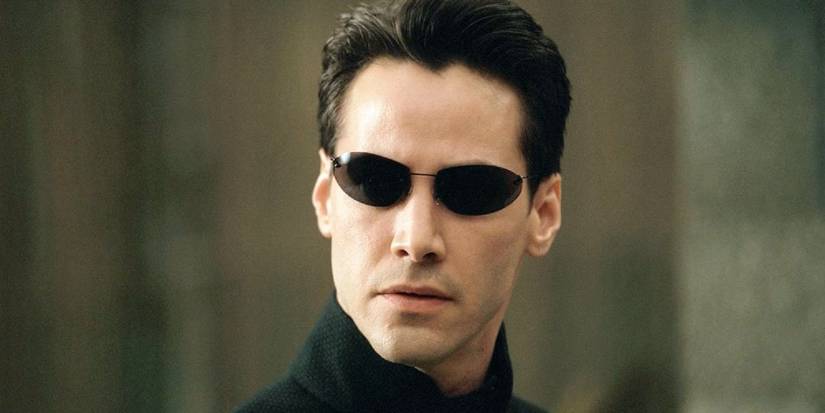 Image via Warner Bros.
What makes The Matrix feel perfect is that its writing does two impossible things at once. It makes the world bigger, the protagonist smaller and evergreen to fit every era. It was done in 1999 but is more relevant today. The film follows Neo (Keanu Reeves), a man with a vague sense that reality is wrong, and the script lets that discomfort build just enough before Morpheus (Laurence Fishburne) gives it language. Once the red pill is taken, the movie could have drowned in exposition.
Instead it turns exposition into propulsion because every answer creates a new existential humiliation. Reality is fake. Your body has been used. Your choices may have been managed. Your sense of self is incomplete. That is thrilling because it is destabilizing. Morpheus, Trinity (Carrie-Anne Moss), Cypher (Joe Pantoliano), Agent Smith (Hugo Weaving), each of them embodies a different relationship to the truth. Belief, loyalty, betrayal, domination. And then the script does the thing that makes it immortal: it attaches transcendence to character clarity. The Matrix is a sub-pop-culture for a reason.
2 ‘Mad Max: Fury Road’ (2015)
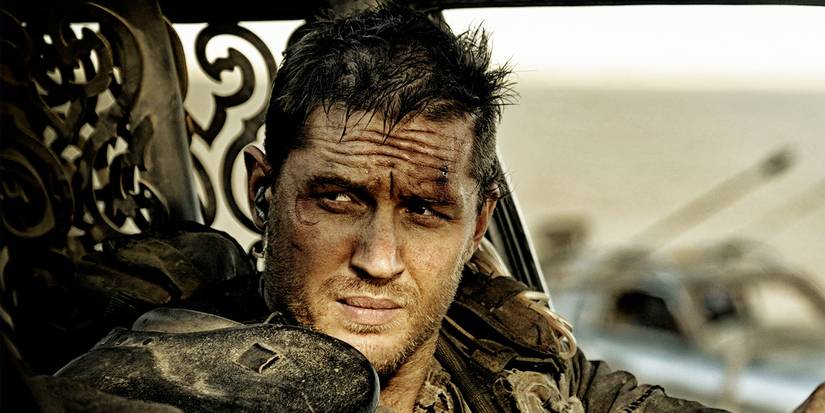 Image via Warner Bros. Pictures
Everyone remembers the movement, the vehicles, the sand, the speed, the insane visual invention in this film. But what makes Mad Max: Fury Road perfect is that every burst of motion is rooted in a clean desire line. Furiosa (Charlize Theron) wants to get the wives out. Immortan Joe (Hugh Keays-Byrne) wants his property back. Max Rockatansky (Tom Hardy) wants survival first, then eventually something larger. Nux (Nicholas Hoult) wants meaning. The wives want personhood. That is unbelievably strong dramatic architecture.
The genius move is making the movie reveal its emotional depth while it is already in motion. Furiosa is introduced through action, defection, and competence. Joe is introduced through ritual, power, and ownership. Max is a damaged drifter whose humanity keeps returning despite his own resistance. The script does not slow down to establish these people. It does the harder thing and establishes them through choices under pressure. And then it turns. That is the miracle. Suddenly the whole second half is not escape. It is reclamation. That is why the ending hits as hard as it does.
1 ‘The Dark Knight’ (2008)
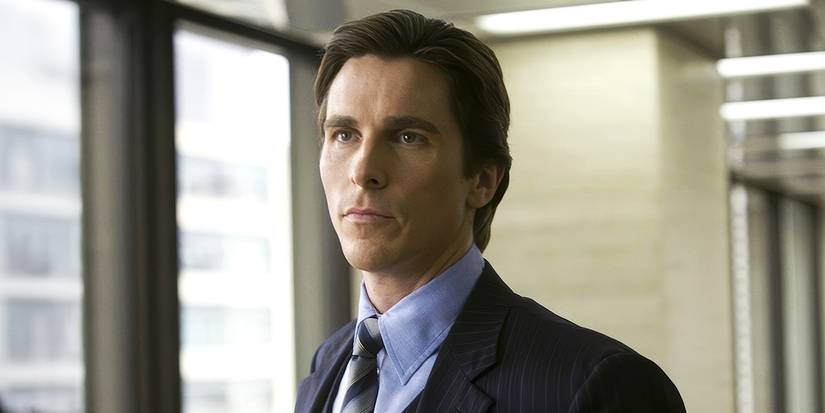 Image via Warner Bros.
This is number one because The Dark Knight is doing almost everything at once and somehow dropping nothing. It is a crime saga, a civic panic thriller, a moral pressure cooker, a superhero film that keeps testing the value of heroism, and an action movie where nearly every major set piece changes the ethical landscape instead of merely raising the noise level. That is absurdly difficult to pull off, and The Dark Knight does it with a script so tight that people sometimes take its clarity for granted. Bruce Wayne (Christian Bale) is written beautifully here because the film never lets Batman stay a pure symbol. He is useful, but his usefulness is creating consequences.
Escalation is the central idea of the movie, and the script keeps proving it from every angle. Batman’s existence changes criminal ambition. The Joker (Heath Ledger) arrives as the answer to a city already destabilized by masked intervention. Harvey Dent (Aaron Eckhart) becomes the respectable public face Gotham desperately wants so Batman can maybe stop being necessary. That triangle is the whole movie. Batman, Joker, Dent. Vigilante force, chaos force, civic hope. Every plot development keeps rebalancing those three energies. And this is where the writing becomes almost cruel in how well it works. It is one of the most perfectly written action movies ever made.
Collider Exclusive · Oscar Best Picture Quiz
Which Oscar Best Picture
Is Your Perfect Movie?
Parasite · Everything Everywhere · Oppenheimer · Birdman · No Country
Five Oscar Best Picture winners. Five completely different visions of what cinema can be — and what it can do to you. One of them is the film that was made for the way your mind works. Ten questions will figure out which one.
🪜Parasite
🌀Everything Everywhere
☢️Oppenheimer
🐦Birdman
🪙No Country for Old Men
FIND YOUR FILM →
01
What kind of film experience do you actually want? The best movies don't just entertain — they leave something behind.
ASomething that pulls the rug out — that makes me think I'm watching one kind of film and then reveals I'm watching another entirely. BSomething overwhelming — funny, sad, absurd, and genuinely moving, all at once. CSomething grand and weighty — a film that makes me feel the full scale of what I'm watching. DSomething formally daring — a film that pushes what cinema can even do. ESomething lean and relentless — pure tension with no wasted frame.
NEXT QUESTION →
02
Which idea grabs you most in a film? Great films are driven by a central obsession. What's yours?
AClass, inequality, and what people are willing to do when desperation meets opportunity. BIdentity, family, and the chaos of trying to hold your life together when everything is falling apart. CGenius, moral responsibility, and the catastrophic weight of a decision you can never take back. DEgo, legacy, and the terror of becoming irrelevant while you're still alive to watch it happen. EEvil, chance, and whether moral order actually exists or if we just tell ourselves it does.
NEXT QUESTION →
03
How do you like your story told? Form is content. The way a story is shaped changes what it means.
AGenre-twisting — I want it to start in one lane and migrate into something completely different. BMaximalist and genre-blending — comedy, action, drama, sci-fi, all in one ride. CEpic and non-linear — cutting between timelines, building a mosaic of cause and consequence. DA single unbroken flow — I want to feel like I'm living it in real time, no cuts to safety. ESpare and precise — every scene doing exactly what it needs to do and nothing more.
NEXT QUESTION →
04
What makes a truly great antagonist? The opposition defines the protagonist. What kind of opposition fascinates you?
AA system — invisible, structural, and almost impossible to fight because it has no single face. BThe self — the ways we sabotage, abandon, and fail the people we love most. CHistory — the unstoppable momentum of events that no single person can stop or redirect. DThe industry — the machinery of culture that chews up talent and spits out irrelevance. EPure, implacable evil — a force so certain of itself it becomes almost philosophical.
NEXT QUESTION →
05
What do you want from a film's ending? The final note is the one that lingers. What do you want it to sound like?
AShock and inevitability — a conclusion that recontextualises everything that came before it. BEarned emotion — I want to cry, laugh, and feel genuinely hopeful, even if the world is a mess. CDevastation and grandeur — an ending that makes me sit in silence for a few minutes after. DAmbiguity — something that leaves enough open that I'm still thinking about it days later. EBleakness — an honest refusal to pretend the world is tidier than it actually is.
NEXT QUESTION →
06
Which setting pulls you in most? Where a film takes place shapes everything — mood, stakes, what's even possible.
AA gleaming modern city with a hidden underside — beauty masking rot, wealth masking desperation. BA collapsing suburban life that opens onto something infinite — the multiverse of a single ordinary person. CThe corridors of power and science at a world-historical turning point — where decisions echo for decades. DThe grimy, alive chaos of New York and Hollywood — fame as both destination and trap. EVast, indifferent landscape — desert and highway where violence arrives without warning or reason.
NEXT QUESTION →
07
What cinematic craft impresses you most? Every great film has a signature — a technical or artistic element that makes it unmistakable.
AProduction design and mise-en-scène — every frame composed to carry meaning beneath the surface. BEditing and tonal control — the ability to move between registers without losing the audience. CScore and sound design — music that becomes inseparable from the dread and awe of what you're watching. DCinematography as performance — the camera not recording events but participating in them. ESilence and restraint — what's left unsaid and unshown doing more work than any dialogue could.
NEXT QUESTION →
08
What kind of main character do you root for? The protagonist is the lens. Who you choose to follow says something about you.
ASomeone smart and resourceful who makes increasingly dangerous decisions under pressure. BSomeone overwhelmed and ordinary who turns out to be capable of something extraordinary. CA brilliant, tortured figure whose gifts and flaws are inseparable from each other. DA self-destructive artist whose ego is both their superpower and their undoing. EA quiet, principled person trying to make sense of a world that has stopped making sense.
NEXT QUESTION →
09
How do you feel about a film that takes its time? Pace is a choice. Some films sprint; others let tension accumulate slowly, deliberately.
AI love a slow build when I know the payoff is going to be seismic — patience for a devastating reveal. BGive me relentless momentum — I want to feel breathless and emotionally spent by the end. CEpic runtime doesn't scare me — if the material demands three hours, give me three hours. DI want it to feel propulsive even when nothing is technically happening — restless energy throughout. EDeliberate and unhurried — I want dread to accumulate in the spaces between the action.
NEXT QUESTION →
10
What do you want to feel walking out of the cinema? The best films leave a mark. What kind of mark do you want?
AUnsettled — like I've just seen something I can't fully explain but can't stop thinking about. BMoved and energised — like the film reminded me what actually matters and gave me something to hold onto. CHumbled — like I've been in the presence of something genuinely important and overwhelming. DExhilarated — like I've just seen cinema doing something it's never quite done before. EHaunted — like a cold, quiet dread that stays with me for days.
REVEAL MY FILM →
The Academy Has Decided Your Perfect Film Is…
Your answers have pointed to one Oscar Best Picture winner above all others. This is the film that was made for the way your mind works.
Parasite
You are drawn to films that operate on multiple levels simultaneously — that begin in one genre and quietly, brilliantly migrate into another. Bong Joon-ho's Parasite is a film about class, desire, and the architecture of inequality that manages to be darkly funny, deeply suspenseful, and genuinely shocking across a single extraordinary running time. Your instinct is for cinema that hides its true intentions until the moment it's ready to reveal them. Parasite is exactly that — a film that rewards close attention and punishes assumptions, right up to its devastating final image.
Everything Everywhere All at Once
You want it all — and this film gives you all of it. The Daniels' Everything Everywhere All at Once is one of the most maximalist films ever made: action comedy, multiverse sci-fi, family drama, existential crisis, and a genuinely earned emotional core that sneaks up on you amid the chaos. You are someone who responds to ambition, who doesn't want cinema to choose between being entertaining and being meaningful. This film refuses that choice entirely. It is overwhelming by design, and its overwhelming nature is precisely the point — because the feeling of being crushed by infinite possibility is exactly what it's about.
Oppenheimer
You are drawn to cinema on a grand scale — films that understand history not as a backdrop but as a force, and that place their characters inside that force and watch what happens. Christopher Nolan's Oppenheimer is a film about the terrifying gap between what we can do and what we should do, told with the full weight of one of the most consequential moments in human history behind it. You want your films to feel important without feeling self-important — to earn their ambition through sheer craft and the gravity of their subject. Oppenheimer does exactly that. It is enormous, complicated, and refuses easy comfort.
Birdman
You are drawn to films that foreground their own construction — that make the how of the filmmaking part of the what it's about. Alejandro González Iñárritu's Birdman, shot to appear as a single continuous take, is cinema examining itself through the cracked mirror of a fading actor's ego. You respond to formal daring, to the feeling that a film is doing something that probably shouldn't be possible. Michael Keaton's performance and Emmanuel Lubezki's restless camera create something genuinely unlike anything else — a film that is simultaneously about creativity, relevance, self-destruction, and the impossibility of ever truly knowing if your work means anything at all.
No Country for Old Men
You are drawn to cinema that trusts silence, that refuses to explain itself, and that treats dread as a form of meaning. The Coen Brothers' No Country for Old Men is a film about the arrival of a new kind of evil — implacable, arbitrary, and utterly indifferent to the moral frameworks we use to make sense of the world. It is one of the most formally controlled films ever made, and its controlled restraint is what makes it so terrifying. You want your films to haunt you, not comfort you. You are not interested in resolution if resolution would be dishonest. No Country for Old Men is honest in a way that most cinema never dares to be.
↻ RETAKE THE QUIZ





 English (US) ·