
 Image via HarperCollins

Published Oct 22, 2026, 12:05 AM EDT
David is a Senior Editor at Collider focused primarily on Lists. His professional journey began in the mid-2010s as a Marketing specialist before embarking on his writing career in the 2020s. At Collider, David started as a Senior Writer in late 2022 and has been a Senior Editor since mid-2023. He is in charge of ideating compelling and engaging List articles by working closely with writers, both Senior and Junior, as well as other editors. Occasionally, David also reviews movies and TV shows and writes episode recaps. Currently, David is also writing his second novel, a psychological horror satire that will, hopefully, be picked up for publication sometime next year.
Sign in to your Collider account
72 years after its debut, J. R. R. Tolkien's The Lord of the Rings is still the greatest fantasy epic ever written. The book, which has come to represent the entire genre and become a clear before-and-after in its history, remains a beloved and universally acclaimed work that has inspired countless artists and established the blueprint followed, imitated, and subverted by nearly everyone with an interest in fantasy.
Many of the book's quotes have become standards of the genre, largely the grandest and most epic ones. However, the true heart of the saga lies in one of Aragorn's best quotes, spoken in The Fellowship of the Ring and capturing the wistful hope that characterizes Tolkien's writing. Many might think such an epic saga would be best represented by a grand declaration of heroism, but in reality, it's the smaller, more tender moments that truly power The Lord of the Rings, and this quote proves it.
What Is 'The Lord of the Rings' About?
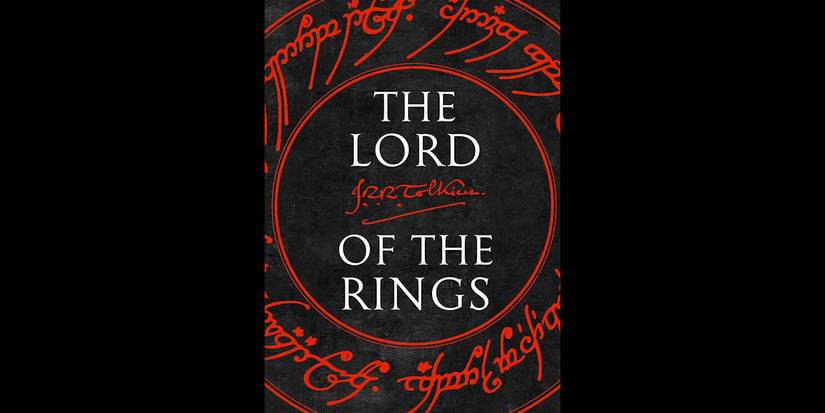 Image via Harper Collins
As most people know, The Lord of the Rings is an epic fantasy tale of good versus evil set in the high fantasy land of Middle-earth. At the center of it all is the hobbit Frodo Baggins, who receives a mysterious ring as a gift from his elderly uncle. The heirloom turns out to be the One Ring, forged by the Dark Lord Sauron and meant to rule over everyone in Middle-earth. Joined by a group of friends and allies deeming themselves the Fellowship of the Ring, Frodo embarks on a perilous journey to destroy the One Ring in the fires of Mount Doom. Meanwhile, Sauron grows in strength and amasses his forces to take over Middle-earth.
Among Frodo's closest and most capable allies is Aragorn, son of Arathorn, a Ranger of the North and the heir of Isildur and thus the true king of Gondor and Arnor. Introduced as Strider, Aragorn encounters Frodo and his hobbit friends at the Prancing Pony Inn, having tracked them after Gandalf's disappearance. Aragorn protects the hobbits from the Nazgûl pursuing them, ultimately helping them reach Rivendell. There, Aragorn joins the Fellowship of the Ring and fiercely protects Frodo and the others until they are forced to go their separate ways following an orc attack. As Frodo and his close friend, Sam, continue to Mordor, Aragorn, the elf Legolas, and the dwarf Gimli decide to rescue the other two hobbits, Merry and Pippin.
What Does Aragorn Say in 'The Fellowship of the Ring'?
 Image via HarperCollins
Shortly after meeting, Aragorn and the hobbits take shelter from the Nazgûl at Weathertop, the highest peak of the Weather Hills in Eriador. There, Aragorn recounts the tragic tale of Beren and Lúthien, an immortal elf maiden and a mortal man, whose love faces insurmountable odds. Her father, King Thingol of Doriath, demands a Silmaril cut from the crown of Morgoth, the ultimate source of evil in Middle-earth, as the price to allow their marriage. The demand sends them on a quest that ultimately ends in rebirth and the embrace of mortality.
Aragorn prefaces his tale by delivering one of the most powerful quotes in The Lord of the Rings: "It is a fair tale, though it is sad, as are all the tales of Middle-earth, and yet it may lift up your hearts." This line is perhaps the single greatest encapsulation of the story's main thematic concerns, and the fact that it's so cleverly hidden behind the facade of another tale is a stroke of genius by Tolkien. It's no surprise that it's used in relation to Beren and Lúthien, either, as Tolkien himself has declared this tragic tale "the chief part of the Silmarillion."
Why Is Aragorn's Quote So Perfect to Represent 'The Lord of the Rings'?
 Image via New Line Cinema
Straight away, Aragorn establishes Beren and Luthién's story as both sad and uplifting, highlighting how that is the nature of all the stories in Middle-earth (and therefore, Tolkien's writing). Aragorn tells the four frightened hobbits the tale at a moment of great danger, as the Nazgûl pursue them and the One Ring begins its attempt to corrupt Frodo. Within the narrative, the brave warrior means to give the inexperienced and innocent hobbits some much-needed hope: even in the darkest times, there is always something to fight for and, more importantly, something to look forward to.
On a deeper thematic level, the quote speaks to the main concerns that Tolkien examines in the larger story. Sacrifice is a necessity in this story, but rather than being a show of courage or a price to pay, it's the ultimate proof of one's humility and connection with the larger world. Middle-earth is a place of balance, where power should be relinquished rather than embraced, where mistakes and redemption are natural companions, and where rebirth is a crucial part of life: ages end, men die, elves leave. In this world, the joy of triumph can only be accompanied by the sorrow of loss, which is ultimately what makes the journey worth remembering. Indeed, Middle-earth is a land of remembrance, and just because something is tragic doesn't make it any less beautiful.
Aragorn's quote strikes at the very heart of The Lord of the Rings: the journey will end in tears, in friends separating, in magic vanishing and death's embrace. Yet, it will also end in joy, in friends embracing, in love prevailing and legends rising. In many ways, The Lord of the Rings is a story about valor, courage, beauty, and especially sorrow, a key aspect of a life well-lived. Here, victory comes at great expense, but it's crucial to never give in to despondency because beauty often lies in the saddest corners of existence. That sounds sad, but it's also incredibly true, and few authors understood it better than Tolkien.




 English (US) ·