
 Image via Netflix

Published Mar 19, 2026, 10:57 AM EDT
Kareem is a veteran editor and writer with over 15 years of experience covering all forms of entertainment, from music to movies. He serves as a High Trending List Writer for Collider, covering all things TV. His work has been seen in numerous online publications such as FanSided, AXS, Examiner, Narcity, HuffPost, and ScreenRant.
He first began his professional writing career in 2011 writing political columns for HubPages, gradualaly building his portfolio until he was rewarded with his first paid writing position with News Headquarters in 2013. Since then, Kareem has covered everything imaginable, from writing political news columns for Examiner, reviewing the latest albums for AXS.com, and giving a unique take on sports, food, and the entertainment industry for Fansided.com. He had another online stop at Narcity, covering travel and things to do in his native Florida, before finally bringing his uniquely immense writing talent and voice to Valnet in 2020, first as a List Writer for ScreenRant before taking his talents to Collider in 2021.
During his time at Collider, Kareem has showcased his talented writing style on a number of beats, trailer previews (DOTA: Dragon's Blood) to season premiers (Abbott Elementary), to Lists ranking everything from 80s Sitcoms (which holds a special place in his heart), to classic Disney Channel shows.
When he's not working, you can catch him bing-watching classic horror movies (he's a huge fan of Friday the 13th), hitting bike trails, and playing UNO (and losing) during game nights with friends.
He calls Orlando, FL home.
Sign in to your Collider account
In the fast-paced world of television, we often like to think of the great shows as cutting-edge and pushing the boundaries of what certain genres can do. But, here's the ironic part of this: what we thought was "cutting-edge" yesterday can feel obsolete today, a Timex in an Apple Watch world. While each genre has its share of television shows that have passed its expiration date, no genre is subjected to the ravages of TV time more than thriller series.
Whether it's convoluted mysteries that collapse under their own weight, or problematic tropes that turn off modern views, there are some thriller shows that seem like they would age like fine wine, but have now become curdled milk. So, that's what we want to look at today, the thrillers that were once popular during their original runs, but can be a bit hard to watch with modern lenses. Without further ado, let's dive in.
'Bloodline' (2015–2017)
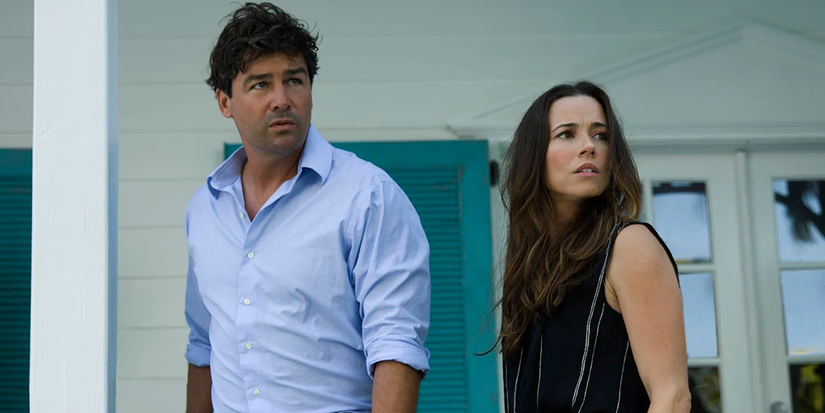 Image via Netflix
Tuning into the first season of Netflix's Bloodline, the slow-burning tension that led to a shocking finale is what had viewers hooked on what was to come. However, despite that gem of a first season, Bloodline has quickly gone from being considered a modern thriller classic, to one that has wilted away under the warm glow of a television lamp. Premiering in 2015, the show follows the Rayburns, a well-respected family in the Florida Keys who has a dark past complete with secrets some in the family would much prefer to keep buried.
Bloodline had all the potential to become a classic Netflix original series, but there were several things that kept this from happening. For starters, there was the extremely quick death of Danny Rayburn (Ben Mendelsohn), who many viewers considered the standout character. When he died at the end of Season 1, many viewers pointed to this as the point where Bloodline never truly recovered. Then there was how the series ended, as the series creators originally planned for the storyline to go six seasons; but when Netflix announced that the show would be canceled after its third season, the series' writers had to condense the final three seasons of the story into one season, which made Bloodline feel rushed and incomplete, two major ingredients for a show to age like milk.
'House of Cards' (2013–2018)
 Image via Netflix
In a lot of ways, Netflix should thank House of Cards for opening the door that led it to be the entertainment behemoth that it is today. Based on the 1989 novel written by Michael Dobbs, the political thriller was the first Netflix original series to break out and become a hit, with its tense moments and characters that would take your breath away. The series initially followed Frank Underwood (Kevin Spacey), a South Carolina Democrat with a thirst for political power that was intensified after he was passed over for an appointment as Secretary of State.
House of Cards was a television juggernaut, ushering in the "binge-watching" era and showing that streaming services could produce shows that could rival the more established networks. But the show's standing as a classic was forever tarnished by Spacey's real-life scandal, numerous sexual misconduct allegations that led to him being fired from the show. While his firing was refreshing, it forever altered the DNA of House of Cards. Remember, the show was built around Frank Underwood's quest for power, so without him, the series' writers had to completely re-tool the series, with mixed results. Regardless, because of the Spacey scandal, few people look back fondly at House of Cards, and are just fine letting this series sit and sour on the sizzling porch.
'The X-Files' (1993–2018)
 Image via FOX
Most would say that TV shows that are considered classics can never age poorly thanks to their legion of fans and nostalgic status. But, we disagree with this, as even shows that are considered iconic can have elements that make them age poorly, with The X-Files being Exhibit A. No one will ever doubt that this sci-fi thriller, created by Chris Carter, is, and should be, considered a classic; but looking at the series from a modern perspective, this is a series that has, sadly, aged very poorly, especially in the face of similar shows that have improved on the formula The X-Files made famous.
Being a show from the 1990s, the technology used in the series instantly dates the show. You see the characters use cell phones the size of cordless landlines, pages, and computers that go the speed of a turtle. While that alone makes The X-Files more of a fossil than a classic, the convoluted mythology, made more problematic by its "Monster of the Week" format, can now be seen as confusing and repetitive. In short, The X-Files often excelled at setting up storylines, but was inconsistent in the payoff. Add in the outdated nature of the social views of the time, and you have a classic that has sat on the kitchen counter for way too long.
'Westworld' (2016–2022)
 Image via HBO
In 1973, director Michael Crichton took us to Westworld, one of the most criminally underrated sci-fi classics in history. Realizing that the story Crichton crafted could be expanded, creators Jonathan Nolan and Lisa Joy adapted Westworld into a TV series for HBO, and it is widely considered a modern-day dystopian classic with thriller elements that are hard to ignore. While the show did a great job at expanding Crichton's story, showing the ramifications AI can have if left unchecked, the series can be seen less as a classic, more as a cautionary tale of how to literally lose the plot of a story you’re bringing to life.
Season 1 of Westworld is often praised as a classic, with its self-contained mystery keeping eyeballs glued to the TV. However, once Season 2 premiered, that element of the series was jarringly replaced by a convoluted narrative that many viewers found unnecessary, even if it was (largely) done well. You never want to drastically switch up the tone and setting of a show without giving the audience a plausible explanation as to why you're switching things up, and the writers of Westworld didn't do a good job in conveying why such a drastic change in tone was needed. It shifted Westworld from a self-contained mystery thriller that kept viewers on the edge of their seats, to a show that got lost in the plot and never found its way out, ensuring that, for all the good the show did, it will be a show that will age poorly in the eyes of many.
Collider Exclusive · Sci-Fi Survival Quiz
Which Sci-Fi World
Would You Survive?
The Matrix · Mad Max · Blade Runner · Dune · Star Wars
Five universes. Five completely different ways the future went wrong — or sideways, or up in flames. Only one of them is the world your instincts were built for. Ten questions will figure out which dystopia, galaxy, or desert wasteland you'd actually make it out of alive.
💊The Matrix
🔥Mad Max
🌧️Blade Runner
🏜️Dune
🚀Star Wars
TEST YOUR SURVIVAL →
01
You sense something is deeply wrong with the world around you. What do you do? The first instinct is often the truest one.
APull on every thread until I understand the system — then figure out how to break it. BStop asking questions and start stockpiling — food, fuel, weapons. Questions don't keep you alive. CKeep my head down, observe carefully, and trust no one until I know who's pulling the strings. DStudy the patterns. Every system has a rhythm — learn it, and you learn how to survive it. EFind the people fighting back and join them. You can't fix a broken galaxy alone.
NEXT QUESTION →
02
In a world of scarcity, what resource do you guard most fiercely? What we protect reveals what we believe survival actually requires.
AKnowledge. If you understand the system, you don't need resources — you can generate them. BFuel. Everything else — movement, power, escape — runs on it. CTrust. In a world of fakes and informants, a truly reliable ally is rarer than any commodity. DWater. And after water, information — the two things empires are truly built on. EShips and credits. The galaxy is big — you survive it by being able to move through it freely.
NEXT QUESTION →
03
What kind of threat keeps you up at night? Fear is useful data — if you're honest about what you're actually afraid of.
AThat reality itself is a lie — that everything I experience has been constructed to keep me compliant. BA raid. No warning, no mercy — just the roar of engines and then nothing left. CBeing identified. Once someone with power decides you're a problem, you're already out of time. DBeing outmanoeuvred — losing a political game I didn't even know I was playing. EThe Empire tightening its grip until there's nowhere left to run.
NEXT QUESTION →
04
Which of these comes most naturally to you? Your strongest skill is your best survival asset — use it accordingly.
AHacking, pattern recognition, finding the exploit in any system — digital or human. BMechanical skill — I can strip an engine, rig a weapon, or fix anything with whatever's around. CReading people — knowing when someone's lying, hiding something, or about to run. DDiscipline and endurance — mental and physical. I outlast things rather than overpower them. EPiloting, navigation, knowing how to get from A to B when every route is dangerous.
NEXT QUESTION →
05
How do you deal with authority you don't trust? Every dystopia has a power structure. Your approach to it determines everything.
ASubvert it from the inside — learn its rules well enough to weaponise them against it. BIgnore it and stay out of its reach. The further from any power structure, the better. CAppear to comply while doing exactly what I need to do. Visibility is the enemy. DManoeuvre within it carefully. You can't beat a system you refuse to understand. EResist openly when I have to. Some things are worth the risk of being seen.
NEXT QUESTION →
06
Which environment could you actually endure long-term? Survival isn't just tactical — it's physical, psychological, and very much about where you are.
AUnderground bunkers and server rooms — cramped, artificial, but with access to everything that matters. BOpen wasteland — brutal sun, no shelter, constant movement. At least the threat is honest. CA dense, rain-soaked city where you can disappear into the crowd and nobody asks questions. DMerciless desert — extreme heat, no water, and something enormous living beneath the sand. EThe fringe — backwater planets and busy spaceports where the Empire's attention rarely reaches.
NEXT QUESTION →
07
Who do you want in your corner when things fall apart? The company you keep is the clearest signal of who you actually are.
AA tight crew of believers who've seen behind the curtain and have nothing left to lose. BOne or two people I'd trust with my life. Any more than that and someone talks. CNobody, ideally. Alliances are liabilities. I work alone unless I have no choice. DA community bound by shared hardship and mutual survival — people who need each other to last. EA ragtag team with wildly different skills and total commitment when it counts.
NEXT QUESTION →
08
A comfortable lie or a devastating truth — which can you actually live with? Some worlds offer one. Some offer the other. Very few offer both.
AThe truth, no matter the cost. I'd rather live in a brutal reality than a beautiful cage. BNeither — truth and lies are luxuries. What matters is surviving the next hour. CI've learned to live with ambiguity. Some truths don't have clean answers. DThe truth — but deployed strategically. Knowing something others don't is power. EThe truth. Even when it means confronting something in yourself you'd rather leave buried.
NEXT QUESTION →
09
Where do you draw the line — if you draw one at all? Every survivor eventually faces a moment that tests what they're actually made of.
AI won't harm the innocent — even the ones who'd report me without hesitation. BI do what I have to to protect the people I've chosen. Everything else is negotiable. CThe line shifts depending on who's asking and what's at stake. DI draw a long-term line — nothing that compromises my people's future, even if it'd help now. ESome lines, once crossed, can't be uncrossed. I know which ones they are.
NEXT QUESTION →
10
What would actually make survival worth it? Staying alive is one thing. Having a reason to is another.
AWaking others up — dismantling the illusion so no one else has to live inside it. BFinding somewhere — or someone — worth protecting. A reason to keep moving. CAnswers. Understanding what I am, what any of this means, before time runs out. DLegacy — shaping the future in a way that outlasts me by generations. EFreedom — for myself, for others, for every world still living under someone else's boot.
REVEAL MY WORLD →
Your Fate Has Been Calculated You'd Survive In…
Your answers point to the world your instincts were built for. Read all five — your result is the one that resonates most deeply.
💊
The Matrix
You took the red pill a long time ago — probably before anyone offered it to you. You're a systems thinker who can't help but notice the seams in things, the places where the official version doesn't quite line up. In the Matrix, that instinct is the difference between life and permanent digital sedation. You'd find the Resistance, or it would find you. The machines built an airtight prison. You'd be the one probing the walls for the door.
🔥
Mad Max
The wasteland doesn't reward the clever or the well-connected — it rewards those who are hard to kill and harder to break. That's you. You don't need comfort, community, or a cause larger than the next horizon. You need a vehicle, a clear threat, and enough fuel to outrun it. You are unsentimental enough to survive that world, and decent enough — just barely — to be something more than another raider.
🌧️
Blade Runner
You'd survive here because you know how to exist in moral grey areas without losing yourself completely. You read people accurately, keep your circle small, and ask the questions others prefer not to answer. In a city where humanity is a legal designation rather than a feeling, you hold onto something that keeps you functional. You're not a hero. But you're not lost, either. In Blade Runner's world, that distinction is everything.
🏜️
Dune
Arrakis is the most hostile environment in the known universe — and you are precisely the kind of person it rewards. Patience, discipline, pattern recognition, political awareness, and an understanding that the long game matters more than any single victory. Others come to Dune and are consumed by it. You'd learn its logic, earn its respect, and perhaps, in time, reshape it entirely.
🚀
Star Wars
The galaxy far, far away is vast, loud, and in a constant state of violent political upheaval — and you wouldn't have it any other way. You're someone who finds meaning in being part of something larger than yourself. You'd gravitate toward the Rebellion, or the fringes, or whatever pocket of the galaxy still believes the Empire's grip can be broken. Whatever you are, you fight. And in Star Wars, that willingness is what makes the difference.
↻ RETAKE THE QUIZ
'Killing Eve' (2018–2022)
 Image via BBC America
Speaking of shows that completely lost their way after a stellar opening season, we have BBC's Killing Eve. The spy thriller was based on the Luke Jennings' novel Villanelle, and follows Sandra Oh as Eve Polastri, a British intelligence investigator who is assigned the task of capturing Villanelle (Joie Comer), an assassin with psychotic tendencies. But as Eve chases Villanelle, the two begin to develop a mutual obsession with each other, which throws a wrench into everything, and makes things more complicated. When well-written, a complicated plot can be great, and Season 1 of Killing Eve was written to perfection.
However, much like Westworld, the writers of Killing Eve got lost in the plot, and a show that thrived on tension and a cat-and-mouse dynamic that felt fresh quickly sunsetted; and, in its place, rose a plot that was disjointed, convoluted, and fragmented that made viewers think twice about the show. A big part of the problem was how the show would rotate showrunners each season, with each bringing a different view as to what they thought would work each season. While there were certainly moments in the latter seasons where the show's potential resurfaced, Killing Eve was too fragmented for viewers to enjoy; and, let's not talk about the final episode, which still leaves a sour milk taste in the mouths of its fans.
'Lost' (2004–2010)
You would be hard-pressed to find a bigger show in the 2000s than Lost, the ABC mystery thriller that was water-cooler talk for much of its run. Considered to be one of the best shows of the new millennium, Lost combined numerous genres together to create a unique show with a very different way of telling its story. Premiering in 2004, Lost follows the survivors of a plane crash who are stranded on an island in the South Pacific. The island, however, isn't what it seems, and while we follow the survivors in their quest to stay alive and, hopefully, find a way off the island, we get flashbacks into the people they were before the crash and, uniquely, the people they turn into after the crash.
This mystery-box way of storytelling is what set Lost apart from its peers, and made it must-see TV in the 2000s. But, ironically, it was this method of storytelling that made Lost age poorly over the years. Mystery-box storytelling only works when you already know how the show is going to end; and the writers of Lost didn't have an idea of how to end the show. Without a pre-planned ending, the show feels fragmented and inconsistent when you rewatch it today; and, if you were wondering, this is the main reason why the final episode of Lost is one of television's most confusing and controversial endings in TV history. It left a lot of things unanswered, which makes this show an unsatisfying rewatch.
'Pretty Little Liars' (2010–2017)
 Image via Freeform
In the 2010s, Pretty Little Liars was one of the premier shows for young adults during the decade. Based on the novel written by Sara Shepard, Pretty Little Liars follows four teen girls who are constantly stalked, harassed, and threatened by a mysterious person known as "A" after the leader of their clique goes missing. With a thrilling storyline and relatable characters, Pretty Little Liars was a ratings' juggernaut for the former ABC Family network, and was groundbreaking for being one of the first shows to use social media to directly engage with its fans, with viewers turning to sites such as Twitter to live-tweet and discuss the mystery that was playing out.
But while Pretty Little Liars can be hailed as a landmark young adult series, there are several issues that make the show problematic for today’s cultural landscape. First was the convoluted plot (especially after Season 5) and numerous plot holes that plague the series. This is especially egregious in numerous rewatches of the series, where you see a number of plotlines that go absolutely nowhere, and it makes the overall storyline convoluted. Then there's the elephant in the room, the relationships that are very problematic. For example, the relationship between Aria Montgomery (Lucy Hale) and Ezra Fitz (Ian Harding), who was seen as the central couple of the show despite the fact that Ezra was Aria's teacher. In the real world, this would be highly illegal, so it was quite strange as to why their relationship would be one that fans should root for, when, in reality, it should have been the exact opposite. The problematic relationships are all over Pretty Little Liars, and despite the memorable moments and massive popularity, this is a show that has, sadly, aged very poorly.

Pretty Little Liars
Release Date 2010 - 2017-00-00
Showrunner Ina Marlene King
Writers Ina Marlene King





 English (US) ·