Action shows have always thrived on spectacle. For some reason, writers believe that big explosions and dramatic fight sequences are the key to success with this genre. There's no denying that the formula works, but only up to a point. After a while, even the most well-choreographed action starts to blur together and the stories start feeling predictable. That's usually where most shows fade into the background.
That said, there are plenty of shows that actually focus onbuilding something underneath all that chaos, with strong characters and complex narratives. The catch is that they don't always get recognized for it right away. That's exactly what makes revisiting them so rewarding, though. Here is a list of the forgotten action shows that have aged like fine wine, thanks to their commitment to delivering the unexpected.
'Banshee' (2013–2016)
Image via Cinemax
Bansheeis a rollercoaster ride of a show that deserves way more appreciation than it gets. The premise sounds a little ridiculous at first, but it takes no time for the audience to get hooked. The series follows Antony Starras an unnamed ex-con who, after serving 15 years in prison, arrives in a small Pennsylvania town and assumes the identity of a murdered sheriff named Lucas Hood. From there, he begins juggling multiple lives at once as he poses as law enforcement, reconnects with his former lover, who is also living under a new identity, and attempts to stay one step ahead of the powerful crime boss he once betrayed.
The setup alone is chaotic, but the show makes it all work. Each season expands the world around Hood and introduces new foes who threaten to expose his farce. The whole thing feels like a pressure cooker of tension filled with overlapping power struggles. What really defines Banshee, though, is its pace. The story refuses to slow down and is almost always building toward something explosive. All its characters exist in a moral grey area, and the show refuses to clean up any of that mess. The show's clever writing is exactly why it has aged so well, because Banshee might present itself as loud, violent entertainment, but beneath all that, it's extremely intentional in its storytelling.
'Spartacus' (2010–2013)
Image via Starz
Spartacusisn't the kind of show that eases the viewer into its blood and gore. Instead, it drops them right in the middle of it. The historical drama is more than just that, though. The series is inspired by the real-life Thracian gladiator,Spartacus, who led a slave uprising against Rome. Spartacus traces the gladiator's journey from a young soldier to a leader capable of challenging an empire. From there, the narrative becomes increasingly dense, and the politics inside the House of Batiatus becomes just as important as all the action and violence.
The show does a great job of creating a constant sense of unease where every alliance feels temporary, and every decision carries consequences that one cannot even imagine. However, Spartacus's biggest strength is that it balances spectacle with substance. Characters who start as one-note slowly gain depth as their arcs become clearer, and even the villains are given enough nuance to feel grounded. Looking back now, it's easy to see why the show holds up better than so many of its contemporaries.
'Nikita' (2010–2013)
Image via The CW
Nikitatakes the familiar spy-thriller formula and puts a fascinating spin on it. The series follows Nikita (Maggie Q), a former assassin who escapes a covert government organization known as Division. Now, Division recruits vulnerable individuals, erases their identities, and turns them into weapons, and Nikita is on a mission to bring them down from the inside. To do that, she places Alex (Lyndsy Fonseca), a young recruit with her own traumatic past, inside the organization as a mole. That starts a constant back-and-forth where Alex feeds Nikita intel from within, and she sabotages the agency's operations from the outside.
What makes all of this interesting is how unstable Division is, with constant power struggles and internal betrayals that keep shifting the playing field. Nikita strikes a good balance between procedural-style storytelling and a long-running serialized arc that keeps building with each episode. That evolving structure is what makes Nikita hold up so well even today. The show uses action as a vehicle to explore larger themes of trust and identity, and that gives it an intentionality like no other.
'Alias' (2001–2006)
Image via ABC
Alias, created by J. J. Abrams, follows Jennifer Garneras Sydney Bristow, a double agent working for the CIA while posing as an operative for a criminal organization known as SD-6. The espionage story soon takes a personal turnas Sydney is forced to navigate a life built on nothing but lies. The early seasons of the show thrive on this tension of the protagonist balancing her double life as she works to dismantle SD-6 from the inside. However, as the story progresses, the scope expands, and the show introduces long-form arcs involving secret organizations, global conspiracies, and the mysterious Rambaldi artifacts.
The action in Alias is fast and cinematic, but it never overshadows the emotional stakes of the story. That's exactly why all the twists and betrayals actually land instead of feeling like empty shock value. Not to mention that Garner delivers one of the best performances of her career as Sydney. Most importantly, Alias was way ahead of its time with its emphasis on a strong female lead. Even when some of the show's spy tech or stylistic choices show their age, they end up adding to its charm rather than taking anything away from the experience.
Collider Exclusive · Star Wars QuizWhich Force User Are You?Light Side · Dark Side · Or Somewhere Between
The Force is not a binary. It is a spectrum — from the serene halls of the Jedi Temple to the shadowed corridors of Sith space. Ten questions will reveal where you truly fall. The Force has always known. Now you will too.
🔵Jedi Master
🟡Padawan
🔴Sith Lord
⚫Inquisitor
⚪Grey Jedi
IGNITE YOUR SABER →
01
What is the Force to you?Your relationship with the Force defines everything else.
AA living energy I must be worthy of — it is not mine to control.
BSomething vast and mysterious I'm only beginning to understand.
CNeither light nor dark — just a current I choose to ride.
DPower. Pure and simple. The strong take it; the weak don't.
NEXT QUESTION →
02
When you feel strong emotions — anger, grief, love — what do you do?The Jedi suppress. The Sith feed. Others choose differently.
AAcknowledge them, then release them. Attachment leads to suffering.
BFeel them fully, then decide what to do — they're not the enemy.
CBury them. Emotion is a liability I can't afford to indulge.
DUse them. Passion is the engine of the dark side for good reason.
NEXT QUESTION →
03
The Jedi Council gives you an order you disagree with. You:How you handle authority reveals your alignment.
AFollow it. The Council's wisdom surpasses my own perspective.
BVoice my objection clearly, then defer to the decision.
CComply outwardly while doing what I think is right.
DIgnore it. The strong don't answer to committees.
NEXT QUESTION →
04
You are offered forbidden knowledge that could give you enormous power. The cost is crossing a moral line. You:The dark side's pull is never more than a choice away.
ARefuse without hesitation. There is no cost worth that price.
BWeigh it carefully — sometimes darkness holds real answers.
CFeel the pull but walk away — for now.
DAccept it. Power justifies the method used to obtain it.
NEXT QUESTION →
05
Your approach to training and learning is:A student's habits become a master's character.
ADedicated but humble. There is always more to learn from my masters.
BRigorous and patient. Mastery is earned through years of discipline.
CEclectic — I draw from every tradition, not just one.
DRelentless and brutal. Pain accelerates growth. Rest is weakness.
NEXT QUESTION →
06
In a duel, your lightsaber fighting style reflects:Combat is the purest expression of a Force user's philosophy.
ADefense and composure — I wait for my opponent to overcommit.
BFast and instinctive — I trust the Force to guide my movements.
CUnpredictable — I blend styles to keep enemies off-balance.
DOverwhelming aggression — I end fights before they begin.
NEXT QUESTION →
07
A defeated enemy lies at your feet, powerless. You:Mercy — or its absence — is the truest test of alignment.
AStrike them down — compassion toward enemies is naïve and costly.
BNeutralize them permanently. I can't afford loose ends.
CSpare them if I can — but stay clear-eyed about the risks.
DOffer them a chance to surrender. Every being deserves that.
NEXT QUESTION →
08
The Jedi Code forbids attachment. Your honest view on love and bonds:The source of the greatest falls in the galaxy.
AThe Code is right. Attachment clouds judgment and invites suffering.
BLove is not a weakness — the Jedi Code got this one wrong.
CI have no attachment — only loyalty to my master's mission.
DI feel it deeply but struggle to reconcile it with my training.
NEXT QUESTION →
09
Why do you use the Force at all? What's the point?Purpose is the difference between a knight and a weapon.
ATo learn. I'm still figuring out what I'm capable of.
BTo protect and serve. The Force is a responsibility, not a gift.
CTo survive — and maybe carve out something worth having.
DTo dominate. Strength demands to be expressed, not contained.
NEXT QUESTION →
10
At the final moment — light side or dark side pulling at you — what wins?In the end, every Force user faces this moment. What does yours look like?
AThe light. I choose peace, even when darkness would be easier.
BNeither fully — I carve my own path through the middle.
CWhoever I serve — my loyalty defines me more than my morality.
DThe dark. Power is the only thing that's ever actually been real.
REVEAL MY ALIGNMENT →
Your Alignment Has Been DeterminedYour Place in the Force
The scores below reveal how the Force sees you. Your highest number is your true alignment. Read on to understand what that means — and what it will cost you.
🔵Jedi Master
🟡Padawan
🔴Sith Lord
⚫Inquisitor
⚪Grey Jedi
Disciplined, compassionate, and deeply attuned to the living Force, you have walked the path long enough to understand its demands — and accept them. You lead not through authority alone, but through example. You have felt the pull of the dark side and chosen otherwise, every time. That is not certainty. That is courage.
You are earnest, powerful, and brimming with potential — and you know it, which is both your greatest asset and your most dangerous flaw. You act before you think, trust your gut over your training, and sometimes confuse impatience for bravery. The Masters see something in you, though. The question isn't whether you have what it takes — it's whether you'll be patient enough to find out.
You are not simply dangerous — you are certain, and that is worse. You have decided what the galaxy needs, and you have decided you are the one to deliver it. Your power is genuine and formidable, earned through sacrifice that would have broken lesser beings. But examine your victories carefully. Every Sith believed their cause was righteous. The dark side's cruelest trick is that it agrees with you.
You were forged in fire and reshaped by those who found you at your lowest. You serve, because service gave you structure when you had none. Your allegiance is not to an ideology — it is to survival and to the master who gave you purpose. But there is something buried beneath the conditioning. The Jedi you hunt? You recognize them. Because you remember what it felt like before the choice was taken from you.
You have looked at the Jedi Code and the Sith Code and found both of them incomplete. You walk the line not out of indecision but out of conviction — you genuinely believe both extremes miss something essential. The Jedi don't fully trust you. The Sith think you're wasting your potential. They're both partially right. But so are you.
↻ RETAKE THE QUIZ
'Snowpiercer' (2020–2024)
Image via TNT
Snowpierceris a dystopian story that forces the audience to question the very social order in which they exist. The series is set in a frozen, post-apocalyptic world where the last of humanity survives aboard a constantly moving train. The entire story is built around class division, as the passengers are segregated in different parts of the train. The wealthy are living in luxury while the poor are crammed into the tail end under inhumane conditions. At the center of it all is Andre Layton (Daveed Diggs), a former detective from the tail section who becomes central to a growing rebellion.
Snowpiercer's greatest strength lies in its world-building. As Andre moves throughout the train, he realizes that each section operates like its own society, and the show takes its time to explore all of this. The intrigue comes from how a decision made at the front ripples all the way to the back. This cause-and-effect storytelling keeps the tension alive. What begins as a high-concept dystopian narrative eventually reveals itself to be a much more accurate reflection of reality that feels almost prophetic today.
'The Unit' (2006–2009)
Image via CBS
The Unit is a military action drama that never got the attention it deserved, even though it was smarter than most shows of its era. The series, based on Eric L. Haney'sInside Delta Force, follows a top-secret special operations team modeled after Delta Force, with Jonas Blane (Dennis Haysbert)at the center of it all. The show doesn't just focus on the team's covert missions and counterterror operations, but it also spends a lot of time exploring what happens to the families left behind, especially the wives who can never really know the full truth about what their partners do.
That structure is exactly what makes the show work. On one side, there are these high-octane missions that Jonas is leading. On the other hand, there is all the pressure back home with the families having to maintain cover stories and protect the unit's secrecy however they can. This gives The Unit a personal angle that very few military shows have even dared to explore. The realism is also a huge part of why the show has aged so well. There's no denying that the story takes some dramatic liberties, but overall, the tone feels authentic and urgent. The Unit refused to rely on the usual tropes of military stories, and in doing so, it laid the groundwork for a more character-focused take on the genre.
'Black Sails' (2014–2017)
Black Sailsis hands-down one of the greatest and most underrated shows ever made. The series is set during the Golden Age of Piracyand acts as a prequel to Robert Louis Stevenson's 1883 novel Treasure Island. The story follows Captain Flint (Toby Stephens), a pirate who is determined to secure the future of New Providence Island as a self-governing pirate stronghold. However, what begins as a treasure hunt for the Spanish gold of the Urca de Lima gradually turns into a war between pirates and the civilized world that seeks to erase them.
The show builds this complex narrative through shifting alliances and power struggles, where no character remains static for long. As the story progresses, it's evident that the pirates have evolved from outlaws chasing gold to people who are fighting for the right to exist on their own terms. Black Sails delivers some of the most layered character work ever seen on TV, and the story grows richer with each season. Many wrote it off as yet another high-budget pirate show, but it doesn't take long for one to realize that the show is so much more than that. It's the kind of series that feels more relevant and impressive now than it did at the time of its release.
Directors
Alik Sakharov, Steve Boyum, Lukas Ettlin, Stefan Schwartz, Clark Johnson, Marc Munden, Neil Marshall, Sam Miller, T.J. Scott, Michael Nankin, Rob Bailey, Roel Reiné, Uta Briesewitz

 Image via Cinemax
 Image via Cinemax
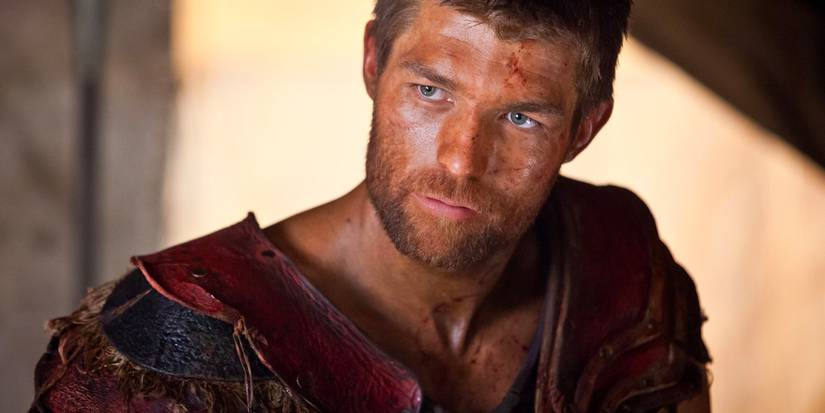 Image via Starz
 Image via The CW
 Image via ABC
 Image via TNT
 Image via CBS



 English (US) ·