
 Image via CBS

Published Mar 21, 2026, 8:52 PM EDT
Kareem is a veteran editor and writer with over 15 years of experience covering all forms of entertainment, from music to movies. He serves as a High Trending List Writer for Collider, covering all things TV. His work has been seen in numerous online publications such as FanSided, AXS, Examiner, Narcity, HuffPost, and ScreenRant.
He first began his professional writing career in 2011 writing political columns for HubPages, gradualaly building his portfolio until he was rewarded with his first paid writing position with News Headquarters in 2013. Since then, Kareem has covered everything imaginable, from writing political news columns for Examiner, reviewing the latest albums for AXS.com, and giving a unique take on sports, food, and the entertainment industry for Fansided.com. He had another online stop at Narcity, covering travel and things to do in his native Florida, before finally bringing his uniquely immense writing talent and voice to Valnet in 2020, first as a List Writer for ScreenRant before taking his talents to Collider in 2021.
During his time at Collider, Kareem has showcased his talented writing style on a number of beats, trailer previews (DOTA: Dragon's Blood) to season premiers (Abbott Elementary), to Lists ranking everything from 80s Sitcoms (which holds a special place in his heart), to classic Disney Channel shows.
When he's not working, you can catch him bing-watching classic horror movies (he's a huge fan of Friday the 13th), hitting bike trails, and playing UNO (and losing) during game nights with friends.
He calls Orlando, FL home.
Sign in to your Collider account
We've all been in this situation before. You curl up on the coach, teeing up your favorite streaming service for a night of binging one of the classic crime shows from a bygone era. You settle in, popcorn and wine on deck, and press play, ready for a night of reliving nostalgia. Then, 30 minutes into the series, you begin to realize that the protagonist of your "classic" crime show is basically a walking HR nightmare, and you go searching for something that will be easier to watch.
This is the unfortunate fate of some of the shows that were once destined to become classics. Shows that once felt edgy and gritty now feel dated and problematic, according to today's standards. Whether it's the glorification of "cowboy" policing, or true-crime documentaries that feel more exploitative than groundbreaking, these crime shows didn't age like a fine wine from Napa, but more like sour milk that sat on the porch for a week with the sun beaming down on it. So, let's look at the shows that prove that "law and order" can sometimes become stale.
'24' (2001–2014)
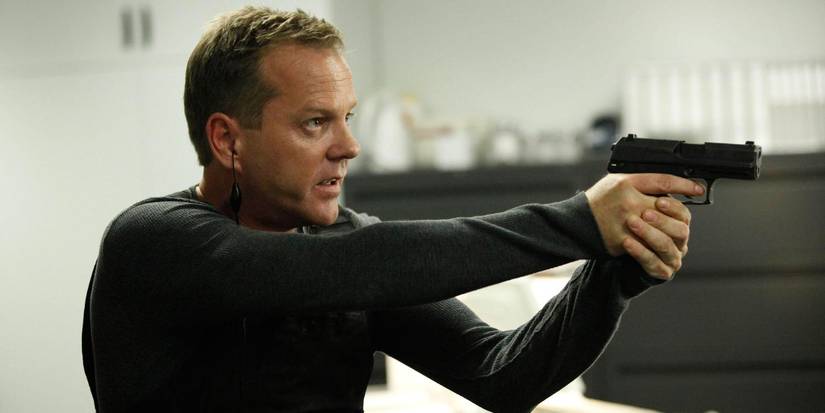 Image via FOX
In the 2000s, Jack Bauer (Kiefer Sutherland) was the man that protected America from the terrorists. Created by Joel Surnow and Robert Cochran, 24 premiered two months after the terrorist attacks of September 11th, and the show ushered in a new age for crime shows as it moved away from the "crime-of-the-week" formula in exchange for high-concept television that was high-stakes, and provided high-drama. Each season of 24 focused on a single day in which Bauer and the FBI must investigate and stop a terrorist attack on the homeland. Back in the 2000s, this was an exciting and genre-bending premise; however, the veneer of 24 has dulled greatly in recent years.
For starters, while 24 focused on terrorism as its central plot, it was often accused of glorifying torture and illegal government surveillance, the latter of which became an issue in real life with the public as the War on Terror dragged on. 24 is also not fondly looked on for the way it portrayed Muslim characters, often stereotyping them as terrorists, along with the fact that the series ran too long. After the fifth season, the quality of the show dropped substantially as its terrorist-heavy, post-9/11 themes began to grow stale among an audience that was clamoring for something fresher. While older viewers may still look at 24 as a groundbreaking series, to those who grew up after its peak, and even those who were around during its original run, its themes and tropes have certainly aged like curdled milk.
'Cops' (1989–Present)
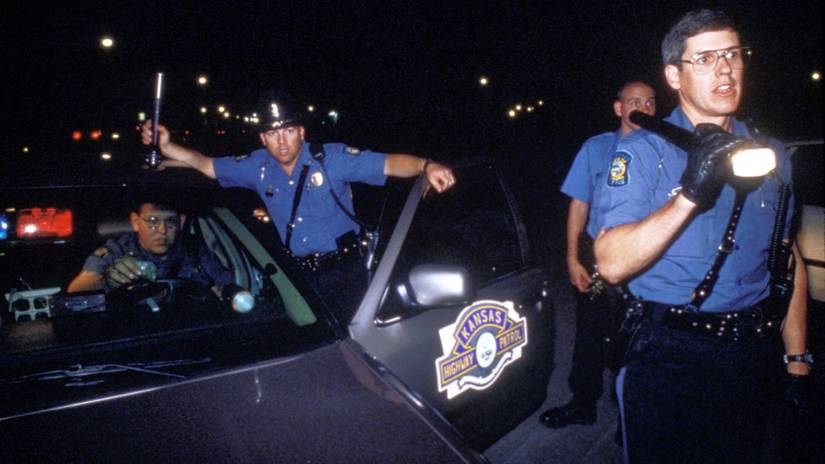 Image via FOX
After the murder of George Floyd in the Summer of 2020, Americans began to re-think what they thought of law enforcement, both in how they interact with the public, and how they're portrayed on television. This reckoning is what led to the cancellation of Cops, a longtime fixture of Saturday nights on Fox that was the vanguard of the reality TV genre. Born out of the writer's strike of 1989, Cops became a hit among audiences with its portrayal of cops as they busted the bad guys and served their communities. The show blew open the notion that Saturday nights was a "death spot" in the TV lineup, and the action on the screen was often exciting.
But looking at the show from a modern lens, Cops was a very problematic show in which its high ratings help hide its poorly aged concepts. A large portion of the people profiled on the show were often people of color, who were highlighted as criminals who were the scourge of society. Cops also normalized police brutality, as the show framed violent arrests and the harsh treatment of suspects as justified, a thinking that changed dramatically after the death of numerous African American individuals at the hands of the police. While Cops was truly groundbreaking, kicking off the reality TV format that would only grow in subsequent years, Cops is nothing more than police propaganda in the face of other reality shows such as On Patrol Live, a similar show that shows police in real-time and gives a more honest look at policing.
'Walker, Texas Ranger' (1993–2001)
 Image via CBS
This one hurts, as this author is a huge fan of Walker, Texas Ranger, and remains so to this day. However, while I'm still a huge fan of this crime procedural, even I can't help but notice how poorly the show has aged. Inspired by the 1983 film Lone Wolf McQuade, the crime drama stars Chuck Norris as Cordell Walker, a member of the Texas Ranger who, along with his partner, James "Jimmy" Trivette (Clarence Gilyard), help solve crimes and bring criminals to justice in the Rangers' Dallas-Fort Worth division. Airing in syndication, Walker, Texas Ranger became a hit among viewers during its initial run, and has maintained its popularity in the years after it left first-run status in 2001.
Having said that, there are a number of issues that have made this show age poorly. For starters, Walker, Texas Ranger feels very predictable, thanks to its "attack first, ask questions later" format that it followed with religion, with Cordell being portrayed as a "Super Ranger" with near impossible immunity to physical harm, even though he inflicted a lot of harm on criminals. Then there's the production quality, which looked a bit campy even during its original run, but it's even more obvious today. In many of the action scenes, you can clearly see Norris' stunt double, and the many mistakes that are made, such as clearly-damaged cars repairing themselves in between scenes. While many longtime viewers could possibly get past those examples, what modern viewers can't get past is how the show clearly justifies excessive policing, to the point that some viewers now view Walker, Texas Ranger as a "conservative law enforcement fantasy" that has aged the show quite poorly according to today’s standards.
'CSI: Crime Scene Investigation' (2000–2015)
 Image via CBS
Back at the turn of the millennium, TV viewers were becoming increasingly interested in forensic science, especially when it came to solving cases. This was thanks to CBS' highly stylistic crime procedural CSI: Crime Scene Investigation, a show that would go on to launch an entire franchise that would become the bedrock of the network's crime procedural programming. The original CSI premiered in 2000, and took a different take on the typical crime series, focusing on a team of crime scene investigators who use physical evidence and forensic science to solve murders in Las Vegas. The science the CSI team used was high-tech and looked cool to viewers, with the show having an outsized effect on the real world use of forensic evidence.
The downside, now, is that a lot of what was portrayed in the original CSI was very inaccurate. The show drastically exaggerated the capabilities of forensic technicians, making them look like detectives when, in reality, they're not. As aforementioned, the "CSI Effect" wound up having a negative impact on the judicial system in real life, with juries often demanding excessive forensic evidence for convictions, which was impossible to do. This was corrected in later versions of the franchise, but they couldn't fix the tone and style of the original CSI, with its highly stylized nature aging the show rapidly in subsequent years.
Collider Exclusive · TV Medicine Quiz
Which Fictional Hospital
Would You Work Best In?
The Pitt · ER · Grey's Anatomy · House · Scrubs
Five hospitals. Five completely different ways medicine goes sideways on television — brutal, chaotic, romantic, brilliant, and ridiculous. Only one of them is the ward your instincts were built for. Ten questions will figure out exactly where you belong.
🚨The Pitt
🏥ER
💉Grey's Anatomy
🔬House
🩺Scrubs
FIND YOUR HOSPITAL →
01
A critical patient comes through the door. What's your first instinct? Medicine under pressure reveals who you actually are.
AStay completely present — block everything else out and work through it step by step, right now. BTriage fast and delegate — get the right people on the right problems immediately. CTrust my gut and move — I work best when I stop overthinking and just act. DAsk the question everyone else is ignoring — what's the thing that doesn't fit? ETake a breath, make a joke to cut the tension, and then get to work — panic helps no one.
NEXT QUESTION →
02
Why did you go into medicine in the first place? The honest answer says more about you than the one you'd give in an interview.
ABecause I wanted to be where it matters most — right at the edge, when someone's life is actually on the line. BBecause I wanted to help people — genuinely, one patient at a time, in a system that makes it hard. CBecause I was drawn to the intensity of it — the stakes, the drama, the feeling of being fully alive. DBecause medicine is the most interesting puzzle there is — and I needed a problem worth solving. EBecause I wanted to make a difference — and also, honestly, I didn't know what else to do with my life.
NEXT QUESTION →
03
What do you actually want from the people you work with? Who you want beside you under pressure is who you are.
ACompetence and calm — I need people who don't fall apart when things get bad. BTrust and reliability — I want to know that when I pass something off, it's handled. CConnection — I want colleagues who become family, even if that gets complicated. DIntelligence and the willingness to be challenged — I have no interest in people who just agree with me. EFriendship — people I actually like spending twelve hours a day with, because those hours are going to happen either way.
NEXT QUESTION →
04
How do you actually perform under extreme pressure? The worst shifts reveal things about you that the good ones never will.
AI narrow in — everything irrelevant falls away and I become completely focused on what's in front of me. BI lead — pressure is when I'm at my most useful, keeping everyone else on track while managing my own fear. CI feel it fully and work through it — I don't pretend the fear isn't there, I just don't let it win. DI get sharper — high stakes are clarifying. This is exactly the environment I think best in. EI hold it together in the moment and fall apart slightly afterwards — which I've made my peace with.
NEXT QUESTION →
05
You lose a patient you fought hard to save. How do you carry it? Every doctor who's worked a long shift has had to answer this question.
AI carry it. All of it. I don't look for ways to put it down — that weight is part of doing this work honestly. BI process it and move — you have to, or the next patient suffers for the one you just lost. CI feel it deeply and lean on the people around me — I don't think you're supposed to handle that alone. DI go back over every decision — not to punish myself, but because I need to understand what I missed. EI grieve it genuinely, find some way to laugh about something unrelated, and try to be kind to myself — imperfectly.
NEXT QUESTION →
06
How would your colleagues describe the way you work? Your reputation on the floor is usually more accurate than your self-image.
AIntense and completely present — no small talk during a shift, but exactly who you want there. BSteady and dependable — not the flashiest in the room but never the one who drops something. CPassionate and occasionally chaotic — brilliant on the hard cases, prone to drama everywhere else. DBrilliant and difficult — right more often than anyone else, and everyone knows it, including me. EWarm and self-deprecating — not the most intimidating presence, but genuinely good at this and easy to like.
NEXT QUESTION →
07
How do you feel about hospital protocol and procedure? Every institution has rules. What you do with them is a choice.
AProtocol is the floor, not the ceiling — I follow it until the patient needs something it can't provide. BI respect it — the system is broken in places, but the structure is there for a reason and I work within it. CI follow it until my instincts tell me not to — and my instincts are usually right, even when they cause problems. DRules are for people who haven't thought hard enough about when to break them. EI try to follow it and mostly do — with a few memorable exceptions that still come up in meetings.
NEXT QUESTION →
08
What kind of medical work do you find most compelling? What draws your attention when you walk through those doors matters.
AEmergency and trauma — I want to see everything, handle anything, and never know what's coming next. BGeneral emergency medicine — breadth over depth, keeping the whole machine running under impossible conditions. CSurgery — I want to be in the room where the most consequential thing happening is happening right now. DDiagnostics — the cases no one else can solve, the symptoms that don't add up, the answer hiding underneath everything. EWhatever needs doing — I'm a generalist at heart and I find something interesting in almost every patient.
NEXT QUESTION →
09
What does this job cost you personally? Nobody works in medicine without paying a price. What's yours?
AEverything outside these walls — I've given this job my full attention and the rest of my life has gone around it. BMy idealism, mostly — I came in believing the system could be fixed and I've made a complicated peace with that. CStability — my personal life has been as chaotic as the OR, and that's not entirely a coincidence. DMy relationships — I am not easy to know, and the people who've tried to would probably agree. EMy sense of gravity — I use humour as a coping mechanism, which not everyone appreciates in a hospital.
NEXT QUESTION →
10
At the end of a long shift, what keeps you coming back? The answer to this question is the most honest thing about you.
AThe fact that it's real — that nothing else I could be doing would matter this much, right now, today. BThe patients — individual human beings who needed something and got it because I was there. CThe people I work with — I have walked through impossible things with these people and I'd do it again. DThe next unsolved case — there's always another puzzle, and I'm not done yet. EBecause despite everything — the exhaustion, the loss, the absurdity — I actually love this job.
REVEAL MY HOSPITAL →
Your Assignment Has Been Made You Belong In…
Your answers have pointed to one fictional hospital above all others. This is the ward your instincts, your temperament, and your particular brand of dysfunction were built for.
The Pitt
You are built for the most unsparing version of emergency medicine television has ever shown. The Pitt doesn't romanticise the work — it puts you inside a single fifteen-hour shift and doesn't let you look away. You are someone who needs their work to be real, who finds meaning not in the drama surrounding medicine but in medicine itself, and who has made peace with the fact that this job will take from you constantly and give back in ways that are harder to name. You don't need the chaos to be aestheticised. You need it to be honest. Pittsburgh Trauma Medical Center is exactly that — and you would not want to be anywhere else.
ER
You are the person who keeps the whole floor running — not the most brilliant in the room, but possibly the most essential. County General is built on the shoulders of people who show up, do the work, absorb the losses, and come back the next day without requiring the job to be anything other than what it is. You care deeply about patients as individual human beings, you believe in the system even when it fails you, and you understand that emergency medicine at its core is about holding the line between order and chaos for just long enough. ER is television about endurance, and you have it.
Grey's Anatomy
You came to medicine with your whole self — your ambition, your emotions, your relationships, your history — and you have never quite managed to leave any of it at the door. Grey Sloan is a hospital where the personal and the professional are permanently, chaotically entangled, and where that entanglement produces both the greatest disasters and the most remarkable saves. You are someone who feels things fully, who forms deep attachments to the people you work with, and who understands that the most extraordinary medicine often happens at the intersection of clinical skill and profound human connection. It's messy here. You would not have it any other way.
House
You are drawn to the problem above everything else. Not the patient as a person — though you are capable of caring, even if you'd deny it — but the case as a puzzle, the symptom that doesn't fit, the diagnosis hiding underneath the obvious one. Princeton-Plainsboro is a hospital that exists to house one extraordinary, impossible mind, and everyone around that mind is there because they are smart enough and stubborn enough to keep up. You work best when the stakes are highest, when the standard answer is wrong, and when the only way forward is to think harder than everyone else in the room. That is exactly what you would do here.
Scrubs
You understand that medicine is tragic and absurd in almost equal measure, and that the only sane response is to hold both of those things at the same time. Sacred Heart is a hospital where the laughter and the grief are genuinely inseparable — where a terrible joke can get you through a terrible moment, and where the most ridiculous people are also, on their best days, remarkably good doctors. You are warm, self-aware, and funnier than most people in your field. You lean on the people around you and you let them lean back. Scrubs is a show about learning to become someone worthy of the job — and you are still very much in the middle of that process, which is exactly right.
↻ RETAKE THE QUIZ
'Worst Roommate Ever' (2022–Present)
 Image via Netflix
For a show that premiered in 2022, Netflix's true-crime documentary Worst Roommate Ever has surely aged poorly in its short stint on the streaming service. Directed by Domini Hofmann and Cynthia Childs, the series tells stories of roommates who turned the lives of their unsuspecting victims upside down. This is a show that would make one think twice about taking in a roommate, but it's also garnered a lot of criticism for the way it tells its horror stories. While the show's originally aim was to highlight how some people can hide their malevolent tendencies, Worst Roommate Ever feels less like a cautionary tale, and more like a show that uses the "bad roommate" dynamic for entertainment purposes.
When you watch an episode of Worst Roommate Ever, the first thing that stands out is how sensationalist the series feels, almost like the story an episode is telling is "hyped up" for shock and entertainment value. Using a sensational tone has rubbed some viewers the wrong way, with the tone being inappropriate given the nature of the crimes committed, which often ends in death and long-lasting trauma for the victims who endured it. Also, some feel as though the show's title itself is misleading. While most people see a "bad roommate" as someone who doesn't pay their fair share of bills on-time, or leaves their living space a mess, the people portrayed in Worst Roommate Ever are actual criminals that go beyond the "bad roommate" label. You don't get a deeper understanding of how America's legal system allows these situations to happen; instead, you get a crime documentary that's focusing on "scaring" the viewer and nothing else, ensuring that Worst Roommate Ever will surely age like spoiled milk.
'Hill Street Blues' (1981–1987)
 Image via NBC
There is zero doubt that the NBC police drama Hill Street Blues is a groundbreaking show that changed how crime shows were made. Created by Steven Bocho and Michael Kozoll, the series created the template for the modern prestige drama, with serialized storylines and overlapping dialogue now becoming a staple of modern day crime shows. However, as revolutionary as the series is, it hasn't escaped the ravages of times, and there are a combination of things that have made Hill Street Blues age poorly when looked at from today's cultural lens.
While TV culture was different in the 1980s, the way Hill Street Blues portrayed race and gender is very outdated, as people of color were often seen as criminals or the poor underclass, and casual sexism was the norm. Hill Street Blues also falls under the "Seinfeld is unfunny" phenomenon, in which the techniques that the series popularized have been refined and made better by other shows. Because of this, the show feels chaotic, derivative, and more of a product of its time instead of being the genre-changing series that it is. While it's OK to still look at Hill Street Blues as a trailblazing crime series, its flaws have certainly made the series age more poorly than most people realize.
'Law & Order' (1990–Present)
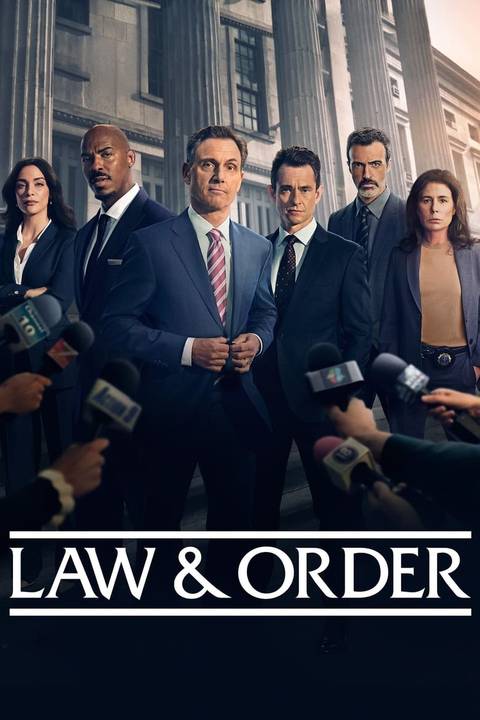
As mentioned earlier, the cultural perception of law enforcement has changed significantly since the death of George Floyd in 2020, which wasn't regulated to real world policing, but also to how it was portrayed on television. Suddenly, shows like the iconic Law & Order, created by the legendary Dick Wolf, weren't looked at as a trailblazing crime series, but one with problematic elements that modern viewers simply can't dismiss. Just to be clear, Law & Order helped advance the modern prestige crime drama Hill Street Blues brought into vogue in 1981. It was a series that focused on the totality of the justice system, from the detectives who investigate and arrest criminals, to the prosecutors who bring cases to trial, and it helped make Law & Order a powerhouse franchise for NBC.
But with the shifting cultural landscape policing, the cases looked at in Law & Order, which were pulled from existing headlines, don't feel quite as satisfying as it once did. This is also thanks to how the show portrays the police, as the series is staunchly "pro police," and portrays the detectives within the series as heroes, making the show feel less like entertainment and more like propaganda. This is not to say that Law & Order is a bad show, far from it; but being a fan also means pointing out its flaws, and the fact of the matter is that this is a show that certainly had flaws that have made it age less like wine and more like milk.
Law & Order
Release Date September 13, 1990
Showrunner Rick Eid
Directors Constantine Makris, Edwin Sherin, Jace Alexander, David Platt, Matthew Penn, Martha Mitchell, Don Scardino, Christopher Misiano, Jean de Segonzac, Michael Pressman, Daniel Sackheim, Alex Chapple, Fred Berner, Fred Gerber, Gloria Muzio, James Frawley, Jim McKay, Vincent Misiano, Michael W. Watkins, Vern Gillum, Alex Hall, Dann Florek, Darnell Martin, David Grossman
-

-

S. Epatha Merkerson
Lieutenant Anita Van Buren





 English (US) ·