
 Image via Warner Bros.
Published Oct 2, 2026, 7:46 AM EDT
Michael Block is a 14 time GLAM Award nominated writer, producer, and host of the podcast Block Talk. Throughout his time in the entertainment industry, he has worked on and off Broadway as a stage manager, written several produced plays, critiqued hundreds of theatrical performances, drag and cabaret shows, and has produced events randing from drag competitoons to variety concerts!
On Block Talk, he interviews nightlife personalities, covers the wide world of entertainment through features, ranking episodes, and recaps ALL of Drag Race, as well as Dragula and Survivor. He has interviewed hundreds of RuGirls that span the globe at DragCon NYC, DragCon LA, and DragCon UK.
In his free time, he makes one-of-a-kind jewelry and gift baskets with his mom. He is a proud member of the LGBTQ+ community.
Sign in to your Collider account
With spooky season upon us, it’s inevitable that our movie lineup is going to go all horror, with at least a vampire movie or two infused in it. Cinema has had a vast fascination with vampires since they were depicted on the page. From Bram Stoker’s Dracula to the brilliant creations of Anne Rice, many of the most infamous vampires have gone from page to screen and screen again.
While there have been countless remakes of vampire flicks, there are six that have yet to receive the same treatment, and we’re here to say suck someone else’s blood! From brilliant retro titles to movies that were just so bad they shouldn’t be touched again, no one wants to see remakes of these six vampire films.
1 'Black Sunday' (1960)
 Image via Unidis
There are just some films that work because of how and when they were made. For Black Sunday, its simplicity and black-and-white look make the 1960 film irreplaceable. Directed by Mario Bava, the Italian Gothic horror set in 17th-century Moldova tells the tale of a malicious witch and princess named Asa Vajda (Barbara Steele) and her lover, Javutich (Arturo Dominici), who are condemned for witchcraft by her own brother, Prince Griabi (Ivo Garrani). Before an iron "mask of Satan" with internal spikes is hammered onto her face, Asa places a blood curse on her brother's entire family line. Two hundred years later, she and her undead servant are revived when blood is spilled on her crypt. She attempts to drain her life and take over the body of her innocent, beautiful descendant, Katia Vajda (Steele), while a local doctor tries to stop the evil plot.
Blending witchcraft and vampirism, Black Sunday adapts Nikolai Gogol's 1835 short story "Viy" to perfection. For a film that exudes existential dread and a gloomy atmosphere, Black Sunday cannot be replicated without straying from Bava’s intent. Bava designed the sets and lighting specifically for the black-and-white film. The effect was a dreamlike, eerie shadow-world that a color story could never achieve. Every scenic element, from the gothic crypts to the skeletal trees, achieves a haunting texture. From a historical context, Black Sunday launched Steele into stardom while establishing modern horror and the giallo genre. Remaking the movie would diminish these integral points.
2 'Blacula' (1972)

The truth for Blacula is it shouldn’t be remade because it would simply diminish the power and impact it had at the time. Directed by William Crain, the blaxploitation horror film centers on 18th-century African prince Mamuwalde (William Marshall) who visits Count Dracula (Charles Macaulay). He asks Count Dracula for help in stopping the slave trade. Dracula refuses and insults them, biting Mamuwalde and turning him into a vampire. He names him "Blacula" and seals him in a hidden coffin before awakening in the 1970s Los Angeles. Blacula, who falls for Tina (Vonetta McGee), a woman who resembles his dead wife, hunts for blood in the city as he is hunted by pathologist Dr. Gordon Thomas (Thalmus Rasulala) and police lieutenant Jack Peters (Gordon Pinsent) following a string of murders.
From an outside perspective, there’s an inherent camp to blaxploitation films, and Blacula was no different. Yet, Marshall infused Prince Mamuwalde with gravitas and unparalleled dignity. Rather than being a gimmick, he was played as a tragic figure. He brought a booming baritone to the character that aided his regal presence. No one could replicate that. Marshall fought to change the original comedic script into a serious, resonant horror film. A remake would likely lose its emotional core, as it would be seen as too kitschy today. It was a lightning-in-a-bottle project that influenced a wave of other Black-inspired horror films as well as other Black protagonists in horror films. The original was a very slick film. Nothing new could compare.
3 'Near Dark' (1987)
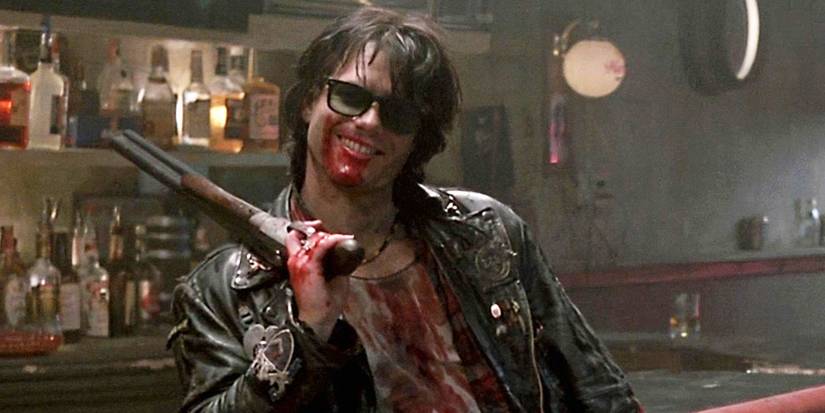 Image via De Laurentiis Entertainment Group
Though there are discussions of a television adaptation, remaking Near Dark may flop, as nothing will match Kathryn Bigelow’s original creation. The dark neo-Western follows young Oklahoma farm boy Caleb Colton (Adrian Pasdar) who is bitten by a beautiful drifter named Mae (Jenny Wright). Caleb is abducted and forced to join the brutal, nomadic family of vampires led by Jesse Hooker (Lance Henriksen). Earning a cult following over the years, Near Dark, which ironically does not ever mention the word vampire, blends the dusty, sun-bleached aesthetic of an American Western with modern horror to make a classic representative of the era.
Near Dark served as Bigelow’s solo directorial debut. The product reflected a very specific style for the rising director that could not be replicated through a modern filmmaking perspective. While it didn’t use the standard vampire tropes, Bigelow infused the film with ideals to make Near Dark stand out. With a specific hypnotic, electronic soundtrack from Tangerine Dream and gritty, wincing practical gore and realistic makeup effects, Near Dark is an '80s classic. A remake would lose that allure and charm, likely replaced by generic digital noise and CGI. Whether it happens or not, any advancement of a new iteration must pay homage to the original.
4 'Shadow of the Vampire' (2000)
 Image via Lions Gate Films
Count Orlock remains one of the most iconic characters within the vampire genre. In 2000, director E. Elias Merhige and screenwriter Steven Katz explored the character through the behind-the-scenes story of the character's creation in W. Murnau's classic 1922 silent film Nosferatu. The fictionalized horror comedy follows W. Murnau (John Malkovich) as he strives to make the ultimate vampire movie. Upon being denied the rights to Dracula, Murnau decides to adapt the story anyway under a different name. To achieve total authenticity, he hires a mysterious, intense actor named Max Schreck (Willem Dafoe), who goes full method acting. Instead, the truth is that Murnau has made a Faustian bargain with him, promising fresh blood in exchange for completing the masterpiece, as Schreck is an actual vampire. A masterpiece in meta-storytelling, Shadow of a Vampire is perfect as is.
The major reason why the film found success lies in Dafoe’s Academy Award-nominated performance. Capturing the exact blend of uncanny creepiness and mortifying decay is nearly impossible to recreate. Paired perfectly with Malkovich as the chillingly obsessive director, they anchored the tragicomedy. Though our fascination with Nosferatu has rekindled, trying to relitigate the postmodern commentary on the 1922 classic would be lost, as that film’s remake has altered all perception. With a one-of-a-kind tone, a remake would likely attempt to polish the project into something pristine, losing the raw prestige the 2000 film captured.
5 'The Addiction' (1995)
 Image via October Films
With a brilliant lo-fi aesthetic and extraordinary ‘90s atmosphere, another hands-off film is The Addiction. Directed by Abel Ferrara, the story is about New York University philosophy doctoral student Kathleen Conklin (Lili Taylor), who is attacked and bitten by a stranger, Casanova (Annabella Sciorra). Instead of dying, Kathleen slowly transforms into a vampire. She meets Peina (Christopher Walken), who helps her understand her condition, embracing her new urges, moving from academic debates about morality to committing violent acts to feed her habit. Using the craving for blood as a metaphor for heroin addiction and dependency, The Addiction explores heavy theological and philosophical concepts, viewing human evil not as a series of bad choices, but as an innate condition that humans are weak against.
While the narrative surrounding addiction remains prevalent, the film also arrived at a very specific moment in time. Ferrera uses the vampire narrative to evoke real-world historical and social traumas, including the AIDS crisis. The Addiction captures a very specific, pre-gentrification New York City in gritty, high-contrast black-and-white. Though its imagery feels timeless, the locale has vastly evolved, creating a new narrative in a remake. At its core, the film is less about traditional vampire tropes and more about a deeply profound exploration of sin, free will, and human evil. Modern studios would cut that, likely in exchange for cheap jump scares. A remake would likely lose the raw, uncompromising edge. Though philosophical horror is all the rage, new stories would be greatly preferred.
6 'The Lost Boys' (1987)

Yes, there is a musical iteration, but the pipeline from screen to stage is common fare. Trying to redo The Lost Boys in another cinematic format that’s not a musical adaptation would be a lost cause. A pinnacle piece of ‘80s cinema, directed by Joel Schumacher, The Lost Boys tells the story of Michael (Jason Patric) and Sam Emerson (Corey Haim), who move to a California coastal town with their mother, Lucy (Dianne Wiest). The catch is that the town is secretly a haven for vampires. Michael falls for a young woman named Star (Jami Gertz), which draws him into a local gang of rebellious, motorcycle-riding teenage vampires led by the charismatic David (Kiefer Sutherland). When Michael drinks blood and transforms into a vampire, Sam teams up with local comic book store clerks and self-proclaimed vampire hunters Edgar and Alan Frog (Corey Feldman and Jamison Newlander) to save Michael. An ‘80s cult classic, a remake of The Lost Boys would simply diminish its extraordinary history.
The Lost Boys was a product of the MTV era. It's a unique blend of 1980s counterculture, practical style, and high-energy, leather-clad, rock 'n' roll nightmare. With its profoundly decade-specific imagery and soundtrack, a modern adaptation wouldn’t work, and an ‘80s-set version would be incorrectly camp. The original film broke the mold, shifting vampires away from dusty, traditional Dracula tropes into dangerous, charismatic street punks. Much of the original film's allure comes from the dynamics among the young ensemble. Re-casting these iconic roles risks losing that innate chemistry. There might always be calls for remakes, but this is one classic that needs to stay as is.

The Lost Boys
Release Date July 31, 1987
Runtime 97 minutes
Director Joel Schumacher
Writers James Jeremias, Jeffrey Boam, Janice Fischer





 English (US) ·