The dangerous thing about a great miniseries is that it can make ten hours feel like a private arrangement between you and the people on screen. No promise of five more seasons. No safety net. Everybody is headed somewhere, and you know the story has to cash every emotional check before it leaves. That pressure changes how you watch. A small look can suddenly feel final.
These six miniseries had me hooked. They know how much story they have, what each character is carrying, and exactly when to stop. More importantly, they leave you with the weird feeling that something ended at the correct moment even though you are nowhere near ready to lose it.
6
'When They See Us' (2019)
Image via Netflix
Five Black and Latino teenagers from Harlem are arrested and wrongfully convicted after the 1989 Central Park jogger attack, and When They See Us follows how police pressure, coerced confessions, public hysteria, prosecution, prison, and years of stigma reshape their lives. The story moves from interrogation rooms into courtrooms, juvenile detention, adulthood, and finally the long-delayed exoneration that comes after the real attacker confesses.
What makes it brutal is how early the adults understand the power imbalance and how little protection that gives the boys. Kevin Richardson (Asante Blackk and Justin Cunningham) asking for his mother, Raymond Santana (Marquis Rodriguez and Freddy Miyares) trying to make sense of what is being said around him, Korey Wise (Jharrel Jerome) ending up in the adult prison system while still so young — each piece lands differently. The final episode with Korey is almost unbearable because the series stops being about the case in the abstract and becomes about time stolen from one person. When the real men appear at the end, the distance between “case” and “life” disappears completely.
5
'The Night Of' (2016)
Image via HBO
Nasir Khan (Riz Ahmed) borrows his father’s cab, meets a young woman named Andrea (Sofia Black-D'Elia), spends the night with her, and wakes to find her stabbed to death. The Night Of follows Naz through arrest, prosecution, Rikers Island, and trial while attorney John Stone (John Turturro) tries to build a defense around a night Naz himself cannot fully reconstruct.
The mystery hooks you, but the prison changes the whole show. Naz enters frightened and soft-spoken, then learns very quickly what survival inside Rikers costs. Freddy (Michael K. Williams) offers protection, and protection starts changing the version of Naz his family remembers. John Stone, meanwhile, shuffles through court with eczema, cheap shoes, and the defeated posture of a man nobody expects much from, yet he keeps noticing things other people dismiss. By the end, even an acquittal could never restore the first episode. That is the sting. The system does damage long before a verdict arrives.
4
'Mare of Easttown' (2021)
Image via HBO
Mare Sheehan (Kate Winslet) is a detective in a small Pennsylvania town investigating the murder of teenage mother Erin McMenamin (Cailee Spaeny) while also carrying the grief of her son’s suicide, raising her grandson, dealing with her ex-husband living nearby, and knowing practically everyone involved in the case. Mare of Easttown turns the murder investigation into a map of a community where every suspect already belongs to somebody.
I love how little glamour there is in Mare. You look at Winslet from a completely different lens that we’ve been used to. She eats badly, swears, looks tired, says the wrong thing, and still keeps moving because other people depend on her. The case keeps folding back into families she knows, which makes every interview feel personal before it becomes procedural. And when the truth finally comes out, the pain is not in some flashy villain reveal. It is in watching ordinary people realize what they have done to protect someone they love. Jean Smart stealing scenes as Helen is a gift, but the series belongs to the moments when Mare stops being a detective long enough to admit she is still somebody’s mother.
3
'The Queen's Gambit' (2020)
Image via Netflix
This whole show is like Gina Gray (also Anya Taylor-Joy) got a whole sassy show of herself but instead of navigating the business world, she’s the finest chess player out there. The Queen's Gambit follows her from local tournaments through national competition and eventually toward a showdown with Soviet champion Vasily Borgov (Marcin Dorociński). Beth Harmon (Anya Taylor-Joy) is orphaned as a child, discovers an extraordinary gift for chess in the basement of her Kentucky orphanage, and grows into an elite player while struggling with addiction, loneliness, and the pressure of becoming exceptional in a world dominated by men.
The chess should be the hard sell, but the show makes a board feel like a room full of knives. Beth sees patterns on ceilings, studies games obsessively, and walks into tournaments with the confidence of someone who knows she may be the smartest person there and still cannot control her own life. My favorite part is how the people she once beat eventually help her. Benny (Thomas Brodie-Sangster), Harry (Harry Melling), Townes (Jacob Fortune-Lloyd), Jolene (Moses Ingram) — the story quietly turns individual genius into something communal. Then Beth walks into that Moscow park at the end and sits down with the old men playing chess. No trophy speech. No victory lap. She has finally found the place she actually belongs.
2
'Band of Brothers' (2001)
Image via HBO
Band of Brothers follows men (a lot of them became the most familiar faces of Hollywood later on) through combat, exhaustion, promotion, fear, friendship, and loss while leadership keeps shifting around them.Easy Company of the 506th Parachute Infantry Regiment trains in Georgia, jumps into Normandy on D-Day, fights across Europe, survives Bastogne, enters Germany, and eventually reaches the end of World War II.
You remember the battles, of course. Winters (Damian Lewis) leading the assault at Brécourt Manor. The frozen misery of Bastogne. The patrols, artillery, and constant dread of losing the man beside you. But what stays with me more is how the series lets faces accumulate meaning. Someone introduced casually in episode one can break your heart six hours later because you have seen him eat, joke, complain, freeze, and keep going. Then the concentration camp episode arrives and strips away whatever distance was left between soldier and witness. The final baseball game is almost impossibly gentle after all that. Men who spent years surviving war finally get to stand in a field and do something ordinary. The Band of Brothers miniseries features notable actors like Damian Lewis, Ron Livingston, Donnie Wahlberg, David Schwimmer, Tom Hardy, and Michael Fassbender, among others.
1
'Chernobyl' (2019)
Image via HBO
A reactor at the Chernobyl Nuclear Power Plant explodes in April 1986, and Chernobyl follows the engineers, firefighters, scientists, miners, officials, soldiers, and civilians caught inside a disaster the Soviet state initially refuses to understand honestly. Valery Legasov (Jared Harris) is brought in to explain what happened, Boris Shcherbina (Stellan Skarsgård) is sent to manage the response, and nuclear physicist Ulana Khomyuk (Emily Watson) helps uncover how a reactor supposedly incapable of exploding did exactly that.
The terror comes from watching people argue with reality while reality keeps winning. Firefighters pick up graphite without knowing what it is. Dyatlov (Paul Ritter) insists the reactor cannot have exploded because the design says it cannot. Men are sent onto the roof for seconds at a time because robots fail under the radiation. Then the courtroom episode finally turns the entire disaster into one terrible chain of decisions, design flaws, fear, and institutional lying. “Every lie we tell incurs a debt to the truth” sounds grand until you realize the whole miniseries has spent five hours showing the bill arrive. I trust Chernobyl more than almost any miniseries I have seen because it never needs to shout. The facts are horrifying enough. The visuals are even more scary.

 Image via Netflix
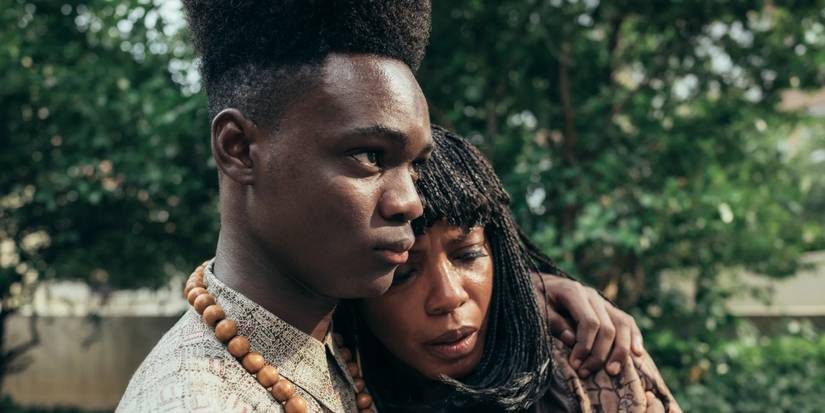 Image via Netflix
 Image via HBO
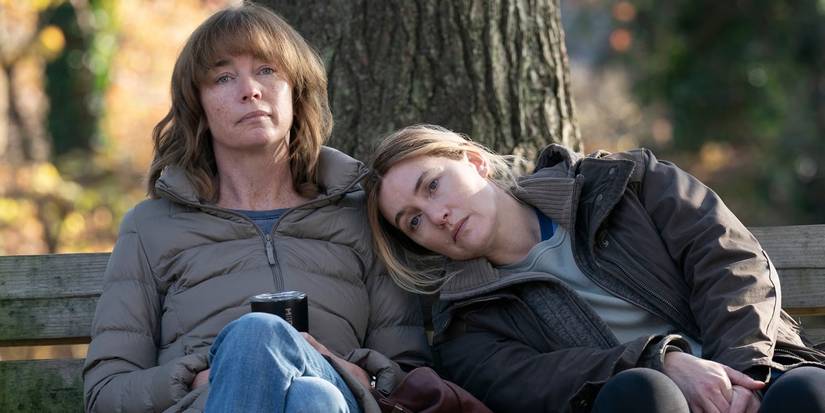 Image via HBO
 Image via Netflix
 Image via HBO
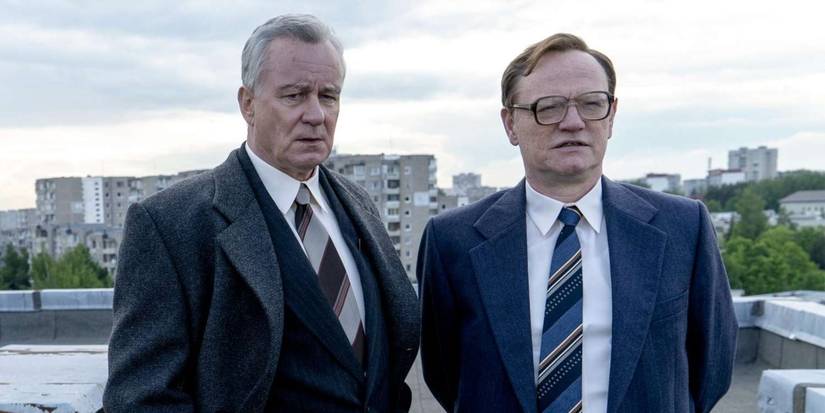 Image via HBO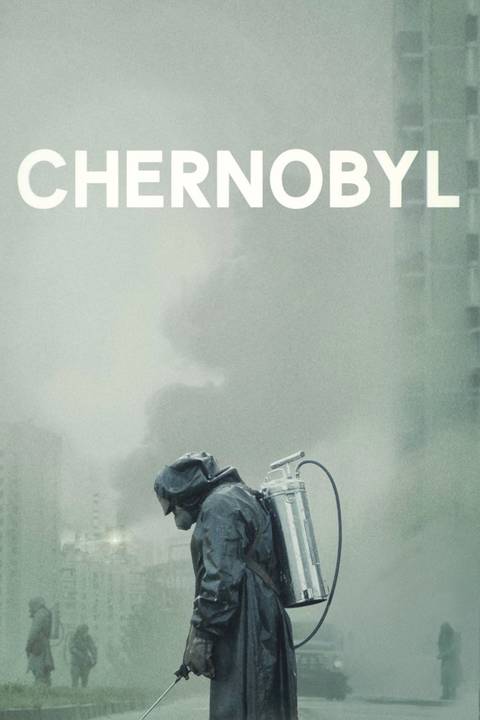








 English (US) ·