There are so many games that people hold dear to their hearts from the N64 console days. Even considering the ones that haven't held up the best into the modern age, it's hard to deny the groundwork they laid for the future of gaming. Unfortunately, that makes it hard to narrow it down to just six. So, honorable mentions go to many games, including Wave Race 64, Mario Kart 64, Paper Mario, Aidyn Chronicles: The First Mage, and so many more. That said, here are some of the top examples of iconic N64 titles that changed history.
Banjo-Kazooie (1998)
Years ago, when I wrote about the best N64 games of all time, I knew I had to include Banjo-Kazooie. Not only is this simply a charming game featuring a bear and bird team, but this first game in the franchise also has expertly crafted level design and puzzles mixed into its platforming adventure.
Besides being an all-around enjoyable time, however, the game also kicked off the genre that is now often referred to as "collect-a-thon" games. While Banjo and Kazooie hunted for the evil Grunthilda to rescue Banjo's sister, players also sought out jigsaw pieces, notes, and more.
Collecting every little side token in a game may not be for everyone, but for completionists and achievement hunters (like myself), this type of gameplay is now one of the most dopamine-producing features of many games. Banjo-Kazooie mastered the ability for players to have fun whether they wanted to find every collectible or not, and that decision has continued to be inspirational to games ever since.
Mario Party (1998)
Mario and his friends have really done just about everything now, with the plumber making his mark on nearly every genre of video game there is. In the case of Mario Party on the N64, it helped to create the genres of virtual board games and party games. Blending board game mechanics with a ton of silly and fun minigames not only gave some hilarity to couch multiplayer gaming, but also kicked off its own popular franchise and the start of a new genre of games.
Not only did Mario Party pave the way for unique board game adaptations to video games, but it also laid the foundation for the party game genre with successful titles like Fall Guys, Jackbox Games, and even Among Us. It showed the world how to manage friendly chaos through random chance events and silly minigames.
Even now, the latest Mario Party Jamboree + Jamboree TV for Switch 2 is a fantastic entry in the franchise and continues to stretch the norms by adding in extra games using the Switch 2's features of microphone, camera, and mouse.
Turok: Dinosaur Hunter (1997)
Originally adapted from the comic book series, Turok, the N64 was the first time that Turok: Dinosaur Hunter came to the video game world. It was one of the strong first-person shooter games that pioneered on the N64, and featured a massive outdoor world for players to explore. Whether swimming, climbing, and jumping in the open world, or chasing down a dino to shoot, the game was a popular example of how many FPS mechanics could work well on a console.
While designing Turok: Dinosaur Hunter, developers used a fog look to help with hardware limitations in the large open areas the world provided. Although this was simply used to help overcome a problem, it ended up adding such a cool, moody effect that other developers continue to use it today.
GoldenEye 007 (1997)
Speaking of first-person shooters, it's hard for anyone to deny the influence that GoldenEye 007 had on the gaming industry. This was one of the first examples to show how well an FPS game could work on a console, and was certainly a step outside Nintendo's norm.
During the gaming era when the N64 was being used, video games on PCs were becoming more utilized. The PC gaming scene had already made the FPS genre popular, but those types of games had not quite proven their worth on consoles yet. GoldenEye 007, as well as some others like Perfect Dark and the above-mentioned Turok: Dinosaur Hunter, were among the first to make it work.
Particularly with its multiplayer gaming that allowed for four-player split-screen deathmatch modes, GoldenEye 007 became something that now has many players looking back with nostalgia. It may not have held up quite as well as some other games, but the legacy that the game left behind more than makes up for that.
The Legend Of Zelda: Ocarina Of Time (1998)
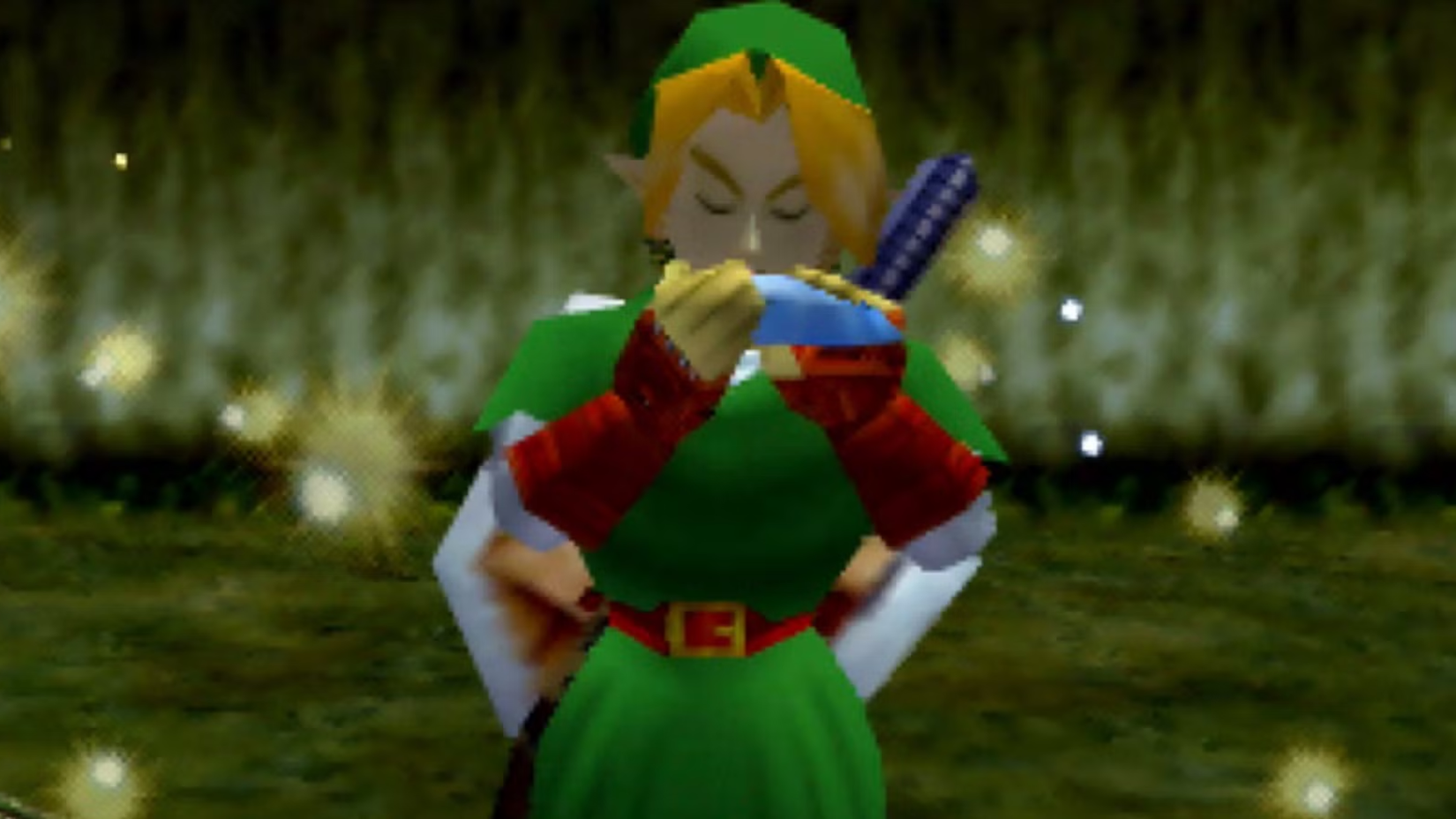
Mario and Zelda games have always been system-sellers for Nintendo, and are often the places where developers can take some risks with their game designs and test the limits. With The Legend of Zelda: Ocarina of Time, the innovations in 3D game design as well as mechanics and even its narrative have gone on to inspire many developers over the past several decades since its launch.
Open-world gameplay is now nearly synonymous with Zelda after the success of Breath of the Wild and Tears of the Kingdom, but Ocarina of Time is where the immersive style began for Link. Additionally, presenting the game tutorial as part of the narrative of the game was a novel idea during the time. Rather than sending players to look at game manuals, players were able to learn through the first bit of the game itself. Now, nearly every game introduces its systems in this manner.
A small, and often overlooked, feature that Ocarina of Time introduced was the enemy targeting system, allowing players to lock onto enemies with a press of a button. This mechanic helped make it much easier for players to enjoy the 3D world and became the legacy for many current games that use modernized target systems.
It's also interesting to note that Ocarina of Time is the first time that the Legend of Zelda series really went for the darker narrative, taking Link into a slightly more mature world.
Super Mario 64 (1996)
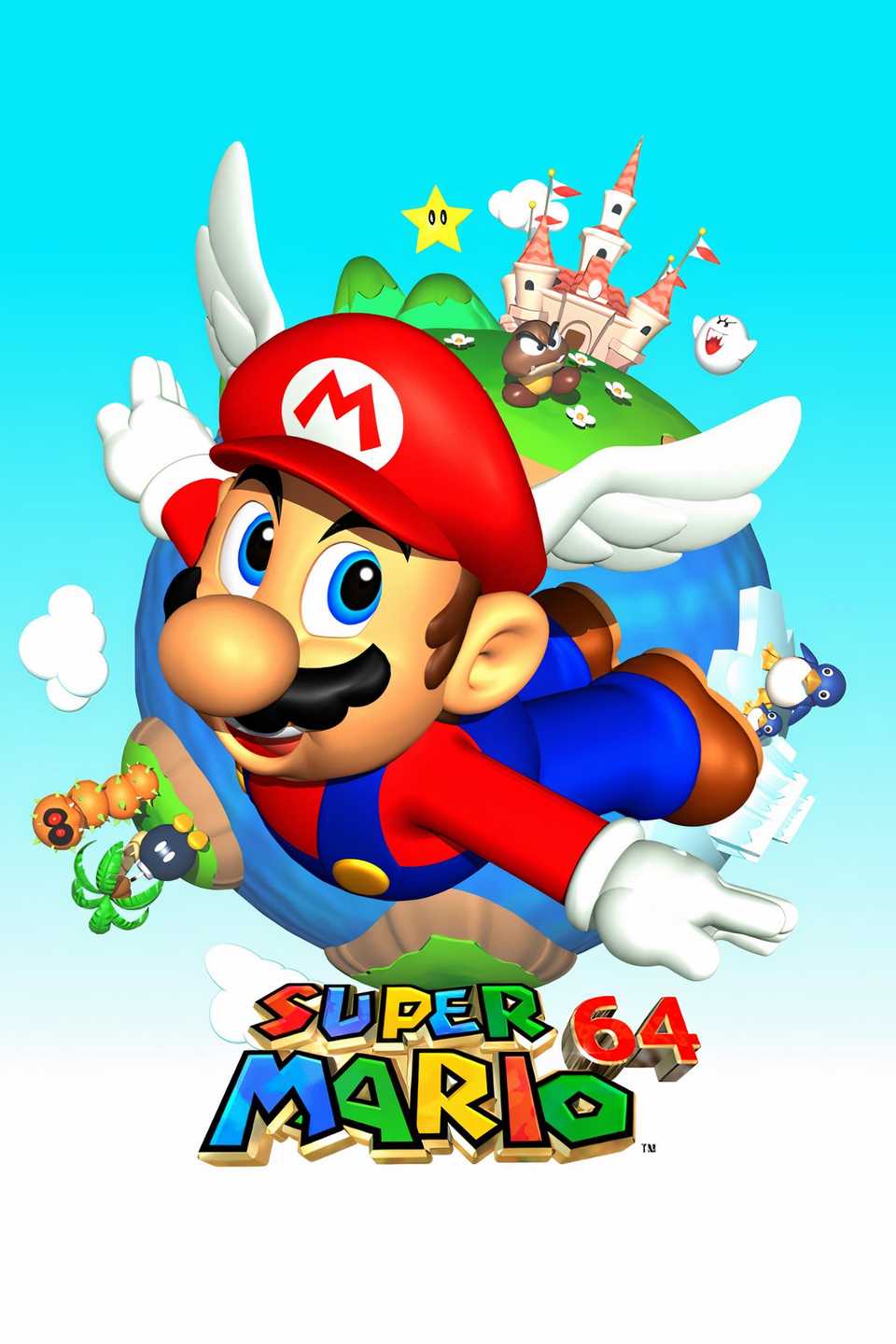
A launch title for the N64, Super Mario 64 was one of the first examples most players saw of the new 3D world that the system introduced. With dynamic camera controls and a first look at open-world exploration in a Mario game, players had to learn how to adjust to the new movement mechanics that the game presented.
Besides the obvious graphical and movement differences, Mario was given new moves to do backflips and wall jumps unlike anything he had done before. This impressive little plumber certainly got an upgrade in his athleticism.
Over the years since its release, numerous developers have cited Super Mario 64 as influencing how they managed creating platform gaming in a 3D environment, both for good and bad. While the game is certainly a bit clunkier to control than modern 3D worlds, it laid the groundwork for how developers could learn how to make a living world in their games, for the Nintendo 64 and beyond.
Released
September 26, 1996
ESRB
E for Everyone
Developer(s)
Nintendo
Publisher(s)
Nintendo
Engine
Nintendo 64 SDK









 English (US) ·