Michael Block is a 14 time GLAM Award nominated writer, producer, and host of the podcast Block Talk. Throughout his time in the entertainment industry, he has worked on and off Broadway as a stage manager, written several produced plays, critiqued hundreds of theatrical performances, drag and cabaret shows, and has produced events randing from drag competitoons to variety concerts!
On Block Talk, he interviews nightlife personalities, covers the wide world of entertainment through features, ranking episodes, and recaps ALL of Drag Race, as well as Dragula and Survivor. He has interviewed hundreds of RuGirls that span the globe at DragCon NYC, DragCon LA, and DragCon UK.
In his free time, he makes one-of-a-kind jewelry and gift baskets with his mom. He is a proud member of the LGBTQ+ community.
The thrill of a miniseries is that it can tell a complete story within the confines of a single series. A great miniseries leaves you wanting more, yet satisfied nevertheless. One of the leading providers of quality miniseries has been HBO. The premium network took the mantle at the turn of the century, telling larger and grander stories that couldn't be told on network television.
With so many incredible, iconic HBO miniseries, only a handful are genuinely perfect. From flawless adaptations of superhero intellectual property to mind-blowing explorations of the horrors of war, these shows have helped establish the blueprint for presenting a perfect narrative. Though there are certainly incredible HBO miniseries that are truly beloved, these six titles are truly top-tier above the rest.
6
'Watchmen' (2019)
Image via HBO
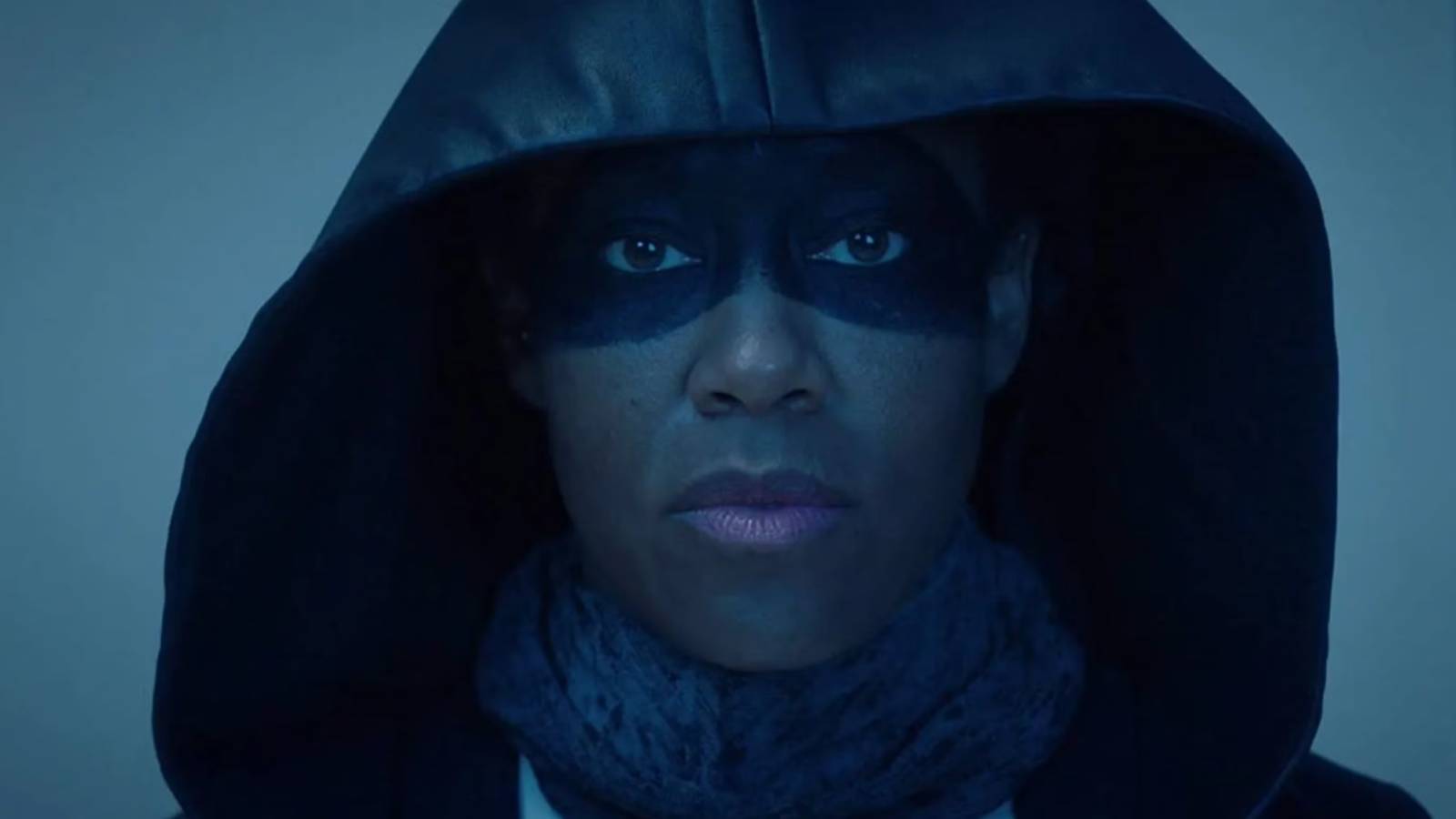
The superhero miniseries genre floodgates opened thanks to Disney+, but the risk may never have been taken without the incredible success of the 2019 Watchmen adaptation. Created by Damon Lindelof, Watchmen lifted the DC comic characters and served as a remixed sequel. The story is set in an alternate contemporary America where masked vigilantes are outlawed, the internet doesn't exist, and Robert Redford has served as U.S. President for decades. After a white supremacist terrorist group called the Seventh Cavalry attacks the police, officers begin wearing masks to protect their identities. Angela Abar (Regina King), a detective who fights crime under the masked identity "Sister Night,” investigates the suspicious hanging death of her police chief, Judd Crawford (Don Johnson). Her investigation pulls back layers of systemic racism, ties back to the 1921 Tulsa Race Massacre, and uncovers the secret history of the very first masked hero, Hooded Justice (Louis Gossett Jr.). The sprawling nine-episode series takes a beloved franchise and reinvents it through a poignant modern lens.
A tightly plotted, cleverly constructed series, Lindelof uses Alan Moore and Dave Gibbons' iconic graphic novel as a launchpad to expand and enhance it, rather than reheat a tired take. In turn, it acts as a continuation 34 years after the events of the comic, respecting the original's timeline while carving out its own distinct identity. Watchmen is anchored in a science fiction and superhero framework but ties in real-world events to explore systemic trauma as the narrative's emotional and thematic core. The series brilliantly tackles how extremist groups co-opt symbols and idolize vigilantes, using Rorschach’s journal as a manifesto for a white supremacist terrorist faction. The series operates as a self-contained story, though we were all eager to see what could happen if there was indeed more to explore. If awards dictate success, Watchmen walked away with 11 awards at the 2020 Primetime Emmy Awards, including a victory for King.
5
'Olive Kitteridge' (2014)
Image via HBO
Some of the greatest miniseries are born out of brilliant existing work. But how they’re adapted to breathe new life is the true key to success. That success was found in 2014 in the four-part adaptation of Olive Kitteridge. Based on Elizabeth Strout's 2008 novel, the miniseries spans over 25 years in the fictional coastal town of Crosby, Maine, following the complex, prickly life of Olive Kitteridge (Frances McDormand), a sharp-tongued, misanthropic retired math teacher, and the people in her orbit. Olive shares a long, complicated marriage with Henry Kitteridge (Richard Jenkins), a warm-hearted, patient local pharmacist. While Henry's gentle nature balances her severity, her critical nature often leaves him emotionally bruised. They have a troubled relationship with their son, Christopher (Devin Druid as a boy and John Gallagher Jr. as an adult), who resents his mother’s domineering presence and feels his father is a victim of her emotional rigidity. Unfolding as a series of intimate vignettes, Olive Kitteridge examines the quiet tragedies, depression, aging, grief, mental illness, and fleeting moments of grace.
A masterclass in long-form storytelling, Olive Kitteridge honors Strout’s titular character by refusing to paint her as anything but a deeply human portrait of imperfection. Written by Jane Anderson and directed by Lisa Cholodenko, takes its time to care for Strout’s characters and narrative. It finds tension and beauty in small-town routines, suppressed emotional baggage, aging, and generational disconnects. It’s an honest depiction, championed by a fervent performance from the incomparable McDormand. She provides a sharp performance that doesn’t mince words. She is not the kindest individual, yet you feel for her. It’s all thanks to her pitch-perfect performance. In a time when miniseries tend to rely on shocking twists and turns to engage viewers, Olive Kitteridge stuck to honest storytelling for an extraordinarily raw series. Olive Kitteridge earned eight awards at the Primetime Emmy Awards, including for McDormand, Jenkins, and Bill Murray.
4
'Mare of Easttown' (2021)
Image via Michele K. Short/HBO
Though this entry may be a caveat should a second season ever be ordered, the reason why it would be is that Mare of Easttown is literal crime thriller perfection. Created by Brad Ingelsby and directed by Craig Zobel, the story follows Mare Sheehan (Kate Winslet), a weary police detective living and working in a tight-knit, struggling blue-collar community in Easttown, Pennsylvania. As Mare is forced to reopen a year-old cold case involving the disappearance of a local young woman named Katie Bailey, teenage single mother Erin McMenamin (Cailee Spaeny) is found dead in a local creek, prompting Mare to lead the murder investigation while facing intense pressure from the community. To make the situation harder, Mare grapples with heavy personal grief from the recent suicide of her son, Kevin (Cody Kostro), while navigating a complex family household that includes her mother, Helen Fahey (Jean Smart), her teenage daughter, Siobhán (Angourie Rice), and a custody battle over her young grandson, Drew (Izzy King). A raw depiction of a woman fighting to balance an unfair life and a brutal job, Mare of Easttown is a deep-seated character study in a raw, lived-in community.
Mare of Easttown is a brilliantly authentic story. It all starts with the world Ingelsby built. Set in a tight-knit Pennsylvania working-class town shaped by the opioid crisis, the setting feels heavy, overcast, and extremely raw. Add in the pure DelCo accent, and audiences feel fully immersed in the town they’re observing. Mare of Easttown doesn’t glorify the crimes; rather, it allows them to shape the lives of the individuals you’re watching. The show focuses on the messy, long-term consequences of trauma on Mare, her family, and her neighbors. Winslet is at her career best as the unglamorous titular character. She delivers a full-bodied performance, carrying the weight of the world. The seven-episode arc wraps up with restraint and an untidy conclusion. As it should have. With such brilliant storytelling and performances, Mare of Easttown was an award-show darling, winning four awards, including for Winslet, Julianne Nicholson, and Evan Peters. If you wanted more Mare of Easttown, with Nicholson appearing in Season 2 of Task, the two shows are officially in the same shared universe.
3
'Chernobyl' (2019)
Image via HBO
It might sound like a brazen idea to create a miniseries about one of history’s worst man-created disasters, but Chernobyl was so expertly created that any doubts were immediately gone. Written by Craig Mazin and directed by Johan Renck, Chernobyl steps beyond the headlines for a truly human story that dramatizes the 1986 nuclear disaster at the Chernobyl Nuclear Power Plant in Soviet Ukraine. Following the horrendous tragedy, the series depicts the initial cover-up by Soviet officials who try to play down the severity of the explosion. Meanwhile, Soviet physicist Valery Legasov (Jared Harris), politician Boris Shcherbina (Stellan Skarsgård), and nuclear physicist Ulana Khomyuk (Emily Watson) lead the frantic cleanup, coordinating firefighters, military personnel, and hundreds of thousands of "liquidators" who risk their lives to contain the aftermath. Rather than lean into mundane documentary, Chernobyl focuses heavily on human sacrifice, systemic government flaws, the horrors of acute radiation sickness.
Widely considered a masterpiece, Chernobyl transforms a technical nuclear accident into a gripping, slow-burn horror story. Through an oppressive sound design, Geiger-counter clicks, and haunting imagery, the series makes invisible radiation feel like a physical, terrifying monster stalking the characters. The true villain of the story becomes the rigid Soviet bureaucracy that prioritized image, denial, and self-preservation over human lives. Fortunately, the focus centers on the brave, heroic individuals who sought to take them down. Whether genuine depictions or through composite characters, Chernobyl prioritizes the ordinary scientists, politicians, and workers confronting a cataclysmic disaster with grim realism. At a tightly curated five episodes, the series is lean and efficient, with no excess filler. Instead, it’s an unrelenting emotional rollercoaster. Hailed by viewers and critics, the series won 10 Emmy Awards and two Golden Globes.
2
'Band of Brothers' (2001)
Image via HBO
The horrors of war had never been brutally dramatized until HBO released the groundbreaking 10-part masterpiece Band of Brothers. Based on historian Stephen E. Ambrose's non-fiction book of the same name, Band of Brothers chronicles the true story of Easy Company, a unit of the 506th Parachute Infantry Regiment, 101st Airborne Division of the U.S. Army, during World War II. The series spans from their grueling paratrooper jump training at Camp Toccoa, Georgia in 1942, all the way through the end of the war in Europe in 1945. Each episode opens with short, recorded reflections from surviving Easy Company veterans, and Band of Brothers blends historical documentary with dramatic storytelling that focuses on the heavy mental, physical, and emotional toll of combat.
Having two legendary Hollywood minds in Steven Spielberg and Tom Hanks guide the series to victory, Band of Brothers brings a cinematic-scale story to the small screen. With a massive $125 million budget, it allowed for authentic uniforms, period-accurate tactics, and realistic combat environments. It balanced deep human emotion and historical accuracy within its sharp cinematography, visceral sound design, and an iconic musical score by Michael Kamen. Band of Brothers' brilliance lies in its extraordinary ensemble, including Dominic Cooper, Jimmy Fallon, Michael Fassbender, Tom Hardy, Damian Lewis, David Schwimmer, Andrew Scott, and Donnie Wahlberg. Earning seven Primetime Awards, Band of Brothers established a new benchmark for achievements in television miniseries.
1
'Angels in America' (2003)
Image via HBO; Everett Collection
Trying to adapt Tony Kushner’s Pulitzer and Tony Award-winning two-part play for the small screen was never going to be an easy feat. But with an all-star ensemble and visionary director in Mike Nichols behind the camera, Angels in America emerged as the greatest miniseries HBO ever produced. On a macro level, Angels in America tells the intertwined stories of several New Yorkers during the height of the AIDS epidemic in 1985. Prior Walter (Justin Kirk) is a young gay man diagnosed with AIDS. Overwhelmed by fear and guilt, his partner Louis Ironson (Ben Shenkman) abandons him as his health deteriorates. Left alone, Prior begins experiencing surreal, prophetic visions and is visited by an Angel (Emma Thompson) who declares him a prophet. Joe Pitt (Patrick Wilson) is a closeted Mormon Republican lawyer. His wife Harper (Mary-Louise Parker) is Valium-addicted, deeply unhappy in a sexless marriage, and retreats into vivid, drug-fueled hallucinations. His overbearing mother, Hannah (Meryl Streep), visits themas he embarks on a secret affair with Louis. Ruthless, closeted conservative lawyer (Al Pacino) contracts AIDS and is desperate to protect his reputation and power; he denies the diagnosis and insists he has liver cancer. Belize Arriaga (Jeffrey Wright), Prior's close friend and a nurse, takes care of him.
Angels in America merges theatrical ambition with intimate human vulnerability for a landmark six-part event. Through the lens of the politics surrounding the AIDS crisis, the story of survival blends gritty social realism with magical realism, religious prophecy, and a critique of divine and earthly authority. With a once-in-a-generation ensemble taking on the various roles prescribed in Kushner’s stage play, they powerfully lift the extraordinary text for truly grounded, lived-in performances rooted in realism. The script maintains its poetic prose while still striking a balance of gravitas and accessibility. The miniseries balances raw personal heartbreak, abandonment, closeted shame, physical decay with biting political satire and cosmic, apocalyptic fantasy. The series swept all 11 categories at the Emmys, proving just how sensational this high-art miniseries truly was.

 Image via HBO
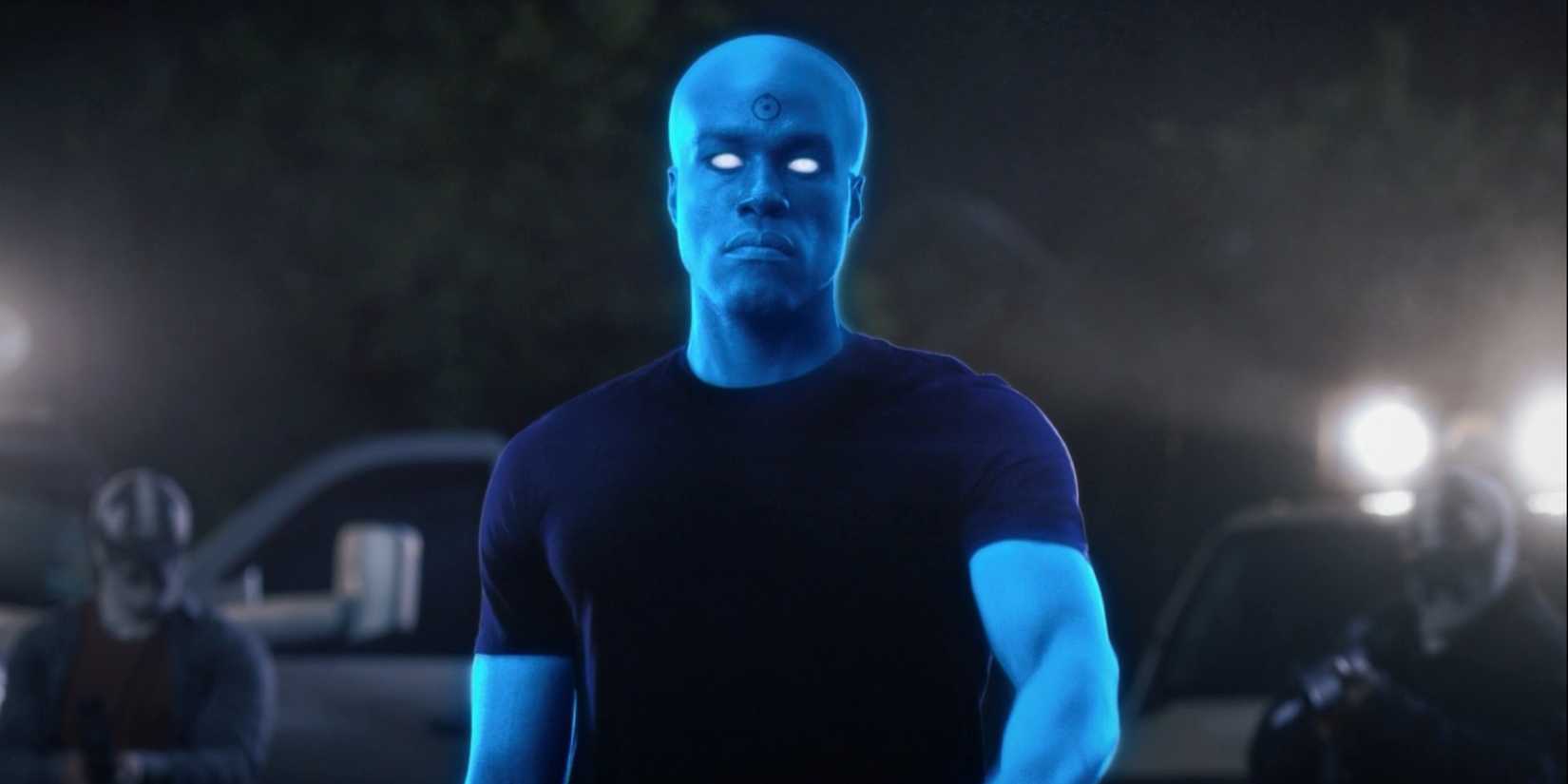 Image via HBO
 Image via HBO
 Image via Michele K. Short/HBO
 Image via HBO
 Image via HBO
 Image via HBO; Everett Collection




 English (US) ·