


Published Oct 8, 2026, 5:00 AM EDT
Jared is a writer, editor, and Communications Studies graduate who loves popular nerd culture (almost anything to do with Marvel, DC, Star Wars, or The Lord of the Rings) and the interactive storytelling medium. Jared's first console was the PS1, wherein he fell for Spider-Man, Spyro the Dragon, and Crash Bandicoot.
Sign in to your ScreenRant account
Batman has endured for the last 86 years as one of the most fascinating characters in all of fiction for many reasons, though a significant one is how Batman and his alter ego, Bruce Wayne, are both comparably compelling characters. It’s terrific when a great Batman story from either the comic books, movies, TV shows, or video games provides stunning action sequences with Batman donning Batsuits, driving stylish Batmobiles, and battling colorful supervillains, to be sure, but the psychology of orphan Bruce Wayne is where every great story has the potential to become exceptional, if treated well.
The core principle of Batman has been more or less unshakable for the last 86 years in DC Comics lore, and a lot of Bruce’s established history as readers understand it today owes a debt of gratitude to seminal DC Comics stories from the mid- to late-1980s, in particular. In order of when they were originally released, the following is a selection of stories that excavated brand-new developments for the Batman mythology and, in some way, helped redefine Bruce Wayne as a character beneath the cape and cowl.
6 Batman #4 (1941)

Batman (1940) #4, from writer Bill Finger, penciler Bob Kane, inker/letterer George Roussos and inker Jerry Robinson, and editor Whitney Ellsworth, is the fourth issue in the first volume of the book’s ongoing series, which has had a few relaunches since. It was here that Batman’s no-kill rule was established as a retcon with Batman declaring to Robin, “Remember, we never kill with weapons of any kind,” in accordance with a pushback on violence from parents and editors following young Dick Grayson’s debut. Amusingly, what began as a form of censorship would later become crucial to Bruce’s moral philosophy in many iterations of the character.
5 The Dark Knight Returns (1986)

The Dark Knight Returns is a four-issue miniseries from writer and penciler Frank Miller, inker Klaus Janson, colorist Lynn Varley, letterer John Costanza, and editors Dick Giordano and Dennis O’Neil. While not canon to the events of the mainline DC Comics continuity (it’s impossible for it to be, as that would mean Bruce was 45 when Joker murdered Jason Todd and also retired for a decade thereafter), The Dark Knight Returns is considered a foundational alternate-universe story that explores a 55-year-old Bruce in a dystopian Gotham City.
As far as Elseworlds and other DC continuities are concerned, there are myriad Batman stories that wield their alternate universes as a means of unraveling Bruce even further and dissecting his traditional characterizations through new lenses. Batman: The Imposter and Absolute Batman, for example, are unbound by whatever status quos or retcons the mainline Batman is leashed to, decided by the writers and creatives for each run. Therefore, their Bruces have much more legroom with which to try a new characterization on for size. The Dark Knight Returns is equally brazen in terms of the specific traumas and issues it wanted Bruce to tackle, and it’s all the better for it, stitching a new quilt patch into Batman’s rich tapestry of lore that wouldn’t be as lovely otherwise.
4 Batman: Year One (1987)
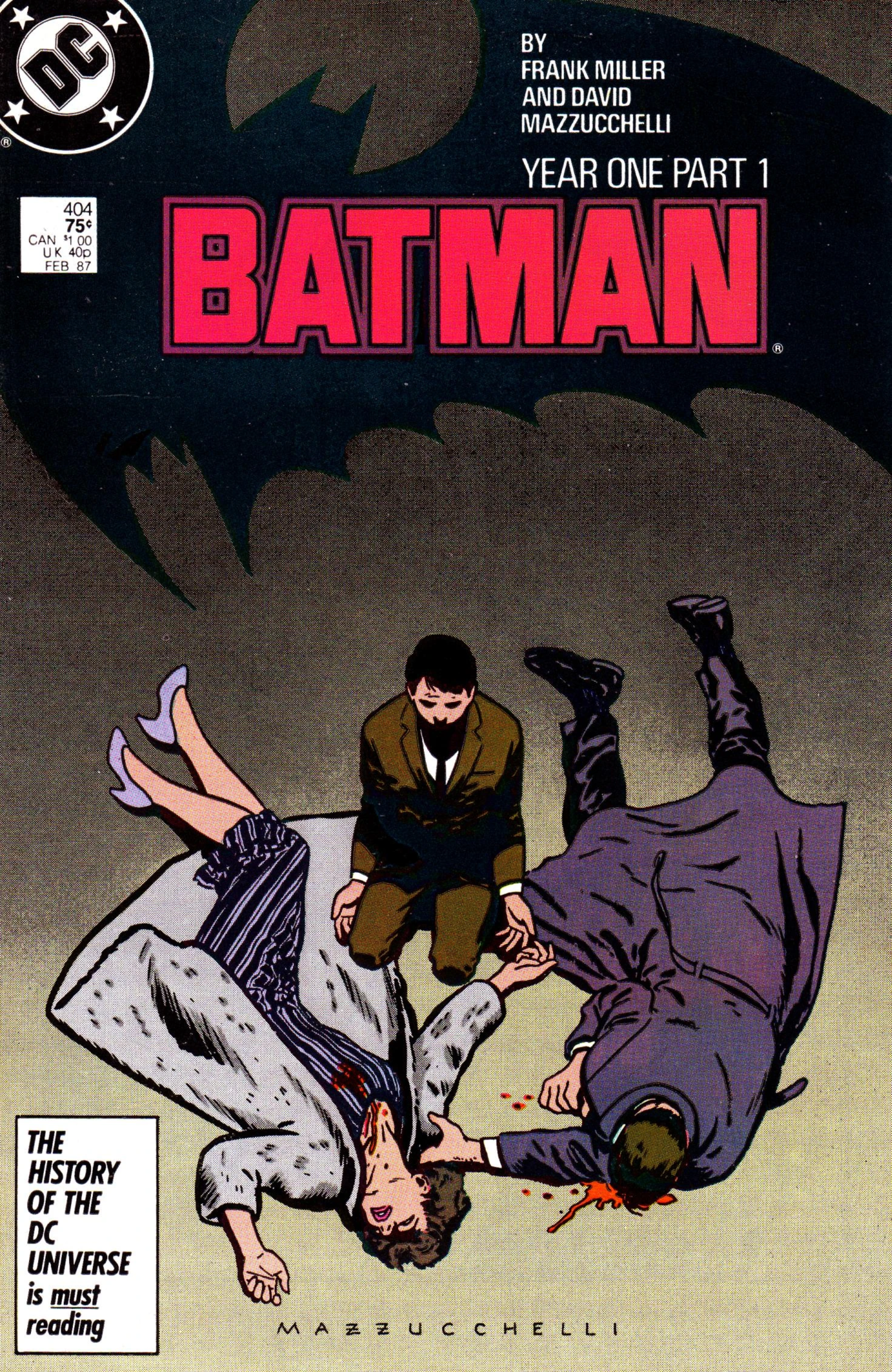
DC Comics’ “Year One” storyline, from writer Frank Miller, penciler David Mazzucchelli, colorist Richmond Lewis, letterer Todd Klein, and editor Dennis O’Neil, first appeared in Batman (1940) #404–407. “Year One” depicts Bruce’s formative, initial year of actual crime-fighting as Batman, telling a darker, more nuanced and modern take on the obviously inspirational Detective Comics #33.
3 Batman: The Killing Joke (1988)

Batman: The Killing Joke is a one-shot graphic novel from writer Alan Moore, penciler Brian Bolland, colorist John Higgins, letterer Richard Starkings, and editor Dennis O’Neil. Unlike “A Death in the Family,” Batman: The Killing Joke crowned Joker as Batman’s best rogues’ gallery villain, and is renowned for positing that Bruce is as unhinged as Joker. There are subtle ways that comic book stories still allude to this being the case, with Bruce simply far better at masking how deeply unwell he is—disregarding that he runs around dressed like a bat, anyway. An amusing encounter emphasizing this took place in Matt Fraction and Jorge Jiménez’s Batman (2025) #1, when an empathetic Killer Croc isn’t so sure that Batman’s head is okay.
2 Batman: A Death in the Family (1988)

DC Comics’ “A Death in the Family” storyline, from writer Jim Starlin, penciler Jim Aparo, inker Mike DeCarlo, colorist Adrienne Roy, letterer John Costanza, and editor Dennis O’Neil, first appeared in Batman (1940) #426–429. “A Death in the Family” sees Bruce reeling from the first major Bat-Family death. And, of course, readers are the ones who truly dealt the killing blow, not Joker.
1 Batman And Son (2006)

DC Comics’ “Batman and Son” storyline, from writer Grant Morrison, artist Andy Kubert, and editor Peter Tomasi, first appeared in Batman (1940) #655–658. Here, Talia al Ghul sent a colony of elite Man-Bat commando ninjas to claim Bruce so she could remind him of the steamy night they shared “under the desert moon above the Tropic of Cancer” that resulted in the conception of the League of Assassins’ heir. Only Bruce controversially recounts this lore a bit differently, stating that he was “drugged senseless” and refused to participate in Talia’s “depraved eugenics experiment.”
Of course, Bruce has technically been a father figure since he took Dick under his wing as his first Robin. However, Damian presented unique challenges as Bruce’s biological son, particularly a son who was raised by international terrorists and “brutalized, indoctrinated, then used as a weapon,” and this was a novel development for Bruce 20 years ago. Damian being dropped into Bruce’s lap in this era was doubly dramatic, as well, due to Bruce being told by Alfred Pennyworth that he must “relearn how to be Bruce Wayne” and officially starting the legal adoption process for Tim Drake as his legitimate son, whereas Dick had only ever legally been Bruce’s ward.
Created By Bob Kane, Bill Finger
Alias Bruce Wayne
Alliance Justice League, Outsiders, Batman Family
Race Human
Franchise D.C.
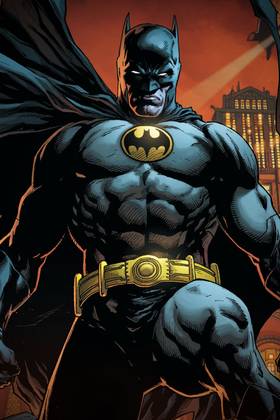
One of DC's most iconic heroes, Batman is the vigilante superhero persona of billionaire Bruce Wayne. Forged by tragedy with the death of his parents, Bruce dedicated his life to becoming the world's leading martial artist, detective, and tactician. Recruiting an entire family of allies and sidekicks, Bruce wages war on evil as the dark knight of his hometown, Gotham City.




 English (US) ·