
 4 hours ago
19

Published Oct 24, 2026, 4:00 AM EDT
The beloved series is now streaming on Hulu
 CBS
When Robert Altman's M*A*S*H arrived in theaters in 1970, its irreverent approach to the Korean War was unlike anything audiences had seen before. The film followed army surgeons who used practical jokes, alcohol, and a disregard for military authority to maintain their sanity while treating the wounded. Two years later, CBS adapted the film into a television series that retained its anarchic spirit but accomplished something the movie couldn't: It gave audiences time to get to know these characters.
Over 11 seasons, M*A*S*H evolved from a sitcom about wisecracking doctors into a thoughtful examination of humanity. The doctors and nurses of the 4077th Mobile Army Surgical Hospital are exhausted, frightened, and overwhelmed by circumstances beyond their control. They're also funny, largely because humor is one of the few weapons they have against the horrors surrounding them.
I grew up watching M*A*S*H with my parents, and while the jokes made me laugh, what stayed with me was how much I cared about the people telling them. Hawkeye Pierce (Alan Alda), Margaret "Hot Lips" Houlihan (Loretta Swit), Radar O'Reilly (Gary Burghoff) and the rest of the ensemble feel more like people you know, making their triumphs more satisfying and their heartbreaks more devastating.
More than half a century after its premiere, M*A*S*H, available to stream on Hulu, remains remarkable because it understood how closely laughter and heartbreak are connected.
M*A*S*H grew into something far greater than a sitcom
 CBS
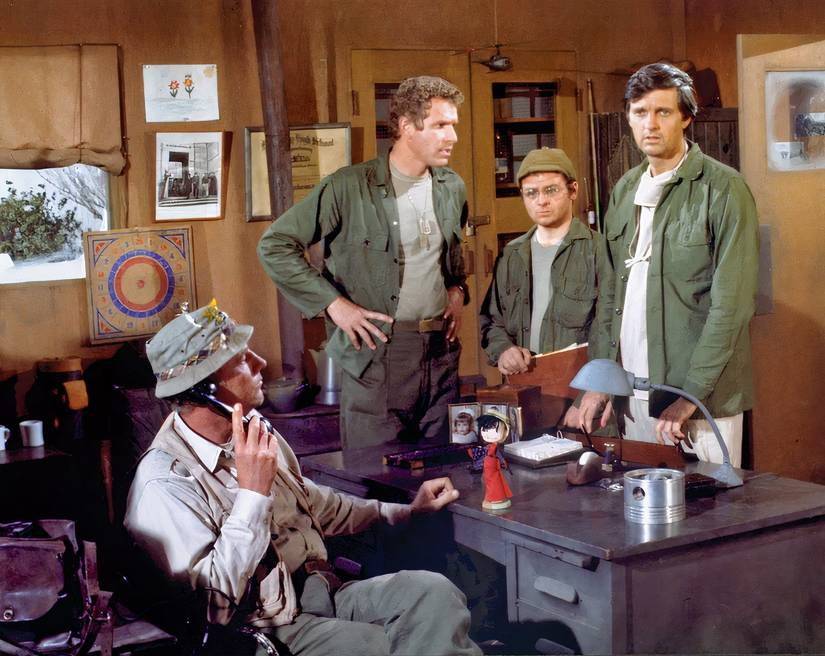
The earliest M*A*S*H episodes lean heavily into the broad comedy of Altman's film, with Hawkeye and Trapper John (Wayne Rogers) drinking, chasing nurses, and tormenting the perpetually outraged Frank Burns (Larry Linville). The Korean War provides the setting, but comedy takes center stage.
As the series progresses, the characters become more complicated. Hawkeye's contempt for the war becomes increasingly personal, while Margaret evolves beyond her initial characterization as a rigid, by-the-book head nurse. Even Maxwell Klinger (Jamie Farr), initially known for his outrageous attempts to get discharged, becomes a capable and compassionate member of the unit.
Remarkably, cast changes that might have derailed another series make M*A*S*H stronger. B.J. Hunnicutt (Mike Farrell) replaces Trapper John, Colonel Sherman Potter (Harry Morgan) takes over from Henry Blake (McLean Stevenson), and Charles Emerson Winchester III (David Ogden Stiers) replaces Frank Burns. Each brings something different, allowing the show to evolve without losing its identity.
The storytelling becomes more ambitious, too. "Point of View" (season 7, episode 11) unfolds through the eyes of a wounded soldier, while "Life Time" (season 8, episode 11) uses an on-screen clock to emphasize the urgency of a medical emergency. "Dreams" (season 8, episode 22) explores the psychological toll of war through surreal nightmares. For a series that begins as a conventional half-hour comedy, it's an extraordinary evolution.
M*A*S*H understood something about comedy that most sitcoms never do
 CBS
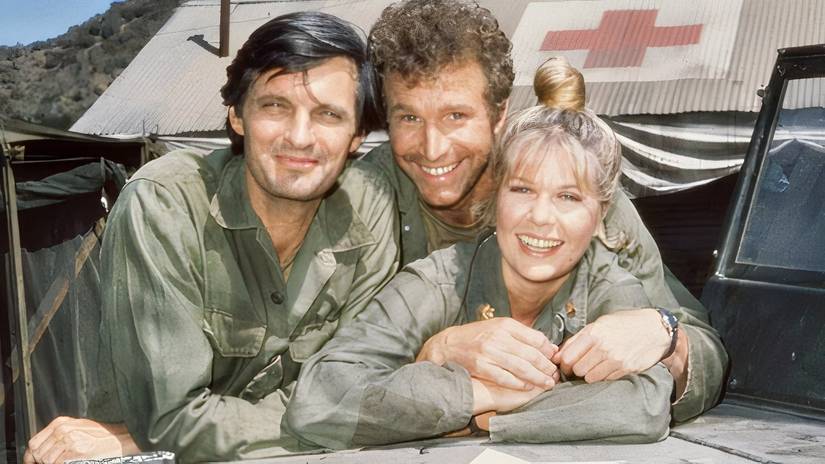
For Hawkeye Pierce, a joke is rarely just a joke. It's a defense mechanism against a war he despises but cannot escape. His practical jokes and wisecracks might make him seem irresponsible, but when wounded soldiers arrive, there's no questioning his dedication. Beneath the irreverence is a gifted surgeon who feels every life lost.
That's what makes M*A*S*H so effective. The comedy doesn't exist separately from the suffering, it's a response to it. The doctors laugh because the alternative is dwelling on the terrible things they see every day, and audiences laugh along with them.
Few episodes illustrate the show's willingness to confront tragedy more powerfully than "Abyssinia, Henry" (season 3, episode 24). After Henry Blake receives his discharge and says his emotional goodbye, the episode appears headed toward a happy ending. Instead, Radar enters the operating room with devastating news: Henry's plane has been shot down, and there are no survivors. The surgeons absorb the news before returning to their patients. The war doesn't stop to give anyone time to grieve.
It's one of television's most heartbreaking moments, precisely because it arrives in a sitcom. M*A*S*H understands that war offers no guarantees. Sometimes the people you love don't make it home, and sometimes the only thing you can do is keep working.
An unforgettable and record-setting finale
 CBS
When "Goodbye, Farewell and Amen" aired on Feb. 28, 1983, an estimated 106 million Americans tuned in to say goodbye to the 4077th. That's roughly 24 million more than watched Super Bowl XVII just a month earlier, when Washington defeated Miami 27-17. The 150-minute finale remains the most-watched episode of scripted television in American history, a remarkable achievement that speaks to how deeply audiences had connected with these characters over 11 seasons.
What makes the finale extraordinary isn't its record-breaking audience. It's the refusal to give these characters an uncomplicated happy ending. Hawkeye begins the story in a psychiatric hospital, struggling to confront a traumatic incident involving a Korean mother and her infant. With psychiatrist Sidney Freedman (Allan Arbus), he gradually remembers the horrifying truth behind his breakdown. It's devastating but appropriate for someone who has spent years using humor to keep his anguish at bay.
The other characters face bittersweet conclusions. Charles is devastated when the Chinese prisoners he taught to play music are killed, Father Mulcahy (William Christopher) suffers hearing loss, and Klinger, who spent years trying to leave Korea, decides to remain with his new wife.
Then comes the final goodbye between Hawkeye and B.J. As Hawkeye's helicopter rises above the abandoned camp, he looks down to discover that his best friend has spelled out "GOODBYE" in stones. It's a simple gesture, but after everything these characters have endured, it's impossibly moving.
I was 11 when the finale aired, and I still remember how deeply that moment affected me. Rewatching it recently, I was surprised by how hard it still hit. Watching it again recently, I found it just as powerful. Even as a kid, I understood I wasn't simply watching the end of a television show. I was saying goodbye to people I'd grown to love. More than four decades later, that feeling hasn't changed.
M*A*S*H is available to stream on Hulu and Disney Plus.








 English (US) ·