
 Image via Warner Bros. / courtesy Everett Collection
Published Oct 7, 2026, 8:20 AM EDT
Hannah covers horror, sci-fi, and games at Collider, where she writes news and features, reviews new releases, and interviews the people who make them. She’s helping build out Collider’s gaming coverage, with Pokémon as one of her specialties. If she isn’t writing about a monster, she’s probably watching one on a tape from her VHS collection.
Sign in to your Collider account
Denis Villeneuve’s Dune has plenty of ways to get your attention. Its ships dwarf entire cities, its sandworms make crossing the desert a terrible proposition, and its cast includes enough stars to populate several other blockbusters. Yet five years later, the movie’s most memorable moment comes down to Rebecca Ferguson, a closed door, and words that science-fiction fans knew before the movie released. For all its spectacle, Dune understands just how much a great line can accomplish.
Frank Herbert’s Litany Against Fear opens with “I must not fear. Fear is the mind-killer. Fear is the little death that brings total obliteration.” Villeneuve’s adaptation slightly shortens the wording, but preserves what makes the passage extraordinary. It gives fear the power to destroy someone’s judgment, then offers a way to resist it. That’s already enough to make it memorable, but Ferguson’s delivery during Paul’s gom jabbar test earns it a place beside sci-fi’s greatest quotes.
Collider Exclusive · Sci-Fi Personality Quiz Which Sci-Fi Hero Are You Most Like? Paul Atreides · Captain Kirk · Princess Leia · Ellen Ripley · Max Rockatansky
Five iconic heroes. Five completely different ways of facing an impossible universe. One of them shares your instincts, your values, and your particular way of refusing to back down. Eight questions will tell you which one.
🏜️Paul Atreides
🖖Capt. Kirk
✊Princess Leia
🔦Ellen Ripley
🔥Max Rockatansky
FIND YOUR HERO →
01
How do you lead when the stakes couldn't be higher? The way you lead under pressure is the most honest thing about you.
AI absorb everything — every variable, every pattern — and move only when I know the path forward. BI read the room, make the call, and own the consequences. Hesitation costs more than mistakes. CI rally people. A cause needs a voice, and I refuse to let fear be louder than conviction. DI assess the threat, establish what needs doing, and get it done without waiting for permission. EI don't lead. I act. Others can follow or not — I'm already moving.
NEXT QUESTION →
02
What is your greatest strength in a crisis? The quality that keeps you alive when everything else fails.
APrescience — the ability to see further ahead than anyone else and plan accordingly. BImprovisation — I'm at my best when the plan falls apart and I have to invent a new one. CConviction — I know what I'm fighting for, and that certainty doesn't waver under fire. DComposure — I stay functional when everyone around me is falling apart. Panic is a luxury. EEndurance — I outlast things. I take the hit and keep moving long after others have stopped.
NEXT QUESTION →
03
What is the thing you'd sacrifice everything else for? Your deepest motivation is your truest compass.
AThe survival and dignity of my people — even if I have to become something frightening to ensure it. BThe safety of my crew — every single one of them. No one gets left behind. CFreedom — for my people, for every world still crushed under the weight of an empire. DThe truth — what actually happened, what's actually out there, whether anyone believes me or not. EThe one person — or the one memory — that still makes any of this worth surviving for.
NEXT QUESTION →
04
How do you relate to the people around you? Who you are to others under pressure is who you really are.
AWith intensity and distance — I care deeply, but the weight I carry makes closeness complicated. BWith warmth and irreverence — I take the mission seriously, not myself. CWith directness and trust — I say what I mean, and I expect the people I work with to rise to it. DWith professional care but clear limits — I'll protect you, but I won't pretend we're family. EWith wariness that slowly becomes loyalty — I don't trust easily, but when I do, it holds.
NEXT QUESTION →
05
You're facing a threat that no one else believes is real. What do you do? How you respond when you're the only one who sees it defines everything.
APrepare in silence. If they won't listen, I'll be ready when they finally have to. BKeep pushing until someone listens — and if no one does, handle it myself. CBuild the case, find the allies, and make the threat impossible to ignore. DDocument everything. The truth matters even if no one believes it yet. EStop trying to convince anyone. Survive it. That's the only argument that counts.
NEXT QUESTION →
06
What has your heroism cost you personally? Every hero pays. The question is what — and whether they'd pay it again.
AMy innocence — I've seen what I'm capable of, and I can't unsee it. BPeople I loved — the command chair has a view, but it's a lonely one. CA normal life — I gave up everything ordinary the moment I chose the cause. DMy sense of safety — I know exactly what's out there now, and I can't pretend otherwise. EAlmost everything — and I'm still not sure what I'm carrying it all for. But I keep going.
NEXT QUESTION →
07
How do you feel about the rules of the world you're in? Every hero has a relationship with the system. What's yours?
AI understand them deeply — and I know exactly which ones must be broken, and why. BI respect the spirit of them and bend the letter when the situation demands it. CThe system is the problem. I'm not here to work within it — I'm here to dismantle it. DI follow protocol until protocol stops being useful. Then I make the call myself. EThe rules collapsed a long time ago. What's left is instinct, and mine are reliable.
NEXT QUESTION →
08
When everything is on the line, what keeps you going? The answer is the most honest thing about you.
ADestiny — or something that feels so much like it that the difference no longer matters. BThe people on my ship — their faces, their trust, the fact that they're counting on me. CThe belief that what we're fighting for is worth every sacrifice, including this one. DSheer refusal to let it win — whatever it is. I don't stop. That's just who I am. EI'm not sure anymore. But the road is still there, and I'm still on it.
REVEAL MY HERO →
Your Hero Has Been Identified Your Sci-Fi Hero Is…
Your answers point to the iconic sci-fi hero who shares your instincts, your values, and your particular way of facing the impossible.
Paul Atreides
You carry a weight most people would crumble under — the knowledge of what you're capable of, and the burden of what you might have to become.
- You see further ahead than others and you plan accordingly, even when the vision frightens you.
- You are driven by loyalty to your people and a sense of destiny you didn't ask for but can't escape.
- Paul Atreides is not simply a hero — he is someone who understands the cost of power and chooses to bear it anyway.
- That gravity, that willingness to carry what others won't, is exactly you.
Captain Kirk
You lead with instinct, warmth, and an absolute refusal to accept a no-win scenario — because you've always believed there's a third option nobody else has thought of yet.
- You take the mission seriously without ever taking yourself too seriously.
- Your crew would follow you anywhere, not because you demand it, but because you've earned it.
- Kirk's genius isn't tactical — it's human. He reads people, bends rules with purpose, and wills outcomes into existence through sheer conviction.
- That combination of warmth, audacity, and relentless optimism is unmistakably yours.
Princess Leia
You are the kind of person who holds the line when everyone else is losing faith — not because you're fearless, but because giving up simply isn't something you're capable of.
- You lead through conviction. Your voice carries because your belief is unshakeable.
- You gave up everything ordinary the moment you chose the cause, and you've never looked back.
- Leia is not a supporting character in her own story — she is the moral centre of the entire rebellion.
- That same fierce, principled, unbreakable core is what defines you.
Ellen Ripley
You are not reckless, not grandiose, and not particularly interested in being anyone's hero — you just refuse to stop when it matters.
- You see threats clearly, you document the truth even when no one listens, and when the time comes you handle it yourself.
- Ripley's heroism is earned, not performed. She doesn't have a speech — she has a flamethrower and a plan.
- You share her composure under the worst possible pressure, and her refusal to pretend the monster isn't there.
- When it counts, you don't flinch. That's everything.
Max Rockatansky
You have been through fire that would break most people — and what came out the other side is something the world underestimates at its peril.
- You don't ask for help, don't need validation, and don't wait for anyone to tell you the rules no longer apply.
- Your loyalty, when it finally arrives, is absolute — but it's earned in silence and tested in action, not in words.
- Max is not a nihilist. He is someone who lost everything and found, against his will, that he still has something worth protecting.
- That bruised, stubborn, ultimately human core is exactly yours.
↻ RETAKE THE QUIZ
Rebecca Ferguson Makes 'Dune's Best Line Impossible to Forget
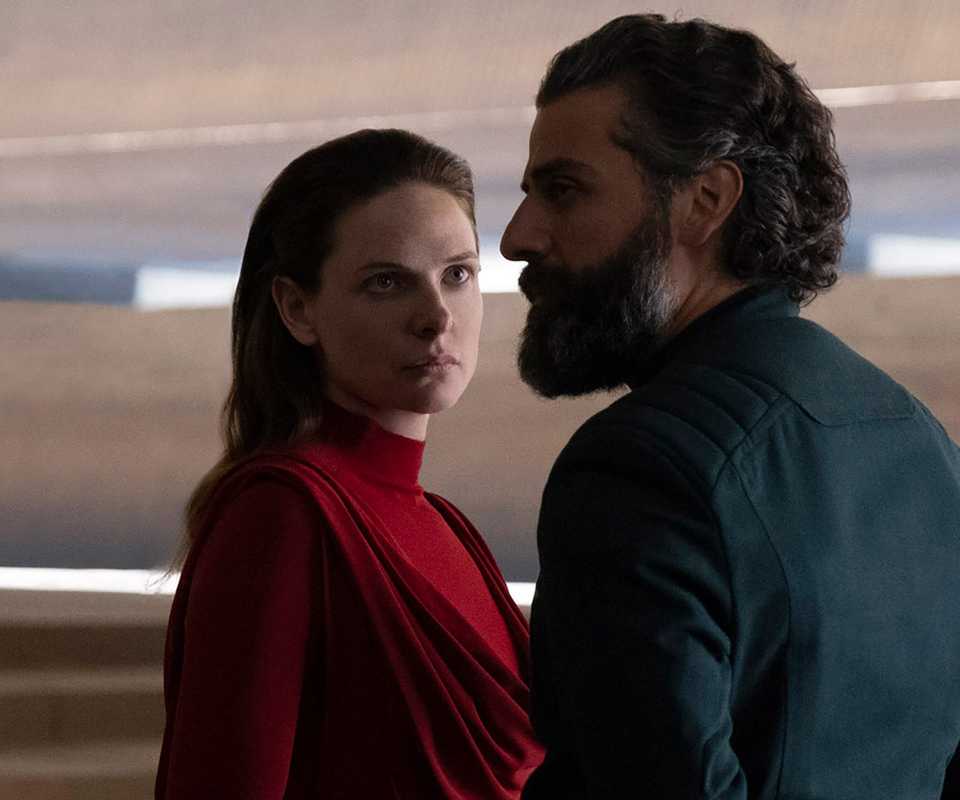
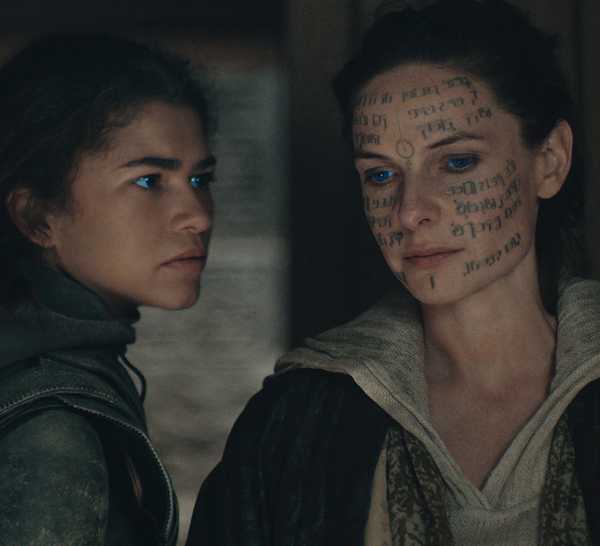
Paul Atreides (Timothée Chalamet) faces an especially nasty introduction to the Bene Gesserit. Reverend Mother Gaius Helen Mohiam (Charlotte Rampling) holds a poisoned needle at his neck while a box subjects his hand to agonizing pain. Pulling away means death, leaving him to resist the instinct the test deliberately provokes. You don’t need a working knowledge of interstellar politics to understand why this scene is terrifying. Chalamet makes staying still look like an enormous physical effort, but Jessica’s position is arguably worse. She knows what Mohiam can do and has helped place her son in that room. In Herbert’s novel, Paul recalls the Litany himself; the movie gives Jessica its defining delivery as she waits outside. That change makes the scene a test of her convictions, too, because following her order’s teachings means allowing her child to remain in danger.
Ferguson doesn’t deliver the passage with the effortless composure you might expect from someone with Jessica’s training. Her voice strains, and the words sound like something she’s clinging to while her son suffers. Her fear makes the scene work. A perfectly controlled Jessica could demonstrate the effectiveness of Bene Gesserit discipline, but this Jessica exposes what that discipline costs her. There’s also something deeply uncomfortable about watching a mother use an institution’s teachings to endure the threat that same institution poses to her son. Mohiam treats Paul’s survival as conditional, claiming the authority to kill him if he fails. Jessica’s distress makes that authority difficult to accept as merely part of an important ritual. The Litany can be worth believing in without making the Bene Gesserit worthy of unquestioning loyalty.
The Litany Against Fear Gives Bravery Something to Do
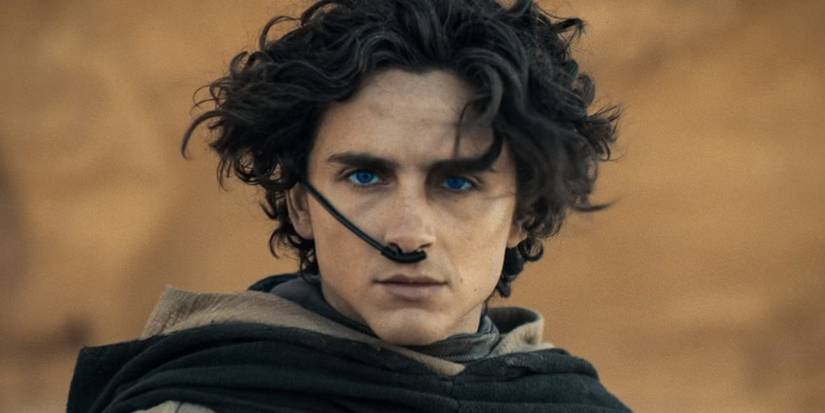 Image via Warner Bros. Pictures
The opening instruction sounds impossible if you stop there. Being told not to fear is hardly helpful when there’s an excellent reason to be frightened. Herbert’s passage becomes more compelling as it develops, acknowledging that fear must be faced and allowed to pass. Its final assurance, “Only I will remain,” follows an admission that getting through the experience will require effort. That progression gives the words a purpose beyond sounding impressive in a movie. Fear can make a possible disaster feel inevitable, or turn the immediate urge to escape into the only option someone can see. The Litany asks its speaker to endure that feeling long enough to recover their judgment. Paul’s test makes the consequence literal, since the response that promises relief would get him killed.
It’s a convincing account of bravery because neither Paul nor Jessica gets to skip being frightened. Their training gives them something to practice under pressure, and the performances show how demanding that practice becomes. The passage remains useful outside the story for the same reason. A person doesn’t need to be facing a poisoned needle to recognize the difficulty of making a decision while panic insists on making it for them.
'Dune's Best Quote Has Earned Its Place Among Sci-Fi's Greats
 Image via Warner Bros.
Science fiction has given us countless unforgettable quotes, and there are surely more waiting in worlds we haven’t visited yet. But Dune’s Litany Against Fear has earned a place that won’t be easy to challenge. Its words offer something worth remembering even after the movie ends, and Ferguson makes us believe in them by showing how desperately Jessica needs them. Jessica knows the Litany by heart, but getting through it while her son suffers is another matter. Ferguson lets that struggle shape her delivery, giving Herbert’s familiar words the urgency of a mother trying to hold herself together. Five years later, the scene remains the strongest argument for the quote’s ranking: it’s easy to tell someone to face their fear, but Dune makes us feel what that actually takes.

Release Date September 15, 2021
Runtime 155 minutes
Director Denis Villeneuve
Writers Denis Villeneuve, Eric Roth, Jon Spaihts, Frank Herbert
Producers Herb Gains, John Harrison, Joseph M. Caracciolo Jr., Mary Parent, Richard P. Rubinstein, Cale Boyter, Thomas Tull, Brian Herbert, Byron Merritt, Kim Herbert, Joshua Grode








 English (US) ·