
 Image via Netflix

Published May 2, 2026, 8:34 PM EDT
Sign in to your Collider account
Some shows do not get forgotten because they were bad. They get forgotten because streaming trained people to move on too fast. It's like pop-culture gripped other shows way too fast, for way too long, and these shows got sidelined. Netflix especially has this ugly habit of swallowing its own history.
A show arrives, finds the exact people it was made for, wrecks them a little, gives them a mood or a world or a relationship dynamic they start living inside for weeks, and then the platform buries it under the next wave of content until it starts feeling like you imagined the whole thing alone. That is what happened to these series. And what makes it so frustrating is that they were not half-successful curiosities. They were the kinds of shows that had texture in the bloodstream.
'Dead to Me' (2019–2022)
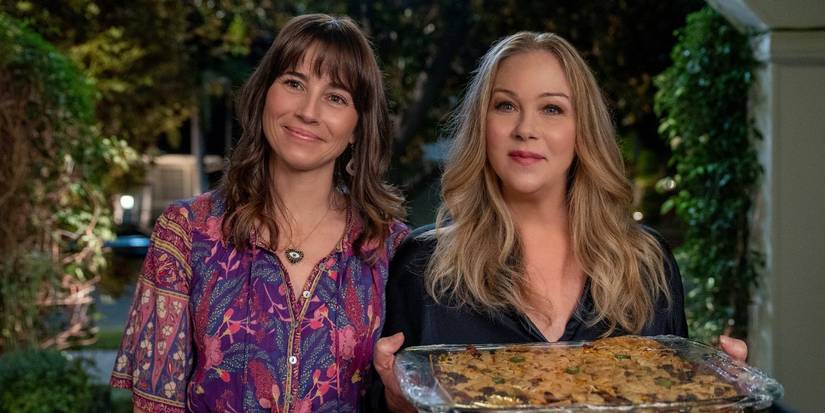 Image via Netflix
What people miss about Dead to Me is how viciously exact it was about grief. Not movie grief. Not prestige-TV grief. The real kind. The kind that makes you angry at the wrong person, funny at the wrong time, controlling when you should collapse, clingy when you should walk away, and weirdly attached to the exact person who seems most dangerous to your emotional survival. Jen Harding (Christina Applegate) and Judy Hale (Linda Cardellini) were the greatest damaged pairing Netflix ever stumbled into.
The show understood immediately that if you put a woman held together by rage next to a woman held together by apology, the result will not be healing at first. It will be combustion. And that is why it stayed so good. It never turned their bond into a neat friendship arc. Every time it got close to sweetness, it would remember the blood under the floorboards. Another lie. Another guilt spiral. Applegate gave Jen that clenched, exhausted, punishing intelligence that grief sometimes sharpens into cruelty, and Cardellini made Judy feel like someone whose need to be loved had already broken every internal boundary she had. The show's brilliance was that it kept letting both women be unbearable and lovable in the same breath. That is near-perfect writing to me.
'The OA' (2016–2019)
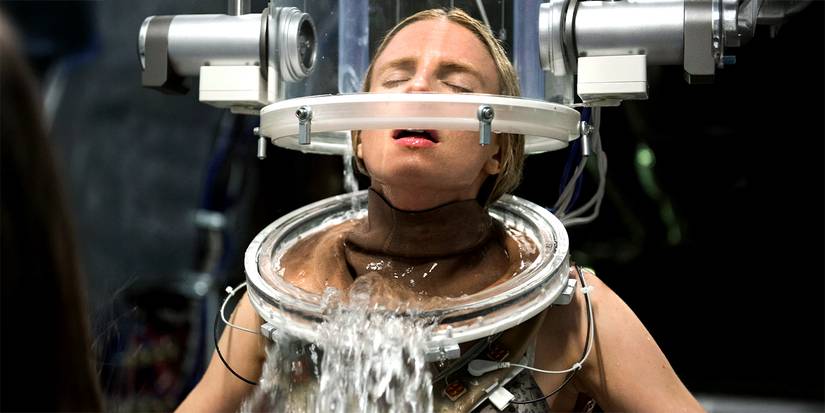 Image via Netflix
This one still feels like a robbery. Not a cancellation. A robbery. Because The OA was not just another ambitious Netflix mystery where you wait for clues to click into place. It was doing something much stranger and much riskier. It was asking the audience to surrender to belief as an emotional act. Prairie Johnson (Brit Marling) returns after seven years, is able to see, gathers those five lonely people in that unfinished house, and tells them what happened to her. That should not have worked as powerfully as it did. On paper, it sounds almost absurd. On screen, it felt sacred and unstable at the same time. The show understood that stories can function like portals long before they function like explanations.
The real genius was that it never treated the listeners as furniture. Steve Winchell (Patrick Gibson), French Sosa (Brandon Perea), Buck Vu (Ian Alexander), Jesse (Brendan Meyer), and BBA (Phyllis Smith) mattered because the show was also about the kinds of lives that are so emotionally starved they become vulnerable to miracles. Prairie was not just giving them exposition. She was giving them a shape of meaning large enough to interrupt despair. That is a huge thing for a show to attempt without irony. Then Season 2 somehow got even bolder, wider, more structurally deranged in the best way, and instead of being rewarded for that nerve, it got cut off just when it was opening into something enormous. That is why people who love The OA talk about it the way they do.
'Sense8' (2015–2018)
There are shows people admire. There are shows that people binge. And then there are shows people attach to in this almost embarrassing, full-body way, because the show touches a need they do not get met anywhere else. Sense8 was that kind of show. It was not just clever sci-fi about psychic connection. It was about how unbearable isolation is, and how intoxicating it would be to be truly reached by other people, not politely understood, not "related to," but reached.
To have somebody else inside your panic, your desire, your shame, your language, your body, your memory. The premise itself was already emotional dynamite. What made the show special was that it actually believed connection could save people. That sounds cheesy when written plainly. Good. It was. It was gloriously, vulnerably earnest about human interdependence in a television era that often hides behind detachment. Watching the cluster become a real cluster was the whole thrill. Sun Bak (Bae Doona)'s control, Lito Rodriguez (Miguel Ángel Silvestre)'s fear, Wolfgang Bogdanow (Max Riemelt)'s damage, Kala Dandekar (Tina Desai)'s divided heart, Nomi Marks (Jamie Clayton)'s courage, Capheus Onyango (Aml Ameen and Toby Onwumere)'s optimism, Riley Blue (Tuppence Middleton)'s ache, Will Gorski (Brian J. Smith)'s steadiness, each one becoming part of the others without disappearing into them. It was brilliant.
Collider Exclusive · Sci-Fi Survival Quiz Which Sci-Fi World Would You Survive? The Matrix · Mad Max · Blade Runner · Dune · Star Wars
Five universes. Five completely different ways the future went wrong — or sideways, or up in flames. Only one of them is the world your instincts were built for. Eight questions will figure out which dystopia, galaxy, or desert wasteland you'd actually make it out of alive.
💊The Matrix
🔥Mad Max
🌧️Blade Runner
🏜️Dune
🚀Star Wars
TEST YOUR SURVIVAL →
01
You sense something is deeply wrong with the world around you. What do you do? The first instinct is often the truest one.
APull on every thread until I understand the system — then figure out how to break it. BStop asking questions and start stockpiling — food, fuel, weapons. Questions don't keep you alive. CKeep my head down, observe carefully, and trust no one until I know who's pulling the strings. DStudy the patterns. Every system has a rhythm — learn it, and you learn how to survive it. EFind the people fighting back and join them. You can't fix a broken galaxy alone.
NEXT QUESTION →
02
In a world of scarcity, what resource do you guard most fiercely? What we protect reveals what we believe survival actually requires.
AKnowledge. If you understand the system, you don't need resources — you can generate them. BFuel. Everything else — movement, power, escape — runs on it. CTrust. In a world of fakes and informants, a truly reliable ally is rarer than any commodity. DWater. And after water, information — the two things empires are truly built on. EShips and credits. The galaxy is big — you survive it by being able to move through it freely.
NEXT QUESTION →
03
What kind of threat keeps you up at night? Fear is useful data — if you're honest about what you're actually afraid of.
AThat reality itself is a lie — that everything I experience has been constructed to keep me compliant. BA raid. No warning, no mercy — just the roar of engines and then nothing left. CBeing identified. Once someone with power decides you're a problem, you're already out of time. DBeing outmanoeuvred — losing a political game I didn't even know I was playing. EThe Empire tightening its grip until there's nowhere left to run.
NEXT QUESTION →
04
How do you deal with authority you don't trust? Every dystopia has a power structure. Your approach to it determines everything.
ASubvert it from the inside — learn its rules well enough to weaponise them against it. BIgnore it and stay out of its reach. The further from any power structure, the better. CAppear to comply while doing exactly what I need to do. Visibility is the enemy. DManoeuvre within it carefully. You can't beat a system you refuse to understand. EResist openly when I have to. Some things are worth the risk of being seen.
NEXT QUESTION →
05
Which environment could you actually endure long-term? Survival isn't just tactical — it's physical, psychological, and very much about where you are.
AUnderground bunkers and server rooms — cramped, artificial, but with access to everything that matters. BOpen wasteland — brutal sun, no shelter, constant movement. At least the threat is honest. CA dense, rain-soaked city where you can disappear into the crowd and nobody asks questions. DMerciless desert — extreme heat, no water, and something enormous living beneath the sand. EThe fringe — backwater planets and busy spaceports where the Empire's attention rarely reaches.
NEXT QUESTION →
06
Who do you want in your corner when things fall apart? The company you keep is the clearest signal of who you actually are.
AA tight crew of believers who've seen behind the curtain and have nothing left to lose. BOne or two people I'd trust with my life. Any more than that and someone talks. CNobody, ideally. Alliances are liabilities. I work alone unless I have no choice. DA community bound by shared hardship and mutual survival — people who need each other to last. EA ragtag team with wildly different skills and total commitment when it counts.
NEXT QUESTION →
07
Where do you draw the line — if you draw one at all? Every survivor eventually faces a moment that tests what they're actually made of.
AI won't harm the innocent — even the ones who'd report me without hesitation. BI do what I have to to protect the people I've chosen. Everything else is negotiable. CThe line shifts depending on who's asking and what's at stake. DI draw a long-term line — nothing that compromises my people's future, even if it'd help now. ESome lines, once crossed, can't be uncrossed. I know which ones they are.
NEXT QUESTION →
08
What would actually make survival worth it? Staying alive is one thing. Having a reason to is another.
AWaking others up — dismantling the illusion so no one else has to live inside it. BFinding somewhere — or someone — worth protecting. A reason to keep moving. CAnswers. Understanding what I am, what any of this means, before time runs out. DLegacy — shaping the future in a way that outlasts me by generations. EFreedom — for myself, for others, for every world still living under someone else's boot.
REVEAL MY WORLD →
Your Fate Has Been Calculated You'd Survive In…
Your answers point to the world your instincts were built for. This is the universe your temperament, your survival instincts, and your particular brand of stubbornness were made for.
The Matrix
You took the red pill a long time ago — probably before anyone offered it to you. You're a systems thinker who can't help but notice the seams in things.
- You're drawn to understanding how the system works before figuring out how to break it.
- You'd find the Resistance, or it would find you — your instinct for spotting constructed realities is the machines' worst nightmare.
- You function best when you have access to information and the freedom to act on it.
- The Matrix built an airtight prison. You'd be the one probing the walls for the door.
Mad Max
The wasteland doesn't reward the clever or the well-connected — it rewards those who are hard to kill and harder to break. That's you.
- You don't need comfort, community, or a cause larger than the next horizon.
- You need a vehicle, a clear threat, and enough fuel to outrun it — and you're good at all three.
- You are unsentimental enough to survive that world, and decent enough — just barely — to be something more than another raider.
- In the wasteland, that distinction is everything.
Blade Runner
You'd survive here because you know how to exist in moral grey areas without losing yourself completely.
- You read people accurately, keep your circle small, and ask the questions others prefer not to answer.
- In a city where humanity is a legal designation rather than a feeling, you hold onto something that keeps you functional.
- You're not a hero. But you're not lost, either.
- In Blade Runner's world, that distinction is everything.
Dune
Arrakis is the most hostile environment in the known universe — and you are precisely the kind of person it rewards.
- Patience, discipline, and political awareness are your core strengths — and on Arrakis, they're survival tools.
- You understand that the long game matters more than any single victory.
- Others come to Dune and are consumed by it. You'd learn its logic and earn its respect.
- In time, you wouldn't just survive Arrakis — you'd begin to reshape it.
Star Wars
The galaxy far, far away is vast, loud, and in a constant state of violent political upheaval — and you wouldn't have it any other way.
- You find meaning in being part of something larger than yourself — a cause, a crew, a rebellion.
- You'd gravitate toward the Rebellion, or the fringes, or whatever pocket of the galaxy still believes the Empire's grip can be broken.
- You fight — not because you have to, but because standing aside isn't something you're capable of.
- In Star Wars, that willingness is what makes all the difference.
↻ RETAKE THE QUIZ
'Marco Polo' (2014–2016)
 Image via Netflix
This is one of the easiest shows for people to dismiss lazily, which is exactly why it belongs here. People remember the budget, the early-Netflix prestige push, the fact that Marco Polo did not become the platform-defining sensation somebody wanted it to be. But if you actually watched it, really watched it, you know it had heft. It had an appetite. It had that old-fashioned historical-drama pleasure of stepping into a world where every glance, every seduction, every ritual, every silence around the throne might change somebody's fate. It was not always elegant, and honestly that was part of the charm. It had a little excess in its bloodstream, which a court drama should.
The smartest thing it did was refuse to make Marco the entire point. Marco Polo (Lorenzo Richelmy) is there, yes, but the world around him kept threatening to outgrow him, which made the series richer. Kublai Khan (Benedict Wong) had gravity. Hundred Eyes (Tom Wu) had mystery. The women around the court were not decorative wall decor but players that read power with terrifying speed. The whole show felt built around the idea that empire is theater and blood at once, and that anybody surviving inside it has to learn how to perform before they can even think about freedom. When people call it forgotten, what they usually mean is that Netflix did not turn it into a forever brand. That is different.
'Bloodline' (2015–2017)
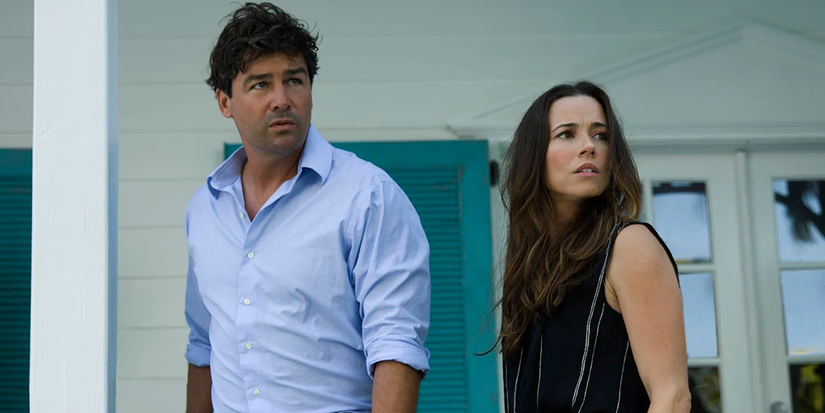 Image via Netflix
Bloodline should not be forgotten. This one feels personal. It should still be sitting right there at the center of any serious conversation about Netflix's best dramatic work, because season one in particular is one of the most suffocating family thrillers the platform ever produced. The setup was already poisonous in the right way: the respectable Rayburn family, all local charm and inherited standing, slowly coming apart when the damaged son comes back and starts pressing on every buried bruise. But the show's real power was not in its secrets — it was in the humidity of the secrets. The sense that this family had been breathing around the same lies for so long, they had forgotten what clean air was supposed to feel like.
And then there was Danny Rayburn (Ben Mendelsohn), who gave one of those performances that changes the chemical balance of an entire series. He was not a villain in the neat sense, but a grievance with memory. He was the family's guilt returning in human form and refusing to stay at the polite distance they had assigned him. Every scene with him felt unstable because he knew where the emotional rot lived, and he had the cruelty and hunger to keep pushing there. That made John Rayburn (Kyle Chandler), Meg Rayburn (Linda Cardellini), and Kevin Rayburn (Norbert Leo Butz) more interesting too, because the show never let their damage separate cleanly from his. They were all trapped in the same family myth, just occupying different corners of it. Bloodline understood a truth a lot of family dramas miss: love does not cancel rot. Sometimes it protects it.

Bloodline
Release Date 2015 - 2017-00-00
Network Netflix
Writers Arthur Phillips, Bill Cain, Lizzie Mickery, Addison McQuigg, Ashlin Halfnight, Lucas Jansen, Barry Pullman, Melanie Hoopes, Dani Vetere



 English (US) ·