
 Image via Universal Pictures
Published Oct 8, 2026, 5:51 AM EDT
Ben Brewster is a filmmaker, critic, screenwriter, and actor whose work sits at the intersection of film culture, craft analysis, and storytelling.
He is a movie list contributing writer at Collider and a contributing writer for High on Films, where he covers contemporary cinema, independent film, and festival releases with an eye toward narrative structure, performance, and visual language.
Ben is an active film festival participant, having worked with Newport Film, the Nantucket Film Festival and as a screener for the Austin, Boston & Woodstock film festivals.
He brings to that work a programming instinct shaped by years of close engagement with independent and documentary cinema. This comes with a deep investment in the kinds of films that rarely find their way into the mainstream conversation without someone willing to advocate for them.
His background spans documentary and narrative filmmaking, film marketing, and production, including work with award-winning directors. This as well as developing his own indie production company, Lilac Creative Studio, through which he develops and produces original work across fiction and nonfiction forms.
His debut documentary, Diamond in the Rust, is an examination of economic redevelopment and displacement in the Queens area of New York City. The film was recently accepted to the Unisphere Film Festival, the Defense of Democracy Film Festival, and the Urbanite Arts & Film Festival. This would mark his first festival recognition as a director.
In addition to his writing and programming work, Ben hosts Beneath the Bloom, a film podcast exploring the work behind the scenes in cinema, and the struggles one can face to make a movie become a reality. The show reflects the same sensibility that runs through all of his work. A conviction that film is not merely entertainment but one of the most powerful tools human beings have for understanding each other.
Across mediums, his work is driven by a deep belief in film as a communal, transformative art form.
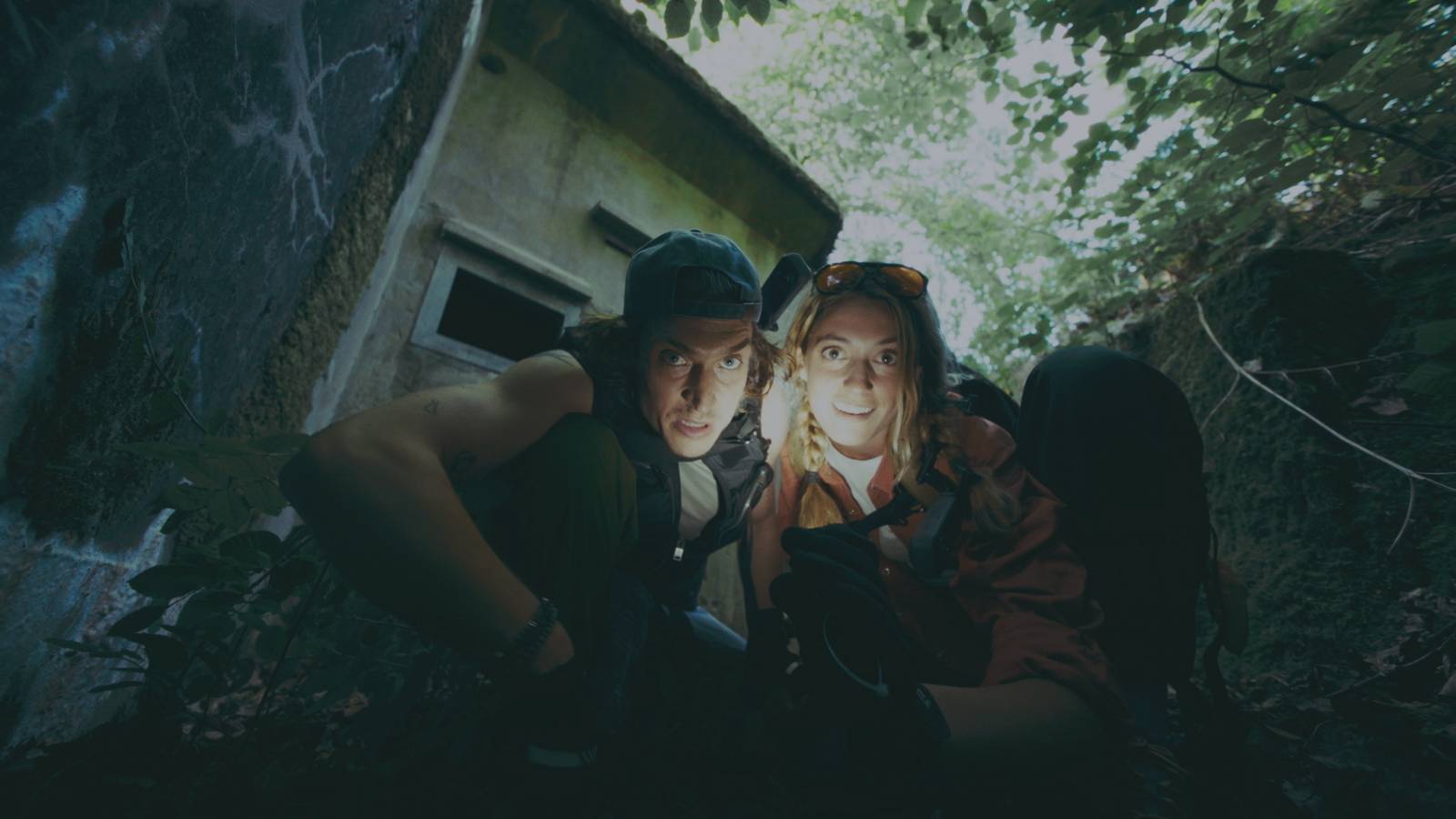
Jessica Chastain has rarely made it a point to show just how much acting range there is in her repertoire. Even when she has been given roles designed to dominate her awards reel, she somehow finds a way to portray a more restrained version of her character. Chastain often relies upon the deeper psychosis of the roles she takes, primarily showcasing her skills through movement and expressionism. But that hasn't always been the case, and it feels now that it might be taking a stark turn with the highly anticipated horror film Other Mommy, in which Chastain stars in dueling roles as the caring mother and the other entity.
Yet, her filmography is also substantially more eclectic than the image of a prestigious dramatic actress might suggest. Regardless, it still seems she doesn't get the flowers she deserves from the industry at large with the variety of women that she has played over the years. A list that just so happens to include an aspiring socialite, a poker operator, an interstellar scientist, a horror survivor and Tammy Faye Baker. There simply is no vanity in her career choices, in particular her ability to look frightened, foolish, cruel or downright exhausted.
Other Mommy arrives on October 9th from The Boogeyman director Rob Savage, and felt like the right moment to revisit some of her career highlights. This isn't Chastains first foray into the horror genre, as she took her talents to the It franchise in 2019, but rather her first leading role, and one that comes as a noticeable arrival to her catalog of performances. The snub on this list, might be Take Shelter, which Chastain shines in as the wife of Curtis LaForche. But, that is a film really designed to praise Michael Shannon's lead character — a man convinced the world is coming to an end and will allow himself to lose his mind in his own perverted effort to protect his family at all costs.
5 'A Most Violent Year' (2014)
 Image via A24
J.C. Chandor's period crime piece, A Most Violent Year, sees Chastain in another role as wife to the lead, this time opposite Oscar Isaac. Chastain plays Anna with a sharp coldness, but doesn't ever slide into the stereotypical mob boss portrayal. Morales is the wife of Oscar Isaac's heating oil businessman who begins the story feeling a world with the walls closing in on him. But it is Anna who serves as the practical intelligence of the operation, and the one who is quicker to accept the situation the family is in and has fewer illusions about remaining morally clean.
Chastain balances Anna's more morally ambiguous feelings about the nature of their income, with the deep love and affection of a caring wife. The crisis might remain on the world stage economically, but the differing beliefs in moral ideology create a dynamic domestic tension between Chastain's Anna and Isaac's Amel. A project a bit under the radar in both of their filmographies, Chastain's ability to bring an edge to her character while carefully balancing the line between dipping into villainy is one of the reasons why it stands up.
4 'It: Chapter Two' (2019)
 Image via Warner Bros. Pictures
Andy Muschietti's adaptation of Stephen King's novel sees the sequel to It buried in a messy, elongated, commercialized movie in constant danger of overshadowing its actors' in favor of digital spectacle. In this one, Chastain plays the adult version of Beverly Marsh, bringing a dedication and seriousness to her depiction that elevates every scene she is in. She may have escaped Derry geographically, but psychologically she never left it behind. Beverly carries that childhood trauma that every King novel protagonist seems to bear, and Chastain constructs the adult version of that carefully, and with a precision that goes well beyond what the screenplay asks for. She was able to find the emotinal logic of where her character ended up in an incredibly internally coherent manner.
The rest of the film around her is pretty uneven in ways that a four-hour adaptation of this source material was probably always destined to be. Nevertheless, Chastain holds an emotional thread, that uniquely human discomfort that informs some of the lackluster spectacle elements of the clown's second round of terror on Derry, Maine. It: Chapter Two is also the connection that makes Other Mommy her second major horror commitment. The two roles could not be more different in their extensive range of demands.
3 'Molly's Game' (2017)
 Image via STX Entertainment
Molly's Game is Aaron Sorkin's directorial debut, a chair he recently returned to with The Social Reckoning. In a highly verbal and dialogue dense role, Molly Bloom was a character Sorkin asked Chastain to carry enormous amounts of expository information within her head. She had to hold the intelligence of the woman while simultaneously displaying the commanding monologues of someone who has lived in the character long enough to stop performing the material and simply inhabit it. Idris Elba opposite her, as her attorney gives the film some of its best scenes, two incredibly smart people circling each other's defenses in a courtroom like sharks.
Molly's Game at its core, is focused on a woman who was exceptional at something the world did not want to give her credit for. Molly is constantly explaining the rules of poker, the hierarchy of wealthy men and women around her, and the increasingly dangerous decisions that built her underground games. Chastain speaks quickly because Molly thinks quickly. Even the film's most openly emotional scenes retain some of the stubbornness that got her into a mess of trouble in the first place.
2 'The Help' (2011)
 Image via Walt Disney
Chastain plays Celia Foote, the comedic heart of The Help, a movie carrying very weighty material. Frankly, she could have been unbearable. Foote is loud, socially awkward and has a certain desperation to be well liked. Celia brings a certain sense of obliviousness to social normalities, none more evident than how she is an outsider, excluded from the society women who run the town's social calendar. The film is set in 1960s Mississippi, and Chastain plays her isolation with a bewildering sense of goodwill that makes her the most human character in the entire movie. She never treats Celia as a joke, seeing her loneliness through the ways in which she attempts to approach people who have already decided they don't want her around.
The character earned her an Academy Award nomination and remains one of the more physically committed pieces of her work. The absence of self consciousness gave Chastain room to work comedically in ways she has rarely been able to since. Her scenes with Octavia Spencer, who plays Minny, have an ease and comedic swagger that cut through The Help's heavier moments. In particular, when she finally starts treating Minny like a person and not another aspect of the predetermined social structure. The physicality of this role exudes an element of her range her more interior work can obscure. This character feels oddly separate from the image that formed around her afterward. The Help has some pretty major concerns regarding how it frames its central subject, but Chastain's performance stands completely separate from those problems.
1 'Zero Dark Thirty' (2012)
.jpg?q=49&fit=crop&w=825&dpr=2) Image via Sony Pictures Releasing
Image via Sony Pictures ReleasingMaya is the role that turned nearly every quality Chastain had shown into something much more extreme and severe. Zero Dark Thirty is Kathryn Bigelow's project about the decade-long hunt for Osama bin Laden. Maya is a CIA analyst with one sole objective, pathologically focused on one target, refusing to give the audience an easy answer as to why. She is arrogant, obsessive and abrasive all in service to catching the man behind the terrorist attacks of September 11, 2001. Her evolution through the ten years with the character is built on control and consistency that makes the evolution feel very organic, even when the performance never asks the audience to find her qualities admirable. The film is deliberately cold and procedural, refusing the vulnerability and warmth so often undesirably associated with a female lead. She walks into rooms full of men who outrank her and behaves as though their disagreement is a temporary inconvenience.
Yet, it is the final scene where the performance becomes something much harder to shake. Maya has spent the film pursuing a conclusion with such intensity that neither she nor the audience stopped to think about what comes afterward. Then, Bigelow just leaves her alone, a fascinating decision for a character that has nothing left to do. The question on Maya's face in the final close up is unsettling in a deeply psychological examination. Now that she has accomplished the single goal that had consumed her life, it's the first time in our journey with her that she has nowhere to go.

Release Date December 19, 2012
Runtime 157 Minutes
Writers Mark Boal



 English (US) ·