Through 53 films released over 51 years, Hitchcock's canon came to be characterized by psychological and situational tension favored above shock and surprise, "MacGuffin" plot devices that the movies happened around, themes of voyeurism and the audience's role in actively watching—and exploration of humanity's darker side, often focusing on "wrong men" and notorious women. Hitchcock's imprint on culture is so profound it's hard to summarize, but some filmmakers have paid homage more explicitly and successfully than others. The following thriller movies take heavy, overt inspiration from The Master of Suspense while also earning esteem as masterpieces in their own right.
5
'Charade' (1963)
Beginning in his early, pre-Hollywood era, Hitchcock made many of the greatest and most influential spy movies of all time. His contribution to the genre is epitomized in 1959's North by Northwest, an enduringly popular combination of tension, humor, and romance. Three short years later, Singin' in the Rain director Stanley Donen's Charade can pretty much be evaluated as a direct response to this film, even featuring the same star in Cary Grant. And whether or not this is actually the case, Charade has long held a reputation as "the best Alfred Hitchcock movie that wasn't made by Alfred Hitchcock."
A delightfully overwhelmed Audrey Hepburn co-stars in the Parisian-set screwball caper, as a widow who's hunted by three goons seeking a debt owed by her late husband. The worst thing you could say about the effervescent, purely pleasurable Charade is that it does feel derivative, but that's entirely by design, so it's hard to frame it as a criticism. It's no North by Northwest (what in the hell is?) but it's a relentlessly charming and quotable picture that holds up decades later.
4
'From Russia With Love' (1963)
A similarly darkly comedic romantic spy thriller from the same year as Charade, the esteemed second entry in Eon's long-running Bond franchise is also a film that can be seen as a direct response to the audience-favorite North by Northwest, perhaps even more explicitly. The follow-up to low-budget, wildly successful Dr. No saw Sean Connery on even more solid footing as 007, in a famously complex Cold War plot concerning a decoding device MacGuffin and a beautiful Russian (Daniela Bianchi) who's unwittingly used as bait by the nefarious SPECTRE.
The third and best act of From Russia With Love takes heavy inspiration from Hitchcock in particular, with an extended train set piece that evokes many Hitchcock classics as far back as The Lady Vanishes, and a fantastic helicopter action sequence that is unabashedly an echo of Cary Grant being pursued by a crop duster.
3
'Body Double' (1984)
One of the defining figures of New Hollywood, Brian De Palma was always transparent about Hitchcock's influence upon his work, and the proof was very much in the pudding. There are many Hitchcockian De Palma joints, notably thrillers like Blow Out, Obsession, Dressed to Kill, Sisters, and Femme Fatale, but perhaps the most purely evocative is the 1984 erotic thriller Body Double.
Craig Wasson gives a highly underrated performance as a mostly-failed actor tasked with watching a beautiful Hollywood Hills home, unwittingly becoming the chief suspect in a brutal murder. The plot is essentially a mash-up of equal parts Rear Window and Vertigo in an edgy '80s setting. Melanie Griffith delivered a star-making turn as adult film star Holly Body, a charmingly foul-mouthed and sexually open deconstruction of the Hitchcock Blonde.
2
'Stranger by the Lake' (2013)
Very much a man ahead of his time in all kinds of ways, Alfred Hitchcock was a personal friend and trusted professional collaborator of countless gay, lesbian and bisexual figures in both above-the-line and below-the-line roles in Hollywood. It's even been reported that the director found such a trait to be a kind of fun, kinky secret to keep. The most notable and well-known queer figures connected to Hitchcock were actors Anthony Perkins and Farley Granger. It's a damn shame Hitchcock didn't live to see the release of one of the best gay films ever made, a thriller that essentially owes everything to him while standing very much on its own as a masterpiece on the razor's edge of taste and what's acceptable in film.
A French erotic thriller set at a secluded gay cruising ground, Stranger by the Lake is so graphic in its sexuality it makes the once wildly controversial Body Double look like network TV. The meticulously crafted, static location and the amusing recurring regulars immediately evoke a raunchier Rear Window. Alain Guiraudie's Cannes prize-winning thriller has a lot to say about the gay community and the way gay men treat each other, none of it positive. It's a Hitchcockian study of human nature, done to perfection.
1
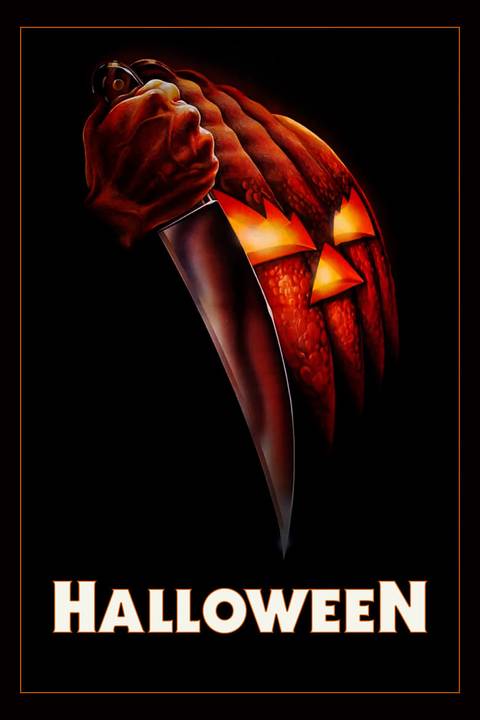
'Halloween' (1978)
John Carpenter's shoestring-budgeted, historically successful and influential thriller that incidentally constructed the slasher formula made no secret of its debt to Hitchcock, particularly Psycho. From naming one of the main characters "Loomis" to casting the daughter of Janet Leigh, Halloween is a film that owes virtually everything to Psycho, and yet it's a movie that's aging just as well, and has proven just as influential. This is the single most ripped-off movie ever made.
Alfred Hitchcock would perhaps never admit this himself, but the censors of his era made him a better director. The creative ways he avoided graphic violence in favor of the far more effective and unsettling power of suggestion has made his movies ageless. Carpenter and the producers of Halloween intentionally made the film along the lines of "theater of the mind," avoiding graphic violence and blood while creating some of the most ingenious and excruciating suspense moments in horror and thriller history, such as a teenage girl mocking her boyfriend for wearing a sheet ghost costume to bed, only that's not her boyfriend under the sheet, or the simple, extraordinary scene where Jamie Lee Curtis' Laurie is cornered in a small closet. Though it's ultimately exhilarating, Halloween is a movie that's designed to torture the audience, something Hitchcock loved to do throughout his entire career.
Release Date
October 27, 1978
Runtime
91 minutes
Director
John Carpenter
Writers
Debra Hill, John Carpenter
Producers
Irwin Yablans

 Image via Universal Pictures




 English (US) ·