
 Image via Max
Published Oct 18, 2026, 2:50 PM EDT
Dyah (pronounced Dee-yah) is a Senior Author at Collider, responsible for both writing and transcription duties. She joined the website in 2022 as a Resource Writer before stepping into her current role in April 2023. As a Senior Author, she writes Features and Lists covering TV, music, and movies, making her a true Jill of all trades. In addition to her writing, Dyah also serves as an interview transcriber, primarily for events such as San Diego Comic-Con, the Toronto International Film Festival, and the Sundance Film Festival.
Dyah graduated from Satya Wacana Christian University in October 2019 with a Bachelor's degree in English Literature, concentrating on Creative Writing. On March 2026, Dyah graduated with Master's degree in English Literature Studies, with a thesis on intersectionality in postcolonial-feminist studies in Asian literary works.
Born and raised between Indonesia and Singapore, Dyah is no stranger to different cultures. She now resides in the small town of Kendal with her husband and four cats, where she spends her free time cooking or cycling.
Sign in to your Collider account
Books have a way of capturing the world as it changes, preserving stories and experiences that might otherwise go unheard. Over the past four decades, society has undergone immense evolution, from shifting social norms to the growing influence of globalization and technology. As people across the globe become more connected, literature has opened the door to perspectives that were once overlooked.
From a novel by a Nobel Prize-winning author to an untold story about the Vietnam War, these books reflect the complexities of the world we live in while offering perspectives that remain relevant long after their publication. Without further ado, here are the five greatest books of the last 40 years, ranked.
5 'Wolf Hall' (2009)
 Image via Henry Holt & Company
Hilary Mantel’s Wolf Hall follows Thomas Cromwell’s rise from an abusive childhood to the heart of King Henry VIII’s court. In 1529, Cromwell serves Cardinal Thomas Wolsey, but when the Cardinal falls out of the King’s favor, he must figure out how to survive the political fallout. As Henry pursues Anne Boleyn and tries to end his marriage to Catherine of Aragon, Cromwell relies on his sharp mind and knack for negotiation to steer court rivalries and secure his future.
Underdogs make some of the best protagonists, and Thomas Cromwell is a perfect example. In Wolf Hall, Hilary Mantel takes a blacksmith’s son and turns him into one of the most fascinating figures in Henry VIII’s court without making him a saint or a cartoon villain. Cromwell is ingenious, enterprising, and merciless when he needs to be, but his loyalty to Cardinal Wolsey also makes him surprisingly human. As Henry’s marriage crisis threatens to reshape England, Mantel makes conversations, legal arguments, and backroom deals just as gripping as any battle. Meanwhile, her close narration lets readers experience Tudor politics through Cromwell’s eyes.
4 'The Sympathizer' (2015)
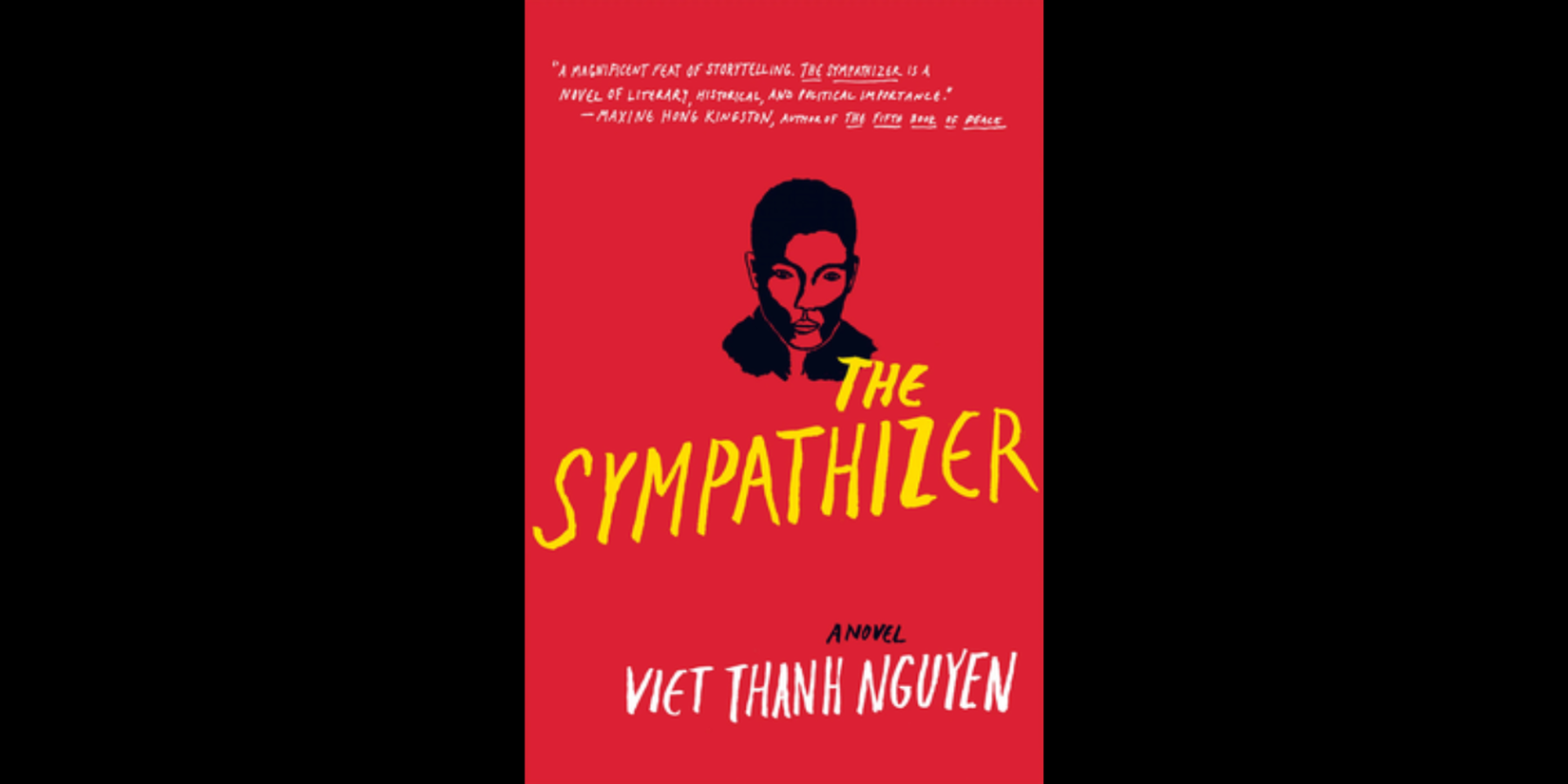 Image via Grove Press
Being caught between two sides is never easy, especially when both expect you to pick one. Viet Thanh Nguyen's The Sympathizer follows an unnamed communist spy of Vietnamese and French descent who flees to Los Angeles after the fall of Saigon. His job is to spy on South Vietnamese military officials living in exile and report back to his communist superiors. But as he tries to fit into American life, keeping his real loyalties hidden becomes increasingly difficult.
The Sympathizer explores an often-overlooked perspective on the Vietnam War — one that rarely comes up in American discourse. It's one thing to tell the story from a Vietnamese perspective, but exploring it through the eyes of someone caught between two racial and cultural identities is far less common. The protagonist never really gets to belong anywhere. He's too Vietnamese for some people, too Western for others, and too committed to his cause to simply walk away. His double life forces him to question what he believes in and how much he's willing to sacrifice for it. There's no fresh start when your past follows you everywhere, and the spy soon discovers that loyalty comes at a price. The more he tries to serve his cause, the harder it becomes to separate his own beliefs from what he's been ordered to do.
Collider Exclusive · Universe Personality Quiz Which Iconic Universe Do You Belong in the Most? Star Wars · Lord of the Rings · Harry Potter · Game of Thrones · Star Trek
Five legendary universes. Five completely different visions of what the world could be — or already was. One of them is the world your instincts, your values, and your particular way of existing were built for. Eight questions will tell you which one.
🚀Star Wars
💍Lord of the Rings
🧙Harry Potter
👑Game of Thrones
🖖Star Trek
FIND YOUR UNIVERSE →
01
What gives your life its deepest sense of meaning? Every universe is built around a different answer to this question.
ABeing part of something larger than myself — a cause, a rebellion, a fight for freedom that outlasts me. BThe journey itself — the places I'll go, the companions beside me, the world I'll discover on the way. CLearning — unlocking what I'm capable of, understanding the world's hidden mechanics, growing into something more. DLegacy — the name I leave behind, the power I build, the mark I make before the world moves on without me. EUnderstanding — exploring what exists beyond the horizon and asking what it means to be alive in a universe this vast.
NEXT QUESTION →
02
Which kind of world do you most want to inhabit? The environment shapes who you become. Choose carefully.
AA galaxy of planets, each with its own culture — connected by conflict, trade, and the Force. BAncient lands of breathtaking beauty, deep history, and a creeping darkness at the edges. CA world hidden inside our own — full of wonder, community, and magic waiting to be learned. DA brutal, beautiful continent where power is everything and every alliance is a calculation. EA future where humanity has reached the stars — and must decide what kind of species it wants to be.
NEXT QUESTION →
03
How do you prefer your conflicts resolved? The shape of a world's conflicts tells you everything about its soul.
AThrough sacrifice and courage — someone has to make the impossible choice so others don't have to. BThrough fellowship — the impossible becomes possible when the right people walk the same road. CThrough growth — confronting what you fear, understanding what you lack, and becoming equal to the challenge. DThrough strategy — outthinking, outmaneuvering, positioning yourself so the outcome was never in doubt. EThrough dialogue — finding the third option, the peaceful resolution, the answer that doesn't require a body count.
NEXT QUESTION →
04
Who do you want beside you when things get difficult? Your ideal companions reveal the world you were made for.
AA small crew — a pilot, a rogue, a warrior — each broken in their own way, unbeatable together. BA fellowship of different kinds of people, bound by purpose and deepened by the long road. CFriends who grew up alongside me — who knew me before I knew myself, and stayed anyway. DAllies whose loyalty I've earned — and tested — and whose ambitions align with mine, for now. EA crew of brilliant, curious, principled people from every corner of known space.
NEXT QUESTION →
05
What is your relationship with power? How you seek, wield, or resist power is the map of who you are.
AI want to use it to protect — and I'm terrified of what I might become if I'm not careful. BI distrust it. The most important power in this story is the courage to give it up. CI want to earn it — through knowledge, through effort, through becoming someone worthy of it. DI want to wield it. Preferably before someone else decides to wield it against me. EI want to understand it — its structures, its limits, its ethical dimensions. Power without accountability is the real threat.
NEXT QUESTION →
06
How does your universe treat good and evil? A world's moral architecture tells you more about it than any map.
AThere is a dark side and a light side — and the choice between them is always present, always personal. BEvil is real and ancient and patient — and goodness, however small, is the only thing that can undo it. CGood and evil are real, but they live inside people — and people are complicated, always capable of both. DGood and evil are mostly a matter of perspective and proximity. Power is the only honest currency. EEvil is usually the result of ignorance, fear, or broken systems — and understanding it is the first step to solving it.
NEXT QUESTION →
07
What role would you naturally fall into? Every universe has archetypes. Which one fits you without trying?
AThe reluctant hero — ordinary origins, extraordinary moment, changed forever by the choice to act. BThe unlikely carrier — the one nobody expected to matter most, quietly bearing the weight of everything. CThe student — not yet who I'll become, learning through every mistake, growing into something the world needs. DThe player — sharp enough to see the game for what it is, ambitious enough to try to win it. EThe explorer — drawn to the unknown, driven by curiosity, most alive when standing somewhere no one has stood before.
NEXT QUESTION →
08
What do you ultimately believe about the future? The answer to this is the clearest window into which universe already lives inside you.
AThat hope is real — that even in the darkest galaxy, a new hope is always possible. CThat even the smallest person can change the course of the future, if they have the courage to try. CThat love and friendship and doing what's right will matter in the end, even when everything says otherwise. DThat the wheel keeps turning — that power shifts, winters end, and what endures is those willing to fight for it. EThat humanity — or whatever we become — is capable of extraordinary things, if we choose to be.
REVEAL MY UNIVERSE →
Your Universe Has Been Chosen You Belong In…
Your answers point to the iconic universe your values, your instincts, and your particular way of seeing the world were built for. This is where you would find your people — and your purpose.
Star Wars
You believe in the cause — in the idea that freedom is worth fighting for even when the odds are impossible and the empire is vast.
- You are drawn to the moral clarity of a universe where hope itself is a form of resistance.
- You'd find your people in the Rebellion — a ragtag coalition of true believers held together by conviction more than resources.
- Star Wars is fundamentally a story about ordinary people choosing to matter in an extraordinary conflict — and that is exactly your kind of story.
- The Force may or may not be with you. But the will to use it for something larger than yourself certainly is.
Lord of the Rings
You understand, in the deepest part of yourself, that the journey matters as much as the destination — and that the world's beauty is worth protecting even at great cost.
- Middle-earth is a world of ancient wonder, deep friendship, and a darkness that only retreats when enough small acts of courage accumulate.
- You would thrive here because you value the fellowship more than the glory — the road more than the arrival.
- Tolkien's universe rewards patience, loyalty, and the willingness to carry something heavy across a very long distance.
- Those are not burdens to you. They are simply how you move through the world.
Harry Potter
You believe that love, loyalty, and doing what's right are not naive sentiments — they are the most powerful forces in any world, magical or otherwise.
- The Wizarding World is a place of wonder hidden in plain sight, where learning is transformative and the bonds you form at school follow you into every battle.
- You would flourish here because you take both the magic and the friendships seriously — and you understand that one without the other is incomplete.
- Harry Potter's universe ultimately rewards those who choose to stand for something even when standing is terrifying.
- That choice — made quietly, without guarantee — is something you understand completely.
Game of Thrones
You see the world clearly — its power structures, its hypocrisies, its brutal arithmetic — and you are not paralysed by that clarity. You use it.
- Westeros is a world that rewards intelligence, adaptability, and the willingness to understand that every alliance is also a negotiation.
- You would survive here — possibly thrive here — because you don't confuse the world as it is with the world as you'd like it to be.
- Game of Thrones is a story about what happens when the idealists and the realists collide. You are sharp enough to know which one lasts longer.
- Winter always comes. You are already prepared.
Star Trek
You believe the future is worth building — that curiosity, cooperation, and the expansion of understanding are not just ideals but the most practical path forward for any civilisation.
- Star Trek is a universe where the questions matter as much as the answers, and where encountering something utterly alien is cause for wonder rather than fear.
- You would belong here because you are fundamentally optimistic about what intelligence and decency can achieve — while being honest about how hard that achievement is.
- The Federation is the universe's most ambitious thought experiment: what if we actually got better?
- You don't just hope that's possible. You think it's the only thing worth working toward.
↻ RETAKE THE QUIZ
3 'Babel, or the Necessity of Violence' (2022)
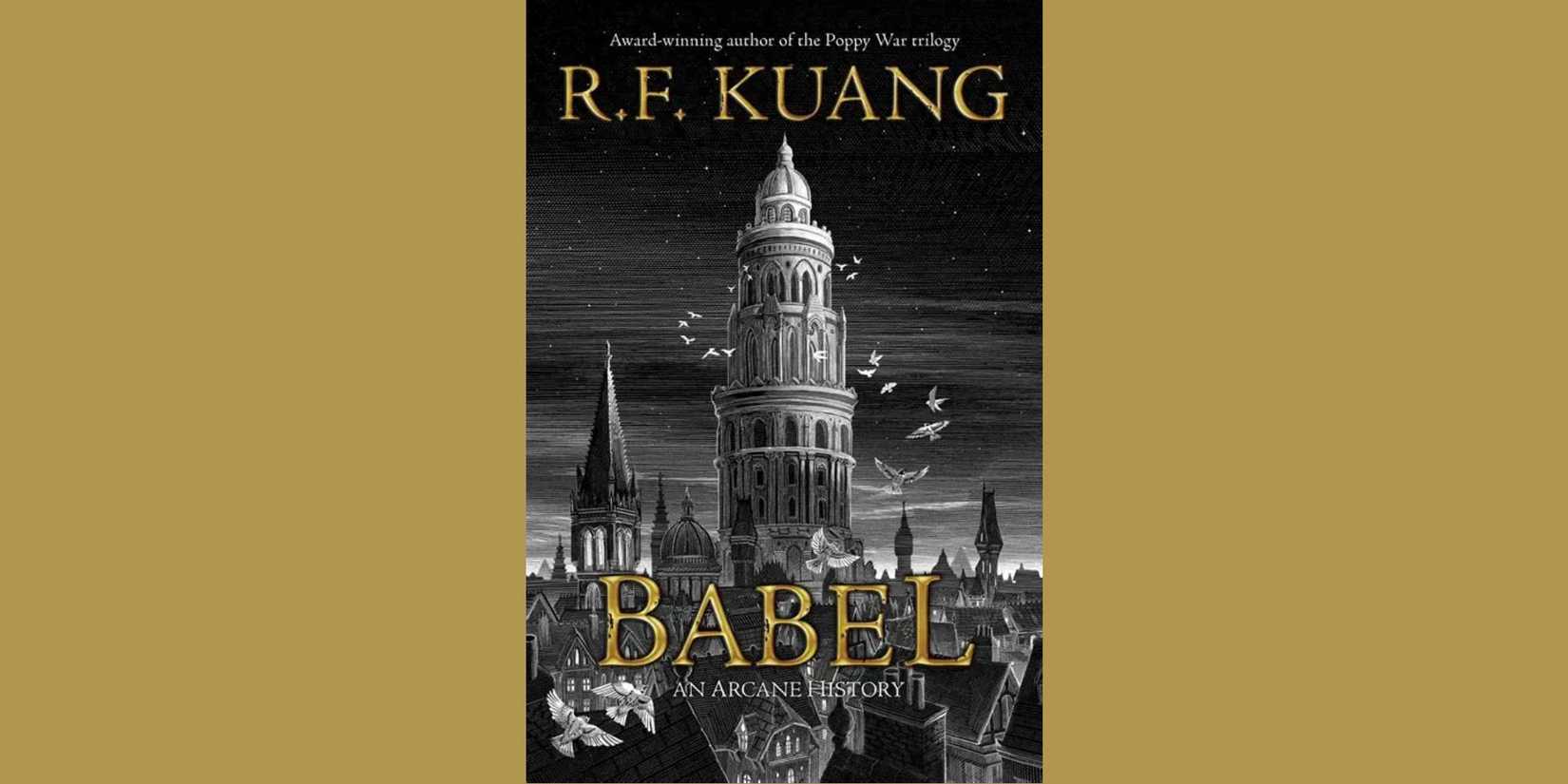 Image via Harper Voyager
R. F. Kuang’s Babel, or the Necessity of Violence imagines an alternate 1830s Britain where language is a source of magical power and a key part of the Empire’s wealth. The dark academia fantasy follows Robin Swift, a Canton-born orphan brought to England by Oxford professor Richard Lovell. At Oxford’s Royal Institute of Translation, Robin studies the connection between languages and silver-working magic, gradually discovering that Britain’s prosperity depends on exploiting the very cultures it claims to understand.
But Babel isn't just about a magical university or a student questioning everything he's been taught. It also takes a hard look at how institutions built around knowledge can serve colonial interests. Robin enters Oxford believing in the opportunities it offers, only to find himself caught between the future he's worked toward and the people harmed by the system supporting it. As he and his fellow students learn more about the Empire's dependence on translation, they must decide whether to protect their place within it or fight against it. Kuang makes a strong case that language is never entirely neutral: it can bridge cultural divides, but it can also become a tool for control. By putting this conflict at the heart of academic life, Babel questions whether education can truly be separated from the political and economic systems that benefit from it.
2 'The Remains of the Day' (1989)

From the mind of Nobel Prize-winning writer Kazuo Ishiguro, The Remains of the Day takes readers to 1956, when Stevens, a longtime butler at Darlington Hall, takes a road trip to Cornwall to visit former housekeeper Miss Kenton after receiving her letter. Along the way, he looks back on his years serving Lord Darlington and begins to question whether his career was as meaningful as he once believed. As memories of his former employer and his relationship with Miss Kenton resurface, Stevens must confront the choices that have shaped his life.
The Remains of the Day explores the divide between the working and elite classes from a uniquely human perspective rather than a theoretical discourse. To Stevens, obedience is a virtue, and serving an influential man like Lord Darlington is a matter of honor. But what happens when the person you've devoted your life to turns out to be less admirable than you thought? Through Stevens, who has spent decades defining himself through his profession, Ishiguro delivers an emotional portrait of a man struggling to understand who he is beyond his duties. The novel also questions the idea that serving someone important automatically makes your life meaningful. By the time Stevens begins to recognize what his loyalty has cost him, he must face the possibility that his commitment to duty has left little room for his own desires, relationships, and happiness.
1 'The God of Small Things' (1997)
 Image via Harper Collins
An essential piece of postcolonial literature, The God of Small Things follows fraternal twins Rahel and Estha throughout their childhood in Kerala, India. Through the eyes of children trying to make sense of adult tragedies, this nonlinear tale offers a painful look at a society where caste, class, and gender dictate how people live. Their complicated family relationships and their mother Ammu’s forbidden romance with Velutha, a worker from the lowest caste, reveal the devastating consequences of challenging these social boundaries.
Everything in The God of Small Things, from its unconventional storytelling to its choice of twins as the main characters, feels intentional. The novel portrays trauma through recurring images and fragmented memories rather than clear, linear recollections. Its childlike, almost languid prose might seem at odds with the horrors unfolding, but it reflects how Rahel and Estha struggle to understand experiences beyond their years. These narrative choices also show how social systems invade even the most intimate parts of life, dictating whom people can love and punishing those who defy expectations. For women like Ammu, who have little social power, the consequences can be especially brutal. All this builds toward one of the novel’s most shocking and controversial endings, one that deserves a second reading rather than immediate judgment, no matter how taboo it may seem.

Release Date 2024 - 2024-00-00
Network HBO
-

-

Robert Downey Jr.
Claude / Professor Hammer / Ned Godwin / Niko Damianos / Priest
-

-




 English (US) ·