These ’70s thrillers are almost half a decade old at this point, sure. But they feel sharp. The movies in ‘70s move with that slow, confident pressure modern movies keep trying to imitate, long stretches of quiet where you can feel the danger approaching, then a single decision that turns everything into panic. No winking. No over-explaining. Far away from the thrill of short-form content today. Just paranoia, sweat, and the sick sense that the world is bigger than the person trapped inside it. And therefore, they’re mostly not good for people with the low attention span of today.
However, these thrillers would be like fine wine to those who can still sit through a complete book reading. Yes all five of the thrillers below mess with your nerves in very specific ways but it requires you to sit through them, in a single take. If you’re the right person, you’d sit down to watch them and start noticing how many doors are between you and safety. You’d start listening harder to background noise and you would start distrusting the nice conversation. And that’s always the good stuff for those it fits with. Let’s get started.
5
'The Conversation' (1974)
Image via Paramount Pictures
The Conversation is the kind of thriller that makes you afraid of listening. It follows Harry Caul (Gene Hackman), a surveillance expert who treats privacy like a moral issue while making a living violating it. You watch him record a couple in a busy public space, then obsess over a single line he can’t stop replaying, and you feel the trap forming: the more he rewinds, the more his imagination fills gaps, the more the recording starts controlling his life. His isolation becomes part of the premise, hotel rooms, locked doors, careful routines, because you can tell this man has built his whole identity around control.
The dread gets personal. He doesn’t trust people, and he can’t even trust the evidence he’s gathered because meaning changes depending on how you hear it. By the time his fear turns into a compulsion to search his own space for bugs, you’re watching a man lose the one thing he valued most: the belief that he can stay separate. The Conversation is a great thriller and the idea of suspicion in it follows you long after the credits have rolled.
4
'Three Days of the Condor' (1975)
Image via Paramount Pictures
Three Days of the Condor grabs you with one of the most stomach-dropping setups possible: Joe Turner (Robert Redford) steps out for lunch, walks back in, and his whole office is dead. No warning. No explanation. Just an instant message that he’s disposable. The rest of the movie becomes pure survival math. Who do you call, where do you go, how do you stay alive when the people hunting you have resources and patience? It makes you think all that.
The emotional hook comes from how trapped he feels even when he’s moving. Joe then forces a stranger into helping him — Kathy Hale (Faye Dunaway). And every scene between them carries either fear, anger, reluctant connection, or the uneasy fact that he dragged her into something lethal. The paranoia feels clean and modern because the problem isn’t one villain with a face. It’s a machine that corrects mistakes by erasing people. You finish it with that ugly thought in your head: if this happened to you, nobody would even know where to start looking.
3
'Marathon Man' (1976)
Image via Paramount Pictures
This movie follows a character Babe Levy (Dustin Hoffman), who is just trying to get through school and train for running, and the movie slowly poisons everything around him — his brother’s shadowy connections, strangers watching too closely, coincidences that stop feeling like coincidences. Marathon Man turns ordinary life into a minefield and builds anxiety through routine: Babe running through New York, thinking he’s clearing his head, while the story quietly positions him as prey.
Then the movie becomes infamous for a reason: the confrontation with Dr. Szell (Laurence Olivier) is pure violation, cold, clinical, and terrifying. Babe’s confusion is a cherry on top and confuses it even more because he doesn’t even know what information he’s supposedly hiding. And therefore, he can’t bargain his way out. The thriller engine here runs on helplessness turning into raw will to survive, and Hoffman makes Babe’s panic feel real enough that you catch yourself bracing your jaw during certain scenes.
2
'The Parallax View' (1974)
Image via Paramount Pictures
The Parallax View follows Joe Frady (Warren Beatty), a journalist with a lead, then keeps following it because each new piece of information makes the previous official story smell worse. The movie builds dread through architecture and distance, big buildings, sterile rooms, shadowy offices, spaces that make a single person look small and easy to remove. Frady keeps pushing anyway, and that stubbornness stands. You watch a man walk deeper into something that clearly doesn’t want witnesses.
What has made it age so well is the way it treats conspiracy as atmosphere instead of being about solving a puzzle through a clever reveal. There’s a specific sequence where he’s exposed to a recruitment-style test that feels like psychological contamination. There are images, messaging, manipulation, and it hits so good. It hits because it’s designed to make you uncomfortable. That’s why you finish The Parallax View with that heavy, bleak feeling that some systems don’t need to silence you loudly. They just need you gone.
1
'Sorcerer' (1977)
Image via Universal Pictures
Sorcerer is a thriller that feels like holding your breath for two hours. Four men, Jackie Scanlon (Roy Scheider), Victor Manzon (Bruno Cremer), Kassem (Amidou), and Nilo (Francisco Rabal), end up trapped in a brutal corner of the world with no clean way out, and the job they take is suicide on a schedule: drive trucks loaded with unstable explosives across dangerous terrain. The movie makes the mission feel real in your body. You can feel the heat, the mud, the engine strain, the terror of vibration and friction and one wrong bump.
The reason it’s #1 is how completely it owns tension as a physical experience. The bridge sequence alone can make your palms sweat, rope, wood, wind, rain, the truck inching forward while everything shakes like it’s about to snap. There’s only survival and the humiliation of how small humans are next to nature and bad luck. Scheider’s Scanlon endures fear, and you endure it with him. Sorcererleaves you remembering the sound of metal creaking and the feeling of wanting to look away but refusing to.

 Image via Paramount Pictures
 Image via Paramount Pictures
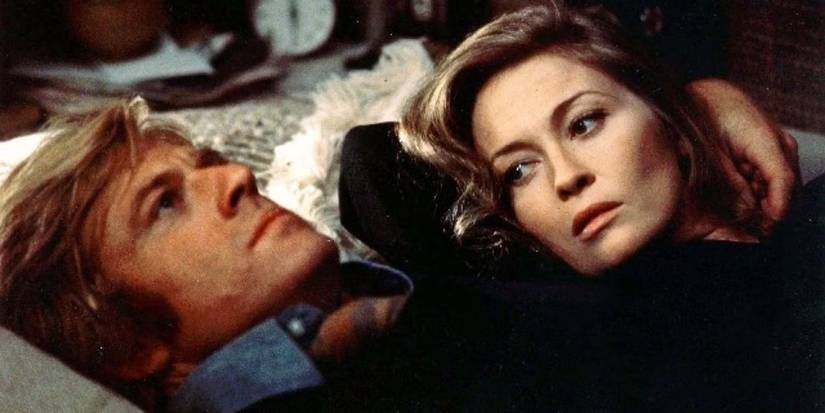 Image via Paramount Pictures
 Image via Paramount Pictures
 Image via Paramount Pictures
 Image via Universal Pictures






 English (US) ·