
1991 was an amazing year for cinema, and one that has perhaps not received enough credit. While it’s often mentioned that 1994 or 1999 are among the best years of the ‘90s, 1991 was an equally stacked year that had way more than just ten great films released; among the memorable titles released during this impressive span of 12 months are David Cronenberg’s science fiction neo-noir Naked Lunch, Barry Levinson’s epic gangster drama Bugsy, Martin Scorsese’s remake of Cape Fear, the all-time great action film Point Break, and the excellent franchise-capper Star Trek VI: The Undiscovered Country.
1991 is truly an impressive year in the sense that it offered a robust slate of films from many different genres and cinematic styles, indicating that audiences were much more willing to check out something that didn’t necessarily fall into their comfort zone.
10 ‘The Prince of Tides’ (1991)
 Image via Columbia Pictures
The Prince of Tides truly feels like it came from a different era because it would be unfathomable for a mature romantic drama based on a complex novel to become a smash hit and blockbuster. Barbra Streisand had made her directorial debut in the previous decade with Yentl, but The Prince of Tides was a more sweeping melodrama that explored guilt, trauma, and familial legacy in a profound way.
The Prince of Tides raised questions about surviving abuse and coping with mortality in a way that was unheard of at the time, and proved that female-directed films could appeal to mass audiences. It also featured the single greatest performance of Nick Nolte’s career, as he was able to show a more sensitive side of masculinity that many of the other leading men of his generation would not have been capable of.
9 ‘The Fisher King’ (1991)
 Image via Tri-Star Pictures
The Fisher King is just as weird as one would expect from Terry Gilliam, but also has some of the most profound emotional subtext of any of the films directed by the former Monty Python member. Although The Fisher King features some deep allusions to Arthurian mythology (and is frankly much better than many of the more traditional King Arthur films), it is also a powerful story about friendship lasting beyond class, and providing outreach to those with mental health struggles.
The Fisher King features two of the best performances of the ‘90s from Jeff Bridges and Robin Williams, both of whom are cast slightly against type. Although Williams earned an Academy Award nomination for Best Actor for one of his boldest performances ever, Bridges is just as good in the film, and does a great job playing a character on a redemptive arc.
8 ‘My Own Private Idaho’ (1991)
 Image via Fine Line Features
My Own Private Idaho is one of the greatest queer films ever made, and solidified Gus Van Sant as a unique voice in the American independent film movement of the ‘90s. In what can be described as a loose, modern retelling of the relationship between Henry and Flastaff in William Shakespeare’s Henry V, My Own Private Idaho charts the journey of two young travelers, played by River Phoenix and Keanu Reeves, both of whom give the greatest performances of their respective careers.
Phoenix was truly an unparalleled screen presence who tragically died at far too young of an age, but left behind a legacy of excellence that is reminiscent of other late stars, such as James Dean and Heath Ledger. Reeves is often thought of strictly as an action star, but My Own Private Idaho showed that he could be a compelling dramatic lead.
7 ‘Boyz n the Hood’ (1991)
 Image via Columbia Pictures
Boyz n the Hood is one of the most impressive directorial debuts of all-time because of the audacity and clarity that John Singleton showed, despite being only 23 when the film was released. Singleton made a powerful and insightful film about violence and discrimination within a community, and created one of cinema’s greatest father figures in Furious, played in an incredible performance by Laurence Fishburne.
Boyz n the Hood was a major film for many of its young stars, as it was the first instance in which Ice Cube proved himself to be a star, even if he would end up doing more comedic roles in the future. It was also a film that had a significant breakthrough at the Academy Awards, as Singleton became the youngest person ever nominated for Best Director, and the first Black director in the history of the category.
6 ‘Defending Your Life’ (1991)
 Image via Warner Bros.
Defending Your Life is a delightful comedy about the afterlife that has all the wit and whimsy that Albert Brooks is best known for. Brooks has always been a force of comedic nature who can recognize the fallibility of humanity, but Defending Your Life was a rare instance in which he had to advocate for the merits of mankind, showing a surprising degree of optimism.
Defending Your Life was among the first films to prove that Meryl Streep was just as talented at comedy as she was at drama, and it also features a hilarious performance from the late great Rip Torn. The influence of Defending Your Life is still prominent today within other comedies that explore the afterlife in various incarnations, including last year’s charming rom-com Eternity, which featured great work from Miles Teller, Elizabeth Olsen, and Callum Turner.
5 ‘Barton Fink’ (1991)
 Image via 20th Century Studios
Barton Fink is yet another masterpiece from the Coen brothers, and stands as one of their most personal films because of the focus it has on the indignities and pressures of Hollywood. John Turturro gives the greatest performance of his career as the titular character, who is a Jewish screenwriter who begins to suffer from extreme writer’s block when he is hired to write films for a corrupt studio.
Barton Fink featured an Oscar-nominated performance from Micahel Lerner, but also has a hilarious side role for John Goodman as Barton’s neighbor, who may or may not be a serial killer. While the Coens were already highly respected as artists at this point in their careers, Barton Fink minted them as some of the greatest filmmakers of their generation because it won the Palme d’Or prize at the Cannes Film Festival.
4 ‘Terminator 2: Judgment Day’ (1991)
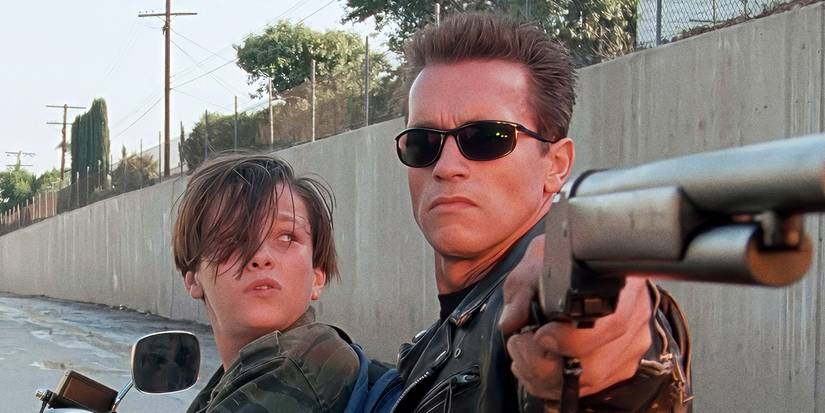 Image via Tri-Star Pictures
Terminator 2: Judgment Day was the peak of James Cameron’s abilities as an action filmmaker because it is one of the rare instances in which the sequel surpassed its predecessor in every single way, even though the original The Terminator from 1984 was a masterpiece in its own right.
Terminator 2: Judgment Day made brilliant choices with its characters, as it turned Sarah Connor (Linda Hamilton) from a scared waitress to a powerful action hero, and brought back a new T-800 (Arnold Schwarzenegger) to be a protector and unusual father figure to a young John Connor (Edward Furlong). Terminator 2: Judgment Day paved the way for decades of blockbusters with its creative use of CGI, which is most notable in the sequence in which the ruthless T-1000 (Robert Patrick) transforms into liquid metal in order to take down the Connors.
3 ‘The Commitments’ (1991)
 Image via Beacon Pictures
The Commitments is an unusual and underrated film about a working class band trying to make it in Ireland, and has the trappings of a music biopic, despite being based on a novel that was not a true story. Although the soundtrack is worth listening to as a great standalone piece of music, The Commitments is at its best when showing the complex evolution that bands go through when their members struggle to stick together after many years on the road.
The Commitments is a powerful homage to the many bands that “didn’t make it,” showing that their lack of attention does not invalidate their work and appreciation for the craft. It’s a very charming film from Alan Parker, a highly underrated filmmaker whose name should be brought up more often when talking about the great British directors of the 20th century.
2 ‘JFK’ (1991)
 Image via Warner Bros.
JFK is the most ambitious and controversial film of Oliver Stone’s career, and remains just as jaw dropping in its construction many years later. Stone took on the story of the New Orleans Attorney Jim Garrison (Kevin Costner) to explore the theories involving the assination of President John F. Kennedy, leading to a complex study about how his administration was usurped for the sake of pushing forward a war effort in Vietnam.
JFK features an amazing ensemble that is filled with great actors, many of whom only show up for a scene or two; while it was Tommy Lee Jones who earned an Academy Award nomination for Best Supporting Actor, Gary Oldman is absolutely chilling in the role of Lee Harvey Oswald, and Donald Sutherland gives an unforgettable performance as the mysterious information “Mr. X,” who provides details to Garrison about the coverup.
1 ‘The Silence of the Lambs’ (1991)
 Image via Orion Pictures
The Silence of the Lambs is the greatest horror film of the ‘90s, and remains the gold standard for serial killer stories. Jonathan Demme didn’t seem like the natural choice to helm such a ruthless thriller, but his ability to capture human emotion (often using close ups where the characters look directly into the camera) created an exhilarating cat-and-mouse game between FBI Agent Clarice Starling (Jodie Foster) and the serial killer Dr. Hannibal Lecter (Anthony Hopkins).
Hopkins created one of the greatest villains of all-time, making it all the more shocking that Lecter is only on screen for less than 20 minutes. The Silence of the Lambs wasn’t only the first horror film to ever win Best Picture at the Academy Awards, but one of only three films to win the “Big Five” Oscars of Picture, Director, Actor, Actress, and Screenplay.

Release Date February 14, 1991
Runtime 118 minutes
Writers Ted Tally





 English (US) ·