
 Image via Fox

Published Apr 12, 2026, 8:49 AM EDT
Thomas Butt is a senior writer. An avid film connoisseur, Thomas actively logs his film consumption on Letterboxd and vows to connect with many more cinephiles through the platform. He is immensely passionate about the work of Martin Scorsese, John Ford, and Albert Brooks. His work can be read on Collider and Taste of Cinema. He also writes for his own blog, The Empty Theater, on Substack. He is also a big fan of courtroom dramas and DVD commentary tracks. For Thomas, movie theaters are a second home. A native of Wakefield, MA, he is often found scrolling through the scheduled programming on Turner Classic Movies and making more room for his physical media collection. Thomas habitually increases his watchlist and jumps down a YouTube rabbit hole of archived interviews with directors and actors. He is inspired to write about film to uphold the medium's artistic value and to express his undying love for the art form. Thomas looks to cinema as an outlet to better understand the world, human emotions, and himself.
Sign in to your Collider account
You could get into a long, if not never-ending, discussion about what is objectively the "best" episode of The Simpsons. Across its 37 seasons, many superfans agree that the finest and most hilarious episode ranges within its loose golden age (which lasted from Season 1 until about Season 8), but even that is up for debate. Picking any episode from this run could make a viable case as not just the best in the series, but perhaps the finest half-hour of animated comedy in the history of television.
"Last Exit to Springfield," Season 4's 17th episode from 1993, is widely regarded as the pinnacle of The Simpsons. If you're looking for a contrarian point of view, venture somewhere else. There is no denying that this episode is the total package, working as a perfect joke machine, satire, a collection of historical and pop culture references, and a vital piece of social commentary. Even at his most buffoonish, Homer Simpson (Dan Castellaneta) could resemble a noble folk hero in his fight for a dental plan.
The 'Simpsons' Episode "Last Exit to Springfield" Has a Big Range of Cultural References
Like every Golden Age Simpsons season, the legendary animated show's fourth season is stuffed with iconic episodes and character moments. Between "Kamp Krusty," "Lisa the Beauty Queen," and "Homer the Heretic," you'll find something delightful and inventive if you scroll through the catalog and randomly select an episode. The season is essentially when the show fully pivoted to Homer as the overarching series protagonist, taking the reins from his son, the icon of juvenile rebellion and irreverence, Bart (Nancy Cartwright).
In "Last Exit to Springfield," Homer's heroic arc was complete. The episode follows Mr. Burns (Harry Shearer) revoking his employees' dental plans in their contracts, an untimely break for Homer, as Lisa (Yeardley Smith) just learned that she requires braces. At the union meeting for the employees of Springfield's power plant, Homer speaks up about the importance of being provided dental care. After a rousing speech, he is elected the union president. The stand-off between the persistent employees and Burns leads to attempted bribery, failed negotiations, and an eventual strike. Throughout this dense and rich episode, Burns is fooled into thinking Homer is some cutthroat, union tactician and not just some doofus who merely didn't want to pay for his daughter's braces.

Related
‘The Simpsons’ EP Reveals Which Character’s Death Would Be the “End of Everything” After 800 Episodes
From Philly guest stars to ‘The Pitt’ parody, Mike Price reveals how Episode 800 came together and why the next ‘Simpsons’ movie has the team hyped.
From the perspective of the litany of pop culture references and textual allusions, where do you even begin with "Last Exit to Springfield"? For one, the title is an homage to the novel, Last Exit to Brooklyn, Hubert Selby Jr.'s harsh examination of the underbelly of society and union corruption in New York in the 1950s. Two of the most imaginative sequences in the episode parody two titans of modern American culture in The Godfather and The Beatles, with Homer fancying himself as a powerful neighborhood crime boss akin to Don Fanucci in The Godfather: Part II, and Lisa's nitrous oxide hallucination putting her through a trip evocative of Yellow Submarine.
No show or institution pays more homage to Citizen Kane than The Simpsons, and this episode features a bird with a striking resemblance to Burns in the foreground, a nod to the startling, screeching bird that flew on the screen in Kane. With everything from Tim Burton's Batman to How the Grinch Stole Christmas to The Three Stooges, nearly every major facet of American pop culture is referenced in this groundbreaking episode.
However, the episode's historical allusions and urgent social commentary pack a greater punch than any winking nod to a cinematic classic of yesteryear. Having Homer rise to the head of a union gave the writers ample opportunity to slide in a joke about Jimmy Hoffa, the charismatic and mob-tied Teamsters president whose disappearance remains ambiguous. In an episode brimming with extraordinary lines and sight gags, one of the most clever moments comes when we see a chalk outline of a body on a football field, a reference to the theory that Hoffa was killed and buried in the now-demolished Giants Stadium in New Jersey.
The theme of unionization and workers' rights is played for big laughs in "Last Exit to Springfield," but its commentary still holds weight today. With corporate consolidation and predatory business practices around us and dominating the news cycle, the marginalization of laborers feels more prevalent than ever. For all its farce, The Simpsons' best and funniest episodes contain a discernible dramatic crux and emotional undercurrent that complement the jokes. "Last Exit to Springfield" finds genuine solace and beauty in the factory workers uniting for their rights, capped off by a protest song performed by Lisa, which channels the pathos of the class struggles in Bob Dylan's music.
The Simpsons taught us that we can learn and understand contemporary life and history through broad humor and satire, and laughing at the poignant realities of life is both therapeutic and an insight as to how the ridiculousness of life is reflected in a cartoon. The only reason The Simpsons feels more politically charged in recent years is that our most powerful business and political leaders have begun unironically resembling Mr. Burns — who was once a cartoonishly over-the-top depiction of a greedy tycoon — through their behavior and shady practices.
Some of Homer's Best Gags Are in "Last Exit to Springfield"
 Image via Fox
Stepping away from all the social and political baggage that the episode shrewdly taps into, "Last Exit to Springfield" is a masterclass in committing to a bit, a comedic device The Simpsons excelled at for years, best exemplified by when Sideshow Bob continuously steps onto rakes in the classic episode "Cape Feare." During the union meeting where Homer first raises the importance of a dental plan, Homer zones out while the speaker calls for anyone to speak on an issue, with his internal monologue bouncing back and forth between him saying "Dental plan" and Marge yelling, "Lisa needs braces!" As soon as you think the bit will end, the show keeps repeating these two lines, with the absurdity of Homer's thought process increasing in hilarity.
When Burns tries to break up the picket line, he brings in the folks at the elderly home into his office, including Abe "Grampa" Simpson, to silence the strike. Abe's strategy is to "tell them stories that don't go anywhere," and he proceeds to share a long-winded anecdote about a time he rode a ferry and tied an onion to his belt. Per usual for Grampa Simpson, the story has no purpose or conclusion. Where most shows would've cut off Abe's rambling after two lines, The Simpsons brilliantly commits to the bit, and we hear nearly the entire story.
Making something perfect is an unfeasible task, but "perfect" is the only proper way to describe "Last Exit to Springfield," the absolute peak of The Simpsons' powers as an animated comedy, satire, reflection of American life, and collection of gags and references.
The Simpsons is available to stream on Disney+.
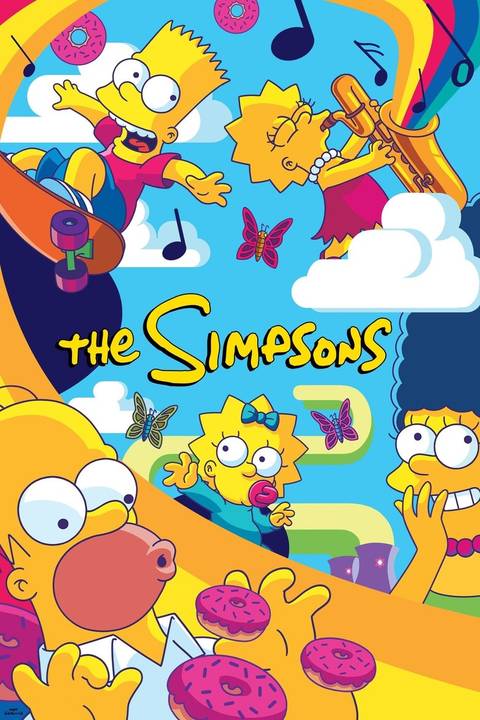
Release Date December 17, 1989
Network FOX
Directors Steven Dean Moore, Mark Kirkland, Rob Oliver, Michael Polcino, Mike B. Anderson, Chris Clements, Wes Archer, Timothy Bailey, Lance Kramer, Nancy Kruse, Matthew Faughnan, Chuck Sheetz, Rich Moore, Jeffrey Lynch, Pete Michels, Susie Dietter, Raymond S. Persi, Carlos Baeza, Dominic Polcino, Lauren MacMullan, Michael Marcantel, Neil Affleck, Swinton O. Scott III, Jennifer Moeller
-

Homer Simpson / Abe Simpson / Barney Gumble / Krusty (voice)
-

Julie Kavner
Marge Simpson / Patty Bouvier / Selma Bouvier (voice)







 English (US) ·