
2006 feels like a lifetime ago in the film world, as the industry has changed radically in the last two decades. 2006 was a year in which the streaming wars did not exist, 3D was not quite a novelty, and the only superhero movies were the disappointing Superman Returns and X-Men: The Last Stand. It was the year that Jerry Bruckheimer asserted his dominance when Pirates of the Caribbean: Dead Man’s Chest grossed more than $1 billion worldwide, and Ron Howard created major controversy with the release of The Da Vinci Code.
2006 was a year that saw many of the best filmmakers out there working at the peak of their powers, as many of the most important directors, actors, and studios behind the year’s films are still an active part of where Hollywood is today in 2026. Here are the ten best movies of 2006, ranked.
10 ‘Little Children’ (2006)
 Image via New Line Cinema
 Little Children was a provocative and controversial drama about the secrets lying beneath an idealized American community, and featured a fantastic ensemble who brought to life a cast of complex characters. Todd Field would go on to examine “cancel culture” and the abuse of power when he made Tar over a decade later, but Little Children showed that he was capable of tackling sensitive issues with empathy to those involved.
Little Children featured one of the best performances of Kate Winslet’s career, earning her yet another Best Actress nomination at the Oscars, and also showed that Patrick Wilson was a worthwhile movie star outside of his work in musicals. However, the breakout star of the film was definitely Jackie Earl Haley, who took on an immensely challenging role and gave an unforgettable performance, earning an Academy Award nomination for Best Supporting Actor in the process.
9 ‘The Wind That Shakes The Barley’ (2006)
 Image via Element Pictures
The Wind That Shakes The Barely took home the Palme d’Or at the Cannes Film Festival and minted Ken Loach as one of the contemporary masters of world cinema. There had never been a film that explored the struggle for Irish independence like The Wind That Shakes The Barley, as it examined the suffering of an entire people in a very artful way.
The Wind That Shakes The Barley is often best remembered as a breakthrough film for Cillian Murphy, whose lead performance as a young revolutionary proved that he would go on to become one of the best actors of his generation. Given that The Wind That Shakes The Barley is an extremely bleak film that does not have the rousing qualities of other war epics, it's a credit to Murphy’s deeply affecting performance that it works as well as it does.
8 ‘Rescue Dawn’ (2006)
 Image via Metro-Goldwyn-Mayer
Rescue Dawn is a war film in the Werner Herzog style, which means it's a lot weirder and more intense that what Hollywood has traditionally put out. Inspired by a documentary that Herzog had previously worked on, Rescue Dawn starred Christian Bale as a pilot who crashed during the Vietnam War, and had to survive in captivity as he connected with others prisoners-of-war.
Bale showed the type of physicality and immersiveness that he would become even better known for within the next decade of his career, but Rescue Dawn also featured a remarkable turn from Steve Zahn as another soldier who has been driven mad by isolation and starvation. Zahn is a beloved character actor who is often given more comedic roles, but Rescue Dawn gave him the opportunity to play a haunted, deeply troubled husk of a man, and it was a performance that he knocked out of the park.
7 ‘Casino Royale’ (2006)
 Image via Sony Pictures Releasing
Casino Royale was the lightning rod that the James Bond franchise needed, as it brought the character back to basics by adapting the first novel within Ian Fleming’s series. As a reminder that Bond is a cold-blooded assassin who is much darker than the way he had previously been depicted, Casino Royale told a thought-provoking origin story that explored important facets of the character.
Casino Royale couldn’t have worked as well if it wasn’t for Daniel Craig, who silenced all doubters by showing a more gritty, yet surprisingly human version of Bond who suffers true heartbreak due to his love for Vesper (Eva Green), the best Bond girl ever. In addition to a chase scene that marks one of the best introductory sequences within any installment in the franchise, Casino Royale also has one of the best Bond villains ever thanks to the terrifying performance by Mads Mikkelsen.
6 ‘Miami Vice’ (2006)
 Image via Universal Pictures
Miami Vice was ahead of its time and is just now being appreciated for the masterpiece that it is. Michael Mann had the audacity to reboot the iconic television show that he had created by turning the glitzy, MTV style of the original series into a stark, tactile encapsulation of modernity brought to life with atmospheric digital impressionism.
Mann took the grandiose, sweeping quality of the show and examined what it would look like in a contemporary setting where increased video quality made it impossible for the deeply lonely characters to mask their feelings of regret and remorse. It’s a deep meditation on futility and failure that ranks among the strangest studio films ever released, and solidified Mann as a director who would never back down in his attempts to innovate. Rarely has a film been both as effortlessly cool and deeply melancholy.
5 ‘The Prestige’ (2006)
 Image via Warner Bros.
The Prestige was one of two period romantic dramas in 2006 that examined 19th century stage magic, and with all respect to the underrated The Illusionist, Christopher Nolan clearly made the superior version. It’s a sign of genius when a filmmaker can deliver a twist that is surprising, yet completely logical in how it is employed, and The Prestige is very precise in how it holds upon repeated viewings.
The Prestige is perhaps the most personal film that Nolan has ever made because it examines the unrelenting drive felt by artists to improve upon their past work, even when it becomes legitimately dangerous. While the friction between Christian Bale and Hugh Jackman created one of the greatest onscreen rivalries, the decision to cast David Bowie as Nikola Tesla is one of the best casting choices that Nolan has ever made.
4 ‘Marie Antoninette’ (2006)
 Image via Sony Pictures Releasing
Marie Antoninette was a radical reinvention of a well-known historical story that both reflected Sofia Coppola’s interests as a director and felt like a bravura step in a new direction. It’s not only a remarkable study of class, gender roles, and the prison of royalty, but an incredible coming-of-age story that gave Kirsten Dunst the best role of her career, which is by no means a small statement.
Marie Antoninette feels modern, and not just because of the contemporary music; it showed teenage anxiety and the weight of expectations placed upon its titular character, who is far more sympathetic than history remembered her as being. Dunst’s performance is the reason to see the film, but Coppola also gives a terrific role to Jason Schwartzman as King Louis, who ends up being a lot more nuanced and empathetic than anyone would have thought him to be.
3 ‘Pan’s Labyrinth’ (2006)
 Image via Warner Bros. Pictures
Pan’s Labyrinth is without question the best film that Guillermo del Toro has ever made, as no one knows how to do dark fantasy quite the same way that he does. Del Toro clearly has a keen interest in monsters and how they come to represent different marginalized communities, but Pan’s Labyrinth wove magical realism into a gripping war story that examined what it would be like for a child to grow up during a devastating world event.
Pan’s Labyrinth defies all standard definitions of genre, as it is as exciting as an adventure, as terrifying as a horror film, and deeply personal as a story of family drama. Del Toro always pours his heart into every film that he makes, but Pan’s Labyrinth is both one of the most staggeringly beautiful films ever made and a deeply moving tragedy that has endured, twenty years later.
2 ‘Children of Men’ (2006)
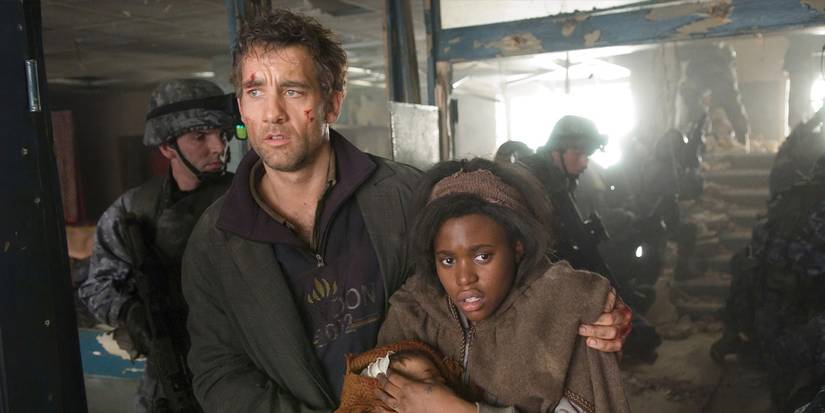 Image via Universal Pictures
Children of Men is a breathtaking work of science fiction that examines a cold reality not that different from the present. Although there are powerful religious themes about messianic figures and the birth of a savior, Children of Men is incredibly gritty, painting a visceral portrayal of what the world would look like if the birth rate were to plummet to zero.
Children of Men is surprisingly beautiful for a film about such bleak material, but that’s what Alfonso Cuaron is best known for with his creative visual style. The performances are first-rate across the board, with Clive Owen in particular giving the type of star turn that makes it all the more disappointing that he hasn’t had as many great roles since. Children of Men is a warning, but it has a message of hope that makes it all the more relevant now.
1 ‘The Departed’ (2006)
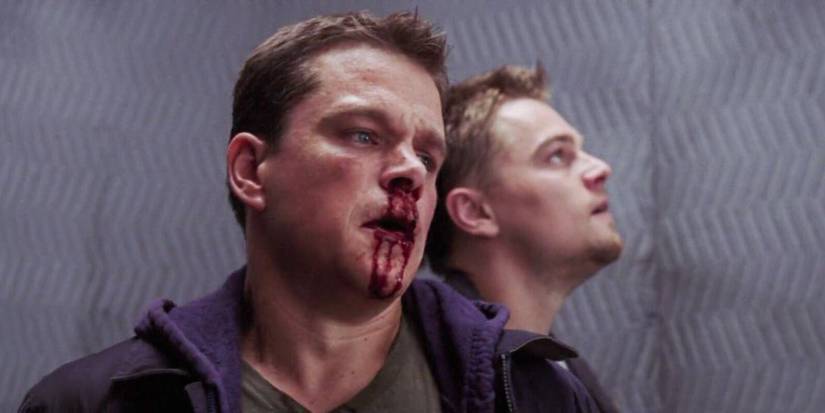 Image via Warner Bros.
The Departed was an out-of-the-gate masterpiece from Martin Scorsese that showed he had not lost any of his brilliance, and was capable of making another classic within the fourth decade of his career. Not only did The Departed win Best Picture, but it also won Scorsese the Best Director prize that had been denied to him for Raging Bull and Goodfellas.
The Departed featured one of the best ensembles of all-time; Jack Nicholson is having a blast playing an absurdly evil gangster, Matt Damon played against type as a traitorous mole, Leonardo DiCaprio gave his most gritty performance ever, Alec Baldwin channeled his real-life anger into an unforgettable character, and it was surprisingly Mark Wahlberg that earned the film’s only acting nomination for his hilarious depiction of the volatile, profane Sergeant Dignam. The Departed gets better on every rewatch, and still hits with the same propulsive power.




 English (US) ·