
 Image via Sony Pictures Entertainment Japan

Published May 11, 2026, 5:33 AM EDT
David is a Senior Editor at Collider focused primarily on Lists. His professional journey began in the mid-2010s as a Marketing specialist before embarking on his writing career in the 2020s. At Collider, David started as a Senior Writer in late 2022 and has been a Senior Editor since mid-2023. He is in charge of ideating compelling and engaging List articles by working closely with writers, both Senior and Junior, as well as other editors. Occasionally, David also reviews movies and TV shows and writes episode recaps. Currently, David is also writing his second novel, a psychological horror satire that will, hopefully, be picked up for publication sometime next year.
Sign in to your Collider account
Science fiction is among the most celebrated genres in cinema. It encompasses everything from profound, ambitious explorations of space travel to smaller, more intimate depictions of futures in varying degrees of unrest. Sci-fi is still thriving in cinema, perhaps now more than ever, with the recent releases of movies like Project Hail Mary proving that the genre is experiencing what is likely its best period to date.
Twenty years ago, however, the landscape was much more different. That's not to say that sci-fi movies didn't exist or that they weren't recognized, but it is fair to say that they were a lot less appreciated, perhaps even dismissed as "genre fare." However, a few of these twenty-year-old movies have aged beautifully and are now considered genuine masterpieces of the genre. Here, we take a look at the sci-fi movies from 2006 that are outright perfect, becoming incredible representatives of their home genre.
'Southland Tales'
 Image via Universal Studios
Richard Kelly followed his 2001 cult classic Donnie Darko with an even bigger deep cut: the dystopian black comedy thriller Southland Tales. Set in 2008, in a United States under the threat of nuclear attack, the film follows several stories, including a movie star (Dwayne Johnson) planning his next movie with the help of a porn star (Sarah Michelle Gellar), who herself is attempting to launch a reality TV show.
Southland Tales was quite misunderstood upon release — in fact, it remains misunderstood and underrated. The film juggles several complex ideas, offering scathing criticisms of the industrial military complex and the entertainment industry. However, its approach is decidedly abstract, to the point where many might dismiss it as too artsy or outright pretentious. Yet, there's a genuine allure to the film's chaos; it has something to say, but it doesn't figure out how to say it. Yet, its attempts still result in an engaging and fascinating movie, one that throws the audience directly into the mayhem and never concerns itself with making sense of it.
'Idiocracy'
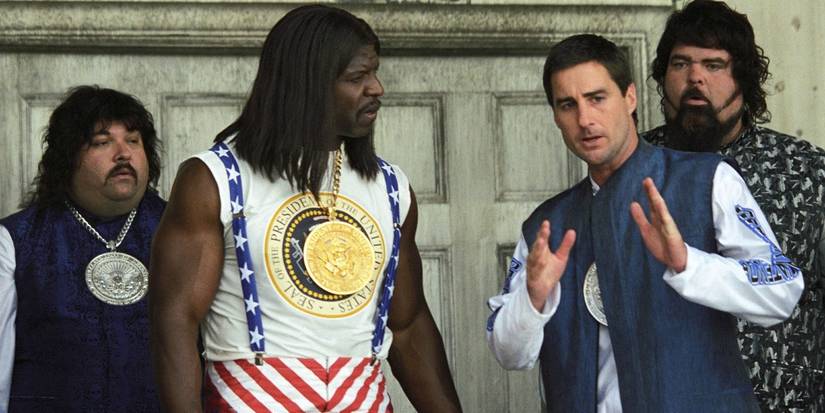 Image via 20th Century Studios
Idiocracy is a movie that not many paid attention to when it came out, but which has become so relevant in the decades since that it seems outright prophetic. Luke Wilson and Maya Rudolph play a librarian and a prostitute who undergo a government procedure that puts them in cryosleep for five hundred years. Upon awakening, they discover that society has regressed to the point where they are now the smartest people in the world.
Mike Judge's film satirizes society's path to progress, commenting on the rise of anti-intellectualism and absurd, seemingly endless consumerism. Sharp and surprisingly insightful, the film has a lot to say about the pernicious relationship between politics and the media, and how superficiality can only lead to something far darker. This cult classic remains perfect, largely because it seems so hauntingly precise in its observations — for example, the presidential plot is no longer as funny as it was because it now uncomfortably hits too close to home. Today, we might be constantly asking ourselves, "Have we actually reached peak idiocracy?" but the awful truth is that we can always go beyond it.
Collider Exclusive · Sci-Fi Survival Quiz Which Sci-Fi World Would You Survive? The Matrix · Mad Max · Blade Runner · Dune · Star Wars
Five universes. Five completely different ways the future went wrong — or sideways, or up in flames. Only one of them is the world your instincts were built for. Eight questions will figure out which dystopia, galaxy, or desert wasteland you'd actually make it out of alive.
💊The Matrix
🔥Mad Max
🌧️Blade Runner
🏜️Dune
🚀Star Wars
TEST YOUR SURVIVAL →
01
You sense something is deeply wrong with the world around you. What do you do? The first instinct is often the truest one.
APull on every thread until I understand the system — then figure out how to break it. BStop asking questions and start stockpiling — food, fuel, weapons. Questions don't keep you alive. CKeep my head down, observe carefully, and trust no one until I know who's pulling the strings. DStudy the patterns. Every system has a rhythm — learn it, and you learn how to survive it. EFind the people fighting back and join them. You can't fix a broken galaxy alone.
NEXT QUESTION →
02
In a world of scarcity, what resource do you guard most fiercely? What we protect reveals what we believe survival actually requires.
AKnowledge. If you understand the system, you don't need resources — you can generate them. BFuel. Everything else — movement, power, escape — runs on it. CTrust. In a world of fakes and informants, a truly reliable ally is rarer than any commodity. DWater. And after water, information — the two things empires are truly built on. EShips and credits. The galaxy is big — you survive it by being able to move through it freely.
NEXT QUESTION →
03
What kind of threat keeps you up at night? Fear is useful data — if you're honest about what you're actually afraid of.
AThat reality itself is a lie — that everything I experience has been constructed to keep me compliant. BA raid. No warning, no mercy — just the roar of engines and then nothing left. CBeing identified. Once someone with power decides you're a problem, you're already out of time. DBeing outmanoeuvred — losing a political game I didn't even know I was playing. EThe Empire tightening its grip until there's nowhere left to run.
NEXT QUESTION →
04
How do you deal with authority you don't trust? Every dystopia has a power structure. Your approach to it determines everything.
ASubvert it from the inside — learn its rules well enough to weaponise them against it. BIgnore it and stay out of its reach. The further from any power structure, the better. CAppear to comply while doing exactly what I need to do. Visibility is the enemy. DManoeuvre within it carefully. You can't beat a system you refuse to understand. EResist openly when I have to. Some things are worth the risk of being seen.
NEXT QUESTION →
05
Which environment could you actually endure long-term? Survival isn't just tactical — it's physical, psychological, and very much about where you are.
AUnderground bunkers and server rooms — cramped, artificial, but with access to everything that matters. BOpen wasteland — brutal sun, no shelter, constant movement. At least the threat is honest. CA dense, rain-soaked city where you can disappear into the crowd and nobody asks questions. DMerciless desert — extreme heat, no water, and something enormous living beneath the sand. EThe fringe — backwater planets and busy spaceports where the Empire's attention rarely reaches.
NEXT QUESTION →
06
Who do you want in your corner when things fall apart? The company you keep is the clearest signal of who you actually are.
AA tight crew of believers who've seen behind the curtain and have nothing left to lose. BOne or two people I'd trust with my life. Any more than that and someone talks. CNobody, ideally. Alliances are liabilities. I work alone unless I have no choice. DA community bound by shared hardship and mutual survival — people who need each other to last. EA ragtag team with wildly different skills and total commitment when it counts.
NEXT QUESTION →
07
Where do you draw the line — if you draw one at all? Every survivor eventually faces a moment that tests what they're actually made of.
AI won't harm the innocent — even the ones who'd report me without hesitation. BI do what I have to to protect the people I've chosen. Everything else is negotiable. CThe line shifts depending on who's asking and what's at stake. DI draw a long-term line — nothing that compromises my people's future, even if it'd help now. ESome lines, once crossed, can't be uncrossed. I know which ones they are.
NEXT QUESTION →
08
What would actually make survival worth it? Staying alive is one thing. Having a reason to is another.
AWaking others up — dismantling the illusion so no one else has to live inside it. BFinding somewhere — or someone — worth protecting. A reason to keep moving. CAnswers. Understanding what I am, what any of this means, before time runs out. DLegacy — shaping the future in a way that outlasts me by generations. EFreedom — for myself, for others, for every world still living under someone else's boot.
REVEAL MY WORLD →
Your Fate Has Been Calculated You'd Survive In…
Your answers point to the world your instincts were built for. This is the universe your temperament, your survival instincts, and your particular brand of stubbornness were made for.
The Matrix
You took the red pill a long time ago — probably before anyone offered it to you. You're a systems thinker who can't help but notice the seams in things.
- You're drawn to understanding how the system works before figuring out how to break it.
- You'd find the Resistance, or it would find you — your instinct for spotting constructed realities is the machines' worst nightmare.
- You function best when you have access to information and the freedom to act on it.
- The Matrix built an airtight prison. You'd be the one probing the walls for the door.
Mad Max
The wasteland doesn't reward the clever or the well-connected — it rewards those who are hard to kill and harder to break. That's you.
- You don't need comfort, community, or a cause larger than the next horizon.
- You need a vehicle, a clear threat, and enough fuel to outrun it — and you're good at all three.
- You are unsentimental enough to survive that world, and decent enough — just barely — to be something more than another raider.
- In the wasteland, that distinction is everything.
Blade Runner
You'd survive here because you know how to exist in moral grey areas without losing yourself completely.
- You read people accurately, keep your circle small, and ask the questions others prefer not to answer.
- In a city where humanity is a legal designation rather than a feeling, you hold onto something that keeps you functional.
- You're not a hero. But you're not lost, either.
- In Blade Runner's world, that distinction is everything.
Dune
Arrakis is the most hostile environment in the known universe — and you are precisely the kind of person it rewards.
- Patience, discipline, and political awareness are your core strengths — and on Arrakis, they're survival tools.
- You understand that the long game matters more than any single victory.
- Others come to Dune and are consumed by it. You'd learn its logic and earn its respect.
- In time, you wouldn't just survive Arrakis — you'd begin to reshape it.
Star Wars
The galaxy far, far away is vast, loud, and in a constant state of violent political upheaval — and you wouldn't have it any other way.
- You find meaning in being part of something larger than yourself — a cause, a crew, a rebellion.
- You'd gravitate toward the Rebellion, or the fringes, or whatever pocket of the galaxy still believes the Empire's grip can be broken.
- You fight — not because you have to, but because standing aside isn't something you're capable of.
- In Star Wars, that willingness is what makes all the difference.
↻ RETAKE THE QUIZ
'The Girl Who Leapt Through Time'
 Image via Kadokawa Herald Pictures
A loose sequel to the 1967 eponymous novel, The Girl Who Leapt Through Time is among the best anime movies of the 2000s. The plot sees teenager Makoto Konno learning to travel in time, thanks to her aunt Kazuko Yoshiyama (the protagonist of the original novel). Makoto uses her newfound abilities to pursue selfish gains, soon realizing her actions have far broader consequences that go beyond just herself.
The Girl Who Leapt Through Time deftly balances several genres, mainly science fiction and coming-of-age, with a healthy dose of romance to boot. The visuals are simply spectacular, capturing a carefree, warm atmosphere that makes everything seem strangely wholesome; it's like watching a child learn how to ride a bike, except it's a teenage girl literally manipulating time. The core of the story is a classic tale of self-discovery and growth, but the execution makes this anime movie far more special. There's also a 1983 live-action adaptation, but the anime version is slightly more striking.
'A Skanner Darkly'
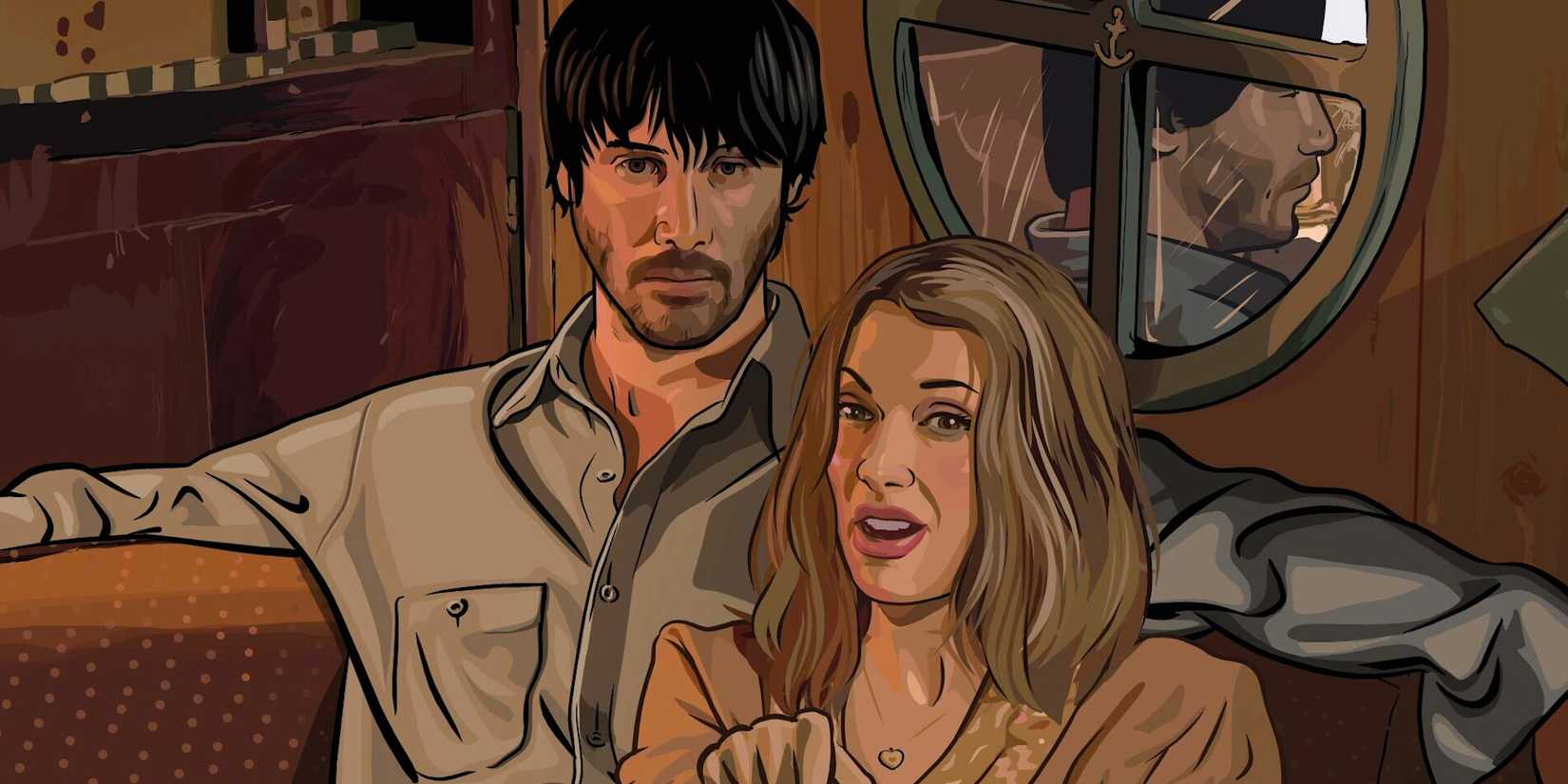 Image via Warner Bros.
Richard Linklater's A Scanner Darkly is among the most singular animated movies of the 2000s — indeed, of all time. Keanu Reeves stars as Bob Arctor, a narcotics officer living in a future where the United States is undergoing a drug-addiction pandemic. While wooing drug dealer Donna (Winona Ryder) in an effort to identify her supplier, Bob is also tasked with spying on his neighbors. Deep undercover, Bob himself develops an addiction.
Based on the novel by Philip K. Dick, A Scanner Darkly is a trippy experience brought to life through rotoscoping, a technique where animators manually trace over the original footage, frame by frame, thus achieving a distinct visual approach. The film looks like a literal comic book brought to life, a deliberate choice that only enhances the themes of addiction, paranoia, and the loss of self. Like other Linklater movies, A Scanner Darkly has a lot to say; the dialogue cracks, and the conversations feel both surreal and heavy with meaning. What exactly that meaning is remains unclear, as the film is far more concerned with posing questions than straight-up answering them.
'The Host'
Bong Joon Ho's movies usually offer a heavy dose of social commentary, be it anti-capitalist sentiment, class struggle, or institutional incompetence. All of those are perfectly showcased in his 2006 monster flick, The Host. The plot centers on intellectually disabled food stand vendor Park Gang-du (Song Kang-ho), whose daughter is kidnapped by a mysterious amphibious monster terrorizing the Han River in Seoul.
Here, Bong pulls no punches, presenting a bleak vision of the United States as uncaring and warmongering, to the point where the film flirts with anti-American sentiment. Like many of his other movies, The Host offers strong commentary on the sheer incompetence of the institutions meant to protect and enhance society, and how the ultimate prize is often paid by those less fortunate. Humanity's relationship with the environment, another favorite of Bong, is also heavily featured here, but the movie still offers all the monster carnage one would expect from a genre flick. The result is a creature feature that is as effective as it is bittersweet and even chilling.
'The Prestige'
 Image via Warner Bros.
Christopher Nolan has mastered many genres, from thriller to mystery and crime drama. However, sci-fi is where he often thrives, and perhaps his most underappreciated entry into the genre is 2006's The Prestige. An intriguing mix of genres, the film stars Hugh Jackman and Christian Bale as rival magicians in Victorian London. As the two try to surpass the other, they embark on an increasingly dark and desperate quest that will ultimately cost them far more than they expected.
For most of its runtime, The Prestige is a psychological thriller laced with hints of a revenge story. It's not until the halfway point that the sci-fi elements arrive, courtesy of a hypnotizing David Bowie as legendary inventor Nikola Tesla. Yet, Nolan uses science fiction to explore the darkest corners of the human psyche, the unrelenting thirst to surpass another, no matter the cost. Yet, The Prestige is as much about showmanship as it is about vengeance, presenting itself under the same structure as the magic tricks at the center of the narrative.
'Paprika'
 Image via Sony Pictures Entertainment Japan
Arguably the trippiest and most challenging sci-fi movie of the 2000s, Paprika is a stellar exploration of dreams and the last film made by the genius Satoshi Kon. The narrative centers on Dr. Atsuko Chiba, a scientist who moonlights as the dream detective Paprika. When a device she's been working on is stolen by a so-called "dream terrorist," Atsuko jumps into action as both herself and as Paprika.
Paprika operates under a singular set of rules. In fact, if you watch it and can't make much sense of it, fear not, because that's partly by design. Perhaps thanks to its nature as an exploration of dreams, and perhaps because of Kon's desire to push the audience to the edge of lofic, Paprika is a famously daunting experience. It's visually, mentally, and emotionally exhausting, a journey through the subconscious that is half dream, half nightmare. It might also probably, kinda, sorta, most likely influenced Nolan's Inception; he's never officially addressed it, but the similarities are... striking. You be the judge.
'Children of Men'
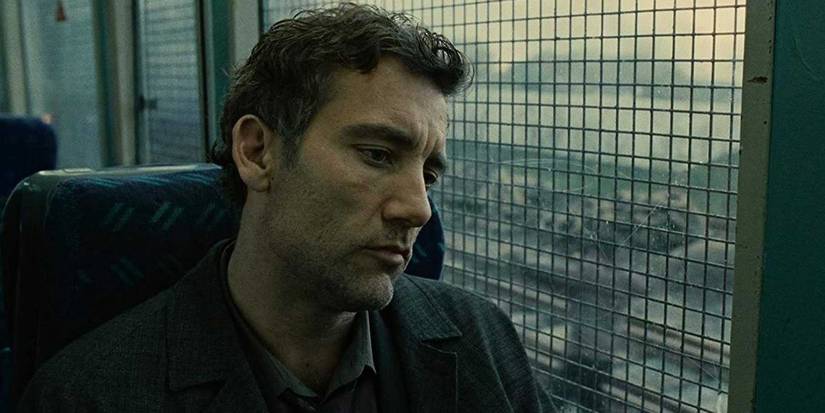 Image via Universal Pictures
What would happen to the world if people stopped having children? Such is the premise for Alfonso Cuarón's dystopian action thriller Children of Men, arguably his magnum opus, give or take a Roma. Clive Owen stars as Theo, a disillusioned bureaucrat tasked by his ex-wife, Julian (Julianne Moore), to escort Kee (Claire-Hope Ashitey), the first pregnant woman in two decades. Facing incredible danger, Theo will have to rise to the challenge.
Children of Men is a curious beast. The sci-fi elements are subtler, but the film still deals with a near-future where civilization has outright collapsed under the weight of mounting desperation provoked by infertility. It's quite incredible how accurately the film predicted the near future, with asylum seekers seeking asylum in the United Kingdom, leading to their imprisonment, deportation, and even execution. Watching Children of Men in 2026 is an uncomfortable experience, as it's difficult not to draw similarities with the current socio-political landscape. The film is a true masterpiece of the 21st century, and a confirmation of Cuarón's prowess as an auteur of singular vision.








 English (US) ·