
 3 weeks ago
25
3 weeks ago
25
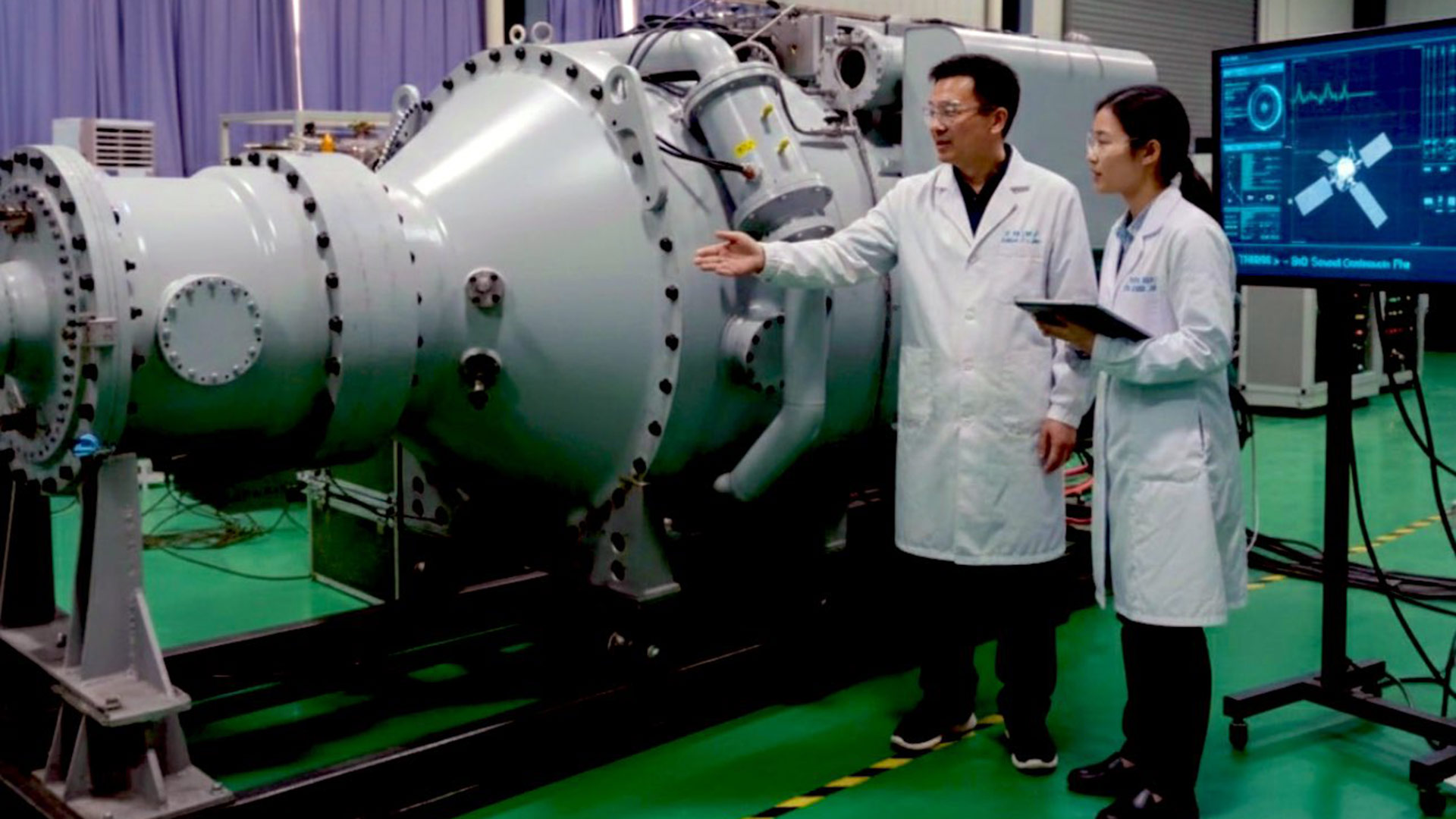
Scientists in China have reportedly developed an incredibly powerful microwave weapon capable of disrupting or damaging low Earth orbit (LEO) satellites. Hong Kong’s SCMP newspaper makes no bones about it, referencing the threat to Starlink satellites multiple times, and even characterizing the TPG1000Cs as “Starlink’s worst nightmare.”
TPG1000Cs was created by a research team based at the High-Power Microwave Science and Technology Key Laboratory of the Northwest Institute of Nuclear Technology (NINT) in Xi’an, Shaanxi Province, China. This high-powered microwave (HPM) weapon is built around a 20-gigawatt Tesla-type pulsed power driver.
Reports suggest that TPG1000Cs is remarkable for two main reasons. First, it is claimed to be the first device capable of sustaining a high-power 20-gigawatt microwave energy burst for a full minute. Secondly, the scientists have been able to cram this HPM weapon into a 4m (12ft) long, 5-ton device. The size/weight of TPG1000Cs makes it easy to mount on the back of a vehicle or even send into space. Importantly, previous HPM weapons would be around twice as big/heavy as the TPG1000Cs, and they wouldn’t be able to sustain bursts of more than a few seconds.
China takes big step towards developing ‘Starlink killer’ weapon with compact high-power microwaveDevice small enough to be mounted on trucks, aircraft, or even satelliteshttps://t.co/Z3EjTaE2Y5Intelligence Report: Classified Threat Assessmenthttps://t.co/1EDYKDcCuH pic.twitter.com/lD903QJXXkFebruary 7, 2026
According to the source report, Starlink satellites can potentially be disrupted by Earth-based HPM weapons of 1-gigawatt or higher, so this 20-gigawatt device is no pea shooter.
One of the key technologies that facilitated the creation of TPG1000Cs is a special liquid insulating material dubbed ‘Midel 7131.’ This, combined with a dual-width pulse-forming line, enabled the scientists to increase power and density.
The Chinese scientists have tested TPG1000Cs to confirm that they operate stably and are durable. Reports say that the system has already been tested “over continuous one-minute durations, accumulating approximately 200,000 pulses with consistent performance.”
We recently reported that Starlink satellites are set to be moved closer to Earth. Moreover, Chinese researchers have run simulations to determine whether the PLA would be able to deny access to Starlink over Taiwan, as if China is preparing for a Russia-inspired Special Military Operation of its own.

Follow Tom's Hardware on Google News, or add us as a preferred source, to get our latest news, analysis, & reviews in your feeds.






 English (US) ·