17 Years Later, Syfy's 4-Season Epic With 95% RT Score Is Still The Best Space Opera Of All Time
5 days ago
11
Image via MovieStillsDB
Published Jun 9, 2026, 2:30 PM EDT
Craig began contributing to Screen Rant in 2016 and has been ranting ever since, mostly to himself in a darkened room. After previously writing for various outlets, Craig's focus turned to TV and film, where a steady upbringing of science fiction and comic books finally became useful. Craig has previously been published by sites such as Den of Geek.
The space opera is a fun little corner of the sci-fi genre. Somewhat nebulous in nature, the tag generally demands several key qualifiers in order to apply. Top of that list is a decent amount of space travel. Shows set entirely on futuristic Earth need not apply. Fulfilling the operatic requirement, meanwhile, typically requires the kind of classical, drama-based storytelling defined by arduous quests, moral quandaries, and bickering rivals.
TV is an especially good medium for the space opera. More screen time means more delving into each character's personal demons and desires, just as you'd find in the space opera's less grimy cousin, the soap opera. A well-plotted TV series can also chart a protagonist's rise, fall, and re-rise across many years, accentuating the scale and gravity of the story itself.
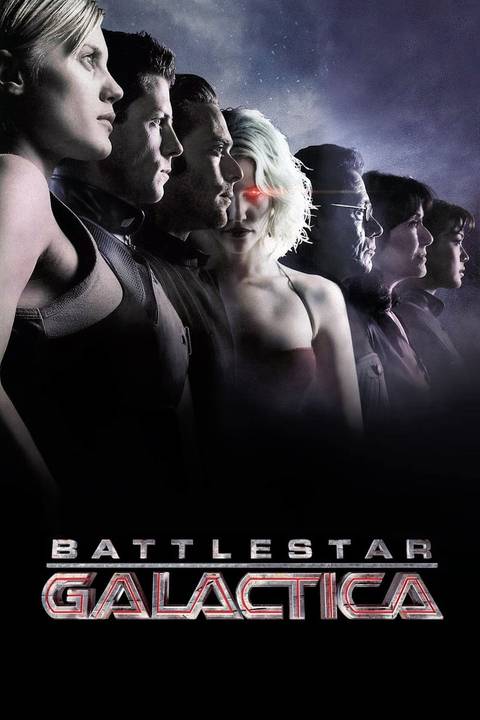
From Blake's 7 and Farscape to Babylon 5 and Dark Matter, brilliant space opera shows can be found across almost every generation of TV. Even so, none of them top Ronald D. Moore's 2000s reboot of Battlestar Galactica.
Battlestar Galactica Nails The Operatic Elements Of The Space Opera Formula
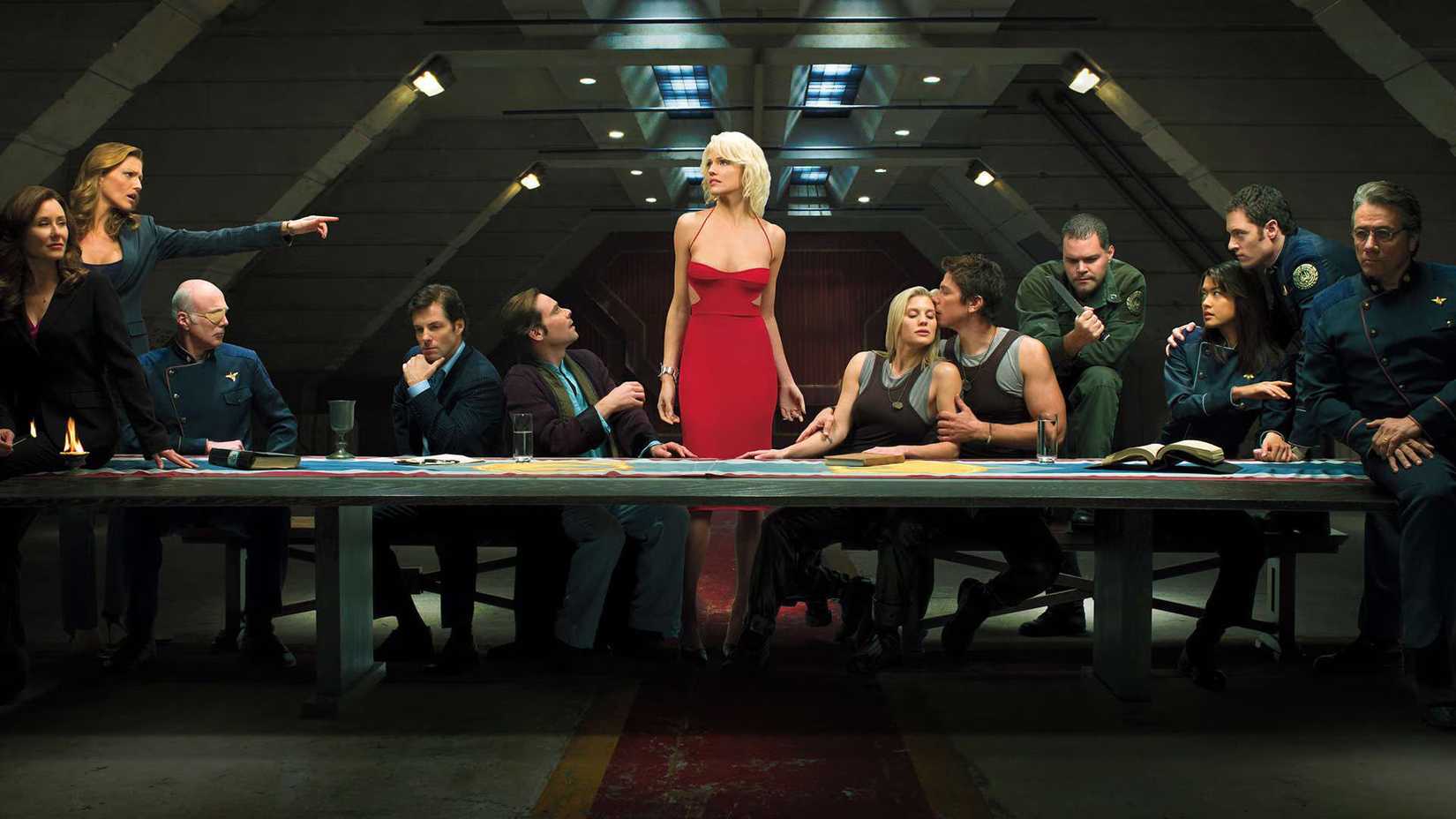
It almost goes without saying that Battlestar Galactica's sci-fi foundations are second-to-none. Even in the absence of aliens populating exotic planets, Battlestar Galactica's world-building created a genuine mythology stretching back millennia, blurring lines between the past and future, and successfully portraying a space-faring melting pot of fictional cultures. The Cylons, meanwhile, managed to simultaneously give viewers exciting robots with big guns, and an existential threat that provided cutting social commentary and a mirror to humanity's own faults. Battlestar Galactica didn't follow sci-fi conventions; it defined them for the next 20 years.
Nevertheless, it is the more operatic side of the equation that elevates Battlestar Galactica above the science fiction pack. Ronald D. Moore has been open about not mapping all four seasons out from the very beginning, but watching Battlestar Galactica back in its entirety, the story absolutely feels like one giant four-part movement, gracefully dancing through crescendos and valleys on a spotlit stage. A literal stage, as it turns out, because various dreamlike scenes throughout Battlestar Galactica played out in an imaginary theater, serving as a metaphor for Galactica itself. The show acknowledged its own operatic allusions, with Galactica's command center the 'stage' in question.
Just like the epics of Homer, Battlestar Galactica has gods puppeteering the lives of mortals, raising questions of destiny, purpose, and spiritualism. Even after Battlestar Galactica's ending, the audience cannot rule out the possibility that powerful higher beings have been toying with humans and Cylons alike as part of some twisted form of entertainment. The gods' own opera, with Gaius Baltar making his own Faustian bargain.
It's Battlestar Galactica's seamless integration of classical themes and melodrama, themes that transcend genre and era, with an expertly designed sci-fi world that cements Ronald D. Moore's remake as the premier space opera series in TV history.
Battlestar Galactica's Ending Assured Its Space Opera Legacy
The space opera genre may be more easily defined by style and content, but legacy certainly plays its part. If the term has its roots on the stage, those are the stories that have survived for decades and continue to cast their influence over those being told today. In order to be considered among the very greatest of space operas, therefore, a story would need to stand the test of time, its reputation enhanced through retellings and rememberings.
That's certainly the case with Battlestar Galactica, which has continued to be discovered and rediscovered in the streaming age. More important to the show's evergreen nature, however, is the strength of Battlestar Galactica's finale.
The conclusion proved controversial at the time, largely due to the ambiguous way some crucial plot points were handled, but the three-part "Daybreak" aired before the likes of Lost, Game of Thrones, and Stranger Things completely altered the discourse surrounding series finales. With the benefit of hindsight, Battlestar Galactica's ending serves as an entirely fitting and thematically sound final act before the curtain closes, creating a full circle moment that resonates even more strongly today. In the almost two decades since, Battlestar Galactica's spirit has been carried forth by the likes of The Expanse, Westworld, and even the older and far more famous Star Trek franchise.
With its legacy unlikely to fade any time soon, Battlestar Galactica can safely be considered the greatest of TV's space operas.
Only One Other Space Opera Comes Close To Battlestar Galactica
Few other space operas come close to Battlestar Galactica's impact and appeal, but there is one that runs it extremely close for the title of 'TV's Best-Ever Space Opera.' Based on a book series by James S.A. Corey, The Expanse took the core DNA of Battlestar Galactica into the next two decades. The philosophy of scientific realism, the political wrangling, the interpersonal relationships, and even the gritty space battles between ships felt close enough that one could consider The Expanse as Battlestar Galactica's spiritual successor.
Ultimately, there is very little to separate the two. It isn't a matter of which sci-fi show is superior, nor which enjoyed more popularity during its run. The deciding factor is simply Battlestar Galactica being a complete story from beginning to end, allowing its 'opera' elements to play out in a dramatic passage of resolution and ominous portents for the future. The Expanse's TV adaptation ended with three books left, meaning the Laconian Empire and mysterious Ring Gate Entities were left as dangling plot threads.
Those threads are vital to The Expanse's rich tapestry, and a crucial part of its own unfolding opera. Without a final act, The Expanse cannot compete with Battlestar Galactica for the honor of being history's best space opera TV series.
Release Date
2004 - 2009-00-00
Showrunner
Ronald D. Moore
Directors
Wayne Rose, Michael Nankin, Rod Hardy, Sergio Mimica-Gezzan, Edward James Olmos, Robert M. Young, Jeff Woolnough, Félix Enríquez Alcalá, Jonas Pate, Allan Kroeker, Anthony Hemingway, Jean de Segonzac, Marita Grabiak, James Head, Paul A. Edwards, Gwyneth Horder-Payton, Brad Turner, Ronald D. Moore, Bill Eagles
Writers
Carla Robinson, Michael Taylor, Bradley Thompson, David Weddle, Jane Espenson, Mark Verheiden, Michael Angeli, Anne Cofell Saunders, Jeff Vlaming, Michael Rymer, Dawn Prestwich, Nicole Yorkin, Seamus Kevin Fahey

 Image via MovieStillsDB








 English (US) ·