
Static Media
With a pop culture impact dating back to 1966, "Star Trek" remains one of the biggest science fiction franchises of all time. Across a growing number of television shows and movies, the sci-fi property has various casts of characters exploring the wonders of the cosmos in a utopian future. This includes entities that are omnipotent and exceed the limits of conventional physical form in their true incarnation. Several of these characters are from the best "Star Trek" alien races, appearing in memorable stories in the franchise in television and film.
Through these all-powerful figures, the usual characters are able to experience adventures that are capable of completely breaking the rules of space and time. In several instances, when these entities prove hostile, the characters have to think fast to avoid facing the full brunt of their wrath.
Here are the 15 most powerful "Star Trek" characters ranked, embodying the sheer cosmic potential of the unknown in either awe-inspiring or terrifying ways.
15. Debra
Paramount+
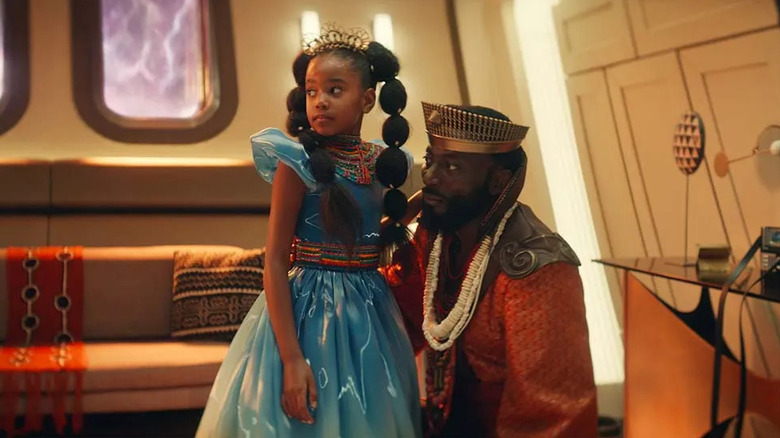
The characters of "Star Trek: Strange New Worlds" have encountered their fair share of omnipotent entities throughout the cosmos. One of the most notable is Debra, a consciousness encountered in the Jonisian Nebula in the episode "The Elysian Kingdom." While the Enterprise explores the nebula, the entity befriends Rukiya (Sage Arrindell), the ailing daughter of the ship's chief medical officer Joseph M'Benga (Babs Olusanmokun). Named after Rukiya's late mother Debra, the entity transforms the starship into a fantasy wonderland based on Rukiya's favorite book.
Like many of the figures on this list, the full extent of Debra's powers are largely unknown. But given that the entity can transform the Enterprise and its crew into fantasy archetypes and back again in an instant suggests it possesses vast reality-shifting abilities. Debra can also completely repair the Enterprise and its warp drive without much visible effort, while it saves Rukiya by converting her into a being of pure energy. This suggests Debra is among the most powerful entities ever depicted in "Strange New Worlds" to date.
14. Pah-wraiths
CBS Studios
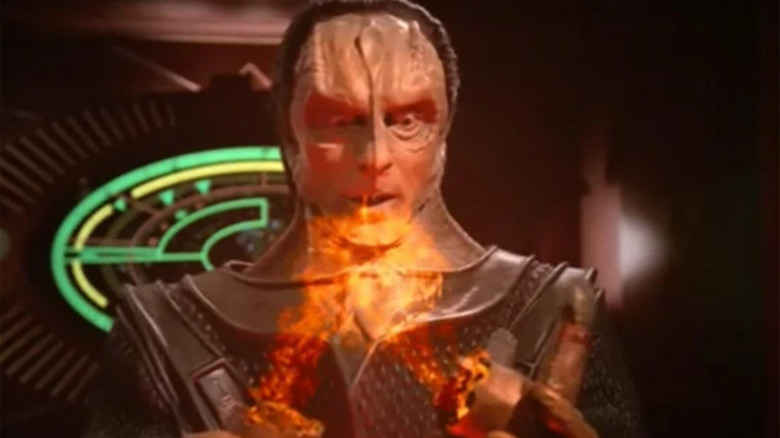
While some would opine that "Star Trek: Deep Space Nine" is the greatest "Trek" of them all, the show did introduce some strange elements to the franchise. This includes the Pah-Wraiths, ancient cosmic entities existing within a wormhole to the Gamma Quadrant near the planet Bajor. Lacking a conventionally physical form themselves, the Pah-Wraiths are able to possess and empower host bodies, harnessing their negative and malevolent emotions. When the Pah-Wraiths do appear, they take on a fiery form, imbuing their hosts with a similar destructive energy.
Despite playing such a prominent role in the later seasons of "DS9," there is still so much unknown about the Pah-Wraiths. We know that they can influence the personalities and actions of those that they target and that they're capable of devastating power. The entities' influence steers Gul Dukat (Marc Alaimo), one of the best "Star Trek" villains of all time, granting him near-omnipotent power. Given the terrifying extent of Dukat's upgrade, one can infer the Pah-Wraiths have similar, if not greater, levels of cosmic potential themselves.
13. Bajoran Prophets
CBS Studios
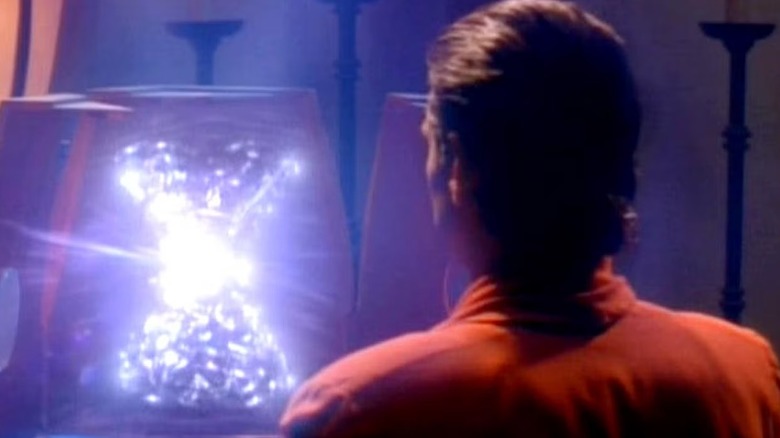
The equal and opposing force to the Pah-Wraiths are the Prophets, a similar noncorporeal entity from the Bajoran wormhole. The Prophets are first glimpsed in the "Deep Space Nine" series premiere, appearing to Benjamin Sisko (Avery Brooks) when he makes first contact by entering the wormhole. The Prophets are revered by the Bajorans, inspiring a religiously zealous cult to worship them, led by Kai Winn Adami (Louise Fletcher). As the Pah-Wraiths make their presence known, the Prophets resurface to stop them, choosing Sisko as their avatar.
The Prophets appear every inch as powerful as the Pah-Wraiths as beings existing outside of normal comprehension. Just as the Pah-Wraiths possess, empower, and influence Dukat, the Prophets do the same for Sisko but in a much more symbiotic and benevolent manner. It's revealed that the Prophets initially have no understanding of physical or linear existence, implying that they exist outside of the bounds of time. Another mysterious entity within the "Star Trek" mythos, the Prophets help turn the tide of the devastating Dominion War by eliminating a vast fleet of reinforcements, showcasing their power.
12. Caretakers
CBS Studios
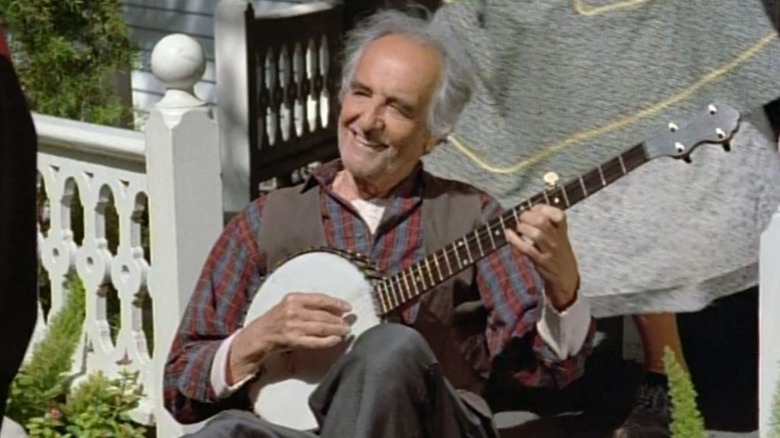
The 1995 series "Star Trek: Voyager" kicked things off with a bang as it catapulted its titular Starfleet vessel and a Maquis starship deep into the Delta Quadrant. This act was done by the Caretaker (Basil Langton), a mysterious figure sending energy pulses throughout the galaxy. In reasoning with the Caretaker, Voyager Captain Kathryn Janeway (Kate Mulgrew) learns he is part of an ancient race taking care of a species known as the Ocampa. Unfortunately, the Caretaker dies before he can send the Voyager back to the Alpha Quadrant, leaving them on a long journey home.
We never really get to see the Caretakers in their physical prime, but they are reputed to be quite powerful beings normally made of pure energy. Even the Caretaker that we do see possesses quite strong psionic abilities in the twilight years of his life. That said, the Caretakers are clearly not immortal and are forced to rely on external technology in some capacity. Like many omnipotent entities in "Star Trek," a lot about the Caretakers is still shrouded in mystery, but they are capable of untold levels of power.
11. V'Ger
Paramount Pictures
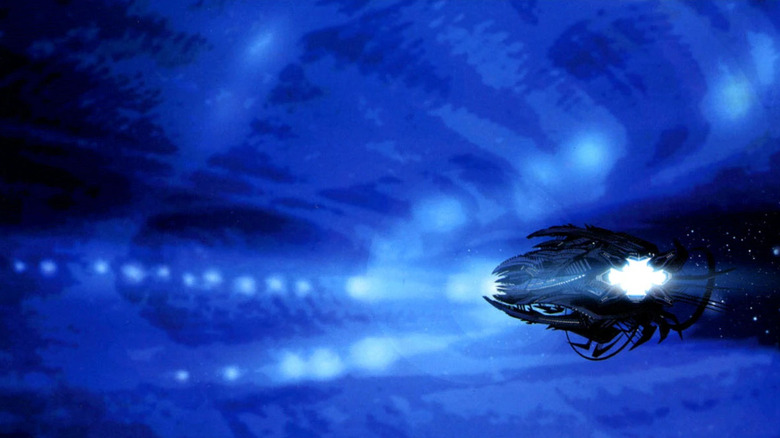
The antagonist of 1979's "Star Trek: The Motion Picture" is V'Ger, a cosmically upgraded Voyager probe in search for its creator. On a course directly headed for Earth, V'Ger easily destroys a group of Klingon warships and a Starfleet research station without so much as slowing down. Intercepting the massive entity, the Enterprise discovers its true origins and mission to deliver the information it's gathered to its creator. This leads Captain Willard Decker (Stephen Collins) volunteering to complete its mission, effectively merging with V'Ger into a new form of hybrid organic-machine life.
V'Ger is a "Star Trek" movie antagonist that isn't defeated so much as it ultimately evolves and vanishes to parts unknown. "The Motion Picture" ending suggests that there is something bigger than the cosmos yet to be witnessed and explored. V'Ger is the embodiment of that message and, merged with Decker, takes on a new form of untold potential and scope. Already formidable before this merger, V'Ger exists beyond the already awe-inspiring entity it threatened the Earth as.
10. Organians
CBS Studios
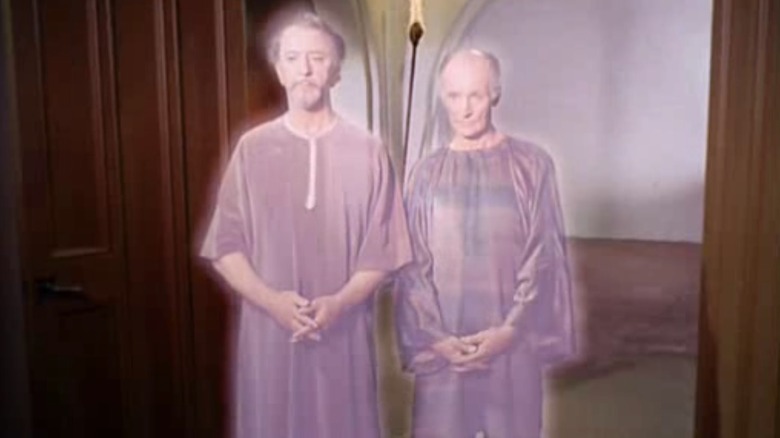
One of the Federation's most politically complicated relationships has been with the Klingon Empire, right from the militaristic race's first appearance. This encounter unfolds in the "Original Series" episode "Errand of Mercy," with an all-out war nearly breaking out around the planet Organia. As Starfleet and the Klingons amass their forces for a fierce showdown, the Organians reveal their true forms to defuse the situation. Rather than being a relatively primitive humanoid race, the Organians are actually beings of pure energy able to bend the laws of physics without visible effort.
The Organians are able to force a lasting, if uneasy, peace treaty between the Federation and the Klingon Empire to holds for the remainder of the "TOS" era. This includes the Organians preventing Starfleet and the Klingons from using their weapons against each other, no matter how visibly hard they try. The resulting peace is maintained because neither the Federation nor the Klingons want to incur the Organians' wrath if they break the agreement. That speaks to just how absolute both factions consider the Organians' power, making them an intimidating presence in the galaxy.
9. Metrons
CBS Studios
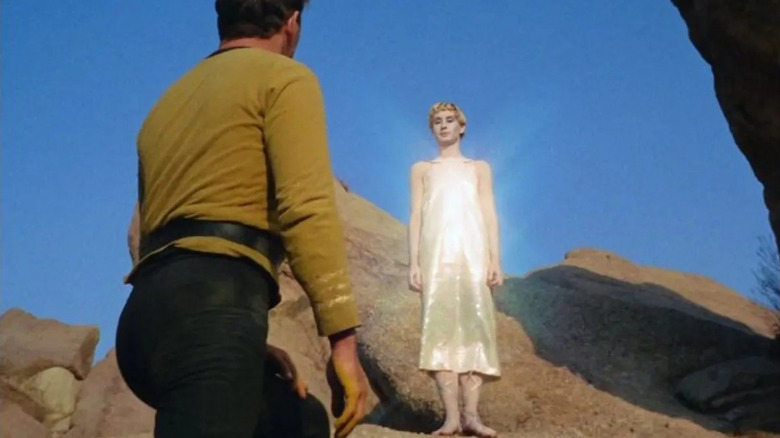
One of the best "Star Trek: The Original Series" episodes is "Arena," which pits Kirk against a reptilian race known as the Gorn. The two characters are transported to a remote planet by an omnipotent race known simply as the Metrons, who observe the battle. After triumphing in one of the worst TV fights ever, Kirk speaks with a Metron (Carole Shelyne), impressed that he spared the Gorn captain's life. The Metron instantly transports Kirk back to the Enterprise, with Kirk's injuries healed and the ship lightyears away from its previous location.
The Metrons and their curiosity of humanity and the Gorn is further explored in "Star Trek: Strange New Worlds." These Metrons confirm that their true form are beings of cosmic energy, able to take on human form for easier discourse with organic beings while capable of living for millennia. The Metrons are also shown being capable of erasing memories of their existence in an instant in another showcase of their power. Still shrouded in mystery, the Metrons are an omnipotent force that feel like they've only shown a fraction of their potential.
8. Guardian of Forever

Paramount+
The Guardian of Forever makes their debut in the "Original Series" episode "The City on the Edge of Forever," allowing the Enterprise's officers to travel back in time. Kirk and his crew investigate the planet when the Guardian emits severe distortions to the space-time continuum that reverberate into outer space. "Star Trek: Discovery" reveals the Guardian relocates to an even more remote planet in the distant future under the guise of an unassuming human man named Carl (Paul Guilfoyle). The Guardian does this to prevent themselves from becoming used as a weapon in the Temporal Wars given its mastery over space-time.
The Guardian's return in "Discovery" includes the revelation that they are aware of multiple timelines and alternate realities, making them more than just a time travel plot device. "Discovery" also reveals that the Guardian isn't bound to the planet where Kirk discovers them, nor to the same physical form, suggesting matter-manipulating powers. The fact that the Guardian was forced into hiding suggests they're not completely capable of fending for themselves unlike other entities on this list. But given the sheer breadth of their dominion over time and space, the Guardian is a force to be reckoned with.
7. Kes
CBS Studios
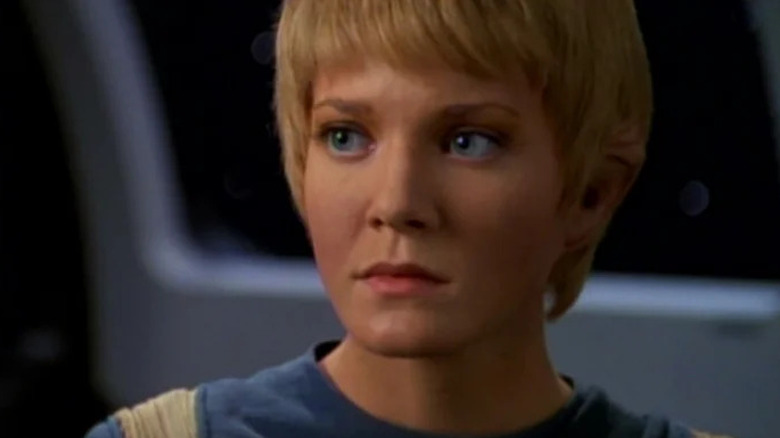
Among the characters native to the Delta Quadrant who join the Voyager crew is Kes (Jennifer Lien), a woman from the Ocampa race. These species maintain telepathic abilities, with other latent psionic abilities, though a short lifespan of approximately nine years. Through her experiences on the ship cruising through the Delta Quadrant, Kes develops and evolves, with her powers expanding into full-blown telekinesis. As Kes was cut from "Star Trek: Voyager," the character evolves into a being of pure energy, leaving the ship to stop herself from accidentally destroying it.
Kes was always something of an odd character out among the Voyager crew but eventually proved herself to be the most powerful character among them. The character resurfaces in the sixth season, even more powerful but resentful that her upgraded powers makes her a pariah among the Ocampa. This signals that her boosted abilities make her an outlier in her own species, in addition to the strongest regular character in the series. A formidable presence with only a fraction of her potential displayed, Kes is the unassuming powerhouse on board Voyager.
6. Charlie Evans
CBS Studios
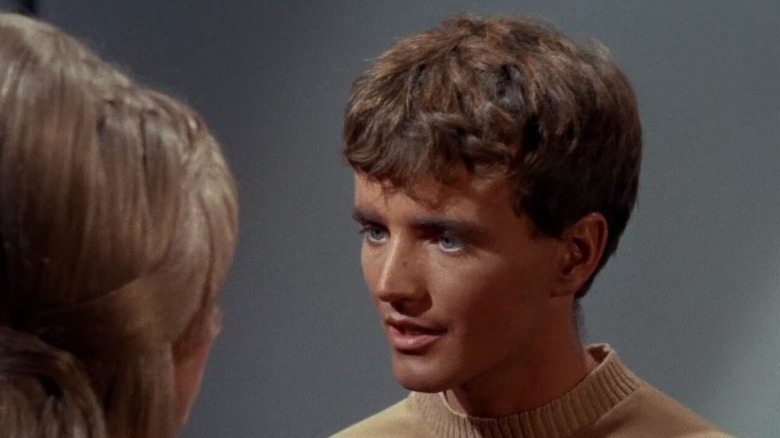
One of the franchise's first depictions of the utterly omnipotent was the "Original Series" episode "Charlie X." The Enterprise picks up a troubled teenaged orphan named Charlie Evans (Robert Walker, Jr.) who begins to display godlike powers. This includes telepathy and the ability to alter matter at will, destroying a starship and even changing the physical appearance of crew members who upset him. When Kirk deems Charlie too dangerous to bring to a larger community, he easily takes control of the Enterprise and makes Janice Rand (Grace Lee Whitney) vanish in thin air.
Kirk and the Enterprise crew faced plenty of demigods and cosmic figures with deity-level abilities but few as petulantly malevolent as Charlie Evans. It's discovered that Charlie received his powers from the mysterious Thasian race, who ultimately come to banish him when Charlie goes out of control. Though there appear to be limits to Charlie and the Thasians' potential, both display a terrifying level of reality-altering power. Though the Thasians haven't been seen on-screen since, Charlie is a reminder that godlike powers should be wielded with a level of maturity and restraint.
5. The Traveler
CBS Studios
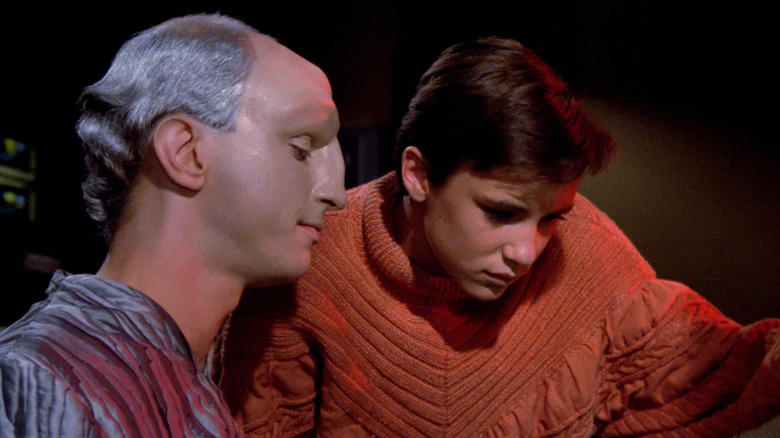
When Wil Wheaton's Wesley Crusher left "Star Trek: The Next Generation," his character did so through an enigmatic character known simply as the Traveler. Played by Eric Menyuk, the Traveler appears in the episode "Where No One Has Gone Before," identifying Wesley as someone with the potential to follow in his footsteps. The character resurfaces several times over the course of the series, able to shape-shift his physical form and reshape the rules of reality to help Wesley and the Enterprise crew. The Traveler's capabilities are expanded to being able to travel through time and space, as well as alternate realities and timelines at will.
After Wesley is recruited as the latest Traveler in "TNG," he is seen having seemingly mastered the abilities with the role in "Star Trek: Picard." In this capacity, Wesley resurfaces in "Star Trek: Prodigy," displaying the power to repair broken timelines and temporal paradoxes. This suggests an awesome potential capable of rewriting the space-time continuum though not without its limits. The Traveler serves as a shadowy figure overseeing the integrity of space and time, making him an extremely powerful figure holding reality together.
4. Kevin Uxbridge
CBS Studios
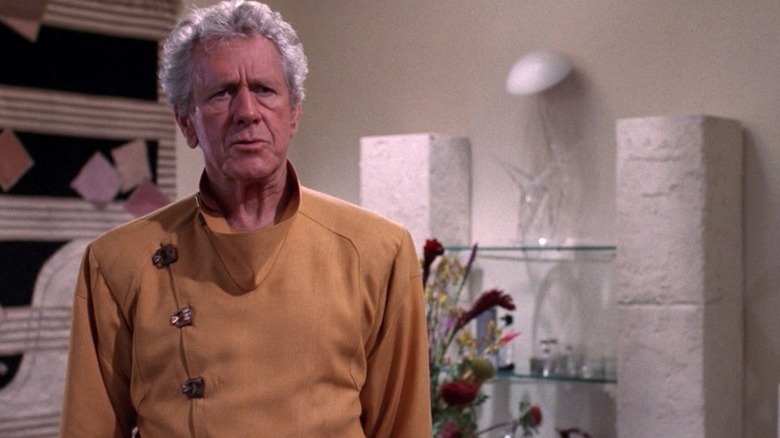
Whereas the threat of cosmic annihilation from omnipotent beings is a recurring trope throughout "Star Trek," the "TNG" episode "The Survivors" features that becoming a somber reality. The Enterprise discovers a planet obliterated by an unseen cataclysm, with only the elderly couple of Kevin (John Anderson) and Rishon Uxbridge (Anne Haney) as its apparent survivors. Jean-Luc Picard (Patrick Stewart) learns that Kevin is actually a being from a species known as the Douwd who took on human form after falling in love with Rishon. After Rishon was killed by a hostile species, Kevin used his immense powers to completely wipe them out, creating an illusion of Rishon to continue the illusion of their marriage.
As Picard observes, someone with the sheer destructive potential that Kevin possesses is best left alone. The Douwd is another species that isn't revisited in "Star Trek" television or film, leaving much about them shrouded in mystery. That Kevin Uxbridge was able to wipe out a race of billions and devastate a planet speaks to untold levels of power that he's capable of. Anyone that powerful, of course, is best to stay on their good side and Picard is wise to steer clear from him.
3. Trelane
Paramount+
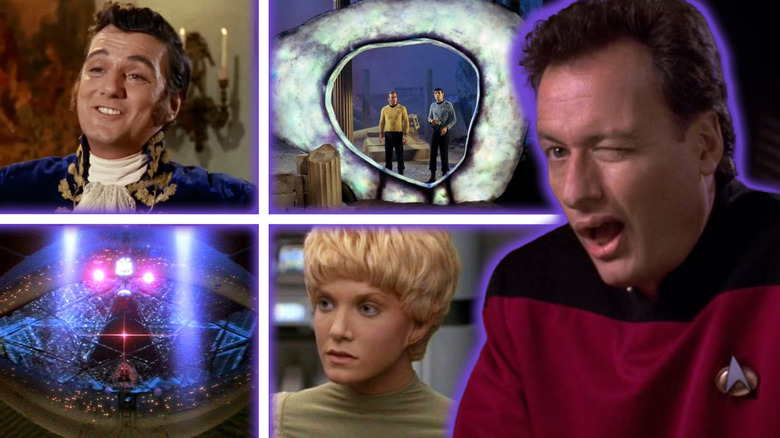
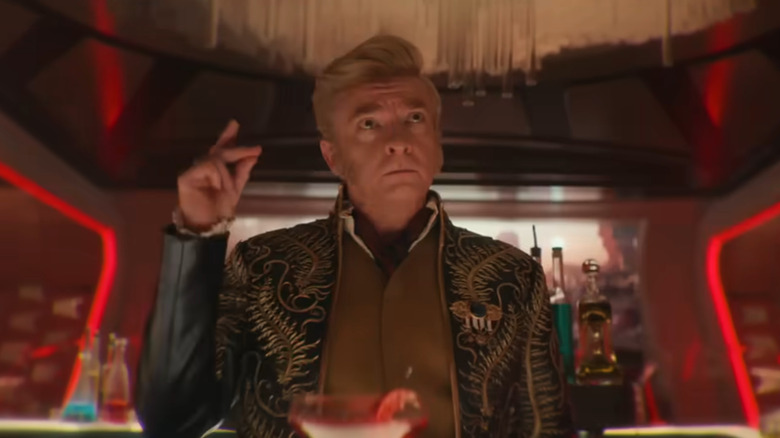
One of the strangest and most powerful characters encountered by Kirk in "The Original Series" is Trelane (William Campbell). Like Q (John de Lancie), Trelane is capable of reshaping reality however he sees fit, viewing Kirk and his crew as little more than playthings to amuse himself with. Trelane resurfaces in "Star Trek: Strange New Worlds" season 3 and confirms he is from the Q Continuum and an apparent son of Q. This places him among the most powerful beings in the universe, who regularly change space and time to suit their purposes.
It's unclear if Trelane is the same character as the one we're mentioning next — after all, the Q Continuum is not confined to linear time. With that in mind, we're treating him as a separate entity, but no less omnipotent though considerably more childish. That latter distinction marks Trelane in a slightly lower ranking, unable to contain himself when using his reality-shaping powers. Functionally a kid with the powers of a god at his disposal, Trelane isn't as menacing as Charlie Evans and doesn't appear to have as many limits to his potential.
2. Q Junior
CBS Studios
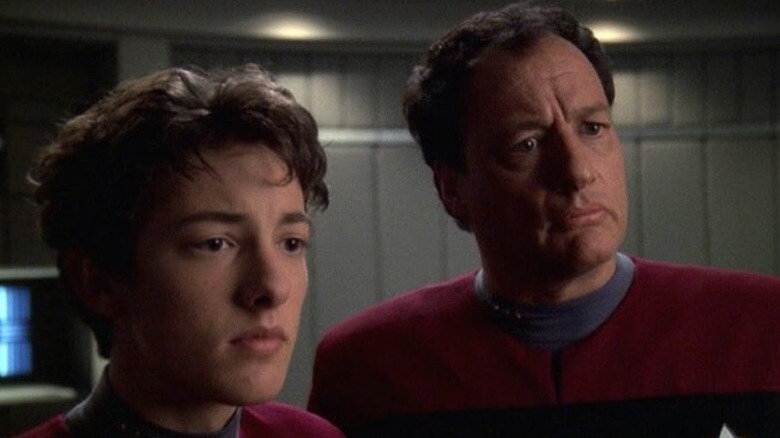
Lest we forget, Trelane is not the only juvenile member seen within the Q Continuum throughout the series. In the aptly titled "Voyager" episode "Q2," Q reunites with Janeway and his teenage son, referred to as Q Junior (Keegan de Lancie). With Junior acting out, Q hopes that his son will learn maturity from the Voyager crew, temporarily stripping him of his powers. It becomes clear that Junior holds a special place for the Continuum's fragile stability, something clearly recognized by his father after lessons are learned and his powers are restored.
Honestly, we could've listed multiple side characters from the Q Continuum, including Q's mate (Suzie Plakson) and the Continuum's judge (Lorna Raver). For the sake of variety, we're keeping things to the biggest characters from this omnipotent race, which includes Junior. One of Q's best moments from across the franchise is his haphazard parenting techniques imposed on the Voyager crew, with Junior shaping up to become a powerful Q indeed. However, given that Q is able to temporarily take away his son's powers signals Junior hasn't quite surpassed his father yet.
1. Q

Paramount+
Every "Star Trek" fan should've expected Q to make this list and somewhere at least near the top of it. The primary Q confronts Picard at the start of "The Next Generation" with the challenge to prove that humanity is worthy of its continued existence. By the series finale, it's clear that Q can make good on this threat, taking Picard back to the species' evolutionary origins as the trial continues. Resurfacing in "Star Trek: Picard," Q is shown to be capable of traveling through alternate timelines and changing history further, bringing back the menace of his initial appearance.
With a snap of his fingers, Q can completely alter reality as he sees fit, standing as something of a godlike frenemy in the franchise. It's implied that the main Q we see throughout the franchise's history holds a position of great importance for the Continuum, potentially making him the strongest Q. It's never clear what the hierarchy is within this unseen species but it is known that there are significant internal tensions. Regardless of the mysteries of the Continuum, Q stands as the most powerful character in "Star Trek," capable of rendering space-time asunder.







 English (US) ·