
Securing respect is still an uphill battle in some corners, but the modern animated landscape also feels as robust as the Disney Renaissance or early Pixar era. Specifically, the last decade has supplied a banquet of riches, be they independent, international, original IP, or sequels. From long-standing studios' return to form to passion projects with Oscar credentials, here are 15 impeccable highlights from the past 10 years.
15 'Puss in Boots: The Last Wish' (2022)
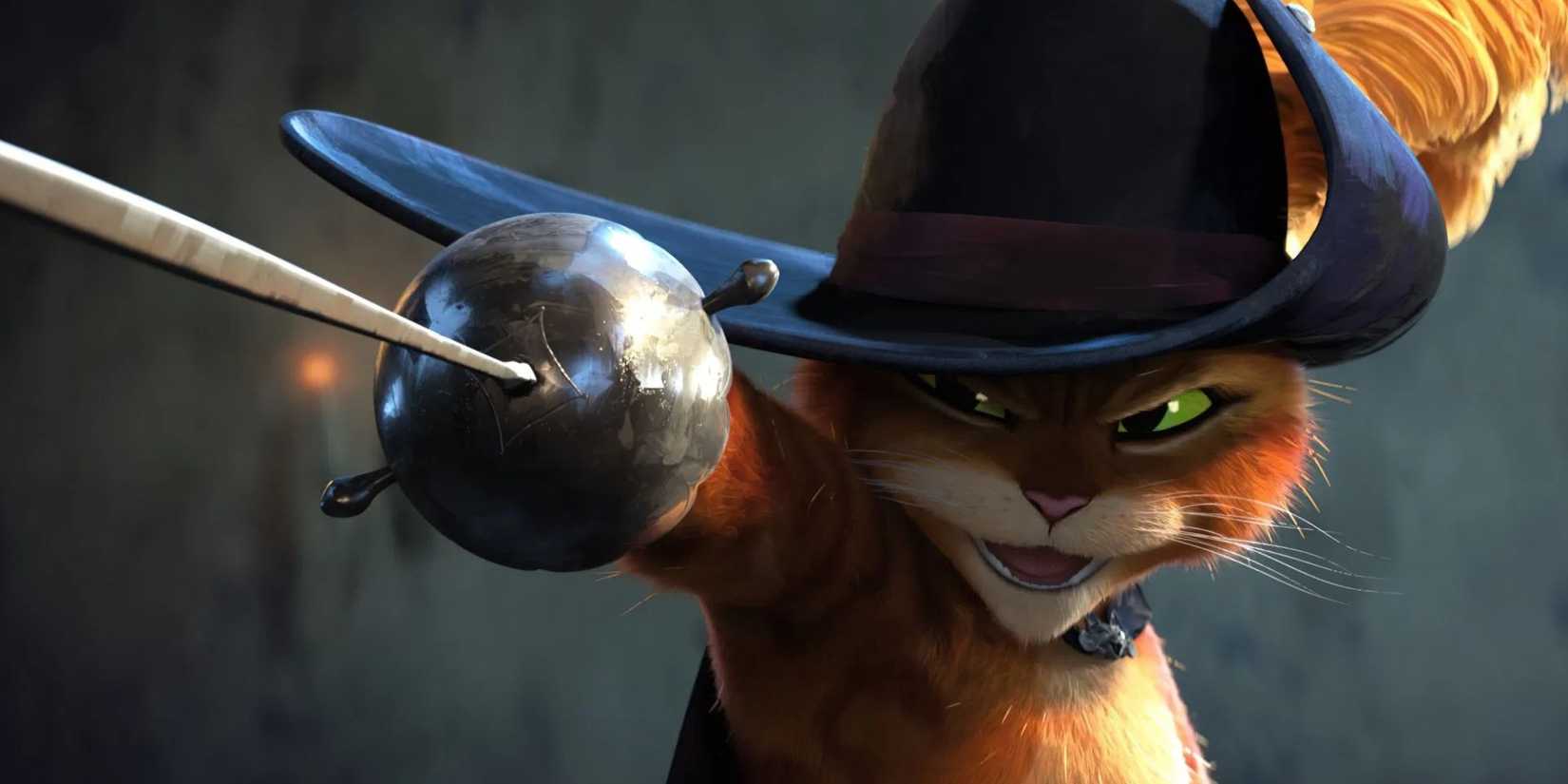 Image via Universal Pictures
No one expected the sequel to a 2011 Shrek spin-off to carry visceral thematic weight. Puss in Boots: The Last Wish could've taken the easy road and played things safe. Instead, director Joel Crawford and co-writers Paul Fisher and Tommy Swerdlow turn the titular hero's (Antonio Banderas) second solo outing into a treatise on panic attacks, existential crises, and the harrowing terror every human confronts — all through the eyes of a suave, swashbuckling ginger cat.
After 90 minutes spent trying to outrun Death (Wagner Moura), no resolution would pass muster for this satirical franchise except Puss' victory. Still, transitioning from a heart-in-throat universal fear to the catharsis of Puss accepting his mortality and cherishing his temporary reprieve makes the refined gravitas of DreamWorks Animation's unexpected treasure even richer. The Last Wish recalls the days when children's movies challenged their young audience rather than doubting their intellectual capacity. Exquisite camera perspectives, eclectic character design, and soaring action are just a bonus.
14 'Encanto' (2021)
 Image via Walt Disney Studios Motion Pictures
Encanto, Disney's lush coming-of-age musical, features an extraordinary heroine who doesn't need superhuman abilities to defend her family. The only antagonists of co-directors Jared Bush and Byron Howard's modern folk tale are familial tension, insecurity, and the ways violent intergenerational trauma reverberates through the decades. Mirabel's (Stephanie Beatriz) journey toward confidence begins with a young woman who can't satisfy her loved ones' high-pressure expectations. She feels like a failure — and Alma (María Cecilia Botero), her abuela, rubs stinging salt in those wounds.
Once Mirabel seizes her self-actualization and Alma values her granddaughter's uniqueness, the intimacy of their conflict-turned-reconciliation both slices to the quick and comforts. The Madrigals' imperfections make them resplendently normal, miraculous Gifts aside; they're defiantly jubilant survivors and communal helpers. Where the latter's concerned, Encanto's team lovingly renders Colombia's diverse culture with tactile specificity and a radiant color palette. Plus, Lin-Manuel Miranda's irresistible tunes are the gift that keeps on giving.
13 'Turning Red' (2022)
 Image via Walt Disney Studios Motion Pictures
Pixar built its reputation upon its willingness to address sensitive and complicated topics. Three decades into their feature film oeuvre, director Domee Shi's deliriously charming Turning Red might be the studio's most invigorating and rewarding venture yet. Hollywood's vast collection of puberty storylines mostly follows cisgender boys and plays the transition for laughs. While Turning Red enjoys its premise, spotlighting frantic change and tumultuous confusion via Mei Lee's (Rosalie Chiang) first period and her accompanying transformations into a tall red panda, it elevates it into genius territory.
Turning Red rejects all menstruation-related stigmas in favor of vigorously embracing everything Mei's feelings entail. Her newfound volatility affects normal middle school difficulties (unrequited crushes, body image, lack of autonomy, plummeting self-confidence), her friendships, her fraught yet loving relationship with her mother (Sandra Oh), and how she explores her Chinese-Canadian identity. Shi allows an adolescent girl to be an adolescent girl without judgment, down to Mei's squealing enthusiasm for her favorite boy band. For the intended age demographic and the adults who remember that formative time, Turning Red is validation in Pixar form.
12 'Demon Slayer: Kimetsu no Yaiba – The Movie: Mugen Train' (2020)
 Image via Aniplex
Three more Demon Slayer movies have hit theaters since 2020, but Mugen Train reigns supreme. Demon Slayer's first feature-length adventure and the film's record-breaking profits provide a fond nostalgic novelty, but Mugen Train marks the moment when the shōnen anime's character-driven tension and sensational spectacle click into a harmonious place. Unrestrained by runtime or budget, director Haruo Sotozaki and the Ufotable studio leave everything on the figurative table with this project; the brutally balletic combat and coordinating visuals are kinetic beyond belief.
Although an extravaganza that warrants slack-jawed staring, Mugen Train's demonic enemies expose the cracks in the heroic quartet's psyches as they're pushed into unrelentingly dark corners and forced to take ruthless measures. Demon Slayer's been a gut-punching saga about loss, sacrifice, resilience, and vulnerability since the premiere's blood-soaked tragedy. True to form, the newly introduced Rengoku (Satoshi Hino) rips viewers' hearts into shreds.
11 'Belle' (2021)
 Image via GKIDS
Writer-director Mamoru Hosoda's Belle is a radically ambitious riff on Beauty and the Beast by way of the internet, childhood trauma, domestic abuse, and the internal life of a teenage girl grieving her mother's death. Joining U, a virtual reality network populated by millions of users and their personalized avatars, enables Suzu Naito (Kaho Nakamura) — withdrawn, angry, and agonizingly shy — to rediscover her passion for singing. As Suzu flourishes, her viral pop star status also fosters her connection with the human boy hiding behind the Dragon (Takeru Satoh), U's so-called villain. Despite the geological distance separating them, Suzu's compassion recognizes her reflection in another frightened, wounded soul.
Hosoda's take on internet hyper-connectivity plants both feet in realism. Online spaces can, indeed, be a therapeutic escape that lessens loneliness and empowers individuals to freely display the traits they conceal in their offline lives. On the flip side, Belle critiques how cultivated anonymity encourages targeted cruelty; internet fame never exists in a vacuum. Hosoda distinguishes both worlds by mixing hand-drawn 2D and computer-generated 3D to spellbinding effect — you've never seen anything like Suzu's glittering, pink-haired persona standing atop a pastel flying whale while thousands of rainbow flowers shower down like rain.
10 'The Wild Robot' (2024)
 Image via Dreamworks
In The Wild Robot, DreamWorks' best animated film since The Prince of Egypt, writer-director Chris Sanders replaces traditional photorealism with a distinct style modeled after impressionist watercolor paintings. The brushstroke-like appearance, combined with an exquisite sense of scale, renders nature's splendor with captivating fluidity, volumetric lighting, and breathtaking golden warmth. Every detail matters; weather and time wear Roz's (Lupita Nyong'o) pristine metallic sheen down into scratched, rusted, and moss-covered silver. Such marks are a source of pride, however, since a robot's version of age lines signifies the wisdom Roz has accrued through experience and heartache.
Speaking of heart: Roz's capacity for dizzying affection leaves her simultaneously content and ruined. Fink (Pedro Pascal), a solitary predator, refuses to acknowledge how much he depends upon Roz's company. The platonic odd couple isn't equipped to teach a runt of the litter like Brightbill (Kit Connor) how to survive. Nevertheless, they selflessly, sincerely shoulder the protective weight and do the best despite their limitations. Found families arcs can wind up trite or didactic, but The Wild Robot unfolds with the tender, soulful frankness of an ancient fairy tale where communal compassion equals strength.
Collider Exclusive · Oscar Best Picture Quiz
Which Oscar Best Picture
Is Your Perfect Movie?
Parasite · Everything Everywhere · Oppenheimer · Birdman · No Country
Five Oscar Best Picture winners. Five completely different visions of what cinema can be — and what it can do to you. One of them is the film that was made for the way your mind works. Ten questions will figure out which one.
🪜Parasite
🌀Everything Everywhere
☢️Oppenheimer
🐦Birdman
🪙No Country for Old Men
FIND YOUR FILM →
01
What kind of film experience do you actually want? The best movies don't just entertain — they leave something behind.
ASomething that pulls the rug out — that makes me think I'm watching one kind of film and then reveals I'm watching another entirely. BSomething overwhelming — funny, sad, absurd, and genuinely moving, all at once. CSomething grand and weighty — a film that makes me feel the full scale of what I'm watching. DSomething formally daring — a film that pushes what cinema can even do. ESomething lean and relentless — pure tension with no wasted frame.
NEXT QUESTION →
02
Which idea grabs you most in a film? Great films are driven by a central obsession. What's yours?
AClass, inequality, and what people are willing to do when desperation meets opportunity. BIdentity, family, and the chaos of trying to hold your life together when everything is falling apart. CGenius, moral responsibility, and the catastrophic weight of a decision you can never take back. DEgo, legacy, and the terror of becoming irrelevant while you're still alive to watch it happen. EEvil, chance, and whether moral order actually exists or if we just tell ourselves it does.
NEXT QUESTION →
03
How do you like your story told? Form is content. The way a story is shaped changes what it means.
AGenre-twisting — I want it to start in one lane and migrate into something completely different. BMaximalist and genre-blending — comedy, action, drama, sci-fi, all in one ride. CEpic and non-linear — cutting between timelines, building a mosaic of cause and consequence. DA single unbroken flow — I want to feel like I'm living it in real time, no cuts to safety. ESpare and precise — every scene doing exactly what it needs to do and nothing more.
NEXT QUESTION →
04
What makes a truly great antagonist? The opposition defines the protagonist. What kind of opposition fascinates you?
AA system — invisible, structural, and almost impossible to fight because it has no single face. BThe self — the ways we sabotage, abandon, and fail the people we love most. CHistory — the unstoppable momentum of events that no single person can stop or redirect. DThe industry — the machinery of culture that chews up talent and spits out irrelevance. EPure, implacable evil — a force so certain of itself it becomes almost philosophical.
NEXT QUESTION →
05
What do you want from a film's ending? The final note is the one that lingers. What do you want it to sound like?
AShock and inevitability — a conclusion that recontextualises everything that came before it. BEarned emotion — I want to cry, laugh, and feel genuinely hopeful, even if the world is a mess. CDevastation and grandeur — an ending that makes me sit in silence for a few minutes after. DAmbiguity — something that leaves enough open that I'm still thinking about it days later. EBleakness — an honest refusal to pretend the world is tidier than it actually is.
NEXT QUESTION →
06
Which setting pulls you in most? Where a film takes place shapes everything — mood, stakes, what's even possible.
AA gleaming modern city with a hidden underside — beauty masking rot, wealth masking desperation. BA collapsing suburban life that opens onto something infinite — the multiverse of a single ordinary person. CThe corridors of power and science at a world-historical turning point — where decisions echo for decades. DThe grimy, alive chaos of New York and Hollywood — fame as both destination and trap. EVast, indifferent landscape — desert and highway where violence arrives without warning or reason.
NEXT QUESTION →
07
What cinematic craft impresses you most? Every great film has a signature — a technical or artistic element that makes it unmistakable.
AProduction design and mise-en-scène — every frame composed to carry meaning beneath the surface. BEditing and tonal control — the ability to move between registers without losing the audience. CScore and sound design — music that becomes inseparable from the dread and awe of what you're watching. DCinematography as performance — the camera not recording events but participating in them. ESilence and restraint — what's left unsaid and unshown doing more work than any dialogue could.
NEXT QUESTION →
08
What kind of main character do you root for? The protagonist is the lens. Who you choose to follow says something about you.
ASomeone smart and resourceful who makes increasingly dangerous decisions under pressure. BSomeone overwhelmed and ordinary who turns out to be capable of something extraordinary. CA brilliant, tortured figure whose gifts and flaws are inseparable from each other. DA self-destructive artist whose ego is both their superpower and their undoing. EA quiet, principled person trying to make sense of a world that has stopped making sense.
NEXT QUESTION →
09
How do you feel about a film that takes its time? Pace is a choice. Some films sprint; others let tension accumulate slowly, deliberately.
AI love a slow build when I know the payoff is going to be seismic — patience for a devastating reveal. BGive me relentless momentum — I want to feel breathless and emotionally spent by the end. CEpic runtime doesn't scare me — if the material demands three hours, give me three hours. DI want it to feel propulsive even when nothing is technically happening — restless energy throughout. EDeliberate and unhurried — I want dread to accumulate in the spaces between the action.
NEXT QUESTION →
10
What do you want to feel walking out of the cinema? The best films leave a mark. What kind of mark do you want?
AUnsettled — like I've just seen something I can't fully explain but can't stop thinking about. BMoved and energised — like the film reminded me what actually matters and gave me something to hold onto. CHumbled — like I've been in the presence of something genuinely important and overwhelming. DExhilarated — like I've just seen cinema doing something it's never quite done before. EHaunted — like a cold, quiet dread that stays with me for days.
REVEAL MY FILM →
The Academy Has Decided Your Perfect Film Is…
Your answers have pointed to one Oscar Best Picture winner above all others. This is the film that was made for the way your mind works.
Parasite
You are drawn to films that operate on multiple levels simultaneously — that begin in one genre and quietly, brilliantly migrate into another. Bong Joon-ho's Parasite is a film about class, desire, and the architecture of inequality that manages to be darkly funny, deeply suspenseful, and genuinely shocking across a single extraordinary running time. Your instinct is for cinema that hides its true intentions until the moment it's ready to reveal them. Parasite is exactly that — a film that rewards close attention and punishes assumptions, right up to its devastating final image.
Everything Everywhere All at Once
You want it all — and this film gives you all of it. The Daniels' Everything Everywhere All at Once is one of the most maximalist films ever made: action comedy, multiverse sci-fi, family drama, existential crisis, and a genuinely earned emotional core that sneaks up on you amid the chaos. You are someone who responds to ambition, who doesn't want cinema to choose between being entertaining and being meaningful. This film refuses that choice entirely. It is overwhelming by design, and its overwhelming nature is precisely the point — because the feeling of being crushed by infinite possibility is exactly what it's about.
Oppenheimer
You are drawn to cinema on a grand scale — films that understand history not as a backdrop but as a force, and that place their characters inside that force and watch what happens. Christopher Nolan's Oppenheimer is a film about the terrifying gap between what we can do and what we should do, told with the full weight of one of the most consequential moments in human history behind it. You want your films to feel important without feeling self-important — to earn their ambition through sheer craft and the gravity of their subject. Oppenheimer does exactly that. It is enormous, complicated, and refuses easy comfort.
Birdman
You are drawn to films that foreground their own construction — that make the how of the filmmaking part of the what it's about. Alejandro González Iñárritu's Birdman, shot to appear as a single continuous take, is cinema examining itself through the cracked mirror of a fading actor's ego. You respond to formal daring, to the feeling that a film is doing something that probably shouldn't be possible. Michael Keaton's performance and Emmanuel Lubezki's restless camera create something genuinely unlike anything else — a film that is simultaneously about creativity, relevance, self-destruction, and the impossibility of ever truly knowing if your work means anything at all.
No Country for Old Men
You are drawn to cinema that trusts silence, that refuses to explain itself, and that treats dread as a form of meaning. The Coen Brothers' No Country for Old Men is a film about the arrival of a new kind of evil — implacable, arbitrary, and utterly indifferent to the moral frameworks we use to make sense of the world. It is one of the most formally controlled films ever made, and its controlled restraint is what makes it so terrifying. You want your films to haunt you, not comfort you. You are not interested in resolution if resolution would be dishonest. No Country for Old Men is honest in a way that most cinema never dares to be.
↻ RETAKE THE QUIZ
9 'Ne Zha 2' (2025)
 Image via A24
Writer-director Jiaozi's worldwide phenomenon broke box office records with firestorm flair. Ne Zha 2 follows on the heels of its 2019 predecessor movie about Ne Zha (Joseph Cao), the endearingly rebellious demonic pre-teen, as he undergoes intense trials in order to gain a body for his only friend, the dragon prince Ao Bing (Han Mo). Amidst Ne Zah 2's overreliance on bathroom humor exists poignant gravitas about expectations, identity, independence, social exclusion, and a deeply loving family. Ne Zha rejects destiny and bigotry; although he's far from perfect, he's determined to prove irredeemable evil isn't within his nature.
Even if Ne Zha 2 didn't have a giant heart, its technical feats would be worth the price of admission. Wall-to-wall with frantic adrenaline and nigh-unprecedented imagination, the luscious environments, striking creature designs, and wuxia martial arts — choreographed with hypnotizing flow and crisp ferocity — are electrifying enough to levitate audiences out of their chairs. The highest-grossing animated film of all time, Ne Zha 2's undeniable proficiency — and its importance as a love letter to Chinese history, religion, mythology, and art — can't be overstated.
8 'KPop Demon Hunters' (2025)
 Image via Netflix
There's something joyful about KPop Demon Hunters, and it's not just the fire soundtrack or barrage of snarky quips. Co-directors Maggie Kang and Chris Appelhans craft everything you could ask for from a game-changing juggernaut: wry wisecracks, earnest candor, and a generation of children inheriting a heroine trio for the ages. Rumi (Adren Cho), Mira (May Hong), and Zoey (Ji-young Yoo) are self-sufficient, aspirational, and relatable in their flawed complexity. Their friendship models healthy acceptance and solidarity, while the metaphor of Rumi carrying traumatic scars and hiding her full self due to internalized shame and fear of rejection applies to the queer community, biracial identities, mental health, and more.
Toss in perfectly timed humor, vibrant hues, smooth-as-melted-butter action, dynamic concert lighting, and adrenaline-spiking cinematography, and you have a modern masterpiece that's earned its instant-classic label. Beyond the K-Pop industry, Korean culture, mythology, history, food, and the ways Rumi's heritage informs her stirring resolution are unapologetically and authentically displayed for the world to see. If you don't get chills during "What It Sounds Like," you might not have a soul.
7 'Guillermo del Toro's Pinocchio' (2022)
 Image via Netflix
Guillermo del Toro collaborates with Mark Gustafson and Patrick McHale for his spin on the 19th-century book, and 1940 Disney classic, but with all due respect to his creative partners, the maestro of the beautifully morbid's fingertips remain all over this virtuoso accomplishment. Aside from del Toro's adoration for misunderstood souls, he applies his eye for Gothic mood, live action color theory, symbolic framing, set design, and sublime lighting to the puppeteers' remarkable stop-motion technique. Their interpretations evoke naturalism, not the medium's tendency toward over-exaggeration. Whether it's the clumsily inhuman yet completely toddler-esque movements of Pinocchio's (Gregory Mann) pinewood limbs or the aching tenderness in Geppetto's (David Bradley) wrinkled face, Guillermo del Toro's Pinocchio flows like poetry.
Meanwhile, transferring the story beats to Mussolini-era Italy facilitates a tapestry of riveting themes, including fascist propaganda, PTSD, mortality, fathers and sons, and war's acidic senselessness. From Pinocchio's divine-intervention creation and his boyish brand of anarchy to how the world enchants his wooden heart, he's an opposing note to authoritarianism's mandatory submission and conformity. Oppressive forces exploit and warp his innocence, but never drain his jovial spark. Pinocchio's a mournful, magnificent ode to mining gold from a bleak world.
6 'Coco' (2017)
 Image via Pixar Animation
Many family conflict movies either side with the protagonist's unconventional dreams, no matter the cost, or make their heroes abandon personal satisfaction in a way that's punishing, not self-aware altruism. Coco strikes the perfect balance between extremes. Miguel (Anthony Gonzalez) doesn't need to sacrifice his passion for music, but his trip to the Land of the Dead illuminates his family's perspective — and lets him connect with Héctor (Gael García Bernal), the one ancestor who can understand his drive. Miguel combines his lessons and the power of music to right tragic wrongs, heal multiple hurting generations, reach Mamá Coco (Ana Ofelia Murguía) through her dementia, and bridge the gap between Miguel and the living family who adore him but couldn't quite grasp his inner magic.
Never let it be said that giving diverse creators free rein is anything except revelatory, necessary, and inherently more substantive than the status quo. The sunlight-soaked Santa Cecilia, the luminous Day of the Dead holiday and the fluorescent, kaleidoscopic Land of the Dead are sublime environments brimming with life (no pun intended). Director Lee Unkrich leads a profound, pathos-filled tribute to Mexico's cultural, historical, and spiritual resonance, as well as everything that makes life bittersweet.





 English (US) ·