
This article contains spoilers for Avatar: The Last Airbender season 2.
Netflix's Avatar: The Last Airbender season 2 makes several big changes to the source material, from plot points and character arcs to timeline alterations. In any adaptation, changes to the original story are to be expected. Therefore, it is the job of the newer show's writers to embed them in a way that either makes sense or improves on the original story, something that Avatar: The Last Airbender season 2's reviews claim is the case, in some ways.
By the time of Avatar: The Last Airbender season 2's ending, several of these big changes are evident, while some are more subtle. Given how 20 episodes of the original show were condensed into only seven live-action episodes, it would be impossible to list every change to the source material. However, the biggest ones are easy to spot, just as they will be in Avatar: The Last Airbender season 3. Be they overt episode omissions and timeline changes or new plots altogether, here are the biggest changes Netflix makes to the original show in Avatar: The Last Airbender season 2.
15 The Timeline Of Book Two: Earth

The broadest change that encompasses the entirety of Avatar: The Last Airbender season 2 is how it changes the timeline of Book Two: Earth. Some of these timeline changes are due to skipped episodes or new plot points, resulting in events from the source material happening out of order. For instance, Aang, Katara, and Sokka travel through the Serpent's Pass in episode 1 of Netflix's live-action show, which doesn't happen until episode 12 of the original.
Another different timeline element in Netflix's adaptation is how early the team reaches Ba Sing Se. This happens in episode 3 of the Netflix show, with elements like Appa's kidnapping and the journey to the library happening after, as opposed to before, like in the source material. Overall, Netflix's Avatar: The Last Airbender chops and changes Book Two's timeline, mostly as a result of skipped episodes from the latter.
14 Netflix’s Avatar: The Last Airbender Skips Several Episodes

Incidentally, Netflix's Avatar: The Last Airbender season 2 skips 11 episodes from the original show, though with elements from several of them still included. Some episodes skipped completely include "The Avatar State," "The Cave of Two Lovers," "The Swamp," "Avatar Day," "The Desert," "The Drill," "Appa's Lost Days," and "The Guru." This means that some of the biggest, most consequential plot points from the original show aren't part of Netflix's Avatar: The Last Airbender season 2.
13 Sai’s Importance Within Team Avatar

A source of one of the bigger changes in Netflix's Avatar: The Last Airbender season 1 was Sai, otherwise known as The Mechanist. Rather than living at the Northern Air Temple, Sai was a resident of Omashu and was tied to the stories of Jet and King Bumi. The changes to the source material continue with Sai in Netflix's Avatar: The Last Airbender season 2, with The Mechanist traveling with the core cast through the Serpent's Pass.
 Related
Avatar: The Last Airbender Season 2 Cast & Character Guide
Netflix’s Avatar: The Last Airbender returns with season 2, reuniting the cast from season 1 with some newcomers as Book Two: Earth is adapted.
While on this journey, it is Sai who tells Team Avatar about Sozin's Comet and inspires them to think of a way to fight back against the Fire Nation before it arrives. Later, Sai is kidnapped by the Dai Li and imprisoned alongside Sokka, subsequently escaping the Earth Kingdom aboard Appa. In the original show, Sai is not even named, aside from his Mechanist moniker, and only appears in three episodes out of a total of 61. Evidently, a big change in Netflix's adaptation is just how important Sai is.
12 Azula’s Chase Of Team Avatar

In season 2, episode 8 of the original show, Azula chases Team Avatar relentlessly using a big metal convoy of sorts. Although Azula's chase of the team is part of Netflix's Avatar: The Last Airbender season 2, it is slightly different. The Fire Nation Princess does not use the metal transport in the live-action show, instead using her hunting skills to track the team alongside Ty Lee and Mai.
11 Zuko & Azula’s Backstory

A big component of the original show's second season was Zuko's backstory, including what happened to his mother. These elements are included in Netflix's Avatar: The Last Airbender season 2, but with a few key differences. Ursa, Zuko's mother, has a bigger role, with the live-action showing more of her dynamic within the family. Azula also has a bigger part to play here, too, as her relationship with Ursa is outlined a bit more. Finally, it is revealed that Ursa inspired Zuko to be the Blue Spirit by telling him stories as a child.
10 The Fire Nation Never Attacks Ba Sing Se

"The Drill" is one of the bigger episode omissions in Netflix's Avatar: The Last Airbender season 2. This means that the Fire Nation never outright attacks Ba Sing Se during the live-action series. Azula makes plans to do so, but the attack is never outright shown, meaning much of Ba Sing Se's fall is down to the princess herself.
9 The Painted Lady
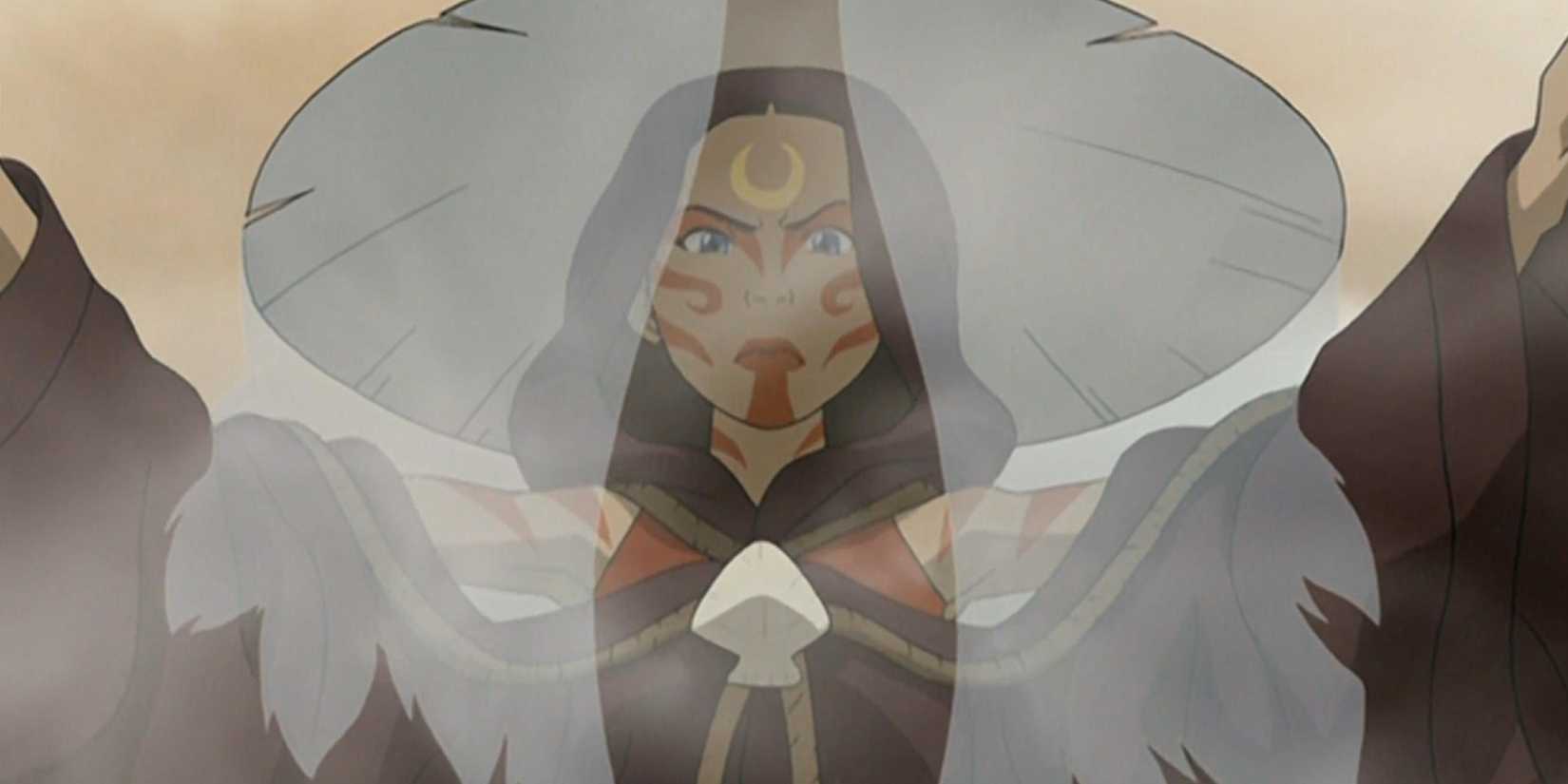
A surprising change made in Netflix's Avatar: The Last Airbender season 2 is Katara's vigilante persona. In season 3 of the original show, Katara decides to aid some Fire Nation citizens as the Painted Lady, with this storyline instead being moved to season 2 of the live-action and Ba Sing Se. Throughout season 2 of Netflix's show, Katara aids the lower-class citizens of the city, including Fire Nation deserters, and teams up with Zuko as the Blue Spirit, providing more of a connection between the two characters.
8 Professor Zei & The Library

The original animated show introduces Professor Zei, an anthropology professor from Ba Sing Se, during "The Desert," one of the episodes skipped in Netflix's version. Zei then leads Team Avatar into the desert to find Wan Shi Tong's library, resulting in a second episode fittingly titled "The Library." In Netflix's version, broader changes to the overall season mean this entire plot line is very different from the source material.
Instead, Zei is introduced to the team during a party at the Earth King's palace, becoming a regular acquaintance of Sokka. This allows Zei to be developed a lot more than he is in the animated show, leading to the reveal that the library is actually inside Ba Sing Se's walls. The entire library arc itself is thus different, with Aang and the team needing to be in the Spirit World to enter. rather than physically entering via the desert.
7 Jet’s Redemption & Fate
 Image via Netflix
What makes the library arc of Netflix's Avatar: The Last Airbender even more different is the inclusion of Jet. In the original show, Jet befriends Zuko on the way to Ba Sing Se before realizing the latter is a Firebender. He then spends time trying to prove as much before attacking Zuko, leading Jet to be arrested by the Dai Li. Jet is then brainwashed into believing that the 100-Year War isn't happening and lives a relatively normal life in the city. After seeing Appa is missing, Jet tries to help and is eventually killed by Long Feng.
This entire storyline is massively different in Netflix's version. Jet never believes that Zuko and Iroh are Firebenders; instead, he only clashes with the former via his fight with the Blue Spirit. Jet also doesn't get arrested or brainwashed by the Dai Li. He appears to Katara and offers to help them find the library, even entering the Spirit World with Team Avatar. In the end, Jet sacrifices himself to allow the group to escape the library, making his redemption arc and ultimate fate much different from the original animated show.
6 Toph’s Parents
 Credit: Katie Yu/Netflix
A big source of new development in Netflix's Avatar: The Last Airbender is Toph and her parents. Rather than simply being the overprotective, wealthy couple they were in the original, Toph's parents are revealed as war profiteers, adding a more mature dynamic to their character arcs. Moreover, Toph's mother travels to Ba Sing Se and is the one to kidnap Toph in an attempt to bring her home. In the original show, The Boulder and Xin Fu are responsible for this.






 English (US) ·