
 Image via WIT Studio
Updated Jun 18, 2026, 8:32 AM EDT
Anja Djuricic was born in Belgrade, Serbia, in 1992. Her first interest in film started very early, as she learned to speak English by watching Disney animated movies (and many, many reruns). Anja soon became inspired to learn more foreign languages to understand more movies, so she entered the Japanese language and literature Bachelor Studies at the University of Belgrade.
Anja is also one of the founders of the DJ duo Vazda Garant, specializing in underground electronic music influenced by various electronic genres.
Anja loves to do puzzles in her spare time, pet cats wherever she meets them, and play The Sims. Anja's Letterboxd four includes Memories of Murder, Parasite, Nope, and The Road to El Dorado.
Sign in to your Collider account
Some of the best written TV shows are anime series. Adult animations are often underrated because of the animated aspect, but they're more often than not incredible heavy hitters. Japanese anime writers especially can reach a certain core with their intricate dialogue and strong characters. And yes, there are silly anime series that often feel absurd, but they can carry strong messages in their core. Similarly to Western shows like The Simpsons, King of the Hill, and Rick and Morty, for example, anime can be a social critique, a character study, and satire just as much as the next live-action show.
Some anime writers are well-known in that world, and people often get attached to a specific author's work. Writers like Chica Umino and Gen Urobuchi are typical examples of great anime writers fans trust; when their name is attached to a project, anime lovers usually opt for those series and rarely regret their choices. Since the list only presents ten of the best written anime series, some honorable mentions go to One Punch Man, a hilarious and core-reaching show, Erased, a mystery thriller with a brilliant twist, and Ping Pong, an anime series unique in visual and storytelling style, among many others, of course.
15 'Terror in Resonance' (2014)
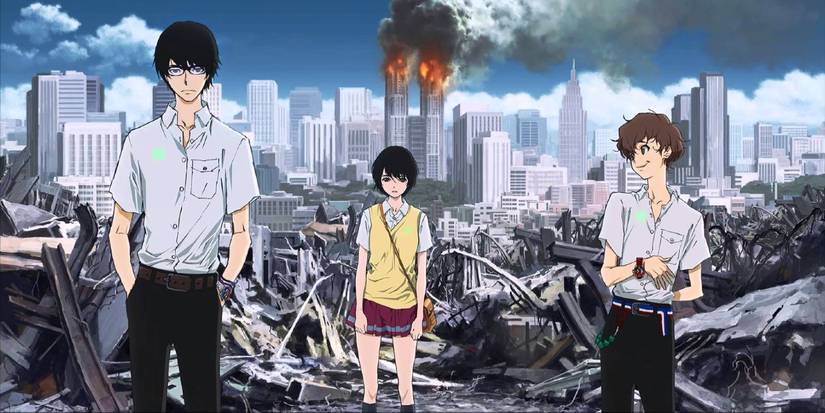 Image via MAPPA
Two teenage boys, calling themselves "Nine" and "Twelve," steal a nuclear device and post a cryptic video online, wearing masks and calling themselves "Sphinx." They begin a series of greatly elaborate terrorist attacks across Tokyo, turning the city into a chessboard. Their real target is not civilians, however, but the secret government project that experimented on them as children, turning them into weapons and then discarding them. As a jaded detective pieces together their past, an outcast high school girl named Lisa finds herself pulled into their dangerous game, slowly realizing that Nine and Twelve may not be villains but victims trying to expose a long-lost truth no one wants to hear.
Shinichirō Watanabe, the legendary director of Cowboy Bebop and Samurai Champloo, returned with this 11‑episode original thriller. Terror in Resonance dives into themes of trauma, systemic issues, and those who suffer at the hands of the very system; the writing is lean and precise, using every riddle and bomb placement as a means to force the public to ask questions about the events rather than overtly destroy for the sake of it. MAPPA, then a young studio, delivered some of the most fluid animation of the decade, while Yoko Kanno's score (her third collaboration with Watanabe) remains hauntingly beautiful. While some viewers found the final episodes divisive, there is no denying that Terror in Resonance is a bold and deeply human story that stands the test of time.
14 'Serial Experiments Lain' (1998)
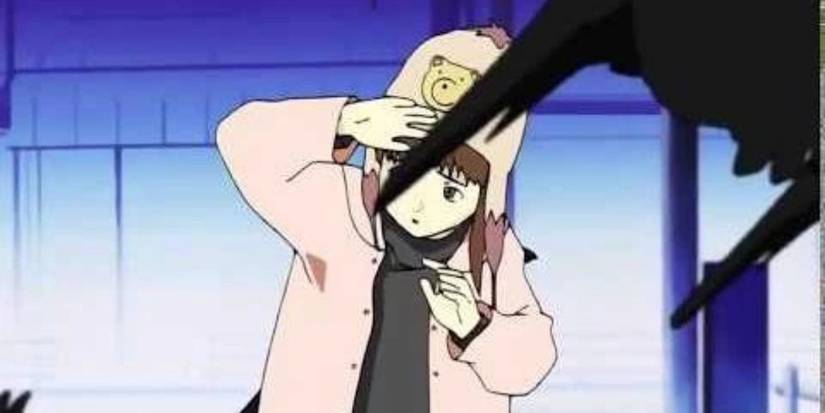 Image via Triangle Staff
Lain Iwakura is a shy, ordinary middle school student, but she becomes a little less ordinary when her classmates begin receiving disturbing emails from a dead classmate. She logs onto Wired, a newly formed global network, where the emails from her classmate guide her, saying she's not actually dead. Lain's physical world begins blurring with her digital one, and she begins to question whether she, too, is just a digital entity with a human form. Serial Experiments Lain is a short but trippy descent into paranoia and identity, using surreal and avant-garde imagery to depict the terror of constant connectivity.
Chiaki J. Konaka's script is unlike anything else in anime. Dense, abstract, and deliberately disorienting, Serial Experiments Lain predicted the internet’s social and psychological fallout years before social media and Y2K paranoia. It immerses viewers in Lain’s fractured consciousness, forcing them to piece together the story like fragments of a corrupted file; it's reminiscent of anime-style psychological horror games, such as Doki Doki Literature Club. Lain isn't always an easy watch; it's often confusing and sometimes overwhelming, but for those who surrender to its atmosphere, it is a prophetic, genre‑defining work of art.
13 'Violet Evergarden' (2018)
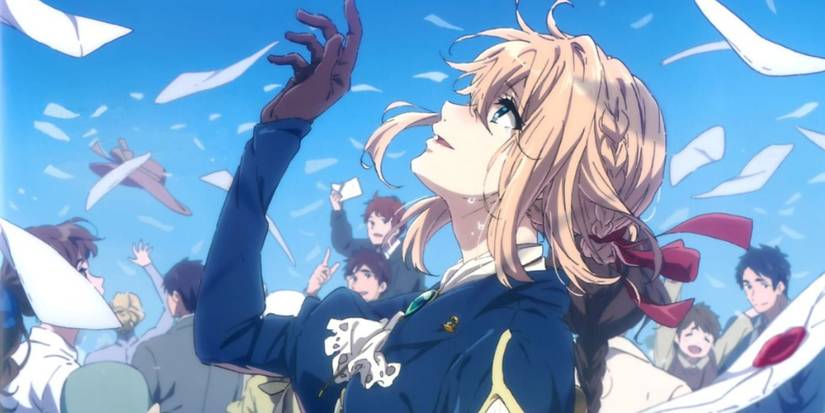 Image via Kyoto Animation
When it comes to one-season anime, Violet Evergarden is often listed as one of the best. With anime often going over one season, it's rare to see a heavily packed storyline told in fourteen episodes that are just a bit longer than 20 minutes. Yet, Violet Evergarden is, from start to finish, an emotionally gripping fantasy story that can easily bring anyone to tears. It follows the titular character returning from war after losing both arms; Violet was a child soldier and raised in the army, and as such, grew up out of tune with her emotions.
After Violet is welcomed by the friend of the Major who raised her, she gets prosthetics and is adopted by the Evergardens. There, she sees they own a private company that sends letters to people as a form of emotional connection. Since Violet doesn't understand emotion, the series follows her slowly filling out her human shell with an innocent, kind, and curious soul that becomes Violet once again. Reiko Yoshida wrote the screenplay, and her most notable work includes the anime Boys Over Flowers, which was based on the manga of the same name. Interestingly, that story was also adapted into a live-action series in Japan, China, and South Korea (among other Asian countries), with all shows becoming modern cult classics.
12 'Psycho‑Pass' (2012–2013)
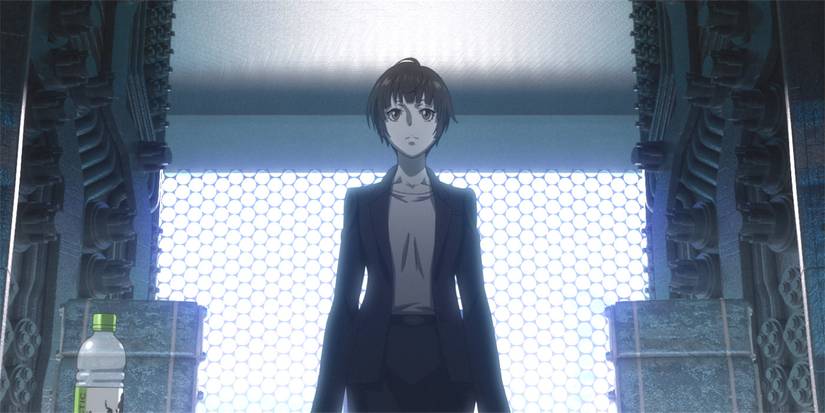
Psycho-Pass is set in a dystopian future when Japan has developed the Sibyl System, which scans every citizen’s mental state. Sybil is used to calculate a "Crime Coefficient" that determines who is a hidden criminal and who must be eliminated on the spot. Inspector Akane Tsunemori is a rookie in the Public Safety Bureau, armed with a gun that can be unlocked only against those with a high Crime Coefficient. Her first case brings her face-to-face with Shogo Makishima, a charismatic mastermind whose Coefficient stays perpetually low, allowing him to commit murder without detection. As Akane hunts him, she begins to question whether the system she swore to uphold is truly just or if it's just another way to control and intimidate.
Gen Urobuchi, the same writer behind Puella Magi Madoka Magica, delivers a cyberpunk thriller that feels more relevant every year. Psycho‑Pass is not just a cat‑and‑mouse chase; it is a philosophical interrogation of free will, surveillance, and the ethics of punishment before a crime is even committed. Makishima is one of anime’s most compelling antagonists, whose arguments about chaos and individual agency remain persuasive, while Akane’s arc, from idealistic recruit to hardened judge, is a masterclass in character writing. It's kind of like The Matrix or Black Mirror, and it's a perfect anime series for people who don't like anime as much.
11 'Mob Psycho 100' (2016–2022)
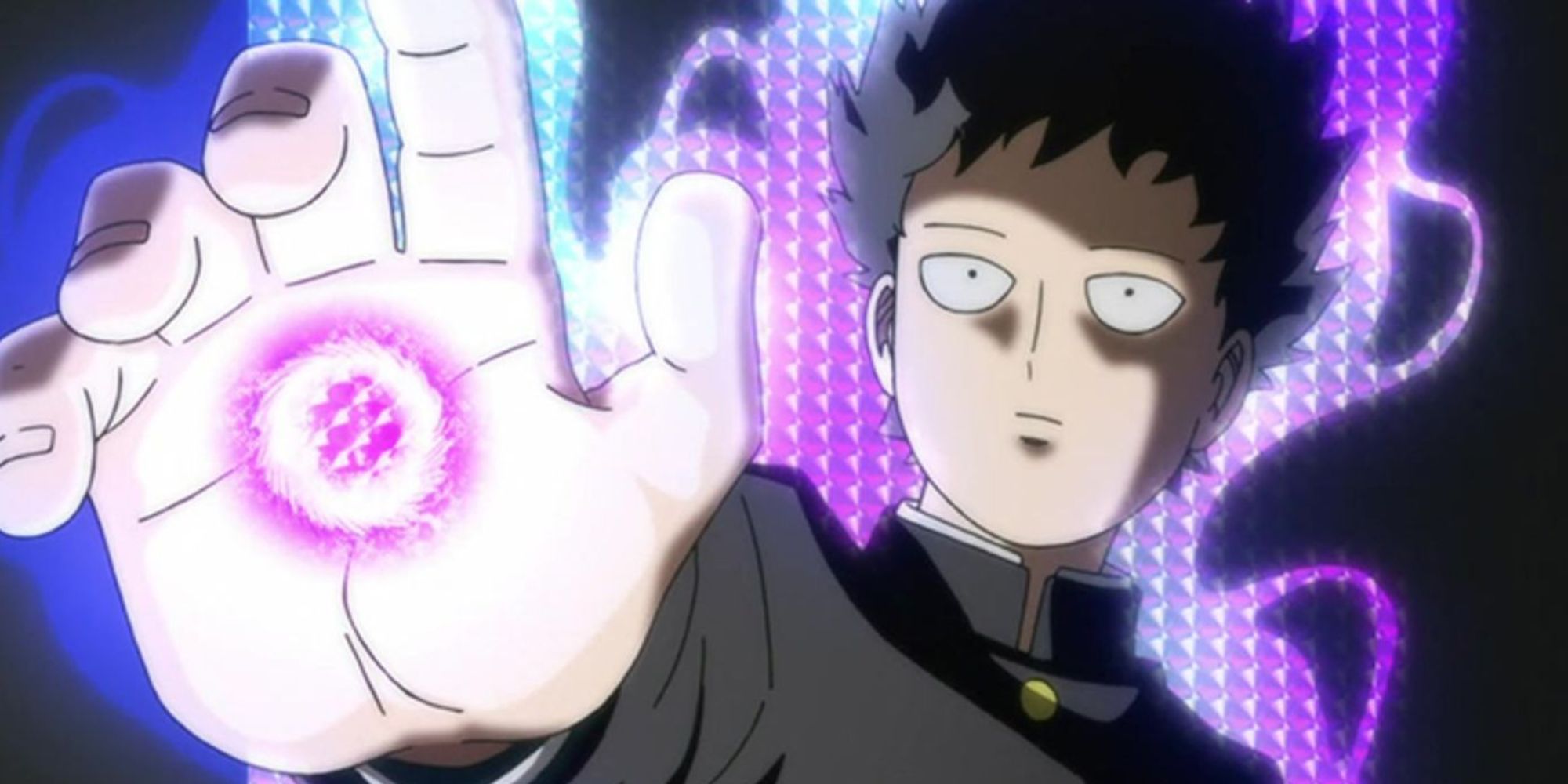
If there's anything anime creators (and fans) love, it's a social misfit. Set in middle school, Mob Psycho 100 follows Shigeo Kageyama, aka Mob, as he navigates life as a socially awkward student; along with a booming adolescence and emotional changes, Mob needs to keep his immense psychic powers in check, which are often brought out during moments of intense emotions. He's also continuously followed around by a spirit called Dimple, who sometimes gives him incredibly offbeat social advice and is often the comic relief of the show.
The series was animated by Bones Inc., a popular Japanese animation studio that's most famous for superhero anime shows. Mob Psycho 100 was, like most anime series, based on a manga of the same name; the screenplay was penned by one of the more famous Japanese anime screenwriters, Hiroshi Seko. Seko wrote Attack on Titan, Jujutsu Kaizen, and the most recent anime hits, Chainsaw Man and Dandadan. Mob Psycho 100 is a funny and endearing coming-of-age anime with greatly relatable characters and brilliant dialogue; it's often considered to be perfect from start to finish.
10 'Monster' (2004–2005)
 Image via VIZ Media
As one of the best psychological thriller shows — yes, including live-action stuff — Monster has big shoes to fill. Fortunately, with its bone-chilling storyline and tight writing, the show is more than able to do so. Monster follows the expert Japanese neurosurgeon Kenzo Tenma, situated in Düsseldorf, Germany. It seems his hospital's director prefers prestige and status over saving lives, which is against Dr. Tenma's principles; when Tenma gets the order to save a functioner over an injured little boy, Johan, he chooses to go against the director and save the child. However, Johan becomes an integral part of the doctor's life, causing him to question himself, his decisions, and his purpose.
Monster actually gets scary at times, thanks to the animation's atmosphere; there's a lot to keep viewers guessing during all 74 episodes, with a brilliant ending to wrap up the story. The only disadvantage is that sometimes the pacing of the show slows down, though the plot never lets loose any of its initiated storylines. Madhouse, one of the biggest Japanese anime studios, was in charge of the animation, and the story itself was so faithfully transferred to the screen that it's sometimes identical frame by frame. So, besides being a great thriller, Monster is one of the best manga for screen adaptations, too.
9 'Puella Magi Madoka Magica' (2011)
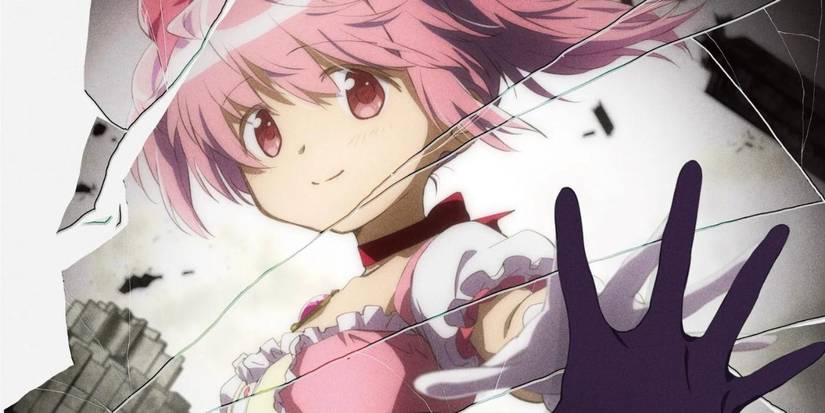 Image via Crunchyroll
What if making a wish wasn't as great as promised? Puella Magi Madoka Magica—often just Madoka Magica—deals with this question. This anime seems light and airy at first glance, which was purposely done by one of its creators, Akiyuki Shinbo; he avoided putting the darker aspects of the series into the trailer. The "magical girl" trope is often cutesy and full of innocent storylines; hiring Gen Urobuchi, the writer of Fate/Zero, to dive into the genre felt off to him, too, at first. Because of his involvement, though, Madoka Magica is one of the best-written anime shows around, with complex storytelling, realistic and relatable characters, and a great plot.
Madoka Magica follows Madoka Kaname, the main character, and her best friend, Sayaka Miki, as they encounter a cat-like creature named Kyubey, who promises them a granting of every wish if they sign a contract to become magical girls. When Madoka learns more about this world, she becomes uncertain of its benefits, and the world around her dissolves, never being the same again. The darkness of the anime is offset by the cutesy character design, but the two contrasts coming together make the story heavier. For fans of anime, Madoka Magica is often among the best shows of all time.
Collider Exclusive · Sci-Fi Survival Quiz Which Sci-Fi World Would You Survive? The Matrix · Mad Max · Blade Runner · Dune · Star Wars
Five universes. Five completely different ways the future went wrong — or sideways, or up in flames. Only one of them is the world your instincts were built for. Eight questions will figure out which dystopia, galaxy, or desert wasteland you'd actually make it out of alive.
💊The Matrix
🔥Mad Max
🌧️Blade Runner
🏜️Dune
🚀Star Wars
TEST YOUR SURVIVAL →
01
You sense something is deeply wrong with the world around you. What do you do? The first instinct is often the truest one.
APull on every thread until I understand the system — then figure out how to break it. BStop asking questions and start stockpiling — food, fuel, weapons. Questions don't keep you alive. CKeep my head down, observe carefully, and trust no one until I know who's pulling the strings. DStudy the patterns. Every system has a rhythm — learn it, and you learn how to survive it. EFind the people fighting back and join them. You can't fix a broken galaxy alone.
NEXT QUESTION →
02
In a world of scarcity, what resource do you guard most fiercely? What we protect reveals what we believe survival actually requires.
AKnowledge. If you understand the system, you don't need resources — you can generate them. BFuel. Everything else — movement, power, escape — runs on it. CTrust. In a world of fakes and informants, a truly reliable ally is rarer than any commodity. DWater. And after water, information — the two things empires are truly built on. EShips and credits. The galaxy is big — you survive it by being able to move through it freely.
NEXT QUESTION →
03
What kind of threat keeps you up at night? Fear is useful data — if you're honest about what you're actually afraid of.
AThat reality itself is a lie — that everything I experience has been constructed to keep me compliant. BA raid. No warning, no mercy — just the roar of engines and then nothing left. CBeing identified. Once someone with power decides you're a problem, you're already out of time. DBeing outmanoeuvred — losing a political game I didn't even know I was playing. EThe Empire tightening its grip until there's nowhere left to run.
NEXT QUESTION →
04
How do you deal with authority you don't trust? Every dystopia has a power structure. Your approach to it determines everything.
ASubvert it from the inside — learn its rules well enough to weaponise them against it. BIgnore it and stay out of its reach. The further from any power structure, the better. CAppear to comply while doing exactly what I need to do. Visibility is the enemy. DManoeuvre within it carefully. You can't beat a system you refuse to understand. EResist openly when I have to. Some things are worth the risk of being seen.
NEXT QUESTION →
05
Which environment could you actually endure long-term? Survival isn't just tactical — it's physical, psychological, and very much about where you are.
AUnderground bunkers and server rooms — cramped, artificial, but with access to everything that matters. BOpen wasteland — brutal sun, no shelter, constant movement. At least the threat is honest. CA dense, rain-soaked city where you can disappear into the crowd and nobody asks questions. DMerciless desert — extreme heat, no water, and something enormous living beneath the sand. EThe fringe — backwater planets and busy spaceports where the Empire's attention rarely reaches.
NEXT QUESTION →
06
Who do you want in your corner when things fall apart? The company you keep is the clearest signal of who you actually are.
AA tight crew of believers who've seen behind the curtain and have nothing left to lose. BOne or two people I'd trust with my life. Any more than that and someone talks. CNobody, ideally. Alliances are liabilities. I work alone unless I have no choice. DA community bound by shared hardship and mutual survival — people who need each other to last. EA ragtag team with wildly different skills and total commitment when it counts.
NEXT QUESTION →
07
Where do you draw the line — if you draw one at all? Every survivor eventually faces a moment that tests what they're actually made of.
AI won't harm the innocent — even the ones who'd report me without hesitation. BI do what I have to to protect the people I've chosen. Everything else is negotiable. CThe line shifts depending on who's asking and what's at stake. DI draw a long-term line — nothing that compromises my people's future, even if it'd help now. ESome lines, once crossed, can't be uncrossed. I know which ones they are.
NEXT QUESTION →
08
What would actually make survival worth it? Staying alive is one thing. Having a reason to is another.
AWaking others up — dismantling the illusion so no one else has to live inside it. BFinding somewhere — or someone — worth protecting. A reason to keep moving. CAnswers. Understanding what I am, what any of this means, before time runs out. DLegacy — shaping the future in a way that outlasts me by generations. EFreedom — for myself, for others, for every world still living under someone else's boot.
REVEAL MY WORLD →
Your Fate Has Been Calculated You'd Survive In…
Your answers point to the world your instincts were built for. This is the universe your temperament, your survival instincts, and your particular brand of stubbornness were made for.
The Matrix
You took the red pill a long time ago — probably before anyone offered it to you. You're a systems thinker who can't help but notice the seams in things.
- You're drawn to understanding how the system works before figuring out how to break it.
- You'd find the Resistance, or it would find you — your instinct for spotting constructed realities is the machines' worst nightmare.
- You function best when you have access to information and the freedom to act on it.
- The Matrix built an airtight prison. You'd be the one probing the walls for the door.
Mad Max
The wasteland doesn't reward the clever or the well-connected — it rewards those who are hard to kill and harder to break. That's you.
- You don't need comfort, community, or a cause larger than the next horizon.
- You need a vehicle, a clear threat, and enough fuel to outrun it — and you're good at all three.
- You are unsentimental enough to survive that world, and decent enough — just barely — to be something more than another raider.
- In the wasteland, that distinction is everything.
Blade Runner
You'd survive here because you know how to exist in moral grey areas without losing yourself completely.
- You read people accurately, keep your circle small, and ask the questions others prefer not to answer.
- In a city where humanity is a legal designation rather than a feeling, you hold onto something that keeps you functional.
- You're not a hero. But you're not lost, either.
- In Blade Runner's world, that distinction is everything.
Dune
Arrakis is the most hostile environment in the known universe — and you are precisely the kind of person it rewards.
- Patience, discipline, and political awareness are your core strengths — and on Arrakis, they're survival tools.
- You understand that the long game matters more than any single victory.
- Others come to Dune and are consumed by it. You'd learn its logic and earn its respect.
- In time, you wouldn't just survive Arrakis — you'd begin to reshape it.
Star Wars
The galaxy far, far away is vast, loud, and in a constant state of violent political upheaval — and you wouldn't have it any other way.
- You find meaning in being part of something larger than yourself — a cause, a crew, a rebellion.
- You'd gravitate toward the Rebellion, or the fringes, or whatever pocket of the galaxy still believes the Empire's grip can be broken.
- You fight — not because you have to, but because standing aside isn't something you're capable of.
- In Star Wars, that willingness is what makes all the difference.
↻ RETAKE THE QUIZ
8 'Death Note' (2006–2007)
 Image via Nippon TV
One of the most globally famous anime shows, Death Note has become a massive franchise over time. It all started with a manga, as is the case with most anime, and evolved into several TV and movie adaptations. We won't get into why they all pale in comparison to the original anime series from 2006; they simply do, as the show displays incredible dialogue, clever writing, and a tight storyline with plenty of life questions and plot twists. Death Note follows Light Yagami, a high school student and genius, as he discovers a notebook that allows him to kill anyone just by writing their name in it.
Of course, Yagami's wish is to rid the world of injustice, but with each name, his actions become more and more suspicious, raising the flags of international organizations such as Interpol. A mysterious detective called L promises to find and catch Yagami, and the entire series becomes a cat-and-mouse chase between the two. Tsugumi Ohba wrote the manga, and Tetsurō Araki adapted it into the anime, holding onto the manga's biggest themes and designs. The Japanese live-action movie kind of worked, but for anyone eager to get into the story, the anime is the right way to go.
7 'Attack on Titan' (2013–2023)
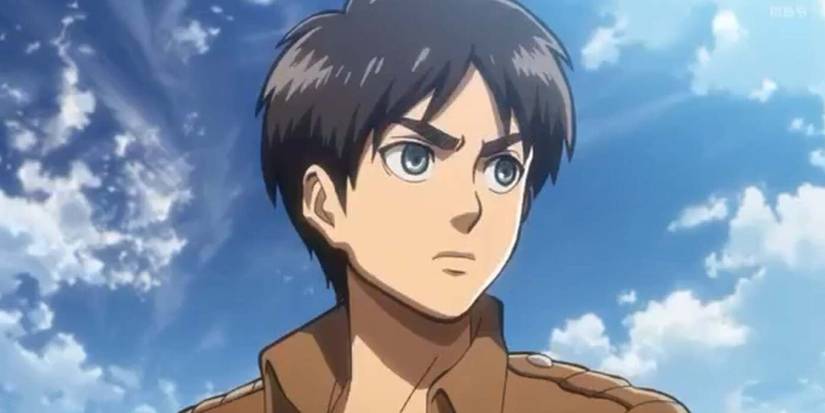 Image via Wit Studio
In a world where humanity lives inside towering walls to escape man‑eating giants known as Titans, young Eren Yeager swears to destroy every last one of them after his mother is killed before his eyes. Alongside his adoptive sister Mikasa and his best friend Armin, Eren joins the military to fight back, only to discover that the true enemy may not be the Titans at all, but the people inside the walls. What begins as a simple survival story slowly unravels into a sprawling, morally grey epic about anger, hatred, freedom, and the terrifying possibility that the hero and the monster are the same person.
It is nearly impossible to overstate the impact of Attack on Titan. Hajime Isayama's manga was already a phenomenon, but screenwriter Hiroshi Seko helped translate its brutal, twisty narrative into a masterpiece of an anime that became a global cultural event. Season after season, the show reinvents itself, moving from a straightforward horror action series to a political thriller, all while weaving through themes of revenge and generational trauma. With nearly a million votes on IMDb, Attack on Titan holds a rating of 9.1, proving that it isn’t just one of the best‑written anime shows but one of the most important pieces of fiction of the 21st century.
6 'Paranoia Agent' (2004–2005)
 Image via Adult Swim
The only anime series by Satoshi Kon, Paranoia Agent, was made in a similar vein to all of his movies; one look at the anime will evoke the memory of watching Tokyo Godfathers or Paprika. Interestingly, though, Paranoia Agent came before those two feature films, and it's a powerful predecessor to some of Kon's best work, showing his signature animation style and storytelling. Paranoia Agent is a miniseries made up of thirteen heavy-hitting episodes connected by a single thread - a local bat-wielder who attacks and brutally beats people.
Paranoia Agent shows how the appearance of an imminent and random threat impacts the emotional and psychological health of various people in the neighborhood, focusing on a different story in each episode. Kon is known for using themes that make differentiating between imagination and reality difficult; he also often showcases people dealing with mental health issues. Every episode in the anime series is an artistic masterpiece, though some are slower than others, which is also fine. For anyone looking for an anime that'll leave them staring at the wall after most episodes, Paranoia Agent is the one.


 English (US) ·