
 Image via Warner Bros.

Published Feb 4, 2026, 5:50 PM EST
Michael Block is a 14 time GLAM Award nominated writer, producer, and host of the podcast Block Talk. Throughout his time in the entertainment industry, he has worked on and off Broadway as a stage manager, written several produced plays, critiqued hundreds of theatrical performances, drag and cabaret shows, and has produced events randing from drag competitoons to variety concerts!
On Block Talk, he interviews nightlife personalities, covers the wide world of entertainment through features, ranking episodes, and recaps ALL of Drag Race, as well as Dragula and Survivor. He has interviewed hundreds of RuGirls that span the globe at DragCon NYC, DragCon LA, and DragCon UK.
In his free time, he makes one-of-a-kind jewelry and gift baskets with his mom. He is a proud member of the LGBTQ+ community.
Sign in to your Collider account
There’s nothing more satisfying than watching an epic movie. But what defines an epic? Characterized by length, scope, and subject, an epic tends to focus on a heroic figure's legendary deeds upon a vast expanse. Often elevated by text, style, larger-than-life foes, and sweeping narratives, epic movies are feats meant for the brave.
With advancements in cinema in the 21st century, many filmmakers have told new kinds of epics. Some are original tales. Others tackle historical moments. Whether on Earth or in space, these epics have had a profound impact on movies and blockbusters in general. The films on this list are among the best of the last 25 years, changing how we consume epic thrillers.
13 'Kingdom of Heaven' (2005)
 Image via 20th Century Studios
If there is one director who knows how to play in every genre imaginable, it's Ridley Scott. Whether in science fiction masterpieces like Alien, comedies like Thelma & Louise, or war films like Black Hawk Down, Scott's ability to craft expansive universes has made him one of the greatest directors of all time. Only a few years after he established the epic in the new millennium with Gladiator, Scott took audiences to medieval times for Kingdom of Heaven. The film follows Balian (Orlando Bloom), a French blacksmith who, after his wife's suicide and children's deaths, travels to the Holy Land seeking redemption, joining his father, Godfrey of Ibelin (Liam Neeson), there. Balian becomes a knight and leads the defense of Jerusalem against the Muslim leader Saladin (Ghassan Massoud) as the fragile peace between Christians and Muslims breaks down. Navigating religious conflict, political intrigue, and the search for a kingdom of conscience, Kingdom of Heaven was an epic that vowed to change perception.
Kingdom of Heaven is a story of honor, faith, the futility of holy wars, and the corruption of religious zeal. Scott presents the film through a nuanced lens of conflict, putting forth morality before religious dogma. The title, a reference to both the physical city of Jerusalem and the idea of a place where morality, tolerance, and justice exist, Kingdom of Heaven is Scott's most daring film thematically. Scott's prowess as a directorial visionary made the film an immersive experience through its spectacular battle sequences. Though it may not have been critically beloved, as epics go, Kingdom of Heaven achieved its mission. Though a post-9/11 lens may have affected the film's execution, the scope and story still resonate as an epic.
12 'Master and Commander: The Far Side of the World' (2003)
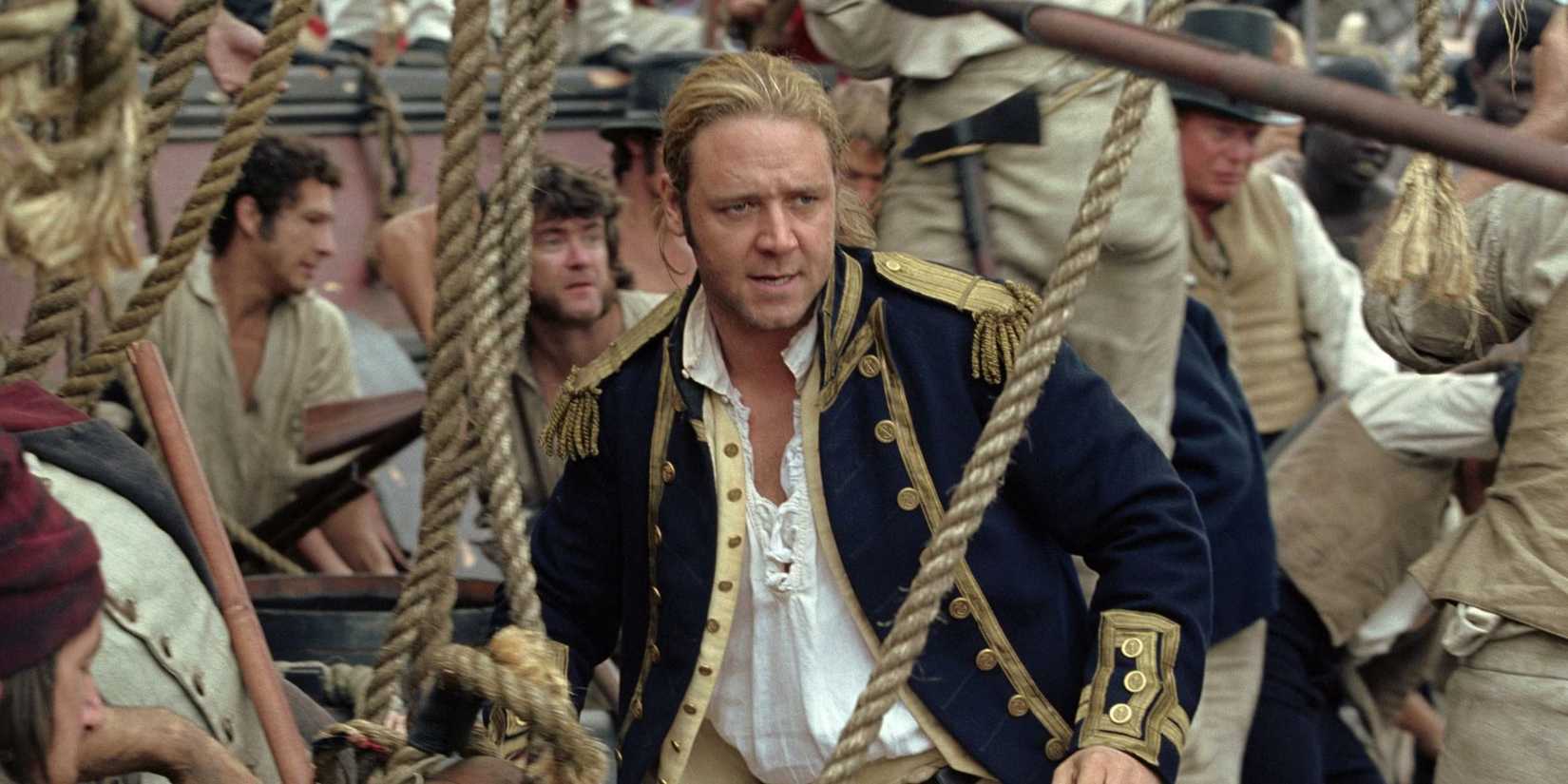 Image via 20th Century Studios
Loosely based on Patrick O'Brian's Aubrey-Maturin novel series, Master and Commander: The Far Side of the World was an extraordinary epic about the naval side of the Napoleonic Wars. Directed by Peter Weir, Captain "Lucky" Jack Aubrey (Russell Crowe) leads the HMS Surprise in a relentless, high-stakes chase to capture a superior French warship, the Acheron, across the Atlantic and Pacific oceans. Showcasing the intense, complex friendship between the traditional Captain Aubrey and the ship's scholarly, intellectual surgeon, Dr. Stephen Maturin (Paul Bettany), Master and Commander: The Far Side of the World is an exploration of the conflict between duty and the Crown, personal ambition, and the responsibility of being a commander at sea.
The film's selling point is Weir's realistic portrayal of 19th-century naval life. By highlighting the brutality of war, the hardships of the crew, and the woes that come with leadership, the film is a remarkably textured and richly human portrait of life during the Napoleonic War that audiences may previously have not been familiar with. Following his star turn in Gladiator, Crowe continued his rise to Hollywood superstardom, as this film highlighted his rough charm and brazen ability to lead a wide-ranging project. The source material led to a wonderful blockbuster that earned numerous nominations.
11 'Prometheus' (2012)
 Image via 20th Century Fox
To no one's shock, we have another groundbreaking Ridley Scott entry to discuss. This time, we're heading back to space with 2012's science fiction horror thriller, Prometheus. The fifth installment of the Alien franchise, the prequel film explores the origins of humanity and the engineers who created them. The story follows the 2093 expedition of spaceship Prometheus as it follows a star map to Moon LV-233, discovered among the artifacts of several ancient Earth cultures. They search for humanity's origins, only to discover on this distant world, a dark biological weapon aimed at Earth, leading to a fight for survival. With a brilliant ensemble cast including Michael Fassbender, Noomi Rapace, Guy Pearce, Idris Elba, Charlize Theron, and Logan Marshall-Green, Prometheus reignited the Alien franchise for the 21st century.
Written by Jon Spaihts and Damon Lindelof, Prometheus expanded on the mythology and lore of the original film while using similar tones across different themes. With artificial intelligence becoming a prominent factor at the time of creation, the newfound elements made Prometheus' central theme of creation and identity so profound. It was an ambitious project, but it paid dividends. Fassbender's take on the android David was sensational, delivering the film's strongest performance. Visually striking, with an aesthetic only Scott could create, the vivid exploration of space was exactly what the franchise needed. Had it not been for Prometheus, we would not have any of the projects that have come since.
10 'Gangs of New York' (2002)
 Image via Miramax/courtesy Everett Collection
If there is one epic working relationship that blossomed in the 21st century, it is that of Martin Scorsese and Leonardo DiCaprio. The first that came to fruition was 2002's Gangs of New York. A rich period piece, the historical epic explores the brutal gang wars in Manhattan's Five Points district during the 1860s. Amsterdam Vallon (DiCaprio) is on a quest for revenge against Bill the Butcher (Daniel Day-Lewis) for killing his father. Set against the backdrop of the Civil War and draft riots, Gangs of New York is a visceral exploration of vengeance and belonging during the violent birth of modern America.
The road to creation took nearly two decades, but the final product was sensational. Though some felt the excessive violence was heightened for entertainment, Scorsese's portrayal of the time was fairly realistic. Having two superstar actors go toe-to-toe proved to be an immense draw for the film. By highlighting the long-running Catholic-Protestant feud through an epic lens, Scorsese created a sprawling production with impressive production design. Though it may have fallen short of some of his other works before and after, Gangs of New York is still a modern masterpiece.
9 'Dune: Part Two' (2024)
 Image via Warner Bros. Pictures
By the end of this calendar year, we may have to swap Dune: Part Two out for its follow-up, but for now, the peak Dune film is its second chapter. Expanding upon the splendor of the first film, Denis Villeneuve's take on Frank Herbert's 1965 novel is remarkable. In Dune: Part Two, Paul Atreides (Timothée Chalamet) unites with the Fremen people of the desert planet Arrakis to wage war against House Harkonnen. Learning the Fremen ways on the road of revenge, Paul must grapple with a prophesied messianic role and visions of a devastating future holy war he might unleash. Through power, love, religious manipulation, and the inevitable rise in becoming a dark anti-hero, Dune: Part Two built upon its predecessor's success into something even more epic.
Knowing that this part would be bookended with the setup and ultimate climax, Dune: Part Two was the right bridge for the overall narrative. Chalamet's charismatic Paul was on full display, but the clues to his ultimate descent allowed for a nuanced performance. The entire ensemble, from Zendaya's Chani and Rebecca Ferguson's Lady Jessica to new players Florence Pugh's Princess Irulan and Austin Butler's Feyd-Rautha, made the film even stronger than the first. Visually extraordinary, the science fiction epic was a cinematic marvel. Where else can you see two of Hollywood's biggest rising stars, Butler and Chalamet, engage in a fight sequence as they did here? If the first film was a glorious appetizer, Dune: Part Two was the delicious entrée.
8 'King Kong' (2005)

A reboot of a beloved classic would be difficult to achieve without it being in the most capable of hands. Thankfully, Peter Jackson brought King Kong to life in the 2005 epic monster film. A remake of the 1933 film, the film follows the story of Carl Denham (Jack Black), an ambitious and unscrupulous filmmaker who tricks playwright Jack Driscoll (Adrian Brody), actress Ann Darrow (Naomi Watts), and his hired ship crew into traveling to the mysterious Skull Island, where they encounter various prehistoric creatures and the legendary giant gorilla, King Kong. Capturing and bringing him back to New York City, Ann forms an integral bond that helps prove the simian is truly no monster.
Emphasizing the emotional depth of Kong's relationship with Ann and the spectacle of Skull Island, this iteration of King Kong maintained the integrity of the original's core narrative while becoming a visually breathtaking blockbuster. Jackson, who will be represented on this list again later, brought his prowess to the project to ensure the epic wasn't just a remake to introduce a new generation to the character, as 1998's Godzilla was. With advancements in special effects and a majestic approach to the story, Jackson's remake was faithful to the original, while also bringing a new sense of wonderment to the iconic creature. Though Jackson may not have continued on the journey with Kong, thanks to him, the character lives on today.
7 'Lincoln' (2012)
 Image via DreamWorks Pictures
Bringing Abraham Lincoln's life to the screen would be no easy feat, given that the 16th President of the United States has been the subject of many projects over the decades. Then Steven Spielberg adapted Tony Kushner's script, casting Daniel Day-Lewis in the titular role, and an epic historical biographical drama was born. In the 2012 film Lincoln, the final four months of Lincoln's life are covered, focusing on President Lincoln's efforts in January 1865 to abolish slavery and involuntary servitude by forcing the Thirteenth Amendment to be passed. Based on Doris Kearns Goodwin's Team of Rivals, Lincoln was a sweeping epic created by a team of cinematic masters.
For a methodical performer who has tackled an array of roles in his career, Day-Lewis's transformative take on Lincoln allowed for a dignified take on an extraordinary man. A powerful and patient performance of a stellar script, Day-Lewis was once again at the top of his game. Through Spielberg's realistic approach to the story, it became a triumphant portrait of an integral figure during a dark period. Though it may not have yielded any new revelations, Lincoln became a reliable biopic with just enough cinematic flair.
6 '300' (2006)
 Image via Warner Bros.
There was an extraordinary desire for gladiator-inspired content after the success of Gladiator. Finding a new way into the genre was the key. Then Zack Snyder swooped in with a Dark Horse comic book, and audiences' needs were satisfied. Based on the source material by Frank Miller and Lynn Varley, 300 took on a fictionalized retelling of the Battle of Thermopylae in the Greco-Persian War. Following King Leonidas (Gerard Butler) as he leads 300 Spartans into battle against Persian "God-King" Xerxes (Rodrigo Santoro) and his 300,000 soldiers. As the war rages on, Queen Gorgo (Lena Headey) attempts to rally support in Sparta for her husband. The fictionalized epic emphasizes the legendary aspect of the last stand through bravery, sacrifice, and defiance against tyranny.
Unlike Gladiator, 300 took on a markedly different tone, even in the color palette Snyder used. Extraordinarily graphic in nature, 300 did not minimize the amount of blood and violence. A film made for the movie theater, 300 didn't aim to depict history with historical accuracy, opting for an entertaining retelling with buff bodies and quotable lines. Digitally enhanced yet never belligerently animated, 300 was a compelling blockbuster that made Snyder a power player in grandstanding. If you're looking for historical accuracy, look away. But, like they said in Gladiator, "Are you not entertained?"
5 '1917' (2019)
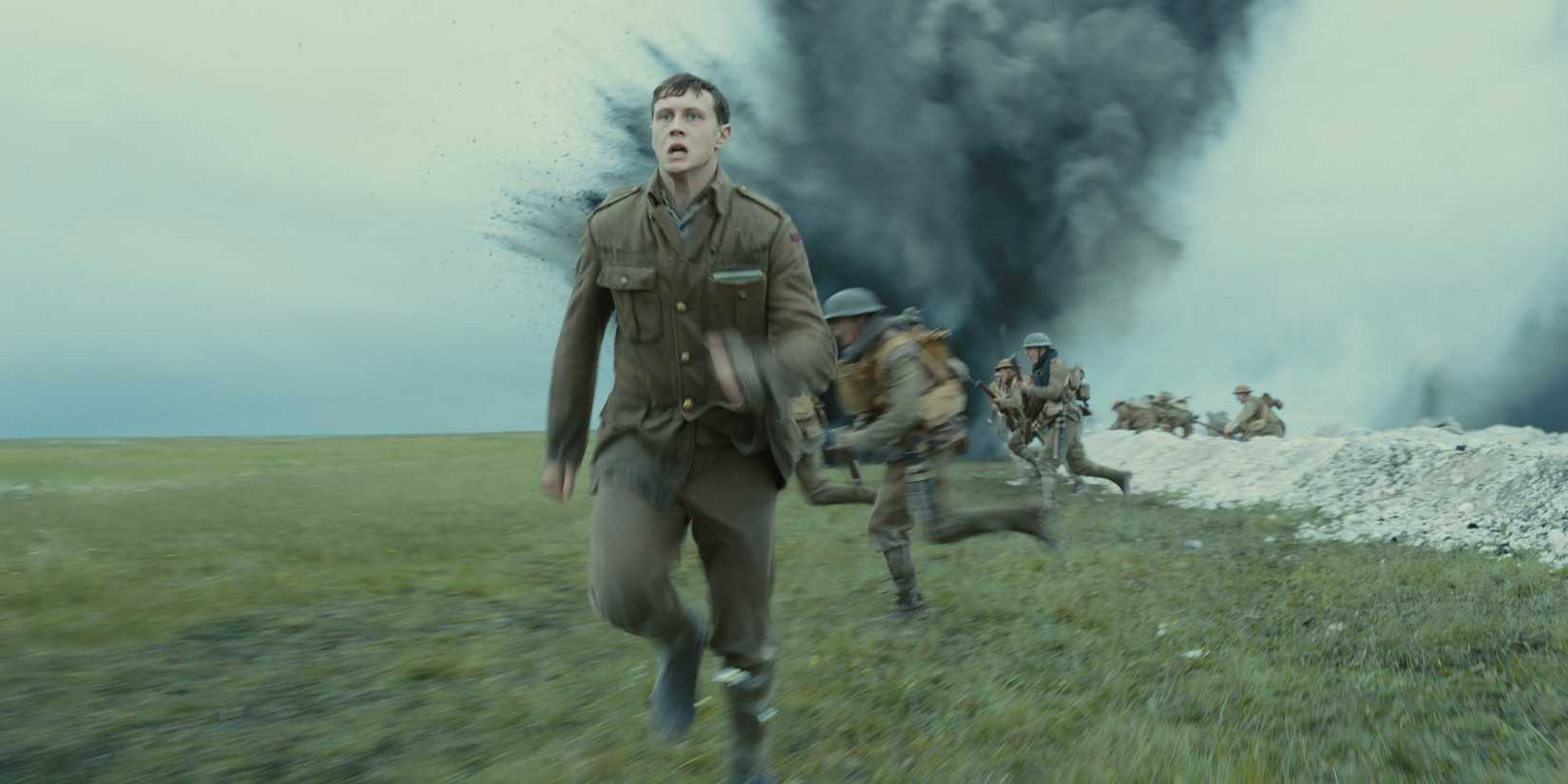 Image via Universal Pictures
No matter what, cinephiles love a good war movie. The 21st century has been in no short supply. Of the many that have come out in the last 25 years, the pinnacle World War I film is Sam Mendes' 1917. Occurring after the German retreat to the Hindenburg Line during Operation Alberich, the film follows two British soldiers, Lance Corporals Will Schofield (George MacKay) and Tom Blake (Dean-Charles Chapman), on a perilous mission across enemy lines to deliver a message to halt an attack that would have cost 1,600 lives. Renowned for its immersive one-shot filmmaking, 1917 captured the intensity of war through a real-time mission that had never been depicted in war movies before.
One of the most visually remarkable war films, it earned the Academy Award for Best Cinematography, Best Sound Mixing, and Best Visual Effects. 1917 is a hard-hitting technical achievement that puts the audience into the trenches. Though some war historians disapproved of the sanitized approach, the cinematic achievement elevated war cinema to new heights through the oft-overlooked chapter of World War I. The historical accuracy of the military tactics may have been exaggerated for entertainment, but nevertheless, 1917 brought the harsh reality of war.
4 'Dunkirk' (2017)
 Image via Warner Bros.
Before 1917 wowed audiences with World War I, Dunkirk brought audiences the definitive World War II epic of the 21st century. Directed by Christopher Nolan, the film depicts the Dunkirk evacuation from the perspective of people on land, sea, and air. Through three parallel narratives, Dunkirk portrays the many individuals who participated in the operation as they helped save Western civilization. On land, it's British soldier Tommy (Fionn Whitehead) who tries to reach safety via the beach. At sea, Dawson (Mark Rylance), a civilian, and his son, Peter (Tom Glynn-Carey), sail their boat to Dunkirk to help with the evacuation. In the air, Collins (Jack Lowden) and Farrier (Tom Hardy), Spitfire pilots, defend the beach from German planes. Considered one of the greatest war films ever made, Dunkirk is an emotionally satisfying epic that honors the reality of a pivotal moment in war.
Filled with chaos and horror, even though we know the outcome, Nolan does a miraculous job at making us ponder if things may turn out differently. Yet, his ability to maintain historical accuracy pleased both casual moviegoers and historians. Seamlessly interweaving multiple storylines, some careening together, Dunkirk's ability to provide emotional balance amid the harsh realities of the situation makes the war drama character-driven first, with history as its backdrop.




 English (US) ·