
 3 weeks ago
33
3 weeks ago
33
White has always been one of the easiest colors in Magic: The Gathering to misunderstand. On the surface, it’s deceptively simple: armies of little creatures, life gain, exile-based removal, and an unhealthy obsession with justice and righteousness. Beneath that veneer of honor and unwavering faith lies a much darker undercurrent of zealotry and dogmatism. When its pursuit of order reaches its logical extreme, White reveals an arsenal of the most brutally oppressive spells in Magic history, fully capable of obliterating the entire world in an instant or making an opponent deeply regret having the audacity to cast a spell at all.
Guided by head designer Mark Rosewater’s core philosophy of peace through absolute structure, white demands that individual advantage yield to universal law and symmetry. Iconic cards like Swords to Plowshares, Wrath of God, and Balance weaponize this dogmatic pursuit of equality, razing entire battlefields or taxing every action to enforce total compliance.
Calling something “quintessentially white,” however, doesn’t mean it’s the strongest card ever printed in the color wheel. Some of these entries are ancient by Magic standards, while others represent how dramatically white has evolved over the years. In no particular order, these are the 11 best cards that capture white’s color identity in Magic.
11 Solitude
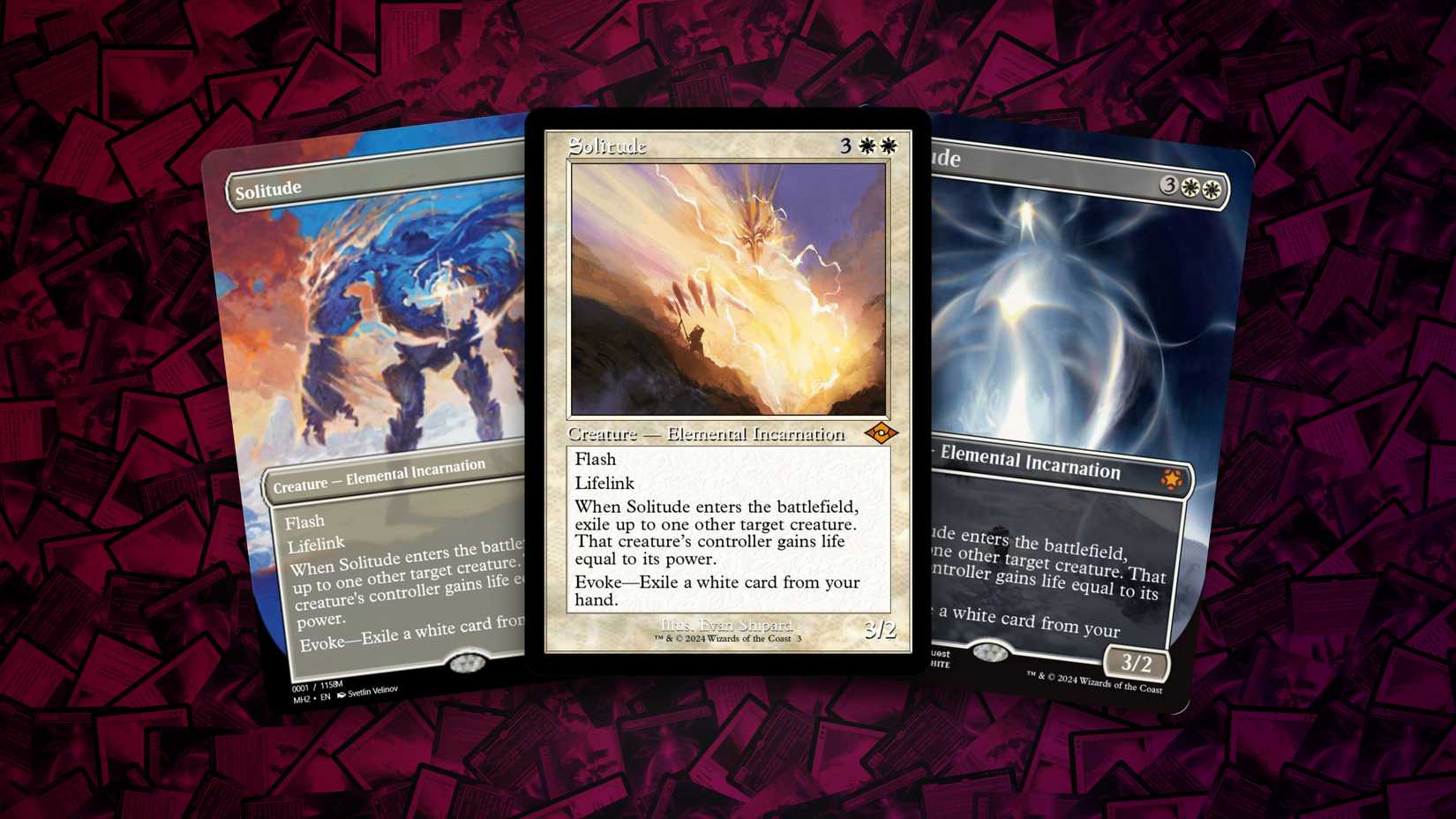 Image: Wizards of the Coast
Solitude is what happens when you take one of white’s oldest tricks and give it a distinctly modern Magic makeover. At its core, it’s a creature-exile spell that sends another creature into exile when it enters, and that creature’s controller gains life equal to its power. However, the five-mana creature’s evoke ability also means you can cast it without paying its mana cost by exiling a white card from your hand. Suddenly, white has a creature that can appear out of nowhere to answer a threat, all without requiring players to leave mana open.
It’s this type of flexibility that makes Solitude such an important evolution of white’s removal suite. It might still feel like a creature version of Swords to Plowshares at its heart, but now the answer itself can attack, block and contribute to the battlefield — all with flash and lifelink to boot. Solitude doesn’t represent a departure from white’s identity so much as an acknowledgment that the color has learned a few new tricks over the decades.
10 Balance
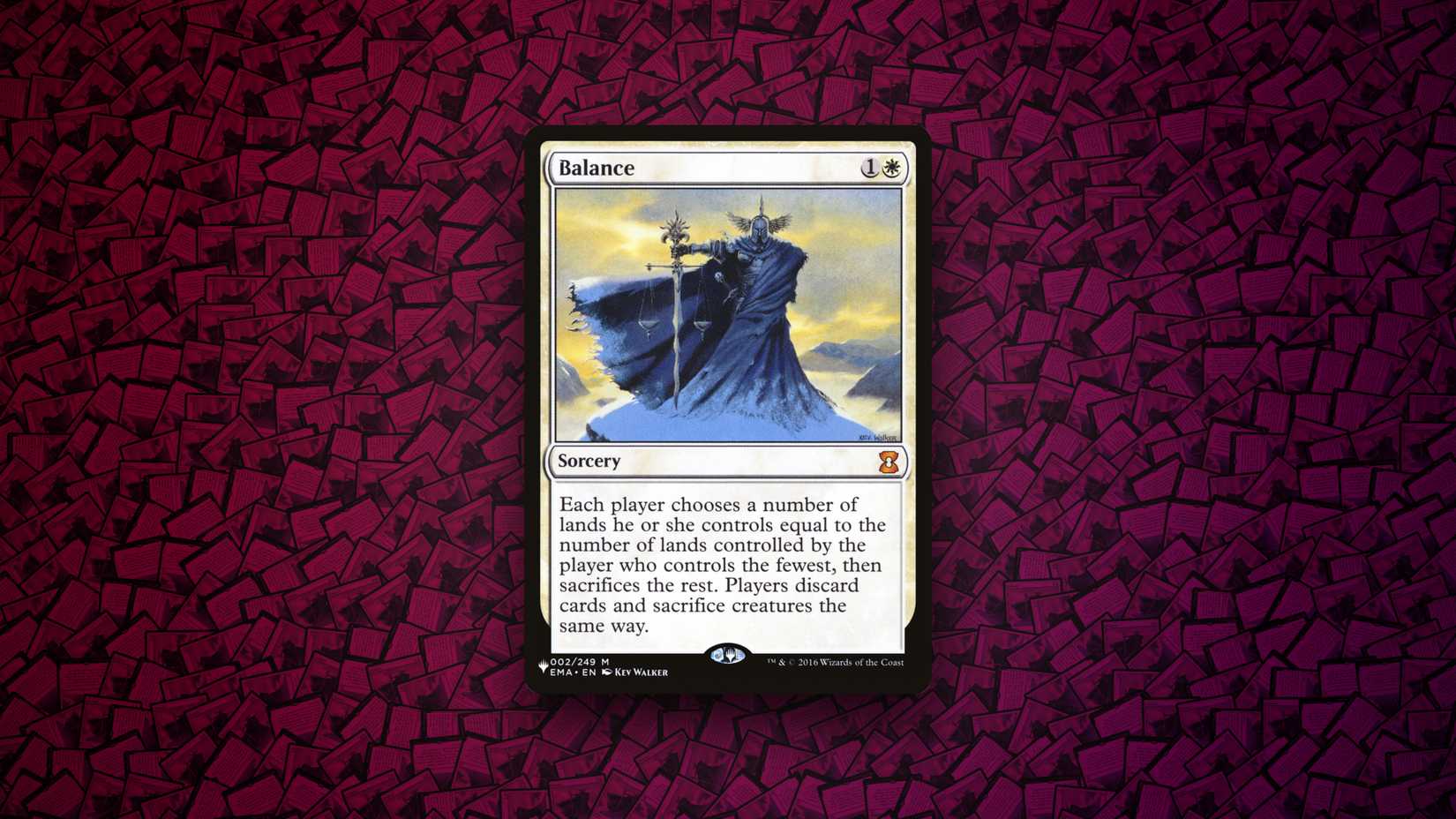 Image: Wizards of the Coast
Balance might be the most dangerous expression of white’s philosophy ever printed. The underlying premise is wonderfully simple. If one player holds an advantage in cards, creatures, or lands, the spell forces a return to absolute parity. In practice, that seemingly noble concept becomes a nightmare the moment a player deliberately engineers their entire deck to aggressively exploit the symmetry.
The card’s relentless commitment to this idea is what anchors it so deeply in white's mechanical identity. Other colors gain leverage by hoarding resources or breaking rules, whereas white insists that every player operate from the exact same floor. Balance executes that philosophy with bureaucratic precision, forcing a reset down to the counts of the player with the fewest lands, creatures, and cards. The real terror of Balance comes from how easily that dogmatic pursuit of fairness turns predatory, allowing a player to dump their hand, sacrifice their own lands, and leave an opponent completely ruined while technically keeping both sides on equal footing. Small wonder it’s banned in Legacy and Commander.
9 Ghostly Prison
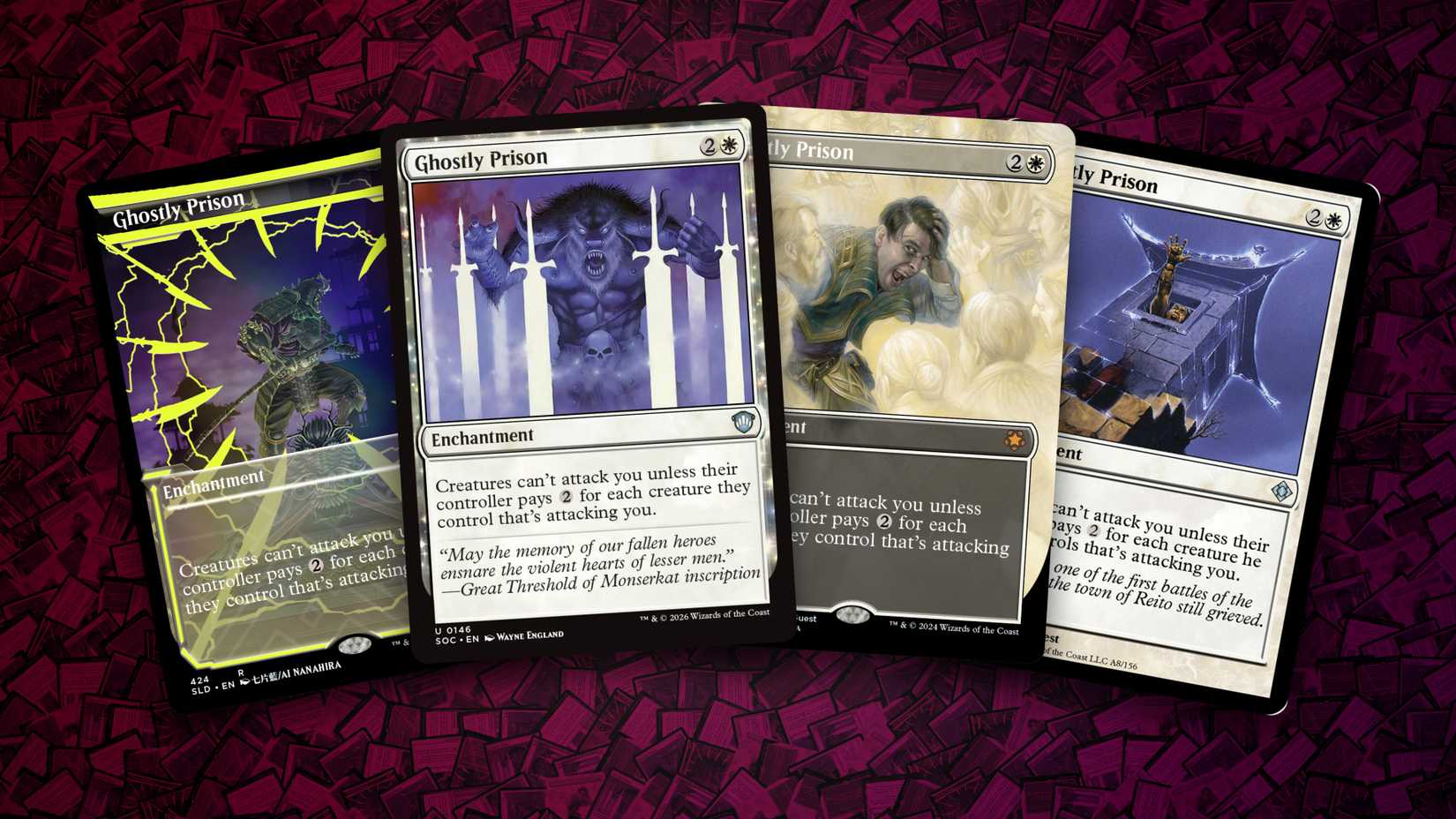 Image: Wizards of the Coast
Ghostly Prison is white’s most brilliant protective recourse, locking down their defenses through a three-cost enchantment that essentially says “There’s a price for every attack you make against me now.” The enchantment makes each creature attacking you cost its controller two mana. While it doesn’t technically prevent your opponents from attacking you, it changes the math of the entire game, making that army of Goblins less terrifying when its controller has to pay two mana for every single one that comes your way. Crucially, it completely shatters the symmetry of a crowded board state, leaving an opponent's massive swarm paralyzed by an economic bottleneck while your own sprawling army swings in entirely unhindered.
This is white’s taxation strategy in one of its cleanest forms. You’re not necessarily destroying your opponent’s creatures or countering their spells; you’re making them pay for doing what they wanted to do in the first place. Ghostly Prison has consequently become one of the defining cards for white’s defensive style of play, particularly in Commander. It can make an opponent reconsider an attack without ever actually telling them they aren’t allowed to attack, and somehow, that feels quintessentially white.
8 Teferi’s Protection
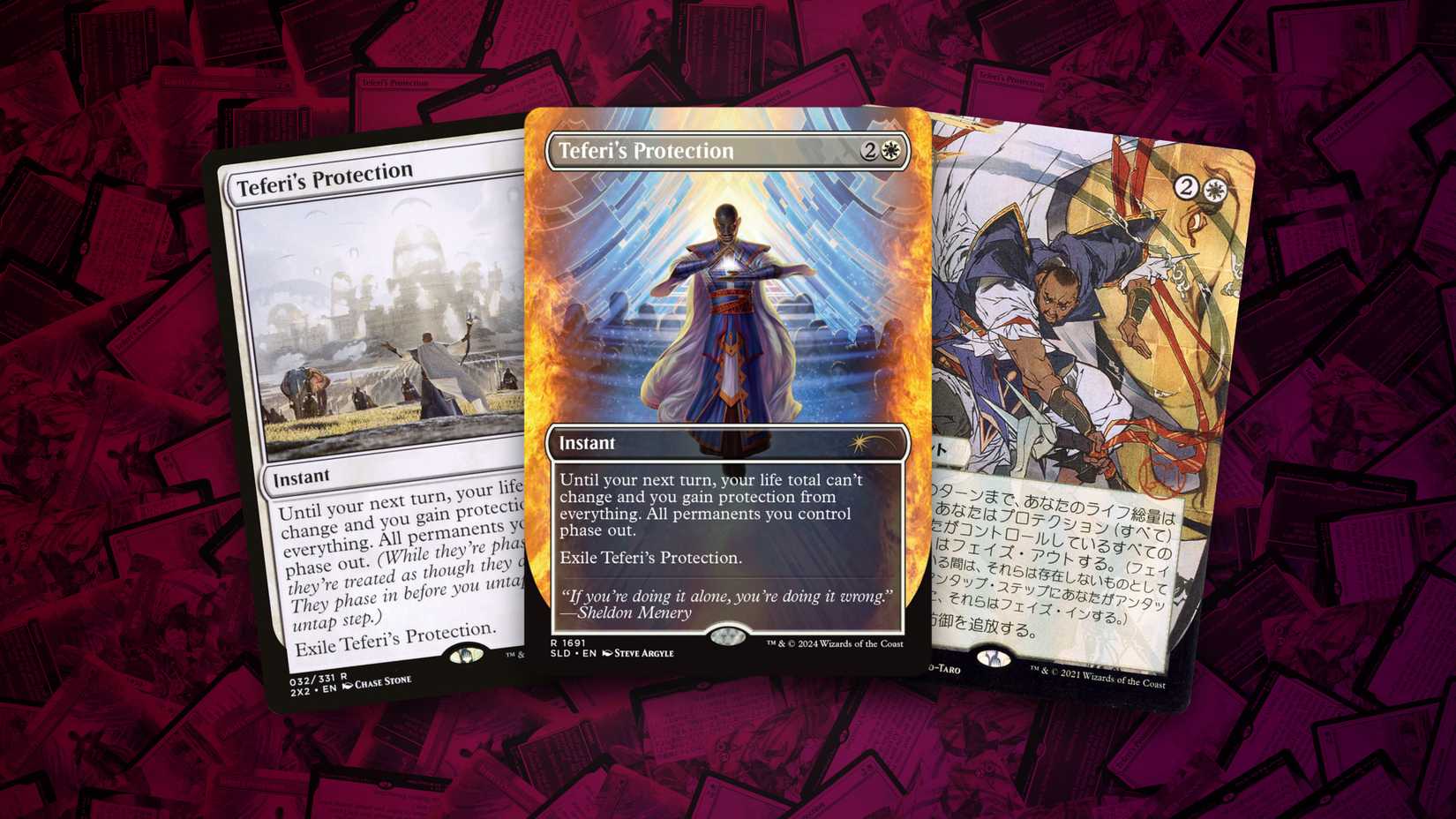 Image: Wizards of the Coast
If the older white cards often feel like stern judges imposing order on the battlefield, Teferi’s Protection feels like white finally discovering an emergency exit. The three-mana instant phases out you and everything you control, netting you protection from everything until your next turn. It’s the kind of spell that evaporates an opponent’s carefully planned victory in an instant, leaving them staring at an empty board in total disbelief.
Teferi’s Protection also captures something important about modern white in Magic. Protection has always been part of the color’s identity, but this card takes that idea to an almost absurd extreme. Instead of watching your entire board crumble to a devastating sweep or lethal swing, your creatures, permanents, and life total simply sidestep the disaster and emerge completely untouched. On your turn, you’re back to the board as if the attack never happened, leaving your opponent to process the sheer frustration of burning their strategy against three open mana. It isn't a subtle move, but nothing matches the quiet satisfaction of turning what should have been a knockout blow into a completely wasted turn.
7 Armageddon
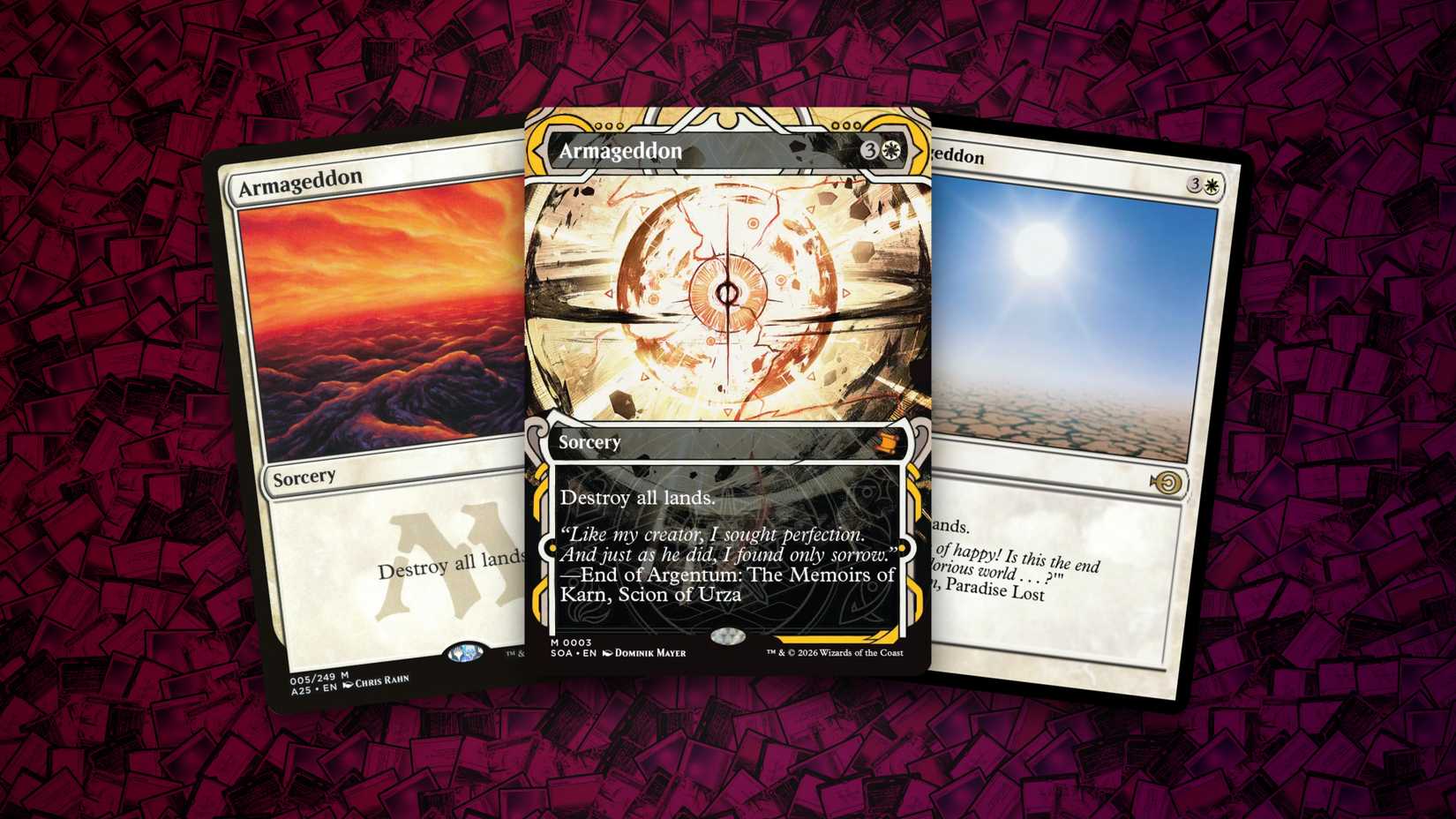 Image: Wizards of the Coast
Few cards demonstrate how white’s obsession with order can occasionally become terrifying better than Armageddon. Destroying all lands in play is an almost absurdly drastic solution to the problem of mana, and that’s exactly why the card has become such an enduring part of Magic’s history. White wants everyone to play by the same rules, but sometimes those rules involve everyone losing the very thing that allows them to play the game.
Armageddon has been around since Alpha, and in Magic’s early years it was famously paired with cards like Wrath of God as one of white’s defining ways to control a game. The important distinction is that Armageddon essentially resets the playing field, and you have to trust your deck is better prepared to rebuild than your opponents. It’s downright cruel, most especially when you or an opponent have established a large board presence before casting it. But as a snapshot of old-school white, representing order through indiscriminate enforcement, it’s nearly impossible to beat.
6 Silence
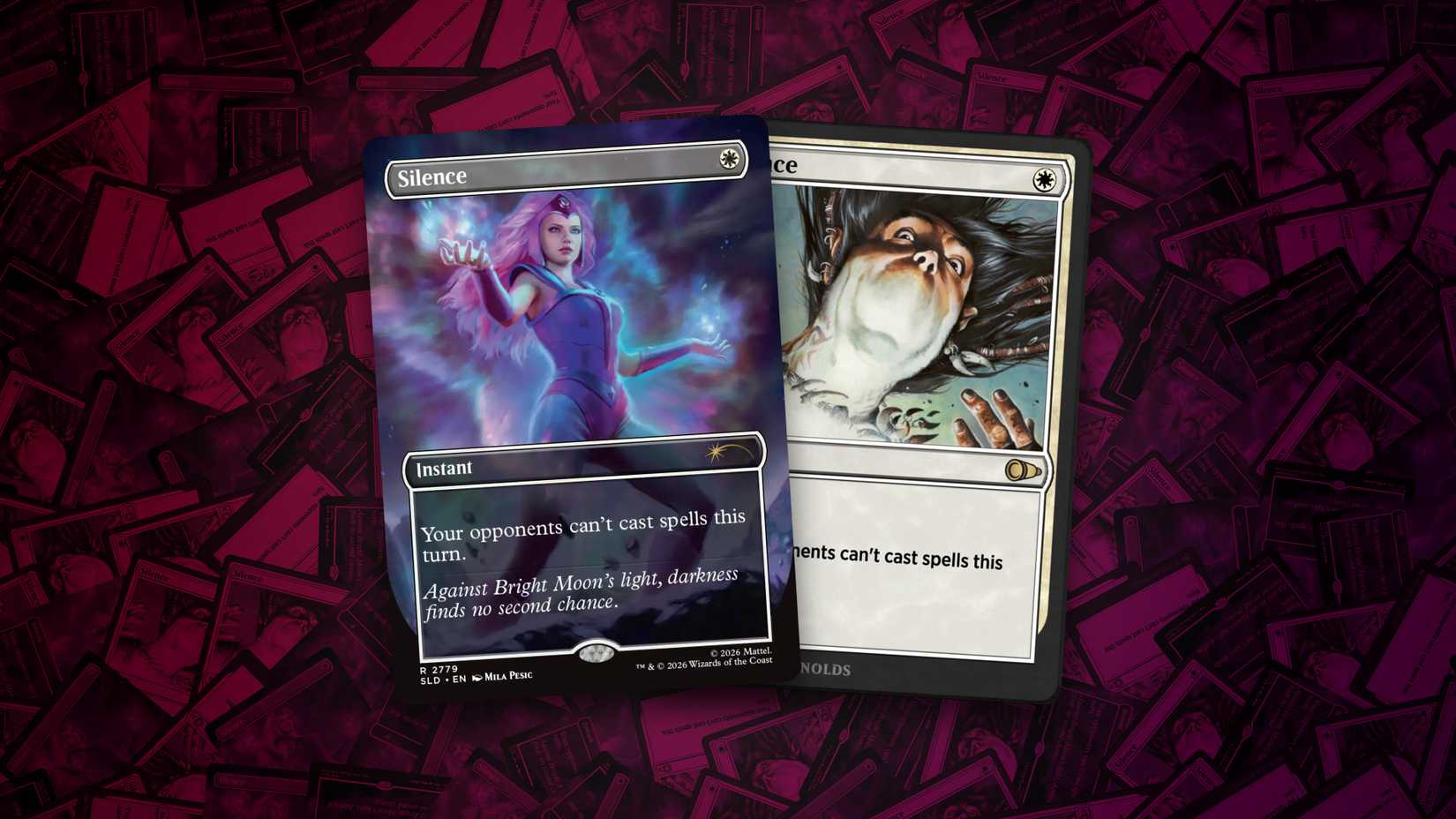 Image: Wizards of the Coast
Silence is one of those deceptively simple white cards that becomes more terrifying the longer you think about it. For a single white mana, the card prevents your opponent from casting spells for the rest of the turn. That’s it; the card doesn’t destroy creatures or exile permanents. It simply silences your opponents for a turn, whether that be yours or theirs, shutting them down from playing anything.
Silence is quintessentially white because it embodies the color’s obsession with control through order rather than outright destruction. It can shut down a combo, protect your own turn, interrupt an opponent’s carefully timed response, or simply leave them sitting there with a handful of spells they aren’t allowed to cast. While the card itself is rather miniscule on paper, the psychological impact can be enormous. Few things feel quite as white as establishing the rules of engagement and then calmly informing your opponent that they don’t get to break them.
5 Esper Sentinel
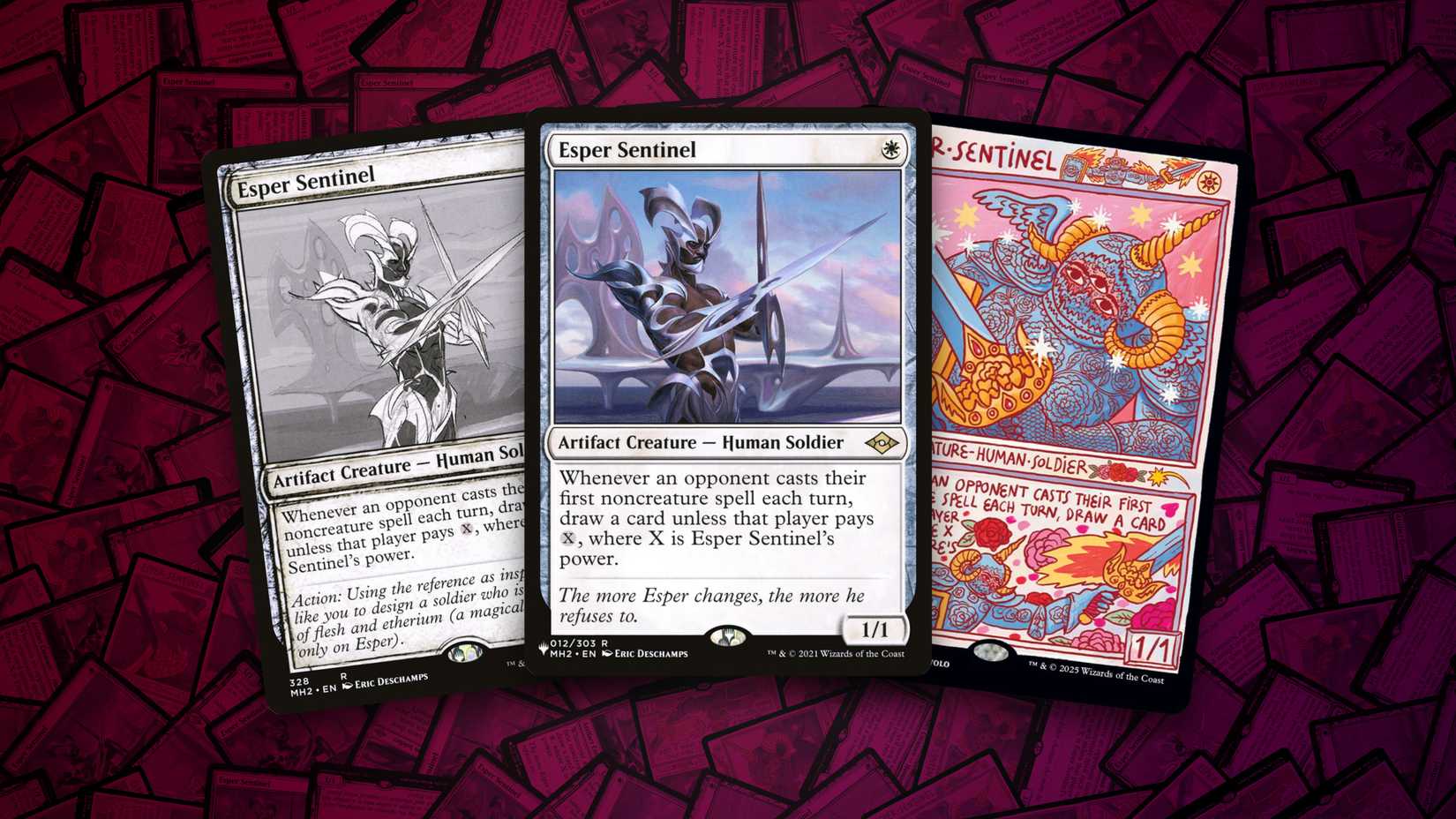 Image: Wizards of the Coast
There was a time when Esper Sentinel would have seemed like an almost bizarrely efficient white card. White has historically struggled with straightforward card draw, preferring to gain advantage through creatures, permanents, and careful resource management. Modern design transformed that dynamic with a single one-mana artifact creature that levies a mandatory tax on an opponent's initial noncreature spell each turn. It captures the essence of white through a distinctly modern lens, executing the color's core philosophy in a way that feels subtle yet devastatingly effective.
White rarely grants raw card draw without a tax attached, preferring instead to make opponents pay for every scrap of momentum they try to build. Esper Sentinel weaponizes that philosophy from the very first turn, transforming an opponent’s actions into immediate card advantage. It exemplifies the sharp evolution of modern white design, packing utility and a demanding tax onto a tiny one-mana frame. While it lacks the decades of history behind legacy pillars like Swords to Plowshares or Armageddon, few cards capture the lean, punishing efficiency of contemporary white magic quite as well.
4 Enlightened Tutor
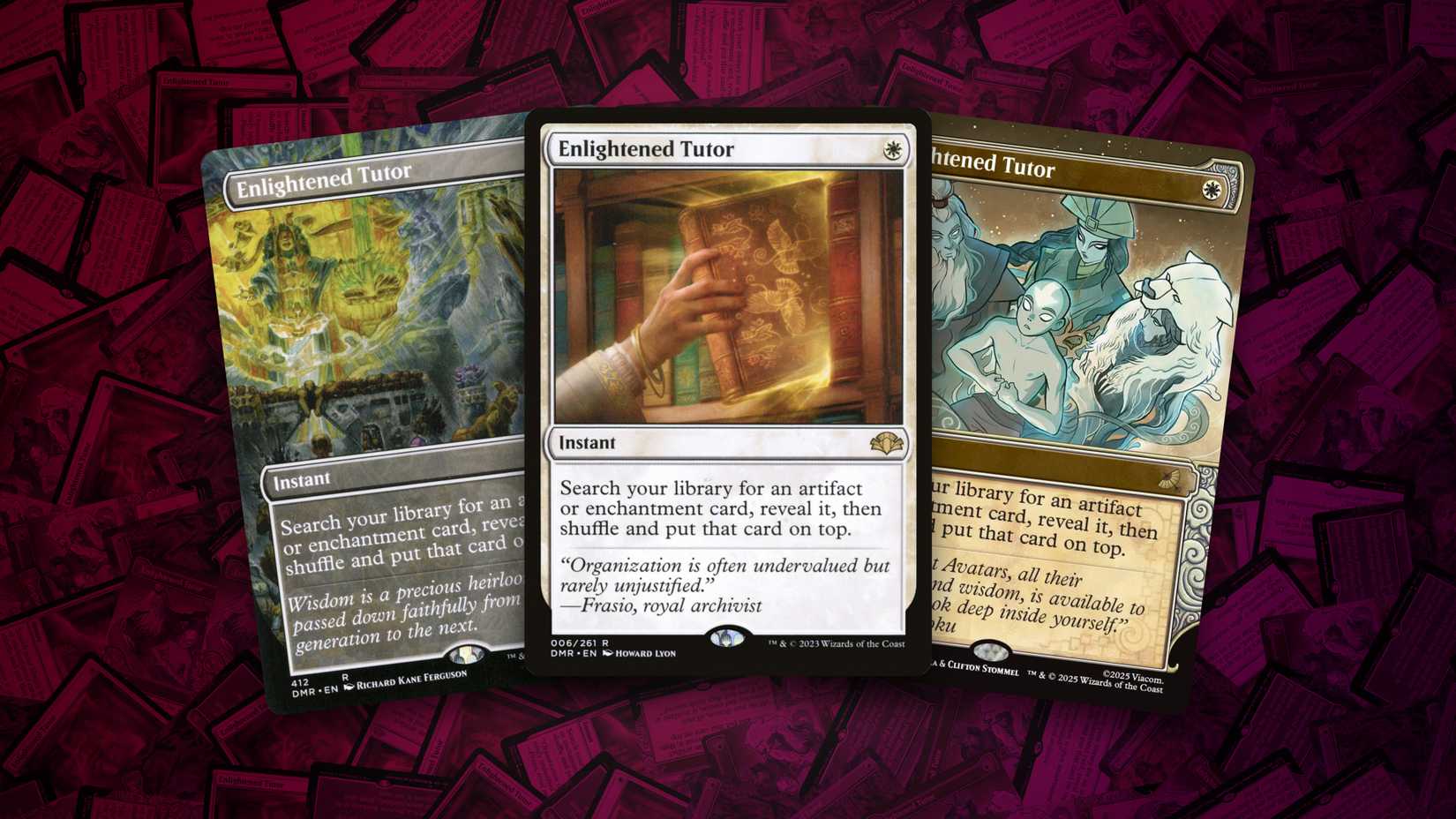 Image: Wizards of the Coast
Enlightened Tutor perfectly captures white’s obsession with meticulous preparation. For a single mana, it bypasses the chaos of a random draw in favor of deliberate planning, allowing you to sift through your library for a specific artifact or enchantment. It lacks the omnipotent flexibility of Magic’s darker tutors, from the Vampiric to the Demonic, but that strict restriction is exactly what roots the instant in white's mechanical identity.
This is a color that favors calculated forethought over raw power. Since its debut in Mirage, the spell has anchored ruthless competitive engines and Commander decks alike, effortlessly fetching everything from crippling enchantments to game-ending equipment. There is no brute force involved, nor any dramatic explosion on the stack. You simply diagnose the board, extract the exact tool required, and methodically execute the plan. (For me, it’s the perfect tool in my Elesh Norn, Mother of Machines artifact deck).
3 Archangel Elspeth
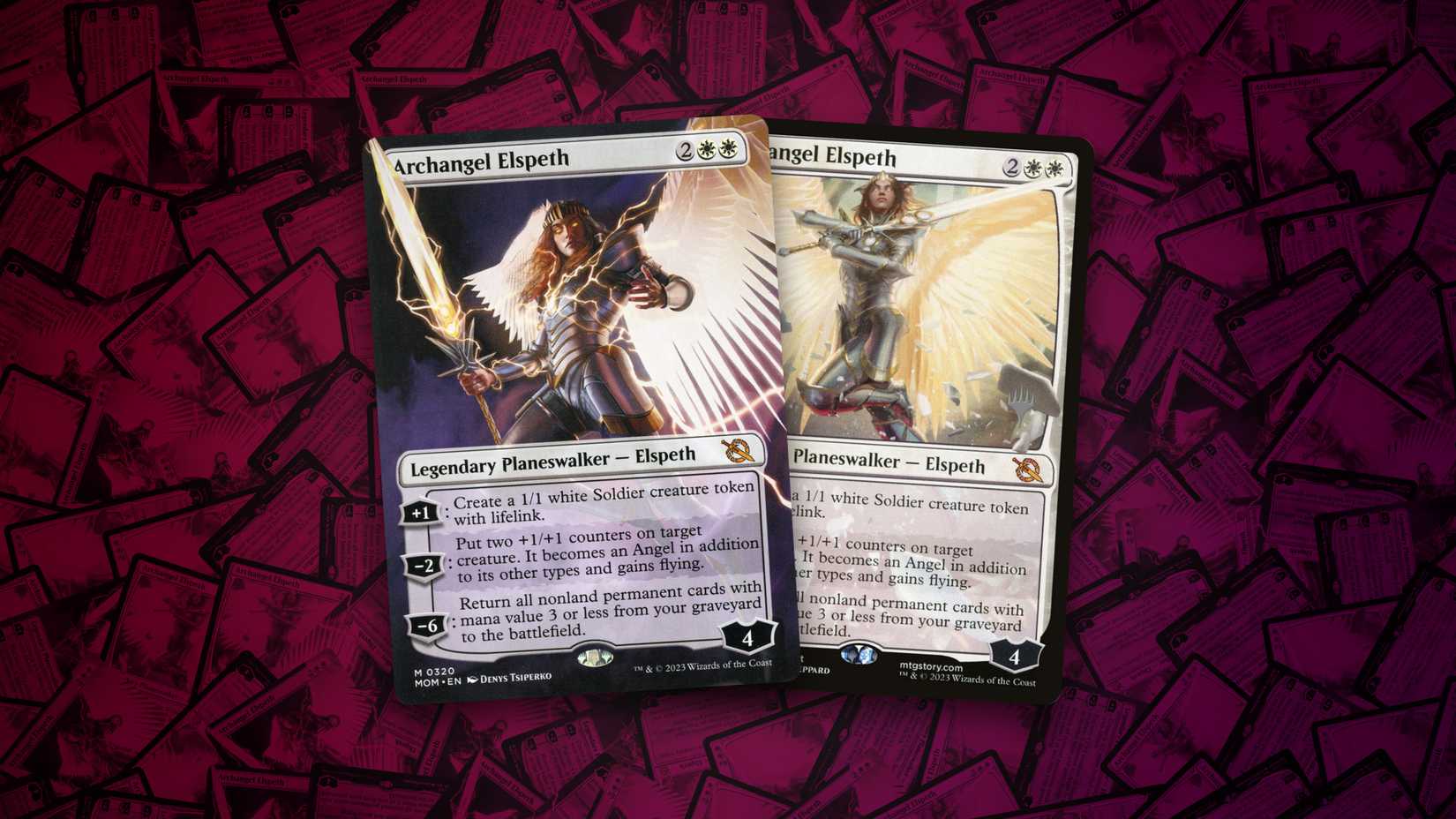 Image: Wizards of the Coast
If Elspeth is the planeswalker most synonymous with white, then Archangel Elspeth feels like the character distilled into a single card. Her abilities are almost a checklist of the color’s greatest hits: create an army, make your creatures stronger, grant them flying, and eventually turn one of them into a considerable threat. There’s nothing particularly subtle about it, and that’s part of the appeal.
Elspeth has always represented white at its most aspirational, showing a color that believes a well-organized army, a little faith, and a whole lot of swords can overcome whatever monstrosity happens to be standing across the table. Archangel Elspeth also captures how white’s planeswalkers have evolved beyond simply generating incremental value. She can build a board from practically nothing and turn a collection of humble creatures into a legitimate endgame threat. If Serra Angel represents the classic image of white, Archangel Elspeth is that same ideal after a few thousand years of power creep.
2 Mother of Runes
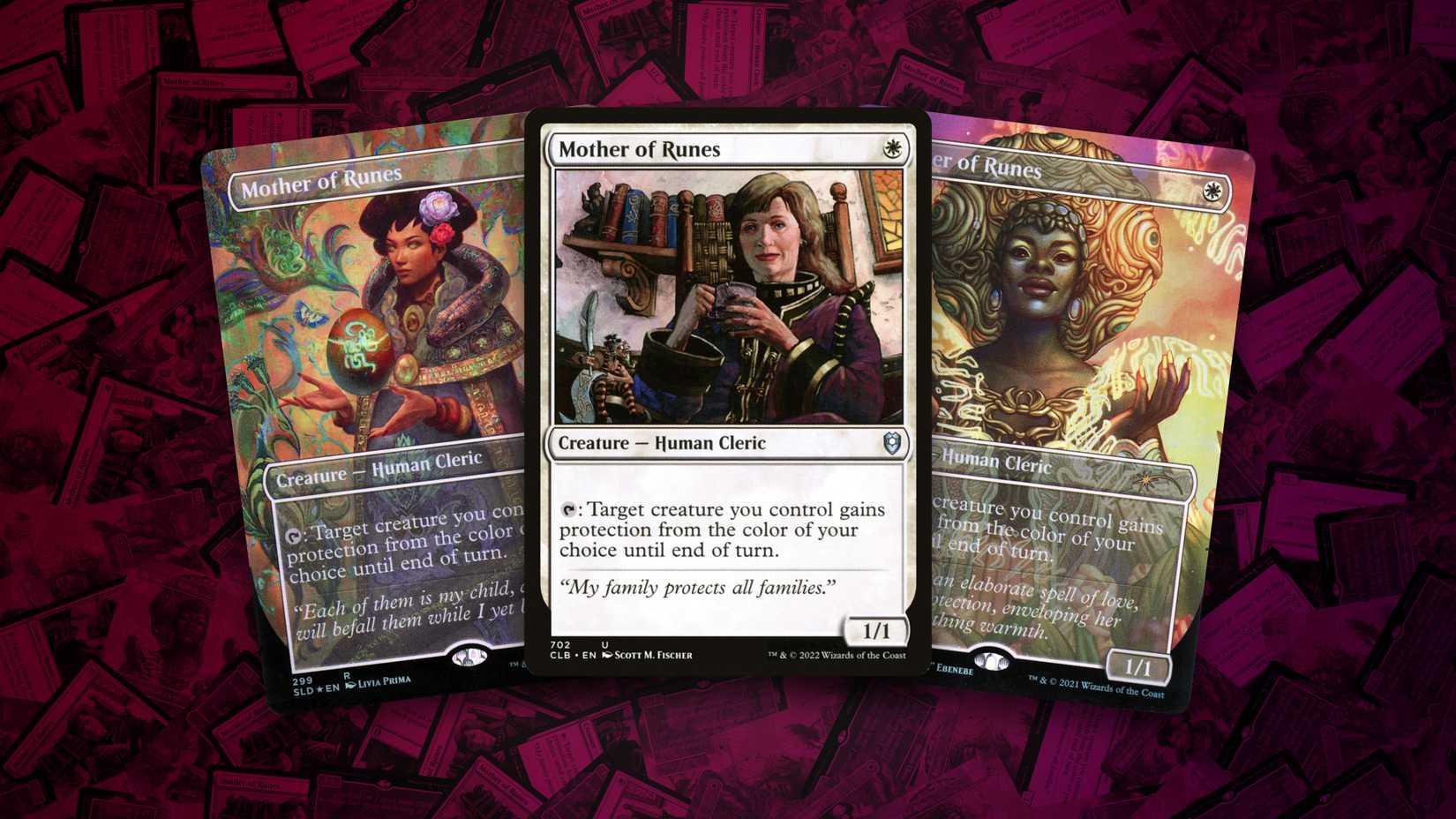 Image: Wizards of the Coast
Mother of Runes is a one-mana creature that looks almost laughably harmless until you’re playing against it. A 1/1 human cleric isn’t exactly striking fear into the heart of an opponent, but Mother of Runes turns your entire battlefield into a much more difficult thing to interact with. Tap her, and another creature you control gains protection from a color of your choice until the end of turn.
In an instant, a lethal removal spell fizzles, an insurmountable blocker is bypassed entirely, and a carefully orchestrated combat phase completely unravels. The sheer brilliance of Mommy Runes lies not just in her protective ward, but in her perfect embodiment of white's mechanical identity. The color has always thrived on elevating seemingly insignificant bodies into formidable assets through tight synergy and discipline. Mother of Runes acts as an ever-present sentinel, continuously standing between your most valuable pieces and whatever devastating schemes the opponent has plotted. She will never swing for the final blow herself, yet her quiet, looming authority guarantees the rest of your board survive long enough to execute the plan.








 English (US) ·