
 Image via Universal Pictures

Published Feb 5, 2026, 1:12 PM EST
Back in 2021, Hannah’s love of all things nerdy collided with her passion for writing — and she hasn’t stopped since. She covers pop culture news, writes reviews, and conducts interviews on just about every kind of media imaginable. If she’s not talking about something spooky, she’s talking about gaming, and her favorite moments in anything she’s read, watched, or played are always the scariest ones. For Hannah, nothing beats the thrill of discovering what’s lurking in the shadows or waiting around the corner for its chance to go bump in the night. Once described as “strictly for the sickos,” she considers it the highest of compliments.
Video game adaptations have spent decades fighting a reputation problem. Even as the genre has improved, there’s still an instinct to treat every attempt as either redemption or disaster, with very little room in between. That’s exactly where Warcraft landed when it arrived in 2016. Directed by Duncan Jones, the film was positioned as the launch of a major fantasy franchise backed by one of the most successful gaming properties in history. Instead, it became one of the most polarizing fantasy blockbusters of the modern era.
Nearly a decade later, Warcraft is finding a new audience on Prime Video, and the streaming environment may finally be the context the film needed all along. Removed from the pressure of launching a theatrical universe and freed from expectations of mass accessibility, the movie reveals itself as something far more interesting than its original reception suggested. It isn’t a failed franchise starter. It’s a dense, unapologetically lore-driven fantasy epic that simply arrived before audiences were ready to engage with it on those terms.
‘Warcraft’ Was Never Trying To Be Accessible Fantasy
From its opening scenes, Warcraft signals that it has little interest in easing viewers into its world. Instead of treating the orcs as monsters to be defeated, the film places them at the center of its emotional and political storytelling. Entire sequences unfold in the orc language, complete with subtitles and complex interpersonal relationships that mirror the human storyline rather than serve as its antagonist backdrop. That creative decision remains one of the movie’s most fascinating (and controversial) elements. Fantasy films historically rely on clear moral framing, especially when introducing unfamiliar mythologies to wide audiences. Warcraft deliberately rejects that structure. The orcs are refugees fleeing a dying world, navigating internal divisions, corrupted leadership, and generational survival anxiety. Their arc carries the emotional weight of the film, often overshadowing the human characters who were marketed as its primary entry point.
The result is a movie that operates more like a mid-season chapter in a larger fantasy saga than a traditional origin story. Instead of explaining its world in simplified exposition, Warcraft assumes familiarity with its mythology or, at the very least, a willingness to learn through immersion. For longtime fans of Blizzard’s games, that approach felt authentic. For general audiences, it often felt overwhelming. But that creative gamble also makes the film unusually ambitious within the video game adaptation landscape. Rather than diluting its source material for broader appeal, Warcraft attempts to translate its sprawling lore directly into cinematic form. That ambition, while uneven in execution, gives the film a level of confidence that becomes easier to appreciate outside of its original blockbuster expectations.

Related
Theatrical Expectations Set ‘Warcraft’ Up To Be Divisive
 Image via Universal Pictures
The marketing campaign for Warcraft framed the film as the next great fantasy spectacle in the tradition of The Lord of the Rings or Game of Thrones. That positioning created an immediate disconnect between what audiences were promised and what the film actually delivered. Instead of a universally accessible fantasy adventure, viewers were given a politically layered story that prioritized faction dynamics, cultural identity, and moral ambiguity over traditional heroic arcs. In 2016, audiences were still adjusting to the idea of cinematic universes that demanded homework. While Marvel had begun normalizing interconnected storytelling, those films still leaned heavily on character-driven accessibility. Warcraft, by contrast, opens in the middle of an already functioning world, introducing multiple factions, magic systems, and political tensions with little narrative hand-holding.
Critics frequently pointed to tonal inconsistency as one of the film’s biggest flaws, particularly in how the human storyline struggled to match the emotional complexity of the orc narrative. That criticism remains valid. The film’s human characters often feel like traditional fantasy archetypes placed inside a story that is far more interested in cultural collapse and moral compromise than straightforward heroism. Yet those same elements that made the film difficult to embrace theatrically now read differently in hindsight. Fantasy audiences have grown increasingly comfortable with dense lore, morally gray factions, and multilingual storytelling. Shows like House of the Dragon and The Witcher have helped normalize sprawling world-building that trusts viewers to keep up rather than simplifying mythology for mass appeal. In many ways, Warcraft resembles a project designed for today’s fantasy landscape rather than the one it debuted in.
Streaming Finally Gives ‘Warcraft’ The Viewing Context It Needed
Streaming has fundamentally changed how audiences engage with complex genre storytelling. The pressure of a theatrical ticket purchase creates an expectation of immediate clarity and universal accessibility. Streaming removes that urgency. Viewers can pause, rewind, research lore, or simply allow themselves to absorb dense world-building at their own pace. That shift benefits a film like Warcraft enormously. Its layered mythology and rapid character introductions feel less overwhelming when watched in a more relaxed environment. Instead of being judged as the foundation of a franchise that may or may not continue, the film functions more effectively as a standalone fantasy experiment.
Prime Video, in particular, has become a home for genre storytelling that thrives on expansive mythology and dedicated fan engagement. As streaming platforms continue building libraries that reward rewatchability and deep lore exploration, Warcraft fits neatly into a growing category of fantasy films that gain appreciation through repeated or more patient viewing. The movie also benefits from changing expectations around video game adaptations. Recent successes have proven that audiences are willing to engage with faithful, lore-heavy interpretations of gaming properties. In that context, Warcraft no longer feels like an outlier. It feels like an early attempt at a now increasingly accepted adaptation philosophy.
None of this erases the film’s structural flaws or tonal imbalances. Warcraft remains uneven, occasionally rushed, and clearly designed with sequel ambitions that never fully materialized. But distance from franchise pressure allows the movie to be evaluated on what it actually accomplishes rather than what it failed to launch. Warcraft stands as a reminder that divisiveness doesn’t always signal creative failure. Sometimes it reflects a project arriving ahead of its audience’s expectations. On Prime Video, removed from the weight of blockbuster franchise demands, the film finally has room to be experienced as something far more interesting — a bold, imperfect fantasy epic that trusted viewers to meet it halfway.
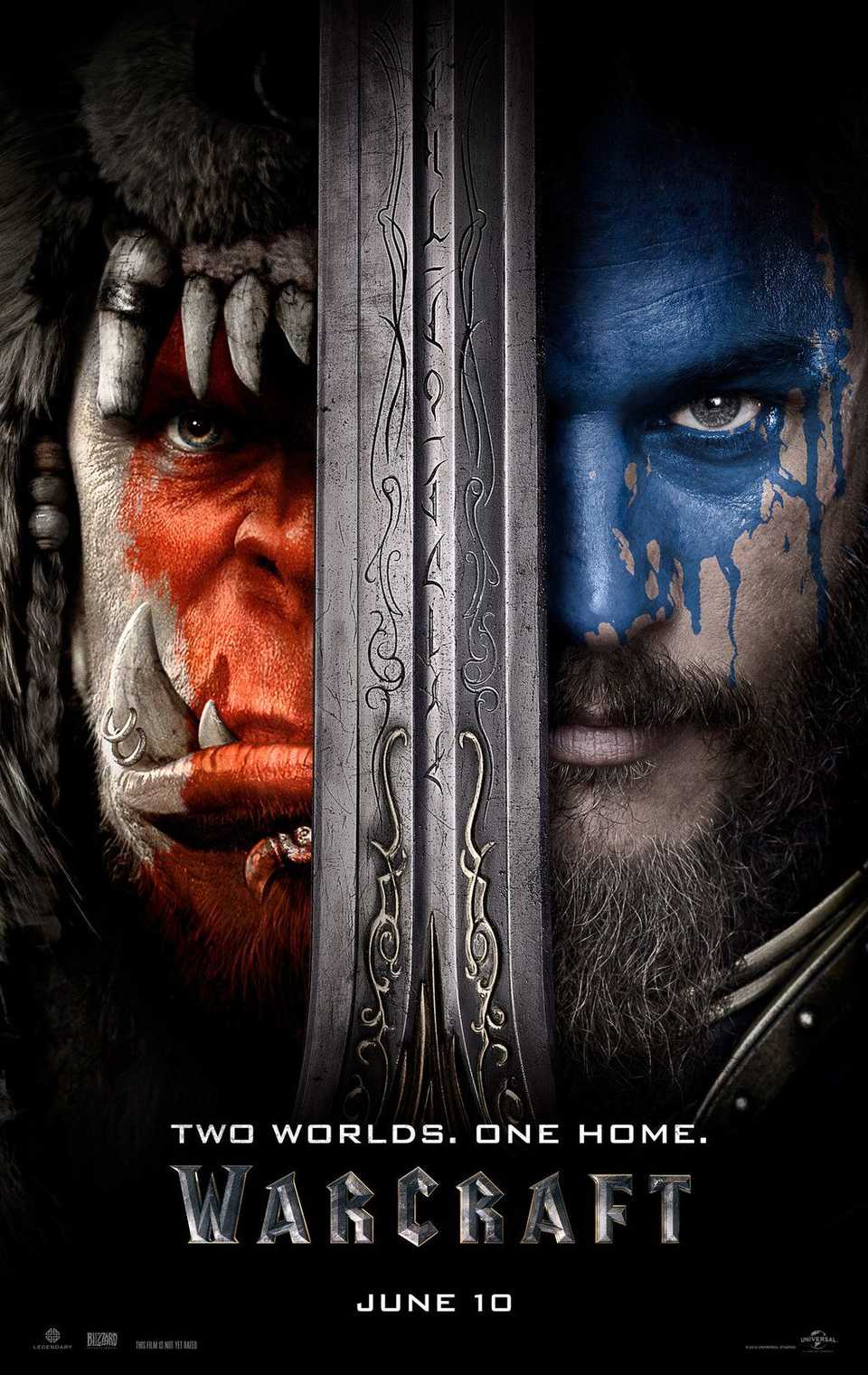
Release Date June 10, 2016
Runtime 123 minutes
Director Duncan Jones




![20 Years Later, One of the Best Sitcoms of the 21st Century Returns With Hilarious First Look [Exclusive]](https://static0.colliderimages.com/wordpress/wp-content/uploads/2026/02/malcolm-in-the-middle-life-s-still-unfair-feature.jpg?w=1600&h=900&fit=crop)
 English (US) ·