
 Image via Warner Bros.

Published Feb 10, 2026, 7:52 AM EST
Andrea M. Ciriaco is a long-time script reader and former entertainment editor who specializes in classic movies and Hollywood history. She was a student film critic at Kent State University for three years and worked at Warner Bros Studio in Burbank and The Safran Company for several years. Based on her vast taste and range of knowledge, many consider Andrea to be a walking IMDb who knows dozens of underrated movies and is a vital assesst to any trivia night. While movies are her expertise, Andrea is also a diehard fan of iconic shows including The Sopranos, Boardwalk Empire, Rod Serling's The Twilight Zone, Will & Grace and South Park. Some of her favorite filmmakers are Walt Disney,John Huston, Fritz Lang, Alfred Hitchcock, John Ford, Mel Brooks, Quentin Tarantino, Martin Scorsese and Howard Hawks.
Sign in to your Collider account
Western movies are often considered to be a genre of perfection, not because they’re flawless, but because they distill cinema to its purest elements: stark landscapes, clear moral choices, and characters standing alone against fate. Western movies traditionally turn simple stories about revenge, justice, and survival into modern myths, but the greatest Westerns, such as Rio Bravo and The Good, the Bad, and the Ugly, balance spectacle with meaning, utilizing wide-open spaces to explore loneliness, lawlessness, and the price of civilization.
Whether classic or modern, perfect Westerns like The Man Who Shot Liberty Valance, The Wild Bunch, and Clint Eastwood's Oscar-winning Western Unforgiven don't just entertain audiences. They linger, like the echo of thick-heeled boots on an empty street, long after the silver screen goes dark. From The Gunfighter starring Gregory Peck to John Ford's iconic Western The Searchers, these are ten Western movies that are perfect, no notes required!
10 'The Gunfighter' (1950)
 Image via 20th Century Studios
The Gunfighter is an essential Western classic starring Gregory Peck as Jimmy Ringo, a veteran gunslinger who is known for having the quickest hand in the Wild West. Unfortunately, Ringo's notorious reputation has led the sharpshooter to gun down a string of men who were foolish enough to believe they could outdraw him. As Ringo tries to put his past behind him and reconcile with his wife, he soon realizes that hanging up his gun and spurs is easier said than done.
The Gunfighter redefines the traditional gunslinger story by focusing not on the glory but on the consequences. The film's tension is constant and meticulously built through looks, silences, and dialogue rather than action, and the ending feels both shocking and unavoidable, reinforcing the film’s central idea that in the West, legends don’t get happy endings. By humanizing its outlaw and questioning the price of violence, The Gunfighter captures the Western genre at its most vulnerable, conveying a protagonist who is not a hero, but instead a man trapped by the very myth that made him famous.
9 'Butch Cassidy and the Sundance Kid' (1969)
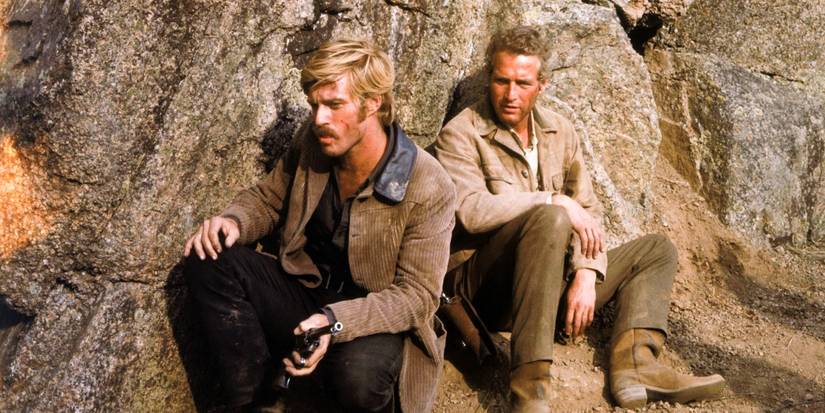 Image via 20th Century Studios
Paul Newman and Robert Redford star in the 1969 masterpiece Butch Cassidy and the Sundance Kid as outlaws, Robert LeRoy Parker, or Butch Cassidy (Newman), and Harry "the Sundance Kid" Longabaugh (Redford), who, after committing a string of train robberies, are relentlessly pursued by a group of lawmen as they head for Bolivia. When they finally reach their destination, the duo tries to make an honest living, but soon after, they learn that you can take a man out of the West, but you can't take the West out of the man.
Butch Cassidy and the Sundance Kid blends legend, humor, and tragedy into a story about the end of an era, all without losing the soul of the Western genre. Compared to the tone of other Westerns, Butch Cassidy and the Sundance Kid is witty and charming, but beneath the banter is a deep sense of inevitability of how the West is no longer a place for clever outlaws and fearless gunfighters. Between the film's effective balance of allure, melancholy, and myth with reality, Butch Cassidy and the Sundance Kid stands as a Western that understands both what the genre was and why it had to change, making it a timeless and perfect Western film.
8 'Once Upon a Time in the West' (1968)
Once Upon a Time in the West is an epic Spaghetti Western starring Henry Fonda as a brutal gun-for-hire, Frank, who is hired by a railway baron, Mr. Morton (Gabriele Ferzetti), to scare off a local rancher who owns the only piece of property with water on it in the area where Morton is currently building a railroad. Meanwhile, a mysterious gunslinger known as Harmonica (Charles Bronson) arrives in town with the intention of settling a long-awaited score with Frank.
Once Upon a Time in the West honors the Western legends while exposing the cost, creating a film that is not just a perfect Western but also a display of the genre at its most grand, tragic, and unforgettable. Leone's choice to keep the dialogue to a minimum results in every scene building toward an inevitable reckoning, and the final revelations reframe the entire story without a single wasted moment. The opening sequence alone, nearly wordless and unbearably tense, highlights the essence of the film: time stretching, violence looming, and an unpredictable fate waiting just over the horizon.
7 'Rio Bravo' (1959)
 Image via Warner Bros.
John Wayne stars in the hangout Western classic Rio Bravo as John T. Chance, a small-town sheriff who arrests a gunslinger, Joe Burdette (Claude Akins), for killing a man in a saloon. When word about Burdette's arrest reaches his brother, Nathan (John Russell), he arrives in town with a threat to break his brother out of jail. With the help of the town drunk, Dude (Dean Martin), a young cowboy, Colorado Ryan (Ricky Nelson), and an old man, Stumpy (Walter Brennan), Chance takes a firm stand against Burdette, fighting him and his men off just long enough for reinforcements to arrive.
At its core, Howard Hawks' Rio Bravo is about professionalism, loyalty, and quiet heroism, and essentially refines the Western genre. Instead of being a mythic loner or a tortured outlaw, the Duke's character is a steady man who takes pride in his job and carefully chooses who stands beside him, eluding the idea that patience, discipline, and trust are more valuable than a quick hand. The relationships between the characters in Rio Bravo play a monumental role in moving the story forward and also establish an unusual sense of warmth and depth that is rarely seen in other Western movies.
6 'The Wild Bunch' (1969)
 Image via Warner Bros.
Sam Peckinpah's gritty Western classic The Wild Bunch stars William Holden as Pike Bishop, an aging outlaw who decides to commit one final robbery before retiring with the help of his gang. When Bishop discovers that the job is a set-up orchestrated in part by his former partner, Deke Thornton (Robert Ryan), he and the surviving men of his gang hide out in Mexican territory, where Thornton eventually catches up with them, resulting in an intense and bloody shootout that could prove to be Bishop's last.
The Wild Bunch is often cited as a perfect Western because it confronts the genre’s violence, masculinity, and moral codes with brutal honesty, marking both an ending and a reckoning for the Old West. Visually bold and emotionally relentless, The Wild Bunch uses innovative editing and slow motion to turn violence into a kind of terrible poetry and ultimately redefines Western violence as chaotic, painful, and unavoidable. Despite its excessive violence, the film isn’t nihilistic; it believes fiercely in brotherhood and honor, even as it shows how those values are doomed, deeming The Wild Bunch a defiant but flawless Western classic.
5 'Unforgiven' (1992)
 Image via Warner Bros.
Clint Eastwood directs and stars in one of the greatest Westerns of the last one hundred years, Unforgiven, as a former outlaw, William Munny, who, along with his friend, Ned (Morgan Freeman), travels to the town of Big Whiskey, where a large reward is being offered to anyone who can catch the men who are responsible for brutally disfiguring a local woman. When the trio arrives in town, they meet the town's corrupt sheriff, Little Bill Daggett (Gene Hackman), who doesn't take too kindly to those who want to take justice into their own hands, resulting in a heated confrontation that ends in bloodshed.
Unforgiven dismantles the romantic myths of the Western genre and replaces them with moral weight, consequence, and hard-earned truth. What makes Unforgiven a perfect Western is its restraint. The movie trusts silence, weather, and performance to carry meaning, while the genuine brutality goes uncelebrated and unseen. Even justice feels compromised, shaped by fear and power rather than righteousness. Overall, Unforgiven doesn’t just revise the traditional Western; it acknowledges the genre’s past while holding it accountable, allowing no easy catharsis or glory, deeming Unforgiven to be a perfect modern Western.
4 'The Man Who Shot Liberty Valance' (1962)
 Image via Paramount Pictures
The Man Who Shot Liberty Valance is a definitive Western classic that pits lawlessness and justice against each other and explores how societies are built just as much on myths as they are on facts. James Stewart stars as Ransom Stoddard, a U.S. Senator who travels to the small town of Shinbone to attend the funeral of his friend, Tom Doniphon (John Wayne). The curiosity of the local press as to why a senator would attend the funeral of a poor rancher leads Stoddard to tell the truth behind his notoriety as well as his legendary encounter with a merciless outlaw known as Liberty Valance (Lee Marvin).
John Ford strips the Western genre down to the essentials with The Man Who Shot Liberty Valance, turning the traditional tale of the Wild West inside out with emotional restraint, layered performances, and a reflective tone that transforms a gunfight into a meditation on democracy and sacrifice. The famous line, “When the legend becomes fact, print the legend,” sums up the film’s central theme of how history favors comforting stories over uncomfortable truths, solidifying The Man Who Shot Liberty Valance as one of the genre’s most complete and enduring statements.
3 'Tombstone' (1993)
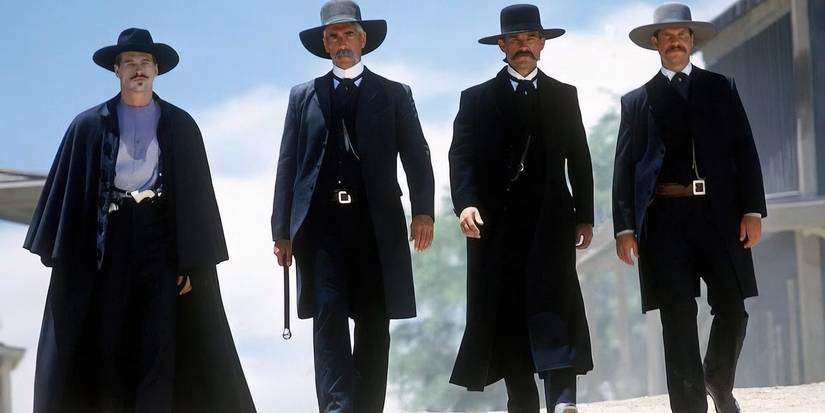 Image via Buena Vista Pictures
Kurt Russell stars in Tombstone as a peace officer, Wyatt Earp, who decides to retire and settle down in Tombstone, Arizona, with his brothers, Virgil (Sam Elliott) and Morgan (Bill Paxton). When the Earp brothers are targeted by an outlaw, "Curly Bill" Brocius (Powers Boothe) and his gang, the Cowboys, they decide to pick up their guns one last time and, with the help of Wyatt's friend and infamous sharpshooter, Doc Holliday (Val Kilmer), fight to restore law and order once again.
Tombstone is a flawless modern Western that embraces the genre’s mythic power while delivering it with modern energy, emotional weight, and unforgettable characters. The dialogue is bold and quotable, the gunfights are clean and decisive, and the story treats violence as swift and consequential rather than flashy. Kilmer in particular elevates the film with his wit, fragility, and fatalism, giving the story its emotional center and its tragic soul. Tombstone doesn’t deconstruct the myth of the Western hero; it fulfills it with a larger-than-life legend told with sincerity, momentum, and heart, reminding audiences why the Western endured in the first place.
2 'The Good, the Bad, and the Ugly' (1966)
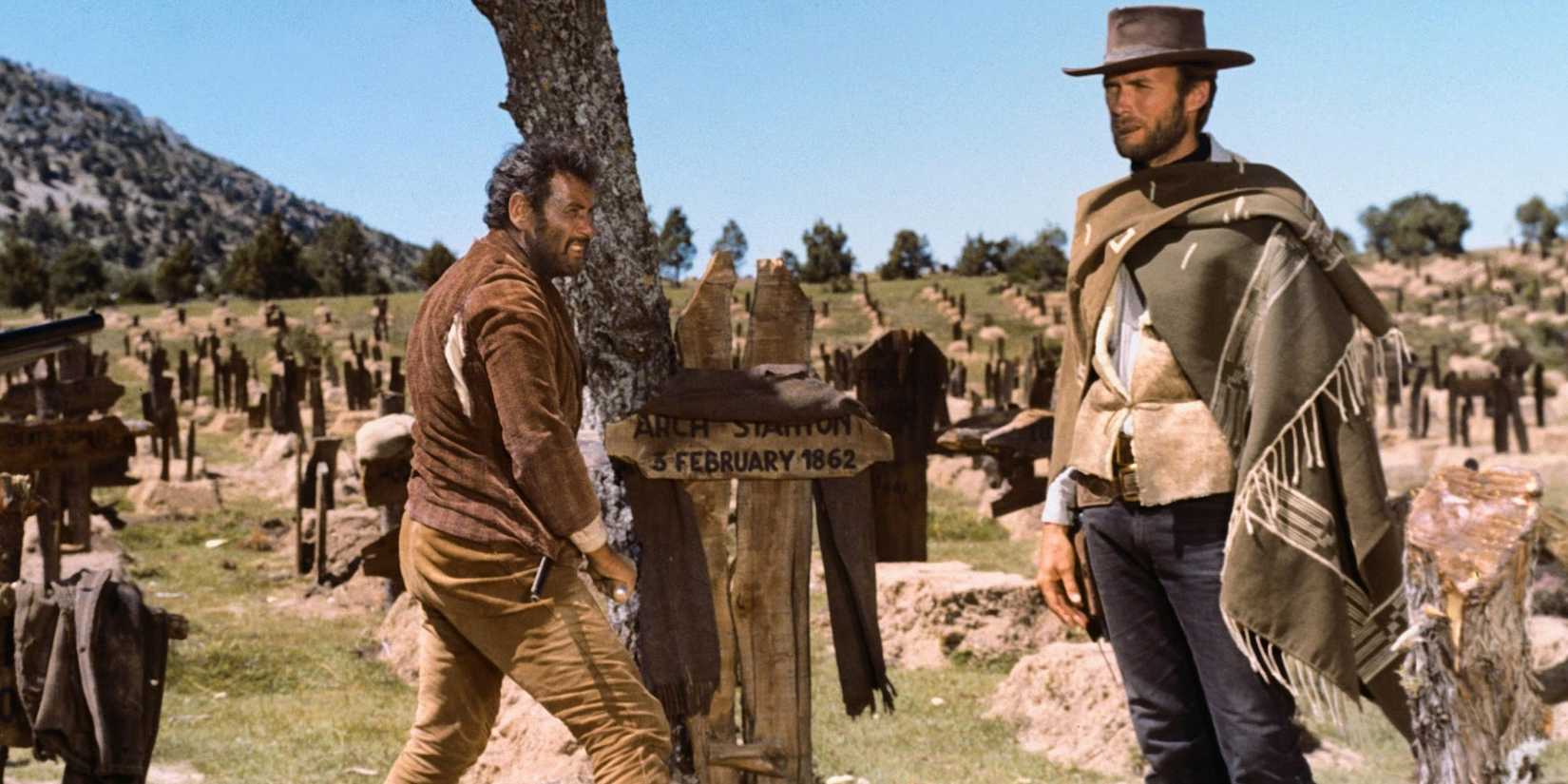 Image via United Artists
The Good, the Bad, and the Ugly is the final installment in Sergio Leone's Dollars trilogy and stars Clint Eastwood in his signature role as the Man With No Name. The movie catches up with Eastwood's character, who has devised a lucrative scheme with a ruthless outlaw, Tuco (Eli Wallach), but when one job almost costs Tuco his life, the unlikely partners decide to part ways. Before they can go their separate ways, the men find a dying Confederate soldier who offers them a buried fortune in exchange for their help. When the soldier dies, the Man With No Name is the only one who knows where the gold is buried, forcing Tuco to stick with him if he ever expects to find the golden fortune.
The Good, the Bad, and the Ugly transforms the genre into pure cinematic myth—stylized, operatic, and morally ambiguous—while redefining what a Western could be. Unlike the majority of other classic Westerns, The Good, the Bad, and the Ugly rejects romantic idealism and exposes the morality of the traditional Western. Violence is ugly, humor is dark, and heroes are deeply flawed, but within that cynicism lies a strange honesty of how the West isn’t about justice, but about endurance, wit, and timing. The legendary scene of the final standoff in the graveyard is the perfect expression of this worldview. No speeches, no moral resolution, just fate, skill, and silence.
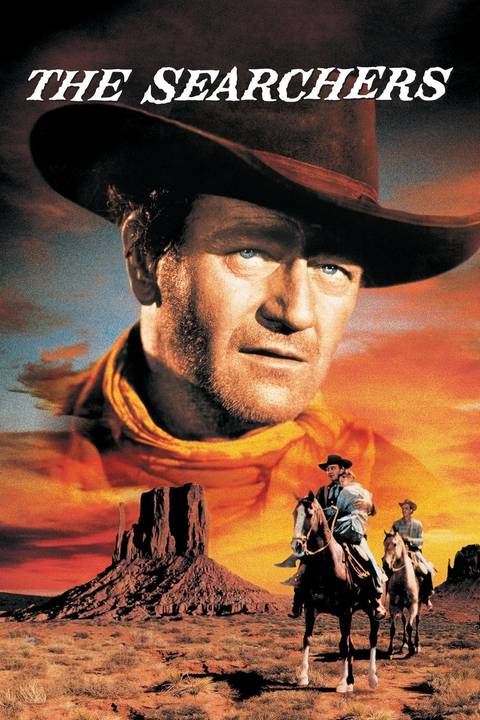
1 'The Searchers' (1956)
 Image via Warner Bros.
 John Wayne stars in John Ford's famous Western classic, The Searchers, as a Civil War veteran and loner, Ethan Edwards, who, after his family is brutally murdered by Native Americans, sets out to find his niece (Natalie Wood), who is supposedly still alive and being held as a prisoner by her family's killers. For several years, Edwards roams the desert with his adopted nephew, Martin (Jeffrey Hunter), but his deep-seated hatred, racism, and inescapable solitude turn his noble search into a dark and all-consuming obsession that could cost him everything and everyone in his life.
The Searchers stretches beyond the genre's heroism into moral reckoning, using vivid imagery to explore deeply personal and unsettling themes. On the surface, The Searchers appears to be a frontier quest, but as the movie progresses, the structure begins to crumble, turning the film into a psychological Western that examines how vengeance can rot a man’s soul. Rather than glorifying violence, The Searchers questions its purpose, and the quiet, restrained, and emotionally ambiguous end undercuts the traditional triumph of the American Western. The final image of Edwards standing alone outside the doorway is easily one of the genre’s most powerful statements about belonging and exile, making The Searchers a perfect and defining contribution to American cinema.
The Searchers
Release Date May 26, 1956
Runtime 119 minutes
Director John Ford
Writers Frank S. Nugent
-

-

Jeffrey Hunter
Martin Pawley




 English (US) ·