
 Image via Paramount

Published Mar 13, 2026, 4:52 AM EDT
Diego Pineda has been a devout storyteller his whole life. He has self-published a fantasy novel and a book of short stories, and is actively working on publishing his second novel.
A lifelong fan of watching movies and talking about them endlessly, he writes reviews and analyses on his Instagram page dedicated to cinema, and occasionally on his blog. His favorite filmmakers are Andrei Tarkovsky and Charlie Chaplin. He loves modern Mexican cinema and thinks it's tragically underappreciated.
Other interests of Diego's include reading, gaming, roller coasters, writing reviews on his Letterboxd account (username: DPP_reviews), and going down rabbit holes of whatever topic he's interested in at any given point.
Sign in to your Collider account
Sometimes, science fiction TV shows are born out of time. Perhaps they had ideas too wild and creative for the time that they were made in, or they dealt with themes that would only become hugely timely decades later, or they were vast space operas made before VFX could keep up. Whatever the case, several of the greatest sci-fi shows ever made were hugely ahead of their time.
That, of course, implies that those shows are now far more enjoyable, impactful, and impressive than they were back when they aired. Thankfully, for fans of televisual science fiction, that implies the existence of several great classics (both older and more modern) that, if they haven't checked them out yet, they absolutely should binge-watch as soon as possible.
10 'Fringe' (2008–2013)
 Image via FOX
After showrunning the first season of Lost, J. J. Abrams left the series and its fascinating mythology in the capable hands of Damon Lindelof and Carlton Cuse. Shortly after, he co-created Fringe. Though it started with a somewhat clunky and rather episodic first season, this cult classic only kept becoming more interesting and more strongly serialized as it went along.
Today, many would gladly call it one of the most underrated sci-fi shows ever made. Full of great writing, great directing, and great acting, it's a "complete package" kind of series whose multiverse-centric plot would have thrived in the current multiverse-obsessed media landscape. Watching Fringe today provides a refreshing, entirely unique approach to these kinds of stories that made alternate realities cool before Marvel made them the norm.
9 'V' (1983)
 Image via NBC
The V franchise as a whole is one of the most underappreciated sci-fi franchises that television has ever housed, but it's mainly the eponymous two-part miniseries that birthed the franchise that's deserving of the most attention. It's one of those must-watch sci-fi miniseries, a show that rises above its natural '80s cheesiness to deliver a hard-hitting, high-quality alien invasion series that's rarely been matched since 1983.
V has always been a standout military sci-fi gem, one whose tremendous ambition and enthralling sense of spectacle have ensured its timelessness. It's nowadays, however, that the miniseries' anti-fascist and anti-authoritarian themes have come to hit the hardest. V has always been fun, but today, it's fun and eerily timely—a killer combo that makes any science fiction show great.
8 'The Prisoner' (1967–1968)
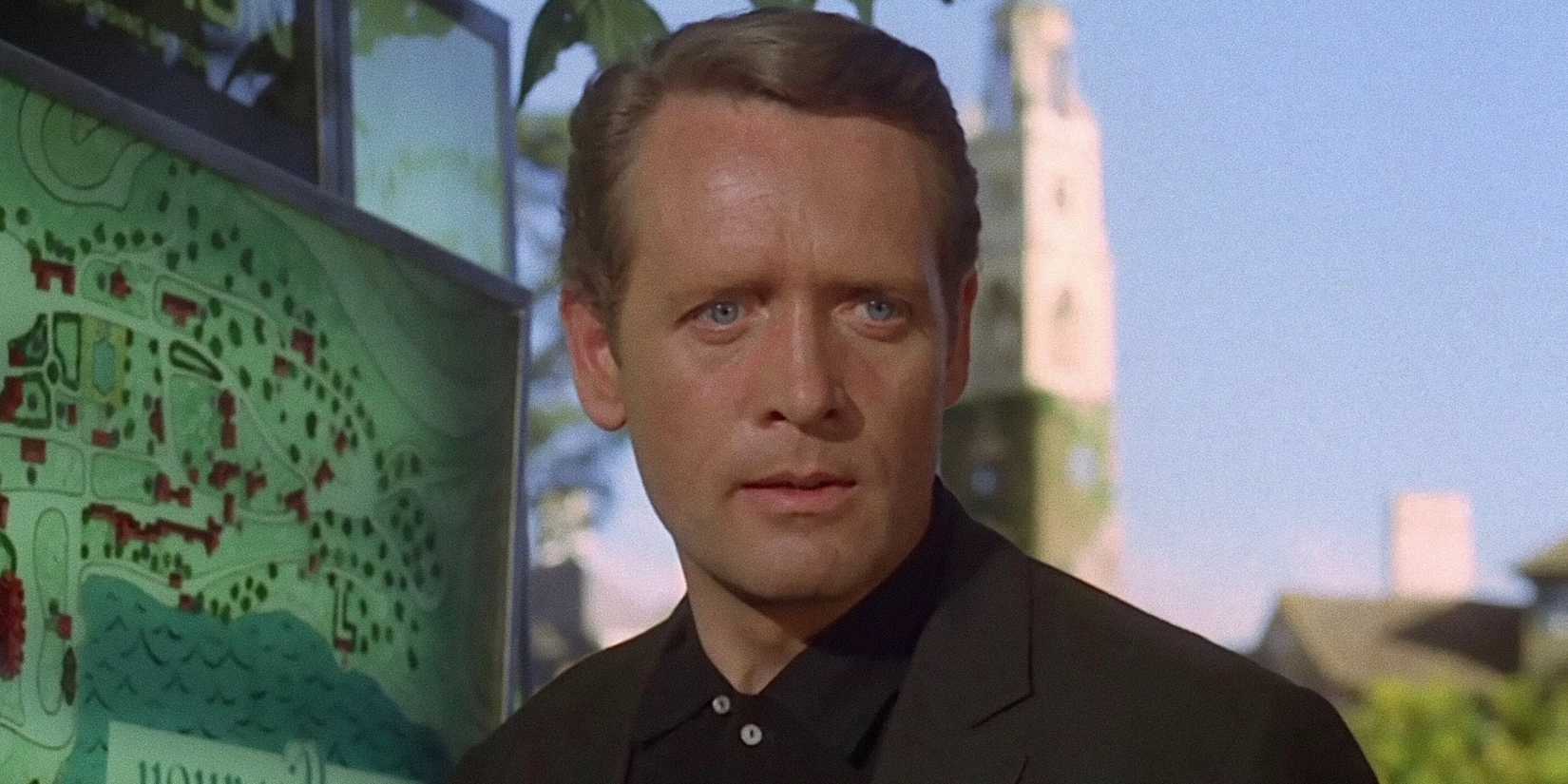 Image via ITV1
With a well-deserved score of 100% on Rotten Tomatoes, The Prisoner is one of the greatest and most legendary British science fiction series of the 20th century. It's the kind of classic sci-fi show that holds up decades later, a brilliant work of art that throws elements of the spy and psychological drama genres into the usual sci-fi mix.
Mind-bendingly surreal and full of Kafkaesque nuances, it's certainly not for people who prefer sci-fi that doesn't make them think much. It's a cornerstone of 1960s counterculture, a highly allegorical cult classic whose themes have wonderfully aged along with it. It was revolutionary back then, but in today's television landscape, it feels even more at home.
7 'Æon Flux' (1991–1995)
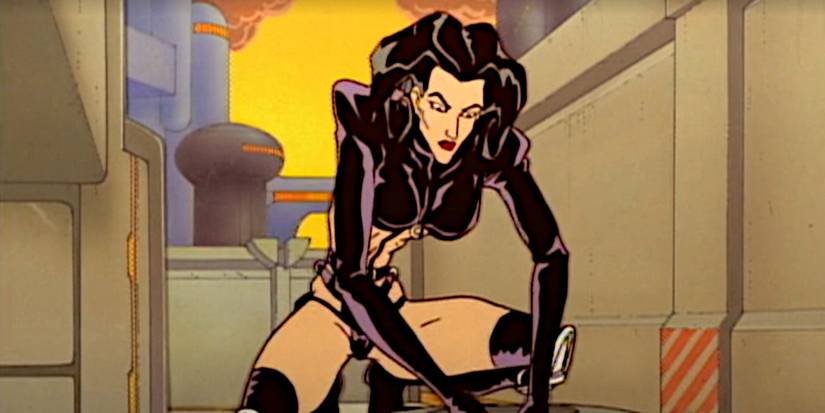 Image via MTV
During the early to mid-'90s, MTV was feeling experimental. They showed this with the animation showcase Liquid Television, which launched cartoons of the caliber of Beavis and Butt-Head. It also launched Æon Flux, an avant-garde animated cult classic that's definitely not for kids, but is undoubtedly one of the most original adult animated shows ever made.
With its mix of biopunk, dystopian sci-fi, and psychedelic imagery, this sharply postmodern classic is one of the most underrated adult animated shows ever. Its German Expressionist-style visuals have aged like fine wine, as have its profoundly philosophical themes. It doesn't feel like audiences appreciated Æon Flux nearly enough back when it ran, but today, sci-fi fans have no excuse to not watch (and inevitably fall in love with) this masterpiece.
6 'The Outer Limits' (1963–1965)
 Image via ABC
The tremendous quality and unprecedented success of 1959's The Twilight Zone, perhaps the single most influential science fiction TV show in history, unsurprisingly made it so that many studios and creatives wanted to have their own version of CBS and Rod Serling's smash hit. ABC's attempt was The Outer Limits, but though it was definitely designed to capitalize on Twilight Zone's popularity, it soon proved to be very much its own thing.
Much like the show that inspired it, Outer Limits was significantly ahead of its time. With far more of a focus on pure sci-fi than Twilight Zone and several of the best sci-fi anthology episodes in TV history, it dealt with complicated themes in futuristic settings that are fascinating to look back on nowadays. This is no Twilight Zone knockoff: It's one of the best sci-fi shows of the '60s in its own right.
5 'Doctor Who' (1963–Present)
 Image via Disney+
Despite its hiatus and its two revivals, Doctor Who has a Guinness World Record as the longest-running science fiction TV show in history. Over the course of its run, it's had its fair share of ups and downs, but throughout the whole thing, it has remained one of the freshest, most entertaining, and most socially-conscious sci-fi shows on television. Built on the premise of a time-traveling alien who can regenerate into a different body after death, it immediately cracked the code on how to constantly renew itself and keep itself relevant.
That's what has allowed it to remain one of the best sci-fi shows with more than five seasons. Though it was originally devised as an educational program for children, it soon started transforming into a more entertainment-driven series. Throughout, however, Doctor Who has been ahead of the curve in terms of representation, diversity, and dealing with socially relevant topics in sensitive ways.
4 'Babylon 5' (1993–1998)
 Image via Warner Bros. Television
By the time Babylon 5 first aired, pretty much everything about it was unprecedented. Never before had American broadcast television—much less genre television—heard of a fully-serialized show envisioned as a "novel for television," where every season was like an installment in said novel, and every episode was a chapter.
This is probably the most ambitious sci-fi TV show in history, and that's more than enough to count it among the most ahead-of-their-time sci-fi series ever. Cheesy though it may feel nowadays, Babylon 5 always aimed high, and it often feels like an out-of-time gem that was destined to be made with 21st-century technology but got stuck in the '90s instead. That's in no way a detriment: It only adds to the show's timeless charm.
3 'Firefly' (2002–2003)
 Image via Fox
Perhaps the most notorious single-season sci-fi show in history, Joss Whedon's Firefly is a cult classic with a fanbase so large and so passionate that it's hard to believe it only lasted 14 episodes (later followed by the film Serenity). It's one of the many sci-fi TV shows that have been canceled too soon throughout history.
With a phenomenal cast led by Nathan Fillion and an enthralling Space Western atmosphere, this gem of the sci-fi genre would have no doubt had far more success if it had come later in the game. Its voice and vision would have very likely thrived in the streaming environment, rather than the broadcast realm that ultimately led to its demise. Whatever the case, despite its short-lived lifespan, this is still one of the best and most beloved sci-fi shows of all time.
2 'The Twilight Zone' (1959–1964)
 Image via CBS
There are very few anthology shows whose every episode is perfect, and The Twilight Zone reigns supreme among those shows. Rod Serling's masterpiece is probably the most influential sci-fi series ever, a gem that made perfect use of the anthology format to deliver hard-hitting sci-fi story after hard-hitting sci-fi story.
The way the show deals with themes like the dangers of technology, artificial intelligence, nuclear paranoia, mass hysteria, and suburban life in the modern age all feel far more relevant and powerful today than they did back in the '50s and '60s. It feels like a prophetic show that was made in the future and then sent back to the Cold War era, and that's probably why it has aged like fine wine.
1 'Star Trek: The Original Series' (1966–1969)
 Image via Paramount
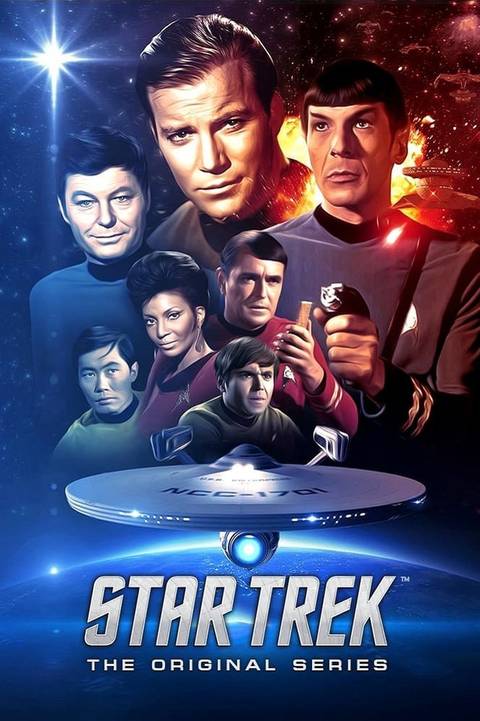
With Star Trek: The Original Series, the Star Trek franchise was born, and with it, the face of science fiction on both the small and big screens changed forever. It's one of the best TV shows of the '60s, and though it may not be the best sci-fi series ever (it's arguably not even the best installment in its own franchise), it's nevertheless one of the most groundbreaking and revolutionary in the genre's history.
For one, Star Trek: TOS always had eye-popping visuals in support of its fascinating storylines, and in today's CGI-heavy world, it would have been far more likely for those visuals to take precedence over the narrative. On top of that, it turned science fiction into a vehicle for complex social, political, and ethical issues at a time when the genre very rarely dealt with such topics. This was only reflected in its iconic cast, arguably the most diverse in the history of television up to that point. In every sense imaginable, Star Trek: TOS was ahead of the curve. Science fiction TV wouldn't be what it is today without it.
Star Trek: The Original Series
Release Date 1966 - 1969-00-00
Showrunner Gene Roddenberry
Directors Marc Daniels, Joseph Pevney, Ralph Senensky, Vincent McEveety, Herb Wallerstein, Jud Taylor, Marvin J. Chomsky, David Alexander, Gerd Oswald, Herschel Daugherty, James Goldstone, Robert Butler, Anton Leader, Gene Nelson, Harvey Hart, Herbert Kenwith, James Komack, John Erman, John Newland, Joseph Sargent, Lawrence Dobkin, Leo Penn, Michael O'Herlihy, Murray Golden



 English (US) ·