
Science fiction is a genre with a lot of variety. While there are totemic films within it whose influence can be seen all across the genre, there are far more singular films that defy simple categorization. Any genre shared by films as varied as Barbarella and Solaris has a breadth unlike almost any other. With that variety, of course, comes varying quality. Even with a universe's worth of stories to tell and constantly advancing technology to tell them with, there's no guarantee of success. As with any genre, and perhaps even more given the often sky-high ambitions of many of the films, there are many that fall short, but they always seem minimal compared to those titanic efforts that turn out perfect from start to finish.
Perfection is unknowable, to quote a character from an underrated sci-fi movie, but there's enough to these sci-fi movies to know that they are as perfect as any film can be. Just as the genre is varied, so too are these masterpieces. From classics to epics to comedies to horror and everything left over, the most perfect sci-fi films show how the genre can help elevate any story. These movies transcend the genre and the very subjectivity of film criticism. Even if some might not be to your personal preference, you have to admit they are pretty damn perfect from their first scenes to their last.
'2001: A Space Odyssey' (1968)
 Image via Metro-Goldwyn-Mayer
If you're making a list of perfect sci-fi films, few picks are more obvious than Stanley Kubrick's epic masterpiece 2001: A Space Odyssey. Written by Kubrick with sci-fi author Arthur C. Clarke, the film represented a quantum leap forward for visual effects, depictions of space travel, and the genre as a whole. While the film may have been a little too optimistic in its estimation of where humanity would be in 2001, there's no denying that the team of technicians and visual effects artists brought its vision of the future to life with stellar clarity.
The film depicts the effects of alien technology, in the form of large black monoliths, on human history and evolution. On a voyage to Jupiter, the human crew faces unexpected adversity from their onboard AI system, HAL 9000, who malfunctions and begins killing them off. While that sounds like the premise of a basic horror or thriller movie, Kubrick is far more interested in the thematic implications of HAL's fallibility than he is in any kind of tension-based set pieces. Once HAL has been dealt with, the film enters its final act, where the last surviving astronaut experiences the overwhelming power of the universe and witnesses the limits of his mortality before being reborn as a higher being. It's a perfect ending that succeeds a series of perfect scenes in what may be the most perfect sci-fi movie ever made.
'Star Wars' (1977)
 Image by Lucasfilm
Star Wars obviously owes a debt to the trail blazed by 2001, but looks further back to the serials of characters like Flash Gordon for its true inspiration. It cannot be overstated how monumental this first adventure in a galaxy far, far away was, changing the summer release landscape forever; whether that was ultimately a good or bad thing may depend on your perspective. Even though it's been decades since its release, and dozens of films have been able to surpass it in terms of visual effects and sheer scale, few have come close to its immersive worldbuilding, and none have matched its impact.
There's something to Luke Skywalker's simplicity that has helped him endure, even when there are far more compelling protagonists in the genre. The actors are all game, but the film belongs to the perfect performances of Alec Guinness as Obi-Wan Kenobi and Harrison Ford as Han Solo, separately setting new templates for the mentor and rogue roles that are now staples of blockbusters. Beyond the beloved characters and setting, Star Wars created an entirely new pipeline for visual effects in cinema. Since no effects studio existed that could handle the workload, Lucas created Industrial Light & Magic, and the rest is sci-fi history.
'Alien' (1979)
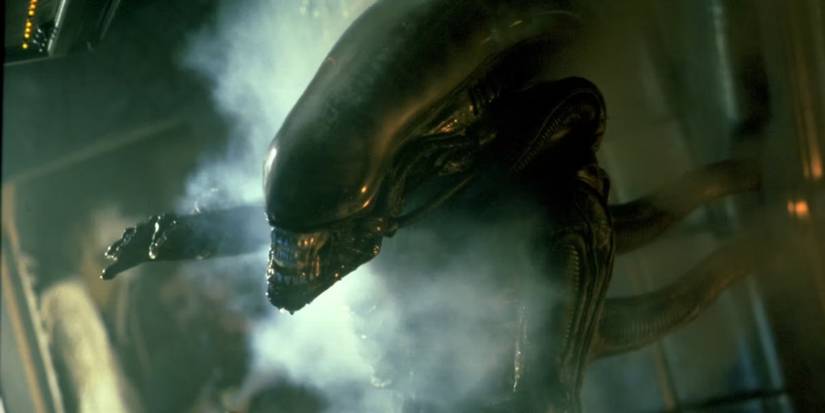 Image via 20th Century Studios
One of the first films to benefit from the success of Star Wars was the iconic sci-fi horror classic Alien. The film, as written by Dan O'Bannon and Ronald Shusett, would likely have been produced as a low-budget B-movie under Roger Corman had it not ended up in the hands of producers Walter Hill and David Giler at 20th Century Studios, then 20th Century Fox. Throwing more money at the script wouldn't necessarily have turned it into the masterpiece fans know and love, but the hiring of director Ridley Scott put it a lot closer. He elevated the film visually, and with collaborators like Ron Cobb and H.R. Giger, Alien took the lived-in sci-fi aesthetic of Star Wars into grimy new territory.
A group of space truckers come out of their long-haul hypersleep to discover they're not quite home yet and have been given orders to investigate a distress signal on an unknown planet. One of them gets a face full of alien, and one infamous dinner scene later, horror is exploding down every dark corridor. The unique elements of the Xenomorph's biology, coupled with Giger's singular designs, make it the most recognizable and terrifying extraterrestrial ever put on film. Alien is so much more than just a monster in space movie, and yet, in many ways, it is nothing more than that. You have to admire it and the movie's purity.
Collider Exclusive · Sci-Fi Survival Quiz Which Sci-Fi World Would You Survive? The Matrix · Mad Max · Blade Runner · Dune · Star Wars
Five universes. Five completely different ways the future went wrong — or sideways, or up in flames. Only one of them is the world your instincts were built for. Eight questions will figure out which dystopia, galaxy, or desert wasteland you'd actually make it out of alive.
💊The Matrix
🔥Mad Max
🌧️Blade Runner
🏜️Dune
🚀Star Wars
TEST YOUR SURVIVAL →
01
You sense something is deeply wrong with the world around you. What do you do? The first instinct is often the truest one.
APull on every thread until I understand the system — then figure out how to break it. BStop asking questions and start stockpiling — food, fuel, weapons. Questions don't keep you alive. CKeep my head down, observe carefully, and trust no one until I know who's pulling the strings. DStudy the patterns. Every system has a rhythm — learn it, and you learn how to survive it. EFind the people fighting back and join them. You can't fix a broken galaxy alone.
NEXT QUESTION →
02
In a world of scarcity, what resource do you guard most fiercely? What we protect reveals what we believe survival actually requires.
AKnowledge. If you understand the system, you don't need resources — you can generate them. BFuel. Everything else — movement, power, escape — runs on it. CTrust. In a world of fakes and informants, a truly reliable ally is rarer than any commodity. DWater. And after water, information — the two things empires are truly built on. EShips and credits. The galaxy is big — you survive it by being able to move through it freely.
NEXT QUESTION →
03
What kind of threat keeps you up at night? Fear is useful data — if you're honest about what you're actually afraid of.
AThat reality itself is a lie — that everything I experience has been constructed to keep me compliant. BA raid. No warning, no mercy — just the roar of engines and then nothing left. CBeing identified. Once someone with power decides you're a problem, you're already out of time. DBeing outmanoeuvred — losing a political game I didn't even know I was playing. EThe Empire tightening its grip until there's nowhere left to run.
NEXT QUESTION →
04
How do you deal with authority you don't trust? Every dystopia has a power structure. Your approach to it determines everything.
ASubvert it from the inside — learn its rules well enough to weaponise them against it. BIgnore it and stay out of its reach. The further from any power structure, the better. CAppear to comply while doing exactly what I need to do. Visibility is the enemy. DManoeuvre within it carefully. You can't beat a system you refuse to understand. EResist openly when I have to. Some things are worth the risk of being seen.
NEXT QUESTION →
05
Which environment could you actually endure long-term? Survival isn't just tactical — it's physical, psychological, and very much about where you are.
AUnderground bunkers and server rooms — cramped, artificial, but with access to everything that matters. BOpen wasteland — brutal sun, no shelter, constant movement. At least the threat is honest. CA dense, rain-soaked city where you can disappear into the crowd and nobody asks questions. DMerciless desert — extreme heat, no water, and something enormous living beneath the sand. EThe fringe — backwater planets and busy spaceports where the Empire's attention rarely reaches.
NEXT QUESTION →
06
Who do you want in your corner when things fall apart? The company you keep is the clearest signal of who you actually are.
AA tight crew of believers who've seen behind the curtain and have nothing left to lose. BOne or two people I'd trust with my life. Any more than that and someone talks. CNobody, ideally. Alliances are liabilities. I work alone unless I have no choice. DA community bound by shared hardship and mutual survival — people who need each other to last. EA ragtag team with wildly different skills and total commitment when it counts.
NEXT QUESTION →
07
Where do you draw the line — if you draw one at all? Every survivor eventually faces a moment that tests what they're actually made of.
AI won't harm the innocent — even the ones who'd report me without hesitation. BI do what I have to to protect the people I've chosen. Everything else is negotiable. CThe line shifts depending on who's asking and what's at stake. DI draw a long-term line — nothing that compromises my people's future, even if it'd help now. ESome lines, once crossed, can't be uncrossed. I know which ones they are.
NEXT QUESTION →
08
What would actually make survival worth it? Staying alive is one thing. Having a reason to is another.
AWaking others up — dismantling the illusion so no one else has to live inside it. BFinding somewhere — or someone — worth protecting. A reason to keep moving. CAnswers. Understanding what I am, what any of this means, before time runs out. DLegacy — shaping the future in a way that outlasts me by generations. EFreedom — for myself, for others, for every world still living under someone else's boot.
REVEAL MY WORLD →
Your Fate Has Been Calculated You'd Survive In…
Your answers point to the world your instincts were built for. This is the universe your temperament, your survival instincts, and your particular brand of stubbornness were made for.
The Matrix
You took the red pill a long time ago — probably before anyone offered it to you. You're a systems thinker who can't help but notice the seams in things.
- You're drawn to understanding how the system works before figuring out how to break it.
- You'd find the Resistance, or it would find you — your instinct for spotting constructed realities is the machines' worst nightmare.
- You function best when you have access to information and the freedom to act on it.
- The Matrix built an airtight prison. You'd be the one probing the walls for the door.
Mad Max
The wasteland doesn't reward the clever or the well-connected — it rewards those who are hard to kill and harder to break. That's you.
- You don't need comfort, community, or a cause larger than the next horizon.
- You need a vehicle, a clear threat, and enough fuel to outrun it — and you're good at all three.
- You are unsentimental enough to survive that world, and decent enough — just barely — to be something more than another raider.
- In the wasteland, that distinction is everything.
Blade Runner
You'd survive here because you know how to exist in moral grey areas without losing yourself completely.
- You read people accurately, keep your circle small, and ask the questions others prefer not to answer.
- In a city where humanity is a legal designation rather than a feeling, you hold onto something that keeps you functional.
- You're not a hero. But you're not lost, either.
- In Blade Runner's world, that distinction is everything.
Dune
Arrakis is the most hostile environment in the known universe — and you are precisely the kind of person it rewards.
- Patience, discipline, and political awareness are your core strengths — and on Arrakis, they're survival tools.
- You understand that the long game matters more than any single victory.
- Others come to Dune and are consumed by it. You'd learn its logic and earn its respect.
- In time, you wouldn't just survive Arrakis — you'd begin to reshape it.
Star Wars
The galaxy far, far away is vast, loud, and in a constant state of violent political upheaval — and you wouldn't have it any other way.
- You find meaning in being part of something larger than yourself — a cause, a crew, a rebellion.
- You'd gravitate toward the Rebellion, or the fringes, or whatever pocket of the galaxy still believes the Empire's grip can be broken.
- You fight — not because you have to, but because standing aside isn't something you're capable of.
- In Star Wars, that willingness is what makes all the difference.
↻ RETAKE THE QUIZ
'Aliens' (1986)
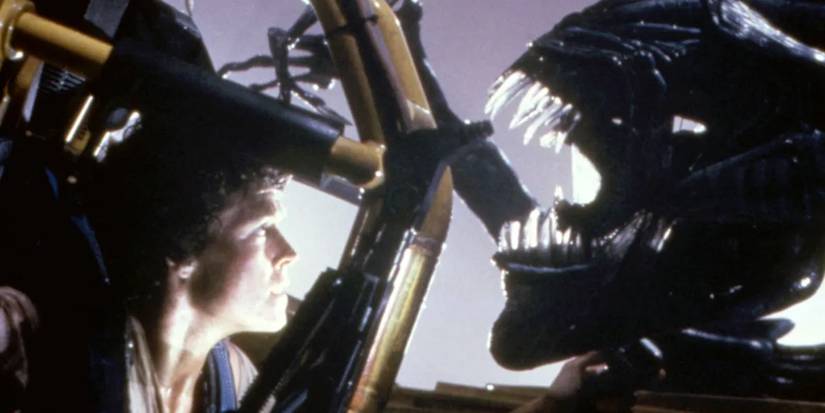 Image via 20th Century Studios
The purity of Alien made sequelizing it an almost insurmountable task. Luckily, James Cameron is not just any filmmaker. Coming hot off the success of The Terminator, Cameron took producer Hill and Giler's concept of a sequel involving soldiers, and fleshed it out into a full-fledged war movie. While Sigourney Weaver became a sci-fi icon thanks to her performance as Ripley in the original, many of the character's greatest developments and most memorable moments come from Aliens. Hollywood agrees with that sentiment, since Weaver was deservedly nominated for an Academy Award for Best Actress.
Ripley wakes up in the sequel after having drifted through space for fifty-seven years after blowing the original Xenomorph out of an airlock. No one believes her story until they lose contact with the colonists who now live on the planet the alien came from, and Ripley is sent back with a team of colonial marines. It's on the planet that she meets sole survivor Newt (Carrie Henn), and the two form a surrogate mother-daughter relationship. Motherhood is all over Cameron's movie, even in its ultimate antagonist, the Alien Queen, which is both bigger and better than the original xenomorph. The influence Aliens had on sci-fi was just as big as the original film's, and in many cases, even bigger.
'RoboCop' (1987)
 Image via Orion Pictures
The '80s were a particularly prolific decade for science fiction, but no movie exemplifies the era as perfectly as RoboCop. Directed by Paul Verhoeven, this satirical action movie featuring a cyborg protagonist is the summation of all the corporate greed, media oversaturation, and rampant drug use and ultraviolence that the '80s vomited out. It’s disheartening how timely some of the film's themes still are, and even more disheartening that this decade won’t get anything as outrageous as RoboCop.
In new Detroit, played by contemporary Dallas, crime is rampant, and the police have been privatized. The corporation behind the cops, OCP, is looking to wipe the city and its poorest population from the face of the Earth and pave over it. To do that, they need to end crime, so they turn recently murdered cop Alex Murphy (Peter Weller) into a chrome-covered robot cop. It’s blood-soaked sci-fi pulp, but it’s also a hilarious takedown of the excesses of the era. If filmmakers like Cameron and others set up the building blocks of this subgenre, Verhoeven drove a bulldozer through them. RoboCop is so over the top in its parody it goes back around to being genuine.
'The Iron Giant' (1999)
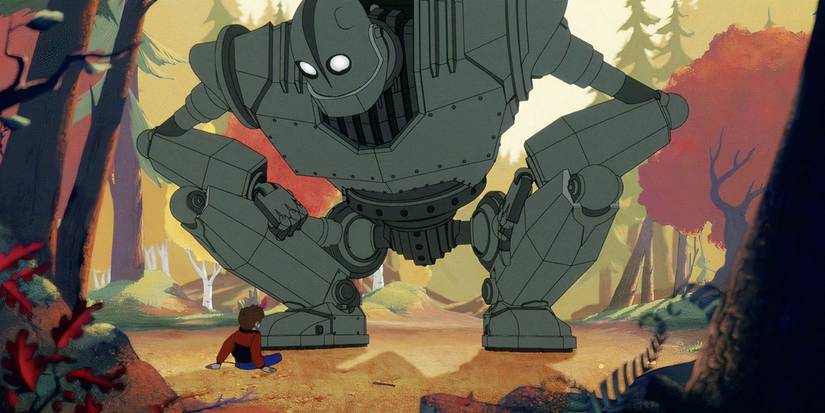 Image via Warner Bros. Pictures
If there’s a kid-friendly counterpart to RoboCop, it’s the titular character in The Iron Giant. He’s a killer robot from space who defies his programming, which means he refuses to use all his high-tech weaponry to maim or destroy. Few sci-fi films are as heartwarming as Brad Bird's feature directorial debut, which began life as a musical adaptation of the novel The Iron Man by Ted Hughes. Filtered through Bird’s energetic style, it becomes a nostalgic period piece about the relationship between a boy and a big robot. It’s got great humor, gorgeous animation, and a big heart.
Bird's film relocates Hughes' story to America and sets it in the 1950s, with Cold War tensions simmering to a boil when the government discovers there's a giant roaming around a small town in the Northeast. Before the agents can get to him, the Iron Giant meets young latchkey child Hogarth Hughes. The bond between boy and machine gives the film its heart and soul, thanks to the expressive animation and outstanding vocal work by Eli Marienthal and Vin Diesel. The latter, in particular, seems well suited to characters who speak in monosyllabic sentences. The Iron Giant was a massive bomb at the box office, despite stellar reviews, but its legacy is assured thanks to a legion of fans who fell in love with its vibrant animation, memorable characters, and simple storytelling.
'Galaxy Quest' (1999)
 Image via DreamWorks Pictures
Another positively perfect family-friendly sci-fi film released the same year as The Iron Giant, Galaxy Quest was a gentle satire of Star Trek that presaged the reboot era and Hollywood's embrace of convention culture. Featuring an incredible ensemble cast of major stars, veteran character actors, and rising talent as the crew of a cancelled sci-fi television series who find themselves in the middle of a real intergalactic conflict, the film succeeds as both a spacefaring adventure and a gut-busting comedy.
It wasn't a hit upon release, but proved popular enough to develop a devoted cult following, including many Trek fans, who often count it as one of the franchise's best films. It has a clever script and impressive effects to match Gene Roddenberry's best efforts, but the true secret to its success is its stacked cast. Tim Allen leads the crew of has-been actors as the egotistical William Shatner stand-in, while Sigourney Weaver gets to poke fun at female roles in sci-fi and Alan Rickman plays the put-upon theater actor stuck reciting his catchphrase to over-eager nerds. Add in a deadpan Tony Shalhoub, a panicky Sam Rockwell, a sarcastic Daryl Mitchell, and a genuinely alien performance by Enrico Colantoni, and Galaxy Quest rivals the best comedy ensembles of all time.
'Eternal Sunshine of the Spotless Mind' (2004)
 Image via Focus Features
While many of these perfect sci-fi films represent the genre at its maximum best, with epic space battles, lavishly designed sets and outstanding creature effects, there are also those made on a smaller scale that are no less technically impressive. If there's one film that perfectly uses sci-fi to heighten the emotions of its story, it's Eternal Sunshine of the Spotless Mind. Written by Charlie Kaufman and directed by Michel Gondry, this romantic drama takes us on a journey through the fragmented memories of one relationship, using a combination of seamless digital effects, camera tricks, and old-fashioned ingenuity to bring its setting of the human mind to life.
Jim Carrey and Kate Winslet play Joel and Clementine, two exes who have had a difficult time moving on from one another. After Joel finds out Clementine has had him erased from her memory, he decides to undergo the same procedure. Halfway through, he starts to have doubts, so he tries to save his memories of Clementine deep in his subconscious. The film is as visually clever as its script, and it interrogates how our memories define who we are, even when they might cause us the greatest pain. From its first frame to its perfect ending, Eternal Sunshine of the Spotless Mind is an immaculate love story about all the messy imperfections that make up a relationship and why they're still worth fighting for.
'Children of Men' (2006)
 Image via Universal Pictures
It didn't take long for audiences to get another perfect sci-fi masterpiece in the 21st century. Alfonso Cuaron's dystopian Children of Men is as grounded and gritty as the genre gets, and its depiction of how we might react to such a thing feels all too familiar. While based on a novel written by P.D. James in 1992, and its production was inspired by many historical moments of social upheaval and violence, its themes and visuals seem just as strikingly relevant today. That may be more of a sad commentary on humanity's social inertia and ill-fate to repeat our past sins than it is prescient filmmaking, but Children of Men is nonetheless still perfectly powerful.
In a future where women have become infertile, many developed societies have collapsed. The United Kingdom has become a totalitarian state where refugees are imprisoned or executed, and where Clive Owen's former revolutionary, Theo, has become an impotent office drone. He's brought back into the fight when his estranged wife asks for his help in transporting a pregnant refugee to safety. In many instances, the film's sci-fi setting seems indistinguishable from reality, and the visceral action sequences put us into the middle of the violence. Emmanuel Lubezki's cinematography, coupled with strategically used digital effects, makes Children of Men an immersive experience that can be harrowing to watch, but which is prudent in our current state of affairs.
'Mad Max: Fury Road' (2015)
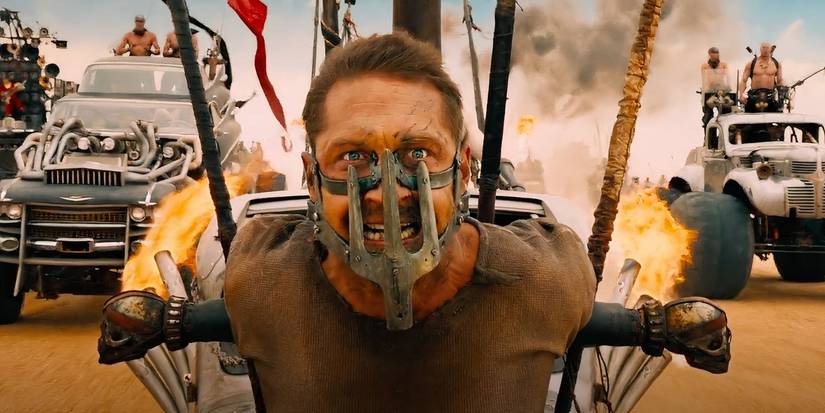 Image via Warner Bros. Pictures
While the depiction of the future in Mad Max: Fury Road seems less inevitable than Children of Men, it does seem to become more and more likely with each passing year. George Miller's belated nitrous-fueled reboot of his signature franchise was something that nobody knew we wanted until it was gifted to us. Unlike many nostalgia-ridden sequels of the last decade, this one blazes its own path from its predecessors, stripping away any extraneous parts and leaving only a perfectly streamlined machine. In what amounts to one epic chase across the desert, Mad Max: Fury Road also finds new ways to evolve the franchise in terms of visuals, characters and themes.
Tom Hardy makes for a suitably grumbly replacement for Mel Gibson as Max, while Charlize Theron is every bit his equal as the badass Furiosa. There's a sharp undercurrent of feminism and bodily autonomy in the film, which never becomes didactic but instead lets its themes inform its perfectly constructed action sequences. Miller communicates more with an ounce of visuals than most filmmakers can with a pound of words, and the movie has more in common with classic Westerns and silent films than it does any beige modern blockbusters, resulting in a sci-fi masterpiece that is perfectly constructed from its first scene to its last.







 English (US) ·