
 Image via Orion Pictures

Published Mar 16, 2026, 10:48 PM EDT
Sign in to your Collider account
A lot of horror movies get called masterpieces because people remember the idea of them more vividly than the actual experience of watching them. That is not what this list is. These are the ones where the premise, the execution, the performances, the escalation, the images, the endings, and the aftertaste all line up so cleanly that arguing against them starts to feel like arguing against gravity. They do not just have great scenes. They hold their nerve for the full runtime. They know exactly when to explain, when to withhold, when to go quiet, and when to make the audience feel trapped.
And the thing that makes them 10/10 without any notes is not just that they are scary. It is that each one understands the specific kind of fear it wants to create and then follows that fear all the way to the wall. Some of them work like breakdowns. Some work like infections. Some work like nightmares that seem almost rational until one detail turns everything rotten. But all ten feel complete. Nothing essential is missing. Nothing major needs fixing. These are horror movies you can revisit years later and still end up thinking, yes, that is exactly how it should be.
‘Halloween’ (1978)
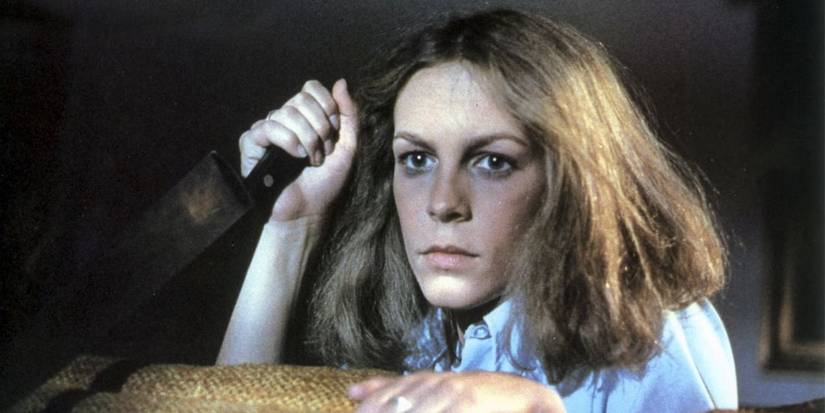 Image via Compass International Pictures
Halloween became a horror, and its titular event’s phenomenon, and still is even half a century later. It mercilessly strips horror down to presence, space, and anticipation. The film does not need elaborate mythology, psychological over-explanation, or nonstop carnage to get under your skin. It understands that fear becomes much more powerful when it feels patient. Michael Myers (Nick Castle) is terrifying. The movie withholds so much of him. And that’s exactly why he is terrifying. He is an absence moving through suburban normalcy, a shape standing at the edge of frames, behind hedges, near laundry lines, outside schoolyards, always close enough to make safety feel like a misunderstanding. That is what makes the film so unnerving.
Laurie Strode (Jamie Lee Curtis), on the other hand, feels young, alert, responsible, and increasingly trapped by a danger she can sense long before she can fully understand it. Dr. Samuel Loomis (Donald Pleasence) helps give the movie its dread because he talks about Michael less like a damaged man and more like something that learned how to wear a man’s outline. Every time Michael appears in the background, every time Laurie realizes nobody is listening, every time the night gets quieter instead of louder, Halloween becomes more suffocating.
'Hereditary' (2018)
 Image via A24
A lot of horror films promise a family nightmare and then eventually abandon the family part for lore. Hereditary never makes that mistake. The occult machinery matters, but the movie’s real power comes from how thoroughly it understands domestic damage. Before it becomes a full supernatural nightmare, it is already one of the harshest depictions of inherited pain in modern horror. Annie (Toni Collette)’s grief is ugly, defensive, and unstable. Peter (Alex Wolff) looks like a teenager who has spent years learning that any room can suddenly become dangerous. Charlie (Milly Shapiro) feels uncanny before anything overtly demonic is confirmed, which makes every family interaction feel slightly off-center.
Then the movie gives you the car scene. And that is where Hereditary earns its reputation permanently. Not just because of what happens, but because of what follows. Peter driving home in shock. Lying in bed. Waiting. Annie discovering the body offscreen through her screams. That sequence is directed with such ruthless confidence that the film never has to beg for your attention again. After that, every argument at the dinner table, every attempt to assign blame, every sleep-deprived look on Peter’s face has weight. Hereditary is about bloodline as destiny, yes, but even more than that, it is about the feeling that your life was structured long before you understood the rules.
'Possession' (1981)
 Image via Gaumont
There are horror movies about divorce, and then there is Possession, which makes divorce look like the first tear in the fabric of reality. The genius of the film is that it does not ask you to separate emotional collapse from physical horror. It treats them as the same event. Mark (Sam Neill) and Anna (Isabelle Adjani) are a couple breaking apart but while they’re at it, they are tearing open the world around them with suspicion, betrayal, rage, and desire.
Adjani’s performance is one of the most unhinged and physically committed performances in horror history, and the movie knows it. It builds itself around the fact that Anna does not seem like a woman hiding an affair so much as a person disintegrating under pressures that no normal language can hold. The subway tunnel scene alone would be enough to justify the film’s legend. It is not scary in a conventional sense. It is something worse. It feels like the body revolting against reason.
'The Texas Chain Saw Massacre' (1974)
 Image Via Bryanston Distributing Company
What still feels unbelievable about The Texas Chain Saw Massacre is how immediate it is. There is no cushion. No elegant buildup. No reassuring genre distance. Tobe Hooper makes the whole thing feel sunstruck, filthy, dehydrated, and cruel. The movie does not feel like it is presenting horror for your enjoyment. It feels like it found horror already happening and shoved you into it.
The movie’s plot is brutally simple, which is part of why it works so perfectly. A group of young people drifts into hostile territory, and one by one they disappear into a house that seems to exist outside ordinary human order. The first kill with Leatherface (Gunnar Hansen) is still one of the great shock cuts in the genre because of how fast and practical it is. What follows is a descent into industrialized madness. Bone furniture. The grandfather at dinner. The family’s grotesque parody of domestic ritual. Sally (Marilyn Burns) playing it all like a human being whose mind and body are being stripped for parts in real time. That is why her hysterical laughter in the back of the pickup truck feels so right. Escape does not restore order. It just leaves her alive enough to understand what she saw. That ending, with Leatherface spinning the chainsaw in the sunrise, is iconic.
'The Thing' (1982)
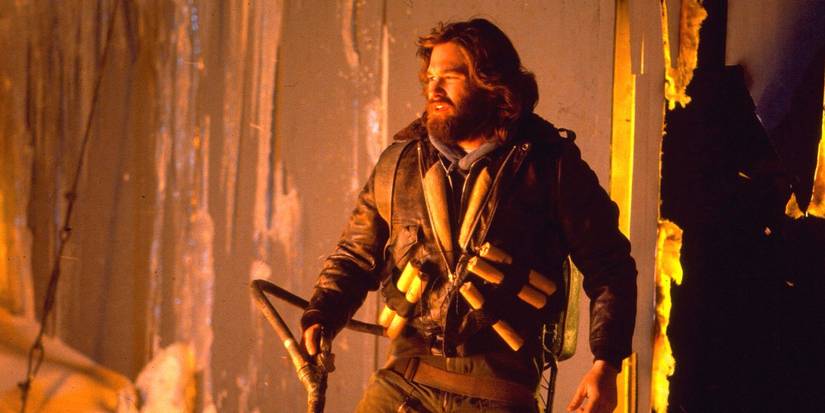 Image via Universal Pictures
There may not be a better horror premise than the one The Thing gives itself: a shape-shifting organism that can perfectly imitate any member of an isolated group. John Carpenter understands immediately that the monster is not just the creature effects, incredible as they are. The real monster is the collapse of trust. Every conversation becomes unstable. Every glance starts to look incriminating. Every test, every accusation, every delay matters because one mistake could mean absorption, imitation, extinction.
What makes the movie 10/10 is how mercilessly it escalates while staying totally lucid. You always understand the geography, the stakes, and the emotional logic of the men at the station. MacReady (Kurt Russell) is such a great central figure because Russell never plays him as a superhero. He is competent, skeptical, and increasingly cornered. When he starts forcing blood tests with a flamethrower in hand, the movie has already earned that level of paranoia. And then there are the effects. The chest opening into a mouth. The spider-head. Norris (Charles Hallahan) convulsing into a thing that has no respect for anatomy as we understand it. It’s an amazing r-rated horror film.
'The Exorcist' (1973)
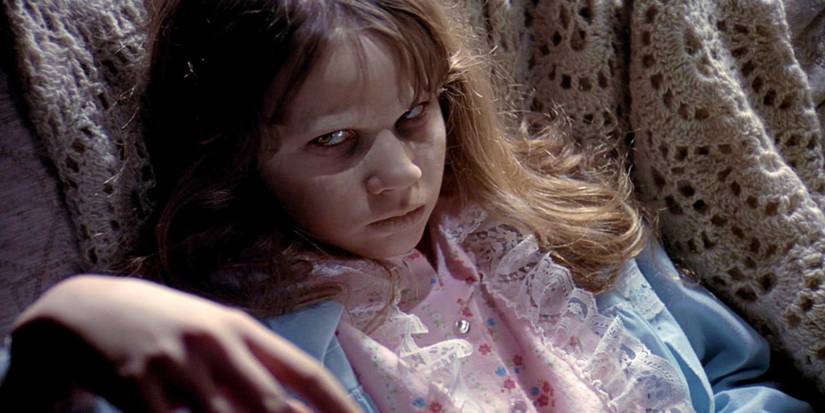 Image via Warner Bros.
The brilliance of The Exorcist is that it takes its time making evil feel intolerably intimate. Before the head-spinning and levitation, the film is about a mother watching her daughter become unreachable. Regan (Linda Blair)’s transformation is horrifying because William Friedkin grounds it in procedure first. Doctors, tests, specialists, scans. The movie makes you sit through medical attempts to explain what is happening, and that choice matters because it strips away easy comfort. Rational systems are not ignored but exhausted first and that makes it authentic.
By the time Father Merrin (Max von Sydow) arrives and the exorcism begins in full, the film has already built such a dense atmosphere of dread that the set pieces do not feel like gimmicks. They feel like the final proof of something ancient and hateful entering a room and refusing to leave. Regan’s obscenities, the voice, the bed shaking, Karras trying to reach the girl inside the possession rather than simply shouting doctrine at it — all of it still hits because the movie never loses sight of the child at the center. The horror is cosmic, but the pain is personal.
'Suspiria' (1977)
 Image via Produzioni Atlas Consorziate
Suspiria is one of the clearest examples of a horror film becoming perfect by refusing realism entirely. The colors are too rich, the sets too deliberate, the sound too invasive, the deaths too designed. And because every element is pushed so hard, the film achieves a kind of total nightmare logic that very few horror movies can sustain. It’s so artificial that it becomes so good.
The opening is enough to announce the film’s control. Suzy Bannion (Jessica Harper) arrives in a storm, sees a terrified student fleeing, and within minutes Argento gives us one of the most visually extravagant murder sequences in horror history. The hanging body crashing through stained glass is the movie teaching you the rules of its world. Beauty and violence are not opposites here. They are partners. What makes Suspiria a 10/10 is that it never accidentally slips into ordinary mode. From the maggot infestation to the blind pianist’s death to the final revelation of Helena Markos, the movie maintains an atmosphere that feels enchanted and diseased at once.
'Alien' (1979)
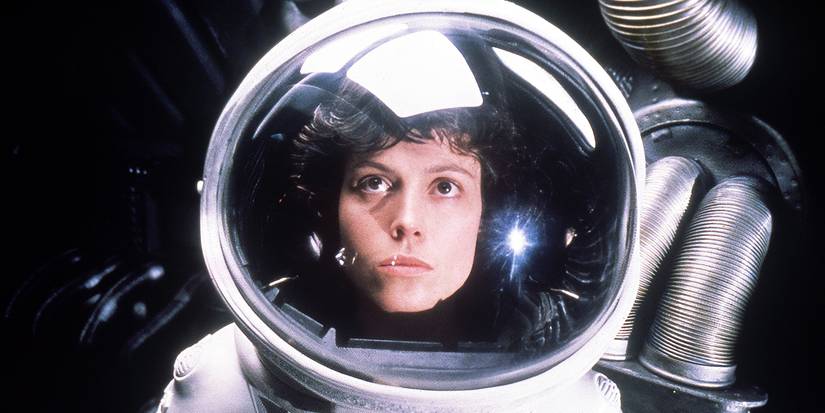 Image via 20th Century Studios
There is not a single wasted idea in Alien. It starts by doing something genius and deceptively simple: it makes space travel feel like labor. The crew of the Nostromo are tired workers arguing about bonuses, chain of command, and procedure. That ordinary, slightly annoyed human texture is what makes everything that follows hit so hard. When Kane (John Hurt) encounters the egg, when the facehugger attaches, when the chestburster explodes out at dinner, the violation lands inside a world that had already convinced you of its physical reality.
Ridley Scott, through Alien, showed that he understands that horror is often strongest when the environment itself feels indifferent. The Nostromo is a maze of chains, steam, shadows, and industrial corridors. Once the xenomorph is loose, the ship stops feeling like shelter and starts feeling like a gigantic delivery system for fear. The crew is always a step behind, and the film never cheats that dynamic. Dallas (Tom Skerritt) in the vents remains one of the best suspense sequences ever shot because you can feel the trap closing in before he does. And then there is Ripley (Sigourney Weaver), who does not play her as an instant action icon. She becomes great through attention, caution, and the refusal to panic as quickly as everyone else. Her insistence on quarantine protocol early on is one of those details that gets better every time you revisit the film.
'The Shining' (1980)
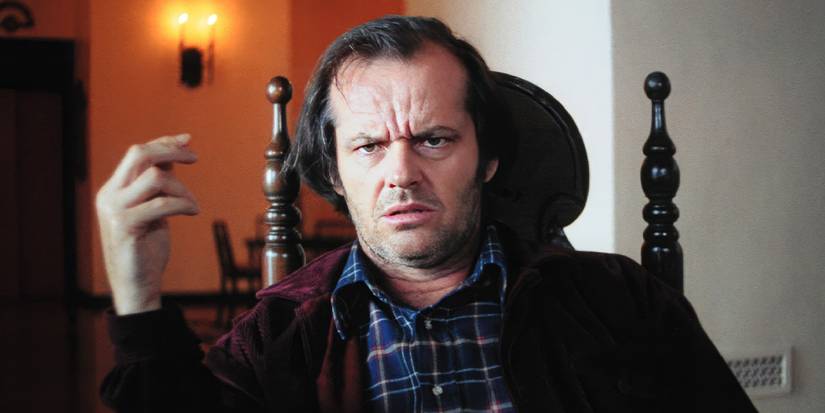 Image via Warner Bros.
What makes The Shining almost impossible to shake is that it never lets you settle on one neat explanation for what Jack Torrance (Jack Nicholson) becomes. Is the Overlook awakening what is already inside him, or simply giving it a grander stage? Jack arrives at the hotel with resentment, vanity, failure, and buried violence already in him. The horror is that the Overlook does not create those things. It curates them. Every part of the film contributes to that feeling of elegant corruption.
Danny (Danny Lloyd) riding the tricycle through the halls. Wendy (Shelley Duvall) hearing too much and understanding too late. Hallorann (Scatman Crothers) sensing the danger from far away. The woman in Room 237 turning from seduction into rot. The ballroom populated by the dead as if they were merely waiting for Jack to accept his place among them. These are not isolated scary scenes. They are parts of one sustained assault on psychic stability. The Shining is not just about madness. It is about a place that knows how to make madness look ceremonial.
'The Silence of the Lambs' (1991)
 Image via Orion Pictures
Yes, it is a thriller. Yes, it is a procedural. It is also horror, and one of the most perfect horror films ever made, because it understands that terror can come from intelligence, from violation, from humiliation, from being watched, from being psychologically read faster than you can protect yourself. That is what makes The Silence of the Lambs untouchable. And Clarice Starling (Jodie Foster) is the reason the movie rises above almost everything else. Foster plays her as capable, observant, and ambitious, but also very aware of how every room reads her.
The film never stops showing the pressure she is under as a young woman moving through male institutions, male violence, and male scrutiny. That texture matters because it makes her scenes with Hannibal Lecter (Anthony Hopkins) even more electric. Hopkins is legendary here not because he is loud, but because he is so composed. Lecter’s stillness is what makes him monstrous. Buffalo Bill (Ted Levine), meanwhile, gives the film its physical horror: the basement, the pit, the moths, the skinning, the dog, the night-vision climax where Clarice is inches away from death and does not know where to aim until instinct finally saves her. The movie balances those two horrors perfectly — the refined monster behind glass and the predator in the dark.
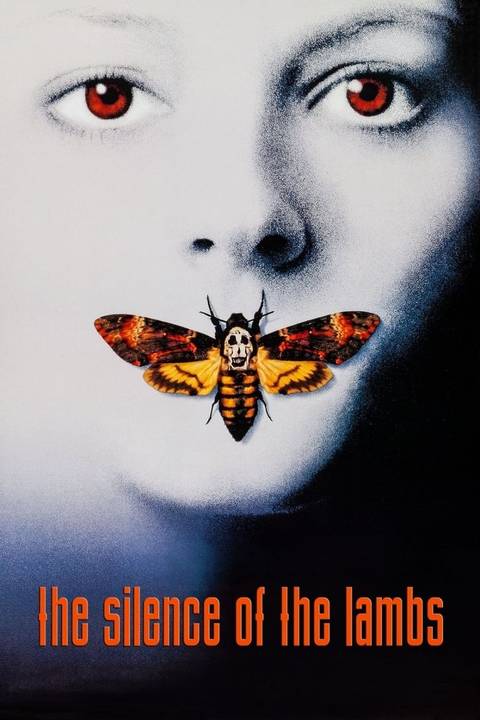
The Silence of the Lambs
Release Date February 14, 1991
Runtime 119 minutes
Director Jonathan Demme
Writers Ted Tally, Thomas Harris




 English (US) ·