
 Image via Fox Searchlight Pictures

Published May 1, 2026, 6:00 PM EDT
Kelcie Mattson is a Senior Features author at Collider. Based in the Midwest, she also contributes Lists, reviews, and television recaps. A lifelong fan of niche sci-fi, epic fantasy, Final Girl horror, elaborate action, and witty detective fiction, becoming a pop culture devotee was inevitable once the Disney Renaissance, Turner Classic Movies, BBC period dramas, and her local library piqued her imagination.
Rarely seen without a book in one hand and a cup of coffee in the other, Kelcie explores media history (especially older, foreign, and independent films) as much as possible. In her spare time, she enjoys RPG video games, amateur photography, nerding out over music, and attending fan conventions with her Trekkie family.
Sign in to your Collider account
Alfred Hitchcock earned his honorific as the Master of Suspense thanks to his enviable body of work and shrewd eye for foreboding unease. The British director still resounds throughout pop culture, even 46 years after his death. Celebrated modern filmmakers cite him as an inspiration, fans and movie historians rank his titles on "best of" lists, and the term "Hitchcockian" has become synonymous with entertainment — movies, television, even books — that emulate his recognizable style.
Hitchcock's famous comparison between surprise and suspense sums up his particular flavor of tension. If a bomb suddenly explodes while characters are having a normal conversation, it shocks the audience. Showing viewers a concealed bomb that's ticking down the minutes while the characters remain oblivious? That's suspense worthy of gripping the edge of your seat. The following 10 thrillers follow the suspense maestro's creative blueprint either by choice or coincidence.
10 'Perfect Blue' (1997)
 Image via GKIDS
The late Satoshi Kon's harrowing Perfect Blue remains an astonishingly compelling directorial debut and one of the 20th century's most influential thrillers. When J-Pop star Mima Kirigoe (Junko Iwao) sheds her chaste girl-group image for a career as a mature dramatic actress, she doesn't realize she's traded one gratuitously degrading entertainment industry for another until it's too late. Traumatic exploitation, vitriolic fan backlash, a stalker, and multiple murders fracture Mima's psyche until she can't differentiate between reality and hallucinations.
Kon's narrative themes and artistic technique operate in expert harmony. Perfect Blue's nauseating mood leaves viewers as helplessly delirious as Mima, flung about by paranoia, doppelgängers, parasocial voyeurism, and graphic violence. Hitchcock often played with parallels, obsessive men, and the woman-in-peril scenario. Yet for all its grisly content, Perfect Blue one-ups the Hitch by playing out as an empathetic character study. Kon invests in Mima the person: her quiet private life, her ambition, her isolation, and the devastation amplifying her agony. Sinister and grueling, Perfect Blue lingers like a scar.
9 'The Night of the Hunter' (1955)
 Image via United Artists
It's a travesty that actor Charles Laughton directed only one exquisite film. Set during the Great Depression, The Night of the Hunter's menacing and misogynistic serial killer, Harry Powell (Robert Mitchum), disguises himself as a charismatic traveling preacher. He seduces vulnerable widows, murders them, and absconds with their fortune. Willa Harper (Shelley Winters), specifically her late husband's money, is his latest target. Only Willa's children, John (Billy Chapin) and Pearl (Sally Jane Bruce), know where their father stashed the stolen wealth. They refuse to reveal its whereabouts, even once the wolf in sheep's clothing invades their home.
The Night of the Hunter is a formal masterwork by objective standards. Laughton magnificently pushes the medium's limits right up to the edge and keeps going, grasping at what possibilities lie beyond. Cinematographer Stanley Cortez's poetically surreal imagery, inspired by German Expression, will etch itself into your mind. Combined with the ominous set design, Laughton crafts an atmosphere of liminal unreality in addition to an unbearable lurking dread most movies can only aspire to. Part Southern Gothic noir, part domestic melodrama, part dark fairy tale, and part exhumation of the American dream, The Night of the Hunter isn't fully anything except its seminal self.
8 'Zodiac' (2007)
 Image via Paramount Pictures
David Fincher's magnum opus adapts true crime author and former political cartoonist Robert Graysmith's non-fiction book about the Zodiac Killer, the unidentified murderer who slaughtered at least five individuals in San Francisco during the '60s and '70s. Fincher's measured approach weaves a concise thread of exponentially fraying anxiety. Audiences know Graysmith (Jake Gyllenhaal) survives, but his moment of potential peril still jolts our spines rigid. And compared to the director's bleakly grotesque Se7en, Zodiac's queasiness originates from implication. Even the brief, contained bursts of violence maintain a methodical distance — a manufactured apathy that makes the tragedies even more ghastly.
Also unlike Se7en's near-mythical feel, Zodiac zeroes in on an investigation's procedural and emotional minutiae: the bureaucratic loopholes and limitations, the sleepless nights, how the wearying cost of chasing a brutal sadist manifests for different individuals. Because there's no magic third act resolution, Zodiac sits in the discomfort of the unresolved — the attention-seeker narcissist taunts his pursuers before vanishing into the night.
7 'Memento' (2000)
 Image via Newmarket Films
Memento, writer-director Christopher Nolan's diabolically genius second feature, adapts his brother Jonathan Nolan's short story about Leonard Shelby (Guy Pearce), an unconventional neo-noir protagonist allegedly hunting his wife Catherine's (Jorja Fox) murderer. Nolan's known for technically sublime crowd-pleasers, and despite holding several aces up his sleeve, there are no gimmicks at work here. Every aesthetic choice supports the brothers' narrative endgame, and they lay out the pieces with precision.
The Nolans are playing with the ephemeral nature of memory, malleable perceptions, and internal biases. Leonard is both exploited by others and an unreliable narrator to the extreme. Since one of Memento's timelines unfolds in reverse, first-time viewers assume Leonard's discombobulated and scrambling headspace. They can't decode what's onscreen, let alone trust their intuition. Crucial clues only click into place during Leonard's final chilling voiceover. Memento's disconnected and half-monochromatic style sounds like an experimental treat Hitchcock would've enjoyed, and it's guaranteed he'd relish a husband who willfully deceives himself and continues to perpetuate harm.
6 'Gaslight' (1944)
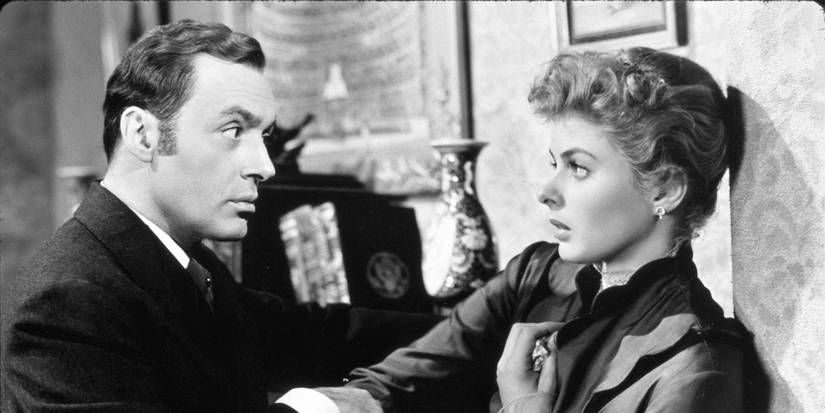 Image via Metro-Goldwyn-Mayer
Director George Cukor's brilliant, punishing Victorian thriller depicts the rhythms of emotional abuse with such accuracy that psychologists coined the term "gaslighting" from 1944's Gaslight. The orphaned Paula Alquist (Ingrid Bergman) is only a teenager when an unknown assailant murders her aunt, a beloved opera singer and Paula's only living family. Years later, as a young adult, Paul falls under Gregory Anton's (Charles Boyer) charming spell. Yet her dreams of fulfillment, companionship, and peaceful comfort shatter, piece by torturous piece, once her duplicitous husband tries to erode her sanity.
Cinematographer Joseph Ruttenberg and art directors Cedric Gibbons and William Ferrari place Gaslight somewhere between film noir (looming silhouettes, foggy streets) and Gothic haunted house (inexplicable occurrences, amplified sounds). Yet it's Gregory's domineering presence and inescapable manipulations that breed Gaslight's suffocating claustrophobia. A predator exploits a woman's vulnerability, isolates her, and systematically terrorizes her from within the intimacy of her home. That violation pushes Gaslight's slow crescendo into agonizing territory. Bergman, upon whom the entire film depends, ensures her first Oscar with a towering tour de force — unraveling from starry-eyed youth to tormented despair and, finally, volcanic vengeance.
5 'Stoker' (2013)
 Image via Fox Searchlight Pictures
The Hitchcock allusions are strong with this one. Writer Wentworth Miller uses the boundary-crossing relationship between the uncle and niece in Hitchcock's Shadow of a Doubt as a springboard for Stoker, a contemporary Southern Gothic rife with dysfunctional familial secrets, moral ambiguity, and depravity. Eighteen-year-old India Stoker (Mia Wasikowska) meets Charlie (Matthew Goode), the uncle she never knew existed, at her father's (Dermot Mulroney) funeral. As suspicious disappearances pile up around their home, a psychosexual pull develops between the wary, introverted teen and her alluring older uncle.
Oldboy director Park Chan-wook's English-language debut simmers with bone-chilling elegance. The concept plays to Park's strengths, like sublime tension, hypnotic heat, uncanny symbolism, and the lurid truths that coil underneath surface-level assumptions like venomous snakes. India appears innocent, yet her coming-of-age arc involves a predisposition for danger, violence, and illicit eroticism (a favorite Hitchcock combination). Charlie's patient cunning takes root because he weaponizes his intriguing charm and dangles forbidden indulgences. Their imbalance heavily weighs in Charlie's favor, but as the transfixed pair circle each other, it's apparent they're engaged in a mutual hunt.
4 'Wait Until Dark' (1967)
 Image via Warner Bros.
Director Terence Young's Wait Until Dark adapts Frederick Knott's stage play of the same name. Ironically, Knott also penned the basis for Hitchcock's Dial M for Murder. Wait Until Dark's version of the imperiled woman is Susy Hendrix (Audrey Hepburn), who's re-establishing her independence after a recent car accident affected her sight. She spends her days alone in the apartment she shares with her busy photographer husband Sam (Efrem Zimbalist Jr.). It's on this home turf that a trio of criminals, led by Roat (Alan Arkin), circle Suzy like sharks, searching for a doll stuffed with illegal drugs.
Wait Until Dark preys upon domestic fears with aplomb. The movie's final act houses one of cinema's greatest jump scares (if you know, you know) and a petrifying conclusion. Before then, Suzy and Roat's hair-raising cat-and-mouse game evolves from taut apprehension to urgent panic. Suzy might justifiably scream, run, and tremble, but she's no easy target who leaves the playing field uneven; her ingenuity and perseverance morph her home into a hunting ground. Arkin's slithering malice strikes notes of almost unfathomable terror, while Hepburn was nominated for a Best Actress Oscar.
3 'Diabolique' (1955)
 Image via Cinédis
Legend claims Hitchcock wanted to adapt Diabolique, but French director Henri-Georges Clouzot secured the rights to Pierre Boileau and Thomas Narcejac's novel first. Michel Delassalle (Paul Meurisse) is a boarding school headmaster and the scum of the earth. His wife Christina (Véra Clouzot) and his mistress Nicole (Simone Signoret) couldn't be less alike in temperament, but rather than jealously compete for Michel's affections, they share a bond forged in the fires of tormented misery (and implied queerness). The women conspire to kill their abusive lover; it's their only escape. All seems well, until Michel's drowned corpse vanishes.
Between Christina and Nicole plotting their perfect murder to the smallest detail and Christina's subsequent collapse into guilt, mistrust, and reality-questioning fear, Diabolique takes the cake when it comes to merciless and unrelenting anxiety. It's no wonder Hitchcock coveted this sympathetic revenge tragedy (and allegedly styled Psycho after it): there are provocateurs, betrayals, and red herrings for days, mysteries upon mysteries, twisted ethics, a detective circling Michel's case, and one final, mind-melting shock.
2 'The Silence of the Lambs' (1991)
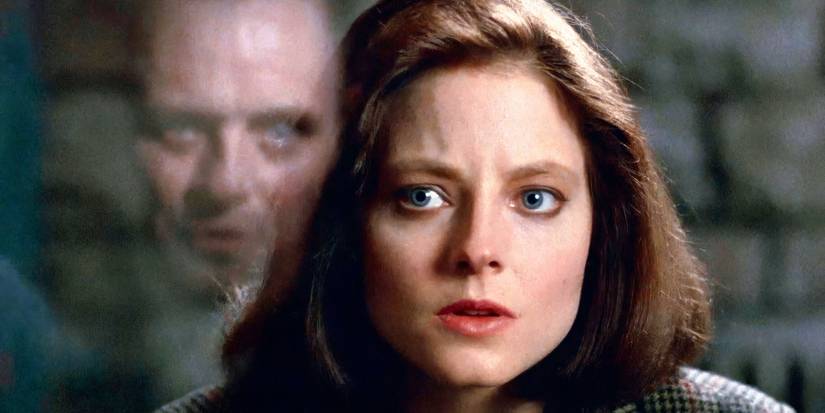 Image via Orion Pictures
Rarely has a film embodied Hitchcockian mechanics more exceptionally than The Silence of the Lambs. Still the only horror movie to win Best Picture, director Jonathan Demme, cinematographer Tak Fujimoto, editor Craig McKay, and composer Howard Shore craft an operatic symphony of suspense out of author Thomas Harris' 1988 bestselling novel. To borrow Hitchcock's metaphor, white-knuckled audiences are actively waiting for multiple bombs to explode at any moment. Silence's menacing, lurking-in-the-shadows slow-burn escalates into a non-stop assault upon the nerves — one infested with scalding tension, not reliant upon cheap jump scares.
Demme's construction is an opulent masterclass in visual grammar. His team implements every twitch of Clarice Starling (Jodie Foster) and Hannibal Lecter's (Anthony Hopkins) faces, each aggressive close-up, distorted camera angle, lingering scene, and score cue with exacting perfectionism. Silence is one of those fascinating experiences where the violence isn't as gruesome as one remembers. What's truly visceral is the psychological imprint this arresting thriller leaves behind.
1 'Blue Velvet' (1986)
 Image via De Laurentiis Entertainment Group
Even though the greatly-missed David Lynch refines similar themes in his follow-up projects, Blue Velvet is still neo-noir at its macabre finest. It's lushly stylized, wondrously bizarre, and as unsettling as the nonsensical clutches of a half-conscious nightmare. Lynch's fourth film condemns college student and amateur sleuth Jeffrey Beaumont (Kyle MacLachlan) to the metaphorical depths of his small town's perverse underworld. After discovering a severed human ear in the woods, Jeffrey's morbid curiosity leads him to Dorothy Vallens (Isabella Rossellini), a nightclub singer trapped in an abusive relationship by the repulsive sadist Frank Booth (Dennis Hopper).
One imagines Hitchcock leaping at the chance to explore sadomasochism, the link between sex and violence, voyeurism, masculinity, and Jeffrey's lost innocence without being encumbered by the Hays Code. That said, Lynch's characters creep several steps beyond Hitchcock's strongest creations. A heart-wrenching Rossellini subverts the femme fatale archetype, Sandy Williams (Laura Dern) is more astute than her girl-next-door appearance suggests, and Jeffrey's soul-shattering experience brings clarity. Blue Velvet marks Lynch's first swing at suburban hypocrisy, and what a home-run swing it is — exposing the wholesome, white picket fence, nuclear family image as a perverse fraud.
Collider Exclusive · Oscar Best Picture Quiz
Which Oscar Best Picture
Is Your Perfect Movie?
Parasite · Everything Everywhere · Oppenheimer · Birdman · No Country
Five Oscar Best Picture winners. Five completely different visions of what cinema can be — and what it can do to you. One of them is the film that was made for the way your mind works. Ten questions will figure out which one.
🪜Parasite
🌀Everything Everywhere
☢️Oppenheimer
🐦Birdman
🪙No Country for Old Men
FIND YOUR FILM →
01
What kind of film experience do you actually want? The best movies don't just entertain — they leave something behind.
ASomething that pulls the rug out — that makes me think I'm watching one kind of film and then reveals I'm watching another entirely. BSomething overwhelming — funny, sad, absurd, and genuinely moving, all at once. CSomething grand and weighty — a film that makes me feel the full scale of what I'm watching. DSomething formally daring — a film that pushes what cinema can even do. ESomething lean and relentless — pure tension with no wasted frame.
NEXT QUESTION →
02
Which idea grabs you most in a film? Great films are driven by a central obsession. What's yours?
AClass, inequality, and what people are willing to do when desperation meets opportunity. BIdentity, family, and the chaos of trying to hold your life together when everything is falling apart. CGenius, moral responsibility, and the catastrophic weight of a decision you can never take back. DEgo, legacy, and the terror of becoming irrelevant while you're still alive to watch it happen. EEvil, chance, and whether moral order actually exists or if we just tell ourselves it does.
NEXT QUESTION →
03
How do you like your story told? Form is content. The way a story is shaped changes what it means.
AGenre-twisting — I want it to start in one lane and migrate into something completely different. BMaximalist and genre-blending — comedy, action, drama, sci-fi, all in one ride. CEpic and non-linear — cutting between timelines, building a mosaic of cause and consequence. DA single unbroken flow — I want to feel like I'm living it in real time, no cuts to safety. ESpare and precise — every scene doing exactly what it needs to do and nothing more.
NEXT QUESTION →
04
What makes a truly great antagonist? The opposition defines the protagonist. What kind of opposition fascinates you?
AA system — invisible, structural, and almost impossible to fight because it has no single face. BThe self — the ways we sabotage, abandon, and fail the people we love most. CHistory — the unstoppable momentum of events that no single person can stop or redirect. DThe industry — the machinery of culture that chews up talent and spits out irrelevance. EPure, implacable evil — a force so certain of itself it becomes almost philosophical.
NEXT QUESTION →
05
What do you want from a film's ending? The final note is the one that lingers. What do you want it to sound like?
AShock and inevitability — a conclusion that recontextualises everything that came before it. BEarned emotion — I want to cry, laugh, and feel genuinely hopeful, even if the world is a mess. CDevastation and grandeur — an ending that makes me sit in silence for a few minutes after. DAmbiguity — something that leaves enough open that I'm still thinking about it days later. EBleakness — an honest refusal to pretend the world is tidier than it actually is.
NEXT QUESTION →
06
Which setting pulls you in most? Where a film takes place shapes everything — mood, stakes, what's even possible.
AA gleaming modern city with a hidden underside — beauty masking rot, wealth masking desperation. BA collapsing suburban life that opens onto something infinite — the multiverse of a single ordinary person. CThe corridors of power and science at a world-historical turning point — where decisions echo for decades. DThe grimy, alive chaos of New York and Hollywood — fame as both destination and trap. EVast, indifferent landscape — desert and highway where violence arrives without warning or reason.
NEXT QUESTION →
07
What cinematic craft impresses you most? Every great film has a signature — a technical or artistic element that makes it unmistakable.
AProduction design and mise-en-scène — every frame composed to carry meaning beneath the surface. BEditing and tonal control — the ability to move between registers without losing the audience. CScore and sound design — music that becomes inseparable from the dread and awe of what you're watching. DCinematography as performance — the camera not recording events but participating in them. ESilence and restraint — what's left unsaid and unshown doing more work than any dialogue could.
NEXT QUESTION →
08
What kind of main character do you root for? The protagonist is the lens. Who you choose to follow says something about you.
ASomeone smart and resourceful who makes increasingly dangerous decisions under pressure. BSomeone overwhelmed and ordinary who turns out to be capable of something extraordinary. CA brilliant, tortured figure whose gifts and flaws are inseparable from each other. DA self-destructive artist whose ego is both their superpower and their undoing. EA quiet, principled person trying to make sense of a world that has stopped making sense.
NEXT QUESTION →
09
How do you feel about a film that takes its time? Pace is a choice. Some films sprint; others let tension accumulate slowly, deliberately.
AI love a slow build when I know the payoff is going to be seismic — patience for a devastating reveal. BGive me relentless momentum — I want to feel breathless and emotionally spent by the end. CEpic runtime doesn't scare me — if the material demands three hours, give me three hours. DI want it to feel propulsive even when nothing is technically happening — restless energy throughout. EDeliberate and unhurried — I want dread to accumulate in the spaces between the action.
NEXT QUESTION →
10
What do you want to feel walking out of the cinema? The best films leave a mark. What kind of mark do you want?
AUnsettled — like I've just seen something I can't fully explain but can't stop thinking about. BMoved and energised — like the film reminded me what actually matters and gave me something to hold onto. CHumbled — like I've been in the presence of something genuinely important and overwhelming. DExhilarated — like I've just seen cinema doing something it's never quite done before. EHaunted — like a cold, quiet dread that stays with me for days.
REVEAL MY FILM →
The Academy Has Decided Your Perfect Film Is…
Your answers have pointed to one Oscar Best Picture winner above all others. This is the film that was made for the way your mind works.
Parasite
You are drawn to films that operate on multiple levels simultaneously — that begin in one genre and quietly, brilliantly migrate into another. Bong Joon-ho's Parasite is a film about class, desire, and the architecture of inequality that manages to be darkly funny, deeply suspenseful, and genuinely shocking across a single extraordinary running time. Your instinct is for cinema that hides its true intentions until the moment it's ready to reveal them. Parasite is exactly that — a film that rewards close attention and punishes assumptions, right up to its devastating final image.
Everything Everywhere All at Once
You want it all — and this film gives you all of it. The Daniels' Everything Everywhere All at Once is one of the most maximalist films ever made: action comedy, multiverse sci-fi, family drama, existential crisis, and a genuinely earned emotional core that sneaks up on you amid the chaos. You are someone who responds to ambition, who doesn't want cinema to choose between being entertaining and being meaningful. This film refuses that choice entirely. It is overwhelming by design, and its overwhelming nature is precisely the point — because the feeling of being crushed by infinite possibility is exactly what it's about.
Oppenheimer
You are drawn to cinema on a grand scale — films that understand history not as a backdrop but as a force, and that place their characters inside that force and watch what happens. Christopher Nolan's Oppenheimer is a film about the terrifying gap between what we can do and what we should do, told with the full weight of one of the most consequential moments in human history behind it. You want your films to feel important without feeling self-important — to earn their ambition through sheer craft and the gravity of their subject. Oppenheimer does exactly that. It is enormous, complicated, and refuses easy comfort.
Birdman
You are drawn to films that foreground their own construction — that make the how of the filmmaking part of the what it's about. Alejandro González Iñárritu's Birdman, shot to appear as a single continuous take, is cinema examining itself through the cracked mirror of a fading actor's ego. You respond to formal daring, to the feeling that a film is doing something that probably shouldn't be possible. Michael Keaton's performance and Emmanuel Lubezki's restless camera create something genuinely unlike anything else — a film that is simultaneously about creativity, relevance, self-destruction, and the impossibility of ever truly knowing if your work means anything at all.
No Country for Old Men
You are drawn to cinema that trusts silence, that refuses to explain itself, and that treats dread as a form of meaning. The Coen Brothers' No Country for Old Men is a film about the arrival of a new kind of evil — implacable, arbitrary, and utterly indifferent to the moral frameworks we use to make sense of the world. It is one of the most formally controlled films ever made, and its controlled restraint is what makes it so terrifying. You want your films to haunt you, not comfort you. You are not interested in resolution if resolution would be dishonest. No Country for Old Men is honest in a way that most cinema never dares to be.
↻ RETAKE THE QUIZ

Blue Velvet
Release Date September 19, 1986
Runtime 120 minutes
Director David Lynch
Writers David Lynch





 English (US) ·