
While many people believe Netflix is only a decade old, the company celebrated its 25th anniversary in 2022. The service began as a DVD-by-mail service in 1997 before launching a streaming service in 2007. They began producing original content in 2012, and now, a decade and a half later, they have so much original content in their library that users struggle to decide what to watch.
Whereas some viewers enjoy discovering new shows and movies all the time, others find comfort in revisiting old favorites. A rewatch can be just as, if not more, rewarding than a first watch because it allows us to see things we missed the first time. In fact, revisiting a truly genius show reveals an entirely new layer of meaning, foreshadowing, and hidden clues. These are the ten Netflix shows that are even better the second time around, making a repeat viewing not only rewarding but necessary.
10 'Beef' (2023–Present)
 Image via Netflix
Beef has recently become an anthology series, with Season 2 released on April 16. Season 1 follows two strangers who engage in a road rage incident. What begins as a petty quest for vengeance quickly escalates into a full-fledged existential war, exposing deep-seated trauma, financial desperation, and a shared, broken humanity that neither expected to discover in the other. In Season 2, two couples from opposite ends of the economic spectrum, linked by a country club where they all work, begin to use each other for mutual benefit and destruction, until their plans are foiled by the arrival of the club's South Korean owner, illustrating the impact of greed, survival, and self-preservation.
The first watch of Lee Sung-jin's Beef is a brutal descent into chaos, but the second watch reveals what a tragedy the entire series truly is; every minor mistake and moment of cruelty is foreshadowed by the characters' deep-seated fears. Knowing how both seasons end can help viewers see how the escalating spiral between strangers was never about road rage or getting richer but about people who saw a mirror image of their own pain and ambition in a stranger and couldn't look away.
9 'BoJack Horseman' (2014–2020)
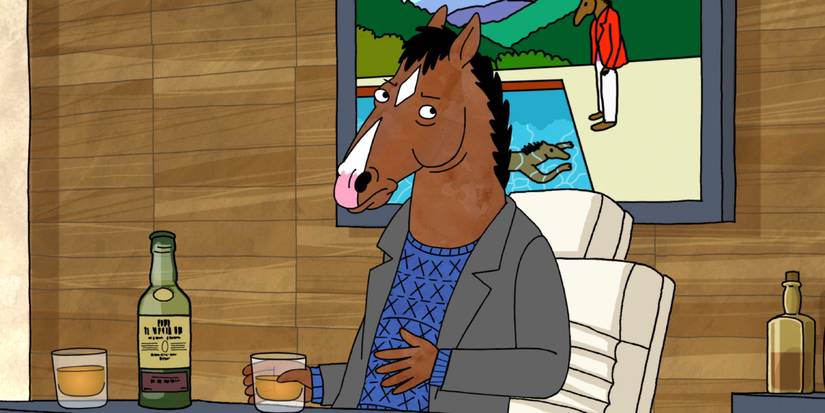 Image via Netflix
BoJack Horseman is a fantastic piece of television that is underappreciated. People who have seen it consider it one of their favorite shows, but others may avoid it due to its adult animation format. However, don't be misled—BoJack Horseman is a dark but silently optimistic series. BoJack Horseman is set in a world where anthropomorphic animals and humans coexist, and it follows the titular character, BoJack Horseman (Will Arnett), a washed-up 1990s sitcom star who lives in Hollywood of the past. He is bitter, narcissistic, and self-destructive, numbing himself with alcohol and clinging to faded glory, but his journey is a darkly humorous and brutally honest exploration of depression, addiction, and the (sometimes futile) quest for redemption.
On first viewing, the show's rapid-fire wordplay and absurdist comedy conceal its heartbreaking emotional depth. And, despite some heavy episodes and character arcs, BoJack Horseman is the type of show some fans will want to watch again if they want to feel seen. A second viewing can help you notice some throwaway lines that foreshadow a tragic arc seasons in advance, as well as visual background gags that are profound metaphors for loneliness, but you'll also find yourself empathizing deeply with some of the characters. BoJack Horseman, while often dark, can serve as a cathartic light when rewatched. It's also very funny and satirical, with a fantastic voice cast.
8 'Midnight Mass' (2021)
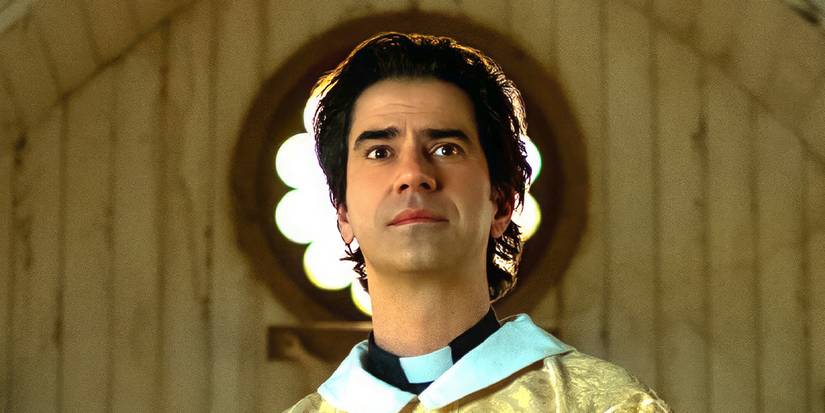 Image via Netflix
Midnight Mass is one of Mike Flanagan's masterpiece miniseries, produced by Netflix. It's arguably his best and most profound work, though many may find the slow-burning pace distracting. Midnight Mass follows Riley (Zach Gilford), who returns to his isolated Catholic island community of Crockett Island after serving a prison sentence for drunk driving and killing a young woman. He arrives at the same time as the mysterious, charismatic young priest, Father Paul (Hamish Linklater), who takes over the local parish. Their arrival sets off a chain of dark and twisted events that cause the locals to either doubt or become even more devoted to their faith.
Upon first viewing, Midnight Mass appears to have long monologues, a slow pace, and intense supernatural horror that surprises you. But a second watch reveals that every single line of dialogue is a clue, allowing you to re-contextualize Father Paul's sermons and the appearance of the dark angel. The slow, deliberate buildup is no longer a mystery, but rather a masterclass in supernatural horror storytelling, with Flanagan incorporating his own crisis of faith into the series as a form of personal catharsis. In this respect, you'll feel as if you're witnessing his own revelations.
7 Black Mirror (2011–Present)
 Image via Netflix
Black Mirror did not begin as a Netflix original but was purchased by the streaming service after its first two seasons. Like Beef, it's an anthology series, but each episode tells a completely new story. Black Mirror is a dark, twisted reflection of our relationship with technology, and its 33 episodes explore a near-future nightmare caused by our digital dependencies. The common thread running through the episodes is the dangerous intersection of human fragility and technological progress, showing that no matter how many benefits an innovation can provide, it also has just as many, if not more, disadvantages.
Black Mirror is arguably the most rewatchable show on this list, but for a different reason: it's an anthology, so you can pretty much start anywhere, from your most to least favorite episode. Typically, the first viewing of Black Mirror is all about the shocking twists and technological spectacle, whereas the second viewing is more about how the spectacle and twists affect the psyche of the human protagonists in the stories. You'll notice subtle background details that hint at the ending, parallels between episodes, and deeper ethical questions. With the anxiety about "what happens next?" gone, you can follow the characters' heartbreaking emotional arcs and the show's brilliant, cynical satire more closely.
6 'Russian Doll' (2019–2022)
 Image via Netflix
Russian Doll is a brilliant and darkly funny science fiction mystery, anchored by Natasha Lyonne's offbeat and charming performance. The show follows Nadia Vulvokov, a sharp-tongued and self-destructive NYC-based game developer, who becomes trapped in a time loop after she dies at the end of her 36th birthday party in Manhattan, reliving the same night over and over again. As she searches for answers, she realizes she isn't alone. When she meets the anxious and paranoid Alan (Charlie Barnett), who also becomes trapped in the same loop, the two are forced to work together to solve the mystery of their shared existential crisis.
The time loop premise in shows like this is entertaining and chaotic on first viewing. Russian Doll is a beautifully constructed puzzle that also serves as a profound meditation on trauma, mortality, and self-destruction. You'll notice the clues hidden in plain sight from the first scene, such as symbolic background imagery, repeating phrases, and the subtle mechanics of how the two characters' loops intersect. Understanding the "how" of the loop allows you to appreciate the "why," making Russian Doll a rewarding series with many hidden gems.
Collider Exclusive · Sci-Fi Survival Quiz Which Sci-Fi World Would You Survive? The Matrix · Mad Max · Blade Runner · Dune · Star Wars
Five universes. Five completely different ways the future went wrong — or sideways, or up in flames. Only one of them is the world your instincts were built for. Eight questions will figure out which dystopia, galaxy, or desert wasteland you'd actually make it out of alive.
💊The Matrix
🔥Mad Max
🌧️Blade Runner
🏜️Dune
🚀Star Wars
TEST YOUR SURVIVAL →
01
You sense something is deeply wrong with the world around you. What do you do? The first instinct is often the truest one.
APull on every thread until I understand the system — then figure out how to break it. BStop asking questions and start stockpiling — food, fuel, weapons. Questions don't keep you alive. CKeep my head down, observe carefully, and trust no one until I know who's pulling the strings. DStudy the patterns. Every system has a rhythm — learn it, and you learn how to survive it. EFind the people fighting back and join them. You can't fix a broken galaxy alone.
NEXT QUESTION →
02
In a world of scarcity, what resource do you guard most fiercely? What we protect reveals what we believe survival actually requires.
AKnowledge. If you understand the system, you don't need resources — you can generate them. BFuel. Everything else — movement, power, escape — runs on it. CTrust. In a world of fakes and informants, a truly reliable ally is rarer than any commodity. DWater. And after water, information — the two things empires are truly built on. EShips and credits. The galaxy is big — you survive it by being able to move through it freely.
NEXT QUESTION →
03
What kind of threat keeps you up at night? Fear is useful data — if you're honest about what you're actually afraid of.
AThat reality itself is a lie — that everything I experience has been constructed to keep me compliant. BA raid. No warning, no mercy — just the roar of engines and then nothing left. CBeing identified. Once someone with power decides you're a problem, you're already out of time. DBeing outmanoeuvred — losing a political game I didn't even know I was playing. EThe Empire tightening its grip until there's nowhere left to run.
NEXT QUESTION →
04
How do you deal with authority you don't trust? Every dystopia has a power structure. Your approach to it determines everything.
ASubvert it from the inside — learn its rules well enough to weaponise them against it. BIgnore it and stay out of its reach. The further from any power structure, the better. CAppear to comply while doing exactly what I need to do. Visibility is the enemy. DManoeuvre within it carefully. You can't beat a system you refuse to understand. EResist openly when I have to. Some things are worth the risk of being seen.
NEXT QUESTION →
05
Which environment could you actually endure long-term? Survival isn't just tactical — it's physical, psychological, and very much about where you are.
AUnderground bunkers and server rooms — cramped, artificial, but with access to everything that matters. BOpen wasteland — brutal sun, no shelter, constant movement. At least the threat is honest. CA dense, rain-soaked city where you can disappear into the crowd and nobody asks questions. DMerciless desert — extreme heat, no water, and something enormous living beneath the sand. EThe fringe — backwater planets and busy spaceports where the Empire's attention rarely reaches.
NEXT QUESTION →
06
Who do you want in your corner when things fall apart? The company you keep is the clearest signal of who you actually are.
AA tight crew of believers who've seen behind the curtain and have nothing left to lose. BOne or two people I'd trust with my life. Any more than that and someone talks. CNobody, ideally. Alliances are liabilities. I work alone unless I have no choice. DA community bound by shared hardship and mutual survival — people who need each other to last. EA ragtag team with wildly different skills and total commitment when it counts.
NEXT QUESTION →
07
Where do you draw the line — if you draw one at all? Every survivor eventually faces a moment that tests what they're actually made of.
AI won't harm the innocent — even the ones who'd report me without hesitation. BI do what I have to to protect the people I've chosen. Everything else is negotiable. CThe line shifts depending on who's asking and what's at stake. DI draw a long-term line — nothing that compromises my people's future, even if it'd help now. ESome lines, once crossed, can't be uncrossed. I know which ones they are.
NEXT QUESTION →
08
What would actually make survival worth it? Staying alive is one thing. Having a reason to is another.
AWaking others up — dismantling the illusion so no one else has to live inside it. BFinding somewhere — or someone — worth protecting. A reason to keep moving. CAnswers. Understanding what I am, what any of this means, before time runs out. DLegacy — shaping the future in a way that outlasts me by generations. EFreedom — for myself, for others, for every world still living under someone else's boot.
REVEAL MY WORLD →
Your Fate Has Been Calculated You'd Survive In…
Your answers point to the world your instincts were built for. This is the universe your temperament, your survival instincts, and your particular brand of stubbornness were made for.
The Matrix
You took the red pill a long time ago — probably before anyone offered it to you. You're a systems thinker who can't help but notice the seams in things.
- You're drawn to understanding how the system works before figuring out how to break it.
- You'd find the Resistance, or it would find you — your instinct for spotting constructed realities is the machines' worst nightmare.
- You function best when you have access to information and the freedom to act on it.
- The Matrix built an airtight prison. You'd be the one probing the walls for the door.
Mad Max
The wasteland doesn't reward the clever or the well-connected — it rewards those who are hard to kill and harder to break. That's you.
- You don't need comfort, community, or a cause larger than the next horizon.
- You need a vehicle, a clear threat, and enough fuel to outrun it — and you're good at all three.
- You are unsentimental enough to survive that world, and decent enough — just barely — to be something more than another raider.
- In the wasteland, that distinction is everything.
Blade Runner
You'd survive here because you know how to exist in moral grey areas without losing yourself completely.
- You read people accurately, keep your circle small, and ask the questions others prefer not to answer.
- In a city where humanity is a legal designation rather than a feeling, you hold onto something that keeps you functional.
- You're not a hero. But you're not lost, either.
- In Blade Runner's world, that distinction is everything.
Dune
Arrakis is the most hostile environment in the known universe — and you are precisely the kind of person it rewards.
- Patience, discipline, and political awareness are your core strengths — and on Arrakis, they're survival tools.
- You understand that the long game matters more than any single victory.
- Others come to Dune and are consumed by it. You'd learn its logic and earn its respect.
- In time, you wouldn't just survive Arrakis — you'd begin to reshape it.
Star Wars
The galaxy far, far away is vast, loud, and in a constant state of violent political upheaval — and you wouldn't have it any other way.
- You find meaning in being part of something larger than yourself — a cause, a crew, a rebellion.
- You'd gravitate toward the Rebellion, or the fringes, or whatever pocket of the galaxy still believes the Empire's grip can be broken.
- You fight — not because you have to, but because standing aside isn't something you're capable of.
- In Star Wars, that willingness is what makes all the difference.
↻ RETAKE THE QUIZ
5 'Mindhunter' (2017–2019)
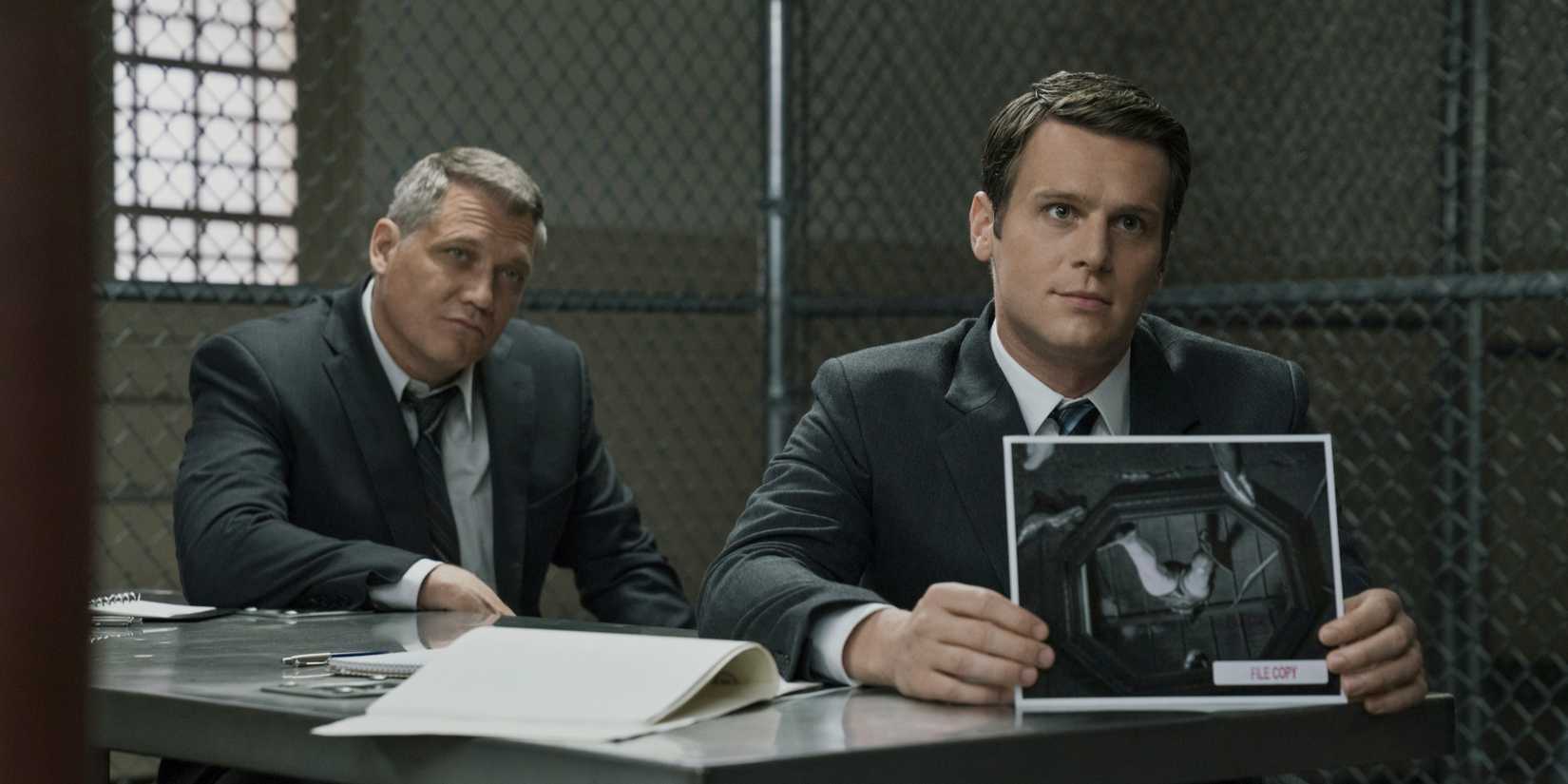 Image via Netflix
David Fincher's Mindhunter is one of the most beloved Netflix shows of the last decade; it's a captivating true-crime story that explains the origins of the so-called "profilers." The series is set in the late 1970s and follows two ambitious FBI agents, Holden Ford (Jonathan Groff) and Bill Tench (Holt McCallany), who pioneer a new field of criminal investigation known as "criminal profiling." Interviews with incarcerated serial killers, such as Ed Kemper, Charles Manson, and Richard Speck, aim to gain insight into their psychological motivations and aid in solving open cases. Their research gradually takes a dark, personal toll, blurring the distinction between the hunters and the hunted.
Mindhunter is a procedural that is less a whodunit and more focused on the "why." Once you understand how the major cases are resolved, a rewatch turns it into an intriguing psychological study you can't stop watching. You can focus on the subtle acting, from microexpressions to changing power dynamics in the interrogation room scenes, and you'll notice that the show's dialogue is often about subtly reshaping our understanding of the protagonists, particularly Ford, who often finds himself becoming a monster of his own kind. Mindhunter is also visually stunning and perfectly scored, so revisiting it is rewarding in multiple ways.
4 'Arcane' (2021–2024)
 Image via Netflix
Arcane is one of the highest-rated Netflix originals, set in the world of the internationally renowned video game League of Legends. Arcane takes place in the utopian city of Piltover and its oppressed underground, Zaun, where conflict escalates into a civil war fueled by technology, magic, and class warfare. The plot revolves around two sisters, Vi (Hailee Steinfeld) and Powder (Ella Purnell), who are torn apart by a failed heist and end up on opposing sides of the rising conflict, following Vi's journey as an enforcer and Powder's tragic transformation into the psychotic, blue-haired terrorist known as Jinx, the result of a world that broke her.
The animation in Arcane is so stunningly detailed, and the plot is so densely layered, that you'll miss important visual character beats the first time around. The second watch can help you focus on the show's stunning, nuanced art style, where you'll notice how color palettes foreshadow changing mental landscapes, how specific visual motifs appear on characters long before they're "explained," and how the voice actors infuse every line with meaning. Arcane is a gem and a 10/10 Netflix series that many people have overlooked due to its origins and animated nature, but it deserves a chance from anyone who enjoys sci-fi and fantasy with exceptional character storytelling.
3 'The OA' (2016–2019)
 Image via Netflix
The OA was (surprisingly) released a decade ago, altering the landscape of hard sci-fi and ambiguous storytelling forever. It has a devoted fan base that is still hoping for a third season of The OA, and interestingly, so is the entire cast. The OA follows Prairie Johnson (Brit Marling), a blind woman who has been missing for seven years, as she returns to her hometown. She is no longer blind, but she is also not the person her family and neighbors remember. When the FBI and parents cannot explain her disappearance, she gathers a group of local high school misfits to listen to her story: a fantastical, unbelievable tale of near-death experiences, interdimensional travel, and a mysterious figure who imprisoned her.
Few shows are as divisive and rewarding to rewatch as The OA. The first watch is about accepting its bizarre, metaphysical premise, whereas the second watch is about actively solving its complex mystery. The show's creators, including Marling, purposefully incorporated clues, symbols, and narrative misdirection, resulting in a true riddle of a show. Watching The OA again transforms it from a passive viewing experience to an active, spiritual puzzle in which viewers discover something new. It's no surprise that hardcore fans adore it so much.
2 'Dark' (2017–2020)
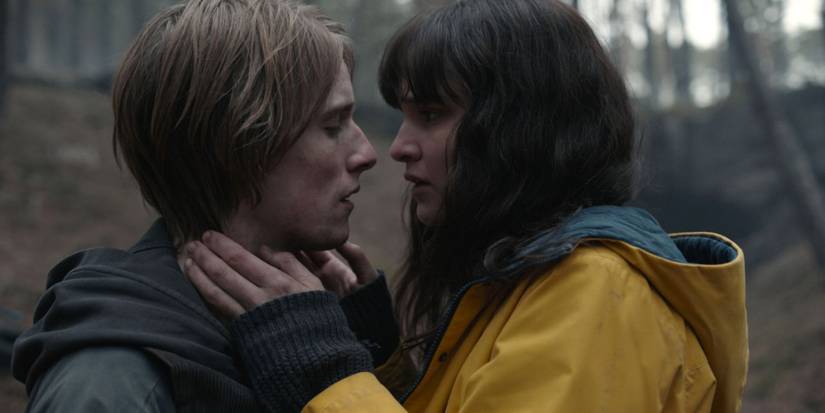 Image via Netflix
Dark is one of the most popular Netflix shows that isn't in English, and it's a series that deserves more than a second look—you'll need a notebook and a pen to keep track of everything that happens. Dark is heavily researched and science-backed, which can make some of it seem confusing; however, once you get the hang of it, it's a rewarding, satisfying show that will remain on your list of favorites. Dark takes place in the small German town of Winden, where two young children disappear one day. The search for the missing children uncovers a cave system linked to a nuclear power plant and a strange time-travel phenomenon that connects the town's past, present, and future. Every character in the show has a secret, and each secret has a consequence.
The first viewing of Dark can be disorienting, especially in the final season. The show's suspense is masterful, but it's difficult to follow the year-hopping narrative and family trees. However, the second watch is an absolute revelation. With the entire puzzle in view, you can finally appreciate the intricate architecture of a show in which everything is important because everything is interconnected. You'll notice clues to the final twist as early as episode one, watch character arcs with tragic hindsight, and realize the show has been telling you the ending since the beginning. Dark is a cerebral watch that encourages rewatching and paying attention to everything it contains.
1 'The Haunting of Hill House' (2018)
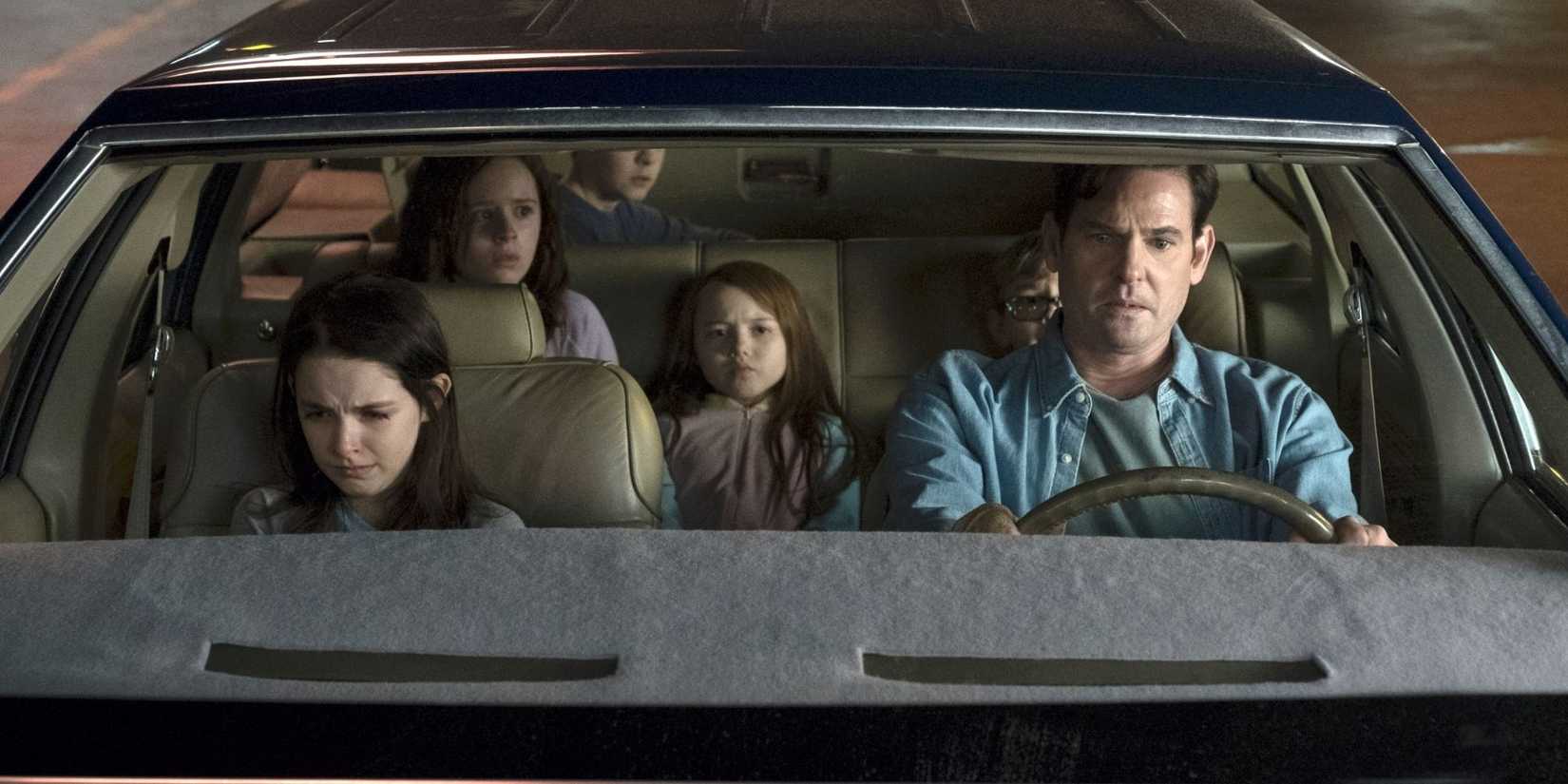 Image via Netflix
Another Flanagan miniseries, The Haunting of Hill House, is based on Shirley Jackson's novel of the same name. While it is another devastating story with profound messages (like Midnight Mass), Hill House is worth watching again because of how well it was crafted. The series follows the Crains, a fractured family who spent a summer decades ago renovating Hill House, a massive, ominous manor, before fleeing in the middle of the night. Now, haunted by literal ghosts and their own repressed memories, the four adult siblings and their estranged father must confront their past secrets as well as the fact that the house never truly let them go.
Yes, Hill House is a terrifying supernatural horror story with plenty of jump scares and intense moments. However, a second viewing reveals that it is a profoundly sad study of family trauma, with fewer jump scares. However, despite no longer being scared by the sudden moments, the series' craftsmanship comes into play: you notice the dozens of hidden ghosts lurking in the background of seemingly empty shots; estimates say there are more than 80 ghostly appearances throughout the show. Another thing you'll notice is how the show visually depicts its characters' psychology, how the house serves as a metaphor for the mind, and how each "horror" beat reflects grief, guilt, and the monsters we inherit.



 English (US) ·