
Psychological thrillers can make you feel unhinged. These are the films I usually return to when I want to feel unsettled, pulled into someone else’s head, and forced to sit there. I think it is because these stories do not rely on twists alone. They ask you to pay attention to small changes in behavior, in memory, in how a character talks or avoids talking. When they work, they make you question what you are seeing and why you are trusting it.
The films on this list stay with me because they do not explain themselves too neatly. They leave gaps on purpose and let discomfort build slowly. Let’s have a look at some of the most captivating psychological thrillers of all time.
10 ‘The Machinist’ (2004)
 Image via Paramount Classics
The story centers on Trevor Reznik, a factory worker who has not slept in nearly a year. His body is failing, and his mind is starting to slip. Trevor moves through his days with routines that barely hold together. He works with dangerous machinery and lives alone in a bare apartment. People around him begin to treat him with suspicion because accidents keep happening.
As time passes, Trevor becomes obsessed with small details that feel impossible to explain. He fixates on a coworker named Ivan, played by John Carroll Lynch, who may or may not exist. His relationship with a sex worker named Stevie, played by Jennifer Jason Leigh, offers brief moments of calm but no real safety. Slowly, the film reveals that Trevor’s condition is tied to guilt rather than illness. The story unfolds by letting his denial collapse piece by piece.
9 ‘Don’t Look Now’ (1973)
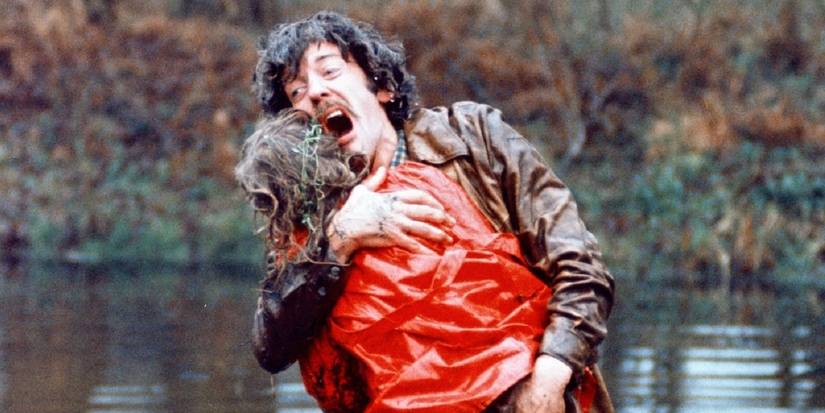 Image via British Lion Film Corporation
This film focuses on a married couple, John and Laura Baxter, played by Donald Sutherland and Julie Christie, after the death of their young daughter. They travel to Venice hoping for distance from their grief. Instead, the city keeps pulling them back into it. John works restoring a church while Laura connects with two elderly sisters who claim to sense the dead.
Time begins to feel unreliable. Memories interrupt the present without warning. John starts seeing a small figure in a red coat that reminds him of his daughter. These moments do not arrive as shocks. They appear quietly and then linger. The film allows grief to shape perception until logic no longer feels stable. By the end, the story suggests that denial can be just as dangerous as belief.
8 ‘Enemy’ (2013)
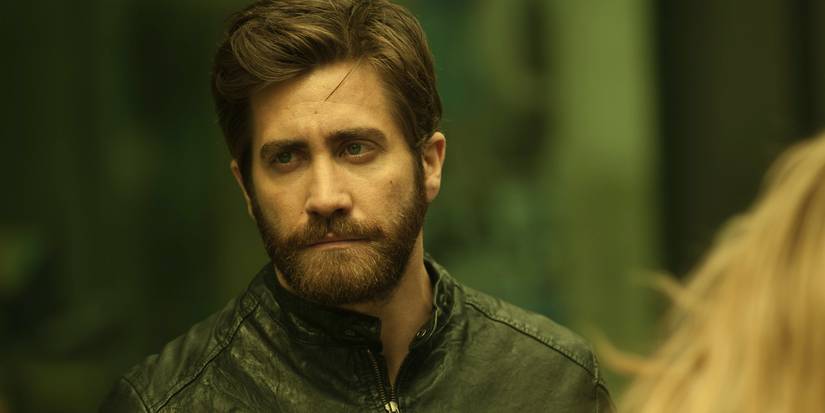 Image via Entertainment One
The film begins with Adam Bell, a quiet college lecturer played by Jake Gyllenhaal, who lives a repetitive life that barely changes from one day to the next. His days are filled with lectures, empty apartments, and a distant relationship with his girlfriend Mary, played by Mélanie Laurent, and nothing in his routine suggests urgency or danger. Everything shifts when Adam notices an actor in a rented film who looks exactly like him.
At first, the discovery feels unsettling rather than dramatic, and Adam’s curiosity slowly turns into obsession as he searches for this double. When he finally meets Anthony, also played by Jake Gyllenhaal, the film begins to explore power, control, and resentment between two versions of the same man. Their interactions feel tense because neither understands what the other represents. By the end, the film refuses to explain itself clearly, choosing instead to reflect how identity fractures under pressure and suppressed fear.
7 ‘Jacob’s Ladder’ (1990)
 Image via Tri-Star Pictures
 Jacob Singer, played by Tim Robbins, is a Vietnam veteran living in New York and trying to rebuild a normal life after the war. He works as a postal clerk, struggles with the loss of his son, and experiences sudden hallucinations that interrupt his sense of reality. These moments arrive without warning and leave him unsure of what is happening to his body and mind.
As Jacob reconnects with former soldiers from his unit, he begins to suspect that their shared trauma is tied to something more disturbing. His conversations with his chiropractor Louis, played by Danny Aiello, provide brief moments of clarity, although they never fully explain what Jacob is going through. The film moves back and forth between memory, fear, and acceptance, allowing confusion to dominate the experience. Rather than offering clean answers, it stays focused on the emotional cost of war and the difficulty of letting go.
6 ‘The Game’ (1997)
.jpeg?q=70&fit=crop&w=825&dpr=1) Image Via PolyGram FIlms
Image Via PolyGram FIlmsNicholas Van Orton is a wealthy investment banker played by Michael Douglas who lives a carefully controlled life shaped by routine and distance from other people. His brother Conrad, played by Sean Penn, gives him an unusual birthday gift in the form of a mysterious company that promises a life-changing experience. At first, the idea feels harmless and even slightly absurd, yet Nicholas agrees because boredom has settled into every part of his life.
Soon after, small disruptions begin to pile up and make it difficult for Nicholas to tell where the game ends and real consequences begin. His money disappears, his relationships collapse, and familiar spaces start to feel hostile. Each attempt to regain control only deepens his confusion. The film works by keeping Nicholas one step behind the truth, which mirrors how little power he has once the illusion of safety is stripped away.
5 ‘Shutter Island’ (2010)
 Image via Paramount Pictures
U.S. Marshal Teddy Daniels, played by Leonardo DiCaprio, arrives at a remote psychiatric hospital with his partner Chuck Aule (Mark Ruffalo) to investigate the disappearance of a patient. The island feels closed off from the world, and the hospital staff speak carefully without offering clear answers. Teddy carries his own trauma from the war and the death of his wife, which already clouds his judgment before the investigation begins.
As Teddy digs deeper, his memories and hallucinations begin to overlap with the case. Conversations feel incomplete, and time starts to lose its structure. Dr. Cawley (Ben Kingsley), presents explanations that sound reasonable yet never fully settle Teddy’s doubts. The film slowly reveals that the mystery is less about escape or conspiracy and more about how far the mind will go to protect itself from unbearable truth.
4 ‘Black Swan’ (2010)
 Image via Searchlight Pictures
Nina Sayers (Natalie Portman) is a disciplined ballet dancer who has spent her life chasing technical perfection. She lives with her controlling mother, Erica (Barbara Hershey), and follows rules that leave little room for independence. When Nina earns the lead role in Swan Lake, she is expected to perform both the innocent White Swan and the darker Black Swan, a demand that immediately exposes her emotional limits.
What unsettles Nina is not just the pressure of the role but the realization that she has no identity outside of it. Her interactions with Lily (Mila Kunis), force her to confront traits she has spent years suppressing. The film treats Nina’s breakdown as the result of emotional isolation rather than sudden madness. Every loss of control feels connected to how narrowly she has been allowed to define herself.
3 ‘Mulholland Drive’ (2001)
 Image via Universal Pictures
The story opens with a woman suffering from amnesia after a car crash on a dark Los Angeles road. She takes the name Rita, played by Laura Harring, and seeks help from Betty Elms (Naomi Watts), an aspiring actress, who has recently arrived in the city full of optimism. Together, they attempt to piece together Rita’s identity while navigating an industry built on illusion and rejection.
Instead of explaining events, the film asks the viewer to sit with emotional logic rather than narrative clarity. The shifting identities and repeated scenes reflect longing, failure, and self-deception more than plot twists. Naomi Watts’s performance anchors the chaos by grounding it in vulnerability and resentment. The story ultimately feels like a portrait of ambition turning inward when dreams stop offering escape.
2 ‘Persona’ (1966)
 Image via AB Svensk Filmindustri
The film centers on Elisabet Vogler, a stage actress (Liv Ullmann), who suddenly stops speaking and is sent to recover under medical supervision. She is placed in the care of Alma, a nurse (Bibi Andersson), who is practical, talkative, and eager to help. When the two women retreat to a quiet seaside house, their days settle into routines shaped by isolation, silence, and long conversations that flow in only one direction.
Over time, the imbalance between them begins to feel unsettling. Alma speaks freely because she needs to be heard, while Elisabet listens with an intensity that feels both intimate and invasive. The film uses their closeness to question how much of identity is shaped by reflection and how easily one person can disappear into another. Rather than offering resolution, it stays focused on discomfort, leaving the relationship suspended in ambiguity.
1 ‘Vertigo’ (1958)
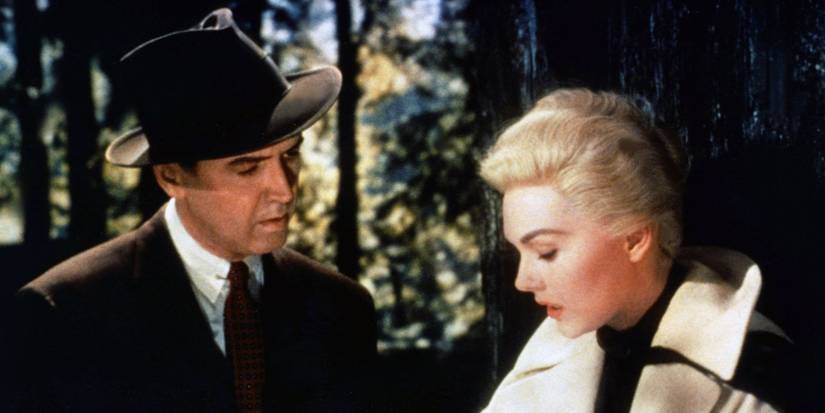 Image via Paramount Pictures
John “Scottie” Ferguson, a former detective (James Stewart), becomes obsessed with a woman named Madeleine (Kim Novak), whom he has been hired to follow. Scottie’s fear of heights has already forced him out of police work, and that vulnerability shapes how he moves through the world. As he trails Madeleine through San Francisco, his fascination grows alongside a sense that she is drifting toward something tragic and unreachable.
What gives the film its lasting weight is how obsession replaces love without Scottie fully noticing the shift. His need to recreate an ideal version of Madeleine reveals a desire for control rather than connection. Kim Novak’s dual performance exposes how identity can be shaped by another person’s expectations. By the end, the film feels less like a mystery and more like a study of how fixation can hollow out empathy and choice.
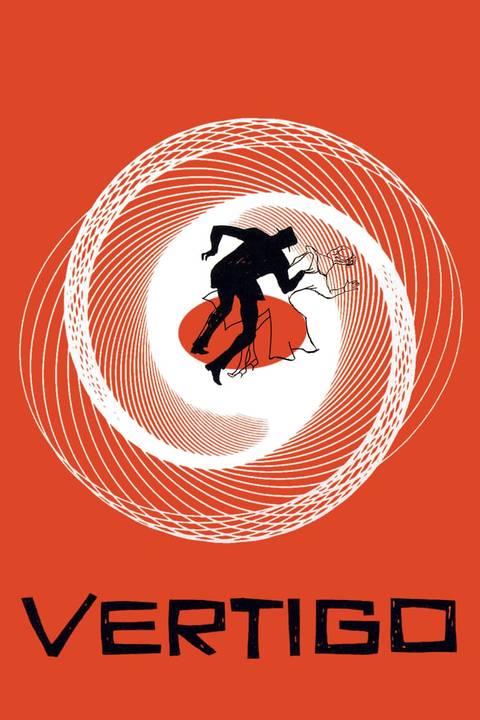
Vertigo
Release Date May 28, 1958
Runtime 128 minutes
Writers Alec Coppel, Samuel A. Taylor
-

James Stewart
Det. John 'Scottie' Ferguson
-

Kim Novak
Madeleine Elster / Judy Barton






![20 Years Later, One of the Best Sitcoms of the 21st Century Returns With Hilarious First Look [Exclusive]](https://static0.colliderimages.com/wordpress/wp-content/uploads/2026/02/malcolm-in-the-middle-life-s-still-unfair-feature.jpg?w=1600&h=900&fit=crop)
 English (US) ·