
For a franchise built on blockbuster action and fantasy, Star Wars has quietly produced some of its best storytelling in comics. Across Marvel and Dark Horse, the galaxy far, far away has become a testing ground for sharper character work, riskier ideas, and stories the films simply never had room to tell. At their best, these books do not just expand the canon or Legends, they deepen it.
1 Darth Vader (2015)

Kieron Gillen’s Darth Vader ran for 25 issues between 2015 and 2016 and remains the gold standard for Vader-led Star Wars comics. Set directly after A New Hope, it follows Vader in the aftermath of the Death Star’s destruction as he investigates the pilot who destroyed it and maneuvers around Palpatine’s growing distrust. That setup turns a seemingly impossible premise into one of Star Wars’ smartest political thrillers.
The run succeeds because it solves the main Vader problem: he is not naturally built to carry a story alone. Gillen fixes that by surrounding him with unforgettable supporting players, especially Doctor Aphra, BT-1, and Triple-Zero. Their chaotic energy gives Vader room to operate as an imposing center of gravity, while the book explores his ambition, bitterness, and quiet obsession with the son he does not yet fully understand.
2 Star Wars (2015)

Marvel’s flagship Star Wars launched in 2015 with Jason Aaron and John Cassaday and quickly became the backbone of the new canon publishing line. Set between A New Hope and The Empire Strikes Back, the series filled in a major gap in the original trilogy and gave Luke, Leia, and Han room to breathe as evolving characters rather than big icons frozen between films.
 Related
It's Time We Admit Star Wars’ Greatest Dark Side Stories Aren't in the Movies
In the Disney era, some of the very best dark side stories have been told not on the screen, but on the page with various canonical comic series.
Aaron’s early arcs, especially “Skywalker Strikes” and “The Journals of Ben Kenobi,” are among the strongest mainstream Star Wars comics ever published. Luke’s insecurity and impulsiveness are given real weight, Leia’s strategic brilliance gets sharper focus, and Han’s swagger is constantly tested. Later arcs under Kieron Gillen shift into a more war-driven tone, but the series remains remarkably consistent through 75 issues.
3 Darth Vader: Dark Lord of the Sith

Charles Soule and Giuseppe Camuncoli’s 25-issue Darth Vader: Dark Lord of the Sith begins seconds after Revenge of the Sith ends. That timing is the book’s greatest strength. Rather than treating Vader as the finished icon in black armor, Soule shows him as newly broken, physically shattered, emotionally unstable, and still dangerously close to the man he used to be.
Watching Vader transform from humiliated apprentice into Palpatine’s unstoppable enforcer gives the run its power. Major arcs like “The Burning Seas,” the Jocasta Nu confrontation, and “Fortress Vader” make excellent use of prequel and Clone Wars lore. Camuncoli’s art is consistently exceptional, and the series delivers one of the most complete portraits of Vader ever published.
4 Star Wars: Knights of the Old Republic

John Jackson Miller’s Knights of the Old Republic comic ran for 50 issues from 2006 to 2010 and stands alongside the original video game as one of the era’s defining Star Wars stories. Set roughly 4,000 years before the films, it follows Padawan Zayne Carrick after he is framed for murder by his own Jedi Masters and forced into exile.
That premise gives the series immediate momentum, but what makes it special is its cast. Zayne is not a prodigy or chosen one. He is awkward, decent, and constantly outmatched, which makes him unusually human by Star Wars standards. Combined with sharp worldbuilding, strong humor, and excellent art from Brian Ching and others, it becomes one of Legends’ most complete long-form adventures.
5 Star Wars: Crimson Empire

Crimson Empire is one of the best examples of Star Wars taking a background detail and building something unforgettable around it. Written by Mike Richardson and Randy Stradley with art by Paul Gulacy, the 1997 series follows Kir Kanos, the last surviving member of Palpatine’s Royal Guard, after the Emperor’s death in Return of the Jedi.
Kanos could have been little more than a cool design in red armor. Instead, Crimson Empire turns him into one of Legends’ most compelling antiheroes. His code, grief, and need for vengeance drive a brutal revenge story that feels far harsher than most Star Wars books. It is violent, political, and deeply personal in ways the films rarely dared.
6 Star Wars: Dark Empire Trilogy

Tom Veitch and Cam Kennedy’s Dark Empire began in 1991 and became one of the most influential post-Return of the Jedi Star Wars stories ever published. Set six years after the fall of the Empire, it presents a fragile New Republic facing a terrifying truth: Palpatine has returned through clone bodies and is ready to reclaim the galaxy.
That premise remains controversial, but Dark Empire is impossible to ignore. Long before sequel-era debates, it introduced ideas that would echo through decades of Star Wars storytelling, from cloned Emperors to corrupted heroes and ancient Sith superweapons. Its surreal art, apocalyptic scale, and operatic tone make it one of the strangest major Star Wars comics, and one of the most important.
7 Star Wars: Bounty Hunters

Launched in March 2020 by Ethan Sacks, Star Wars: Bounty Hunters finally gave the galaxy’s deadliest freelancers the spotlight they always deserved. Set between The Empire Strikes Back and Return of the Jedi, the series begins with Beilert Valance and quickly expands into a dense underworld epic involving Boba Fett, Bossk, Dengar, and half the criminal ecosystem in the galaxy.
The genius of the series is that it treats bounty hunters as more than action figures with cool helmets. Valance becomes one of modern Star Wars’ strongest tragic leads, and the book builds genuine tension out of shifting alliances, betrayals, and syndicate politics. For fans who always wanted more from the hunters seen on Vader’s Executor, this is essential reading.
8 Star Wars: Purge

John Ostrander and Doug Wheatley’s Star Wars: Purge is a one-shot, but it hits harder than many full miniseries. Released in 2005, it takes place shortly after Revenge of the Sith and follows Darth Vader as he hunts a surviving pocket of Jedi who have regrouped on Kessel in the immediate aftermath of Order 66.
What makes Purge so effective is its simplicity. It strips away the grand lore and presents Vader as raw terror who is newly armored, emotionally unstable, and terrifyingly efficient. Ostrander wastes no space, and Wheatley’s grim, heavy visuals reinforce the hopelessness of the Jedi’s situation. It is short, brutal, and one of the cleanest examples of Vader as horror villain.
9 The Star Wars

In 2013, Dark Horse published The Star Wars, an eight-issue adaptation of George Lucas’ original rough-draft screenplay, written by J.W. Rinzler and illustrated by Mike Mayhew. It is not just a curiosity piece. It is a fascinating alternate-universe version of Star Wars, where familiar names and ideas appear in wildly different forms.
Luke Skywalker is an older general, Han Solo is a massive alien, and Jedi-Bendu are warrior-monks in a far stranger galaxy than the one audiences eventually got in 1977. The book works because it is more than behind-the-scenes trivia. It is a fully realized “what if” version of Star Wars history, and one of the most revealing experiments the franchise has ever published.
10 Star Wars Infinities

Published from 2001 to 2004, Star Wars Infinities delivered 12 issues of pure alternate-history fun, split into three four-issue arcs reimagining the original trilogy. Each miniseries begins with one changed event in A New Hope, The Empire Strikes Back, or Return of the Jedi, then follows the butterfly effect into radically different outcomes.
 Related
Cassian Andor Officially Returns For New Star Wars Appearance
10 years after Rogue One, Cassian Andor has become one of the stars of the Star Wars franchise; his next appearance brings him full circle.
The concept is simple, but the execution is what makes it memorable. These stories do not merely remix famous scenes. They push Star Wars into speculative fiction, asking how fragile the saga’s biggest victories really were. For fans who love Marvel’s What If…?, Infinities is one of the most entertaining and inventive Star Wars comic experiments ever printed.
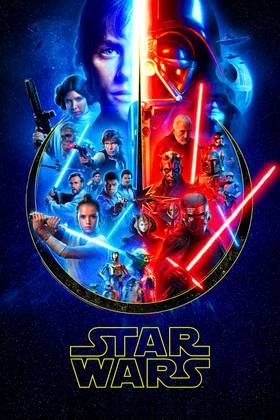
Movie(s) Star Wars: Episode I - The Phantom Menace, Star Wars: Episode II - Attack of the Clones, Star Wars: Episode III - Revenge of the Sith, Star Wars: Episode IV - A New Hope, Star Wars: Episode V - The Empire Strikes Back, Star Wars: Episode VI - Return of the Jedi, Star Wars: Episode VII - The Force Awakens, Star Wars: Episode VIII - The Last Jedi, Star Wars: Episode IX- The Rise of Skywalker, Rogue One: A Star Wars Story, Solo: A Star Wars Story, Star Wars: The Clone Wars, Star Wars: Dawn of the Jedi, Star Wars: New Jedi Order
(function(){ 'use strict'; function equaliseTitleHeights(){ var titles=document.querySelectorAll('#sr-widget .sr-card-title'); if(!titles.length)return; titles.forEach(function(el){el.style.height='auto'}); var maxHeight=0; titles.forEach(function(el){var h=el.scrollHeight;if(h>maxHeight)maxHeight=h}); titles.forEach(function(el){el.style.height=maxHeight+'px'}); } if(document.readyState==='loading'){document.addEventListener('DOMContentLoaded',equaliseTitleHeights)} else{equaliseTitleHeights()} var resizeTimer; window.addEventListener('resize',function(){clearTimeout(resizeTimer);resizeTimer=setTimeout(equaliseTitleHeights,150)}); var images=document.querySelectorAll('#sr-widget .sr-card-img'); images.forEach(function(img){if(!img.complete){img.addEventListener('load',equaliseTitleHeights)}}); })();





 English (US) ·