
 Image via The CW

Published May 6, 2026, 6:03 PM EDT
Dyah (pronounced Dee-yah) is a Senior Author at Collider, responsible for both writing and transcription duties. She joined the website in 2022 as a Resource Writer before stepping into her current role in April 2023. As a Senior Author, she writes Features and Lists covering TV, music, and movies, making her a true Jill of all trades. In addition to her writing, Dyah also serves as an interview transcriber, primarily for events such as San Diego Comic-Con, the Toronto International Film Festival, and the Sundance Film Festival.
Dyah graduated from Satya Wacana Christian University in October 2019 with a Bachelor's degree in English Literature, concentrating on Creative Writing. She is currently completing her Master's degree in English Literature Studies, with a thesis on intersectionality in postcolonial-feminist studies in Asian literary works, and is expected to graduate in 2026.
Born and raised between Indonesia and Singapore, Dyah is no stranger to different cultures. She now resides in the small town of Kendal with her husband and four cats, where she spends her free time cooking or cycling.
Sign in to your Collider account
There is a collection of sci-fi shows that once held a strong place within the genre. However, with modern audiences fixated with either newer hits like Severance, or familiar fan-favorites like Star Trek, many underrated gems have quietly slipped under the radar. That does not mean these shows were unsuccessful in terms of quality. In fact, several featured solid stories, but never received the promotional support or cultural momentum needed to reach a wider audience.
Some of these series premiered before the rise of social media, limiting their visibility during their original run. Others were cancelled before they had the chance to build a strong following. Regardless of the reason, these overlooked sci-fi shows deserve a second chance and renewed appreciation today. Without further ado, here are the near-perfect hard sci-fi shows that no one remembers anymore.
'Firefly' (2002–2003)
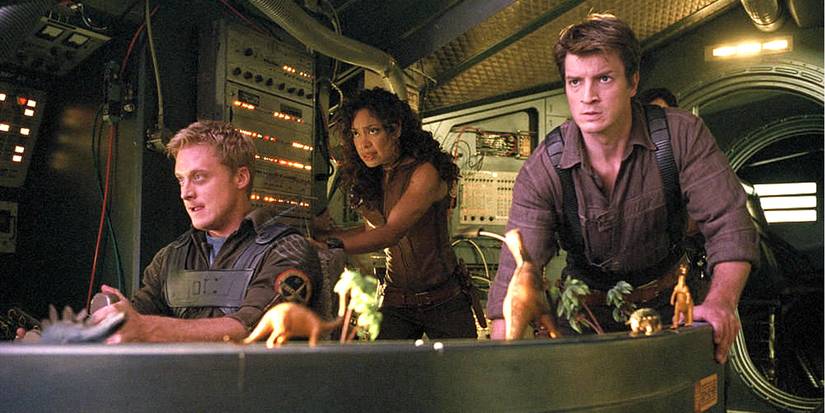 Image via FOX
"Find a crew. Find a job. Keep flying." Before The Expanse took over the sci-fi genre, there was Firefly. Set in 2517, Firefly follows the crew of the spaceship Serenity, a rundown Firefly-class transport ship trying to survive on the fringes of civilized space. Instead of saving the galaxy, people take on random intergalactic jobs to survive in this new world.
Just like The Expanse, there is a clear distinction between the working class and the authoritarian Alliance government. This social tension drives the series, with ordinary people crushed by institutions that think they know better. Designed in neo-Western aesthetics, these men and women are literally space cowboys.
'Travelers' (2016–2018)
 Image via Netflix
Travelers is set in a future where civilization has officially collapsed. Instead of saving the world directly, humans develop the ability to send consciousness back through time. Rather than relying on traditional time-travel methods, a traveler's mind is transmitted into the body of someone living in the 21st century.
One major element of the sci-fi genre is how detached and hyper-pragmatic advanced technology can become. Travelers questions the ethical repercussions of such a method. These travelers are controlled by a massive quantum AI called The Director. The machine essentially plays God — selectively picking who gets to inhabit whom for the sake of saving humanity, usually at the cost of another person's life.
'Counterpart' (2017–2019)
 Image via Starz
Histories collide in Counterpart, a sci-fi take on not just the espionage genre, but also the Cold War. In 1987, an experiment in East Germany accidentally created a parallel Earth, known as Alpha and Prime. At first, the world cooperated peacefully. But after a period of political distrust, the two worlds develop an unspoken spy warfare.
With parallel universes, there's also parallel characters, which is where Howard Silk (J. K. Simmons) comes in. In Alpha, Howard is just a low-level office employee. However, his counterpart in Prime is a highly trained spy. These double identities converge when the two become involved in dimension-traversing intelligence operations.
'Bodies' (2023)
 Image via Netflix
Four eras, four detectives, one dead body. Bodies is a time-bending, mind-twisting sci-fi thriller that explores the dangers of altering time itself. It's an ambitious premise, spanning not two, not three, but four different timelines with four different detectives in the years 1890, 1941, 2023, and 2053. The one thing that ties them together is the discovery of the same naked dead man on the fictional Longharvest Lane in London's Whitechapel district, bearing the same injuries.
Bodies shows that no matter which generation these detectives come from, oppression is a never-ending cycle. These four detectives experience different forms of discrimination relevant to their period, shaping how they approach the case. Some strive to bring justice, while others have questionable intentions.
Collider Exclusive · Sci-Fi Survival Quiz Which Sci-Fi World Would You Survive? The Matrix · Mad Max · Blade Runner · Dune · Star Wars
Five universes. Five completely different ways the future went wrong — or sideways, or up in flames. Only one of them is the world your instincts were built for. Eight questions will figure out which dystopia, galaxy, or desert wasteland you'd actually make it out of alive.
💊The Matrix
🔥Mad Max
🌧️Blade Runner
🏜️Dune
🚀Star Wars
TEST YOUR SURVIVAL →
01
You sense something is deeply wrong with the world around you. What do you do? The first instinct is often the truest one.
APull on every thread until I understand the system — then figure out how to break it. BStop asking questions and start stockpiling — food, fuel, weapons. Questions don't keep you alive. CKeep my head down, observe carefully, and trust no one until I know who's pulling the strings. DStudy the patterns. Every system has a rhythm — learn it, and you learn how to survive it. EFind the people fighting back and join them. You can't fix a broken galaxy alone.
NEXT QUESTION →
02
In a world of scarcity, what resource do you guard most fiercely? What we protect reveals what we believe survival actually requires.
AKnowledge. If you understand the system, you don't need resources — you can generate them. BFuel. Everything else — movement, power, escape — runs on it. CTrust. In a world of fakes and informants, a truly reliable ally is rarer than any commodity. DWater. And after water, information — the two things empires are truly built on. EShips and credits. The galaxy is big — you survive it by being able to move through it freely.
NEXT QUESTION →
03
What kind of threat keeps you up at night? Fear is useful data — if you're honest about what you're actually afraid of.
AThat reality itself is a lie — that everything I experience has been constructed to keep me compliant. BA raid. No warning, no mercy — just the roar of engines and then nothing left. CBeing identified. Once someone with power decides you're a problem, you're already out of time. DBeing outmanoeuvred — losing a political game I didn't even know I was playing. EThe Empire tightening its grip until there's nowhere left to run.
NEXT QUESTION →
04
How do you deal with authority you don't trust? Every dystopia has a power structure. Your approach to it determines everything.
ASubvert it from the inside — learn its rules well enough to weaponise them against it. BIgnore it and stay out of its reach. The further from any power structure, the better. CAppear to comply while doing exactly what I need to do. Visibility is the enemy. DManoeuvre within it carefully. You can't beat a system you refuse to understand. EResist openly when I have to. Some things are worth the risk of being seen.
NEXT QUESTION →
05
Which environment could you actually endure long-term? Survival isn't just tactical — it's physical, psychological, and very much about where you are.
AUnderground bunkers and server rooms — cramped, artificial, but with access to everything that matters. BOpen wasteland — brutal sun, no shelter, constant movement. At least the threat is honest. CA dense, rain-soaked city where you can disappear into the crowd and nobody asks questions. DMerciless desert — extreme heat, no water, and something enormous living beneath the sand. EThe fringe — backwater planets and busy spaceports where the Empire's attention rarely reaches.
NEXT QUESTION →
06
Who do you want in your corner when things fall apart? The company you keep is the clearest signal of who you actually are.
AA tight crew of believers who've seen behind the curtain and have nothing left to lose. BOne or two people I'd trust with my life. Any more than that and someone talks. CNobody, ideally. Alliances are liabilities. I work alone unless I have no choice. DA community bound by shared hardship and mutual survival — people who need each other to last. EA ragtag team with wildly different skills and total commitment when it counts.
NEXT QUESTION →
07
Where do you draw the line — if you draw one at all? Every survivor eventually faces a moment that tests what they're actually made of.
AI won't harm the innocent — even the ones who'd report me without hesitation. BI do what I have to to protect the people I've chosen. Everything else is negotiable. CThe line shifts depending on who's asking and what's at stake. DI draw a long-term line — nothing that compromises my people's future, even if it'd help now. ESome lines, once crossed, can't be uncrossed. I know which ones they are.
NEXT QUESTION →
08
What would actually make survival worth it? Staying alive is one thing. Having a reason to is another.
AWaking others up — dismantling the illusion so no one else has to live inside it. BFinding somewhere — or someone — worth protecting. A reason to keep moving. CAnswers. Understanding what I am, what any of this means, before time runs out. DLegacy — shaping the future in a way that outlasts me by generations. EFreedom — for myself, for others, for every world still living under someone else's boot.
REVEAL MY WORLD →
Your Fate Has Been Calculated You'd Survive In…
Your answers point to the world your instincts were built for. This is the universe your temperament, your survival instincts, and your particular brand of stubbornness were made for.
The Matrix
You took the red pill a long time ago — probably before anyone offered it to you. You're a systems thinker who can't help but notice the seams in things.
- You're drawn to understanding how the system works before figuring out how to break it.
- You'd find the Resistance, or it would find you — your instinct for spotting constructed realities is the machines' worst nightmare.
- You function best when you have access to information and the freedom to act on it.
- The Matrix built an airtight prison. You'd be the one probing the walls for the door.
Mad Max
The wasteland doesn't reward the clever or the well-connected — it rewards those who are hard to kill and harder to break. That's you.
- You don't need comfort, community, or a cause larger than the next horizon.
- You need a vehicle, a clear threat, and enough fuel to outrun it — and you're good at all three.
- You are unsentimental enough to survive that world, and decent enough — just barely — to be something more than another raider.
- In the wasteland, that distinction is everything.
Blade Runner
You'd survive here because you know how to exist in moral grey areas without losing yourself completely.
- You read people accurately, keep your circle small, and ask the questions others prefer not to answer.
- In a city where humanity is a legal designation rather than a feeling, you hold onto something that keeps you functional.
- You're not a hero. But you're not lost, either.
- In Blade Runner's world, that distinction is everything.
Dune
Arrakis is the most hostile environment in the known universe — and you are precisely the kind of person it rewards.
- Patience, discipline, and political awareness are your core strengths — and on Arrakis, they're survival tools.
- You understand that the long game matters more than any single victory.
- Others come to Dune and are consumed by it. You'd learn its logic and earn its respect.
- In time, you wouldn't just survive Arrakis — you'd begin to reshape it.
Star Wars
The galaxy far, far away is vast, loud, and in a constant state of violent political upheaval — and you wouldn't have it any other way.
- You find meaning in being part of something larger than yourself — a cause, a crew, a rebellion.
- You'd gravitate toward the Rebellion, or the fringes, or whatever pocket of the galaxy still believes the Empire's grip can be broken.
- You fight — not because you have to, but because standing aside isn't something you're capable of.
- In Star Wars, that willingness is what makes all the difference.
↻ RETAKE THE QUIZ
'Dark Matter' (2024–Present)
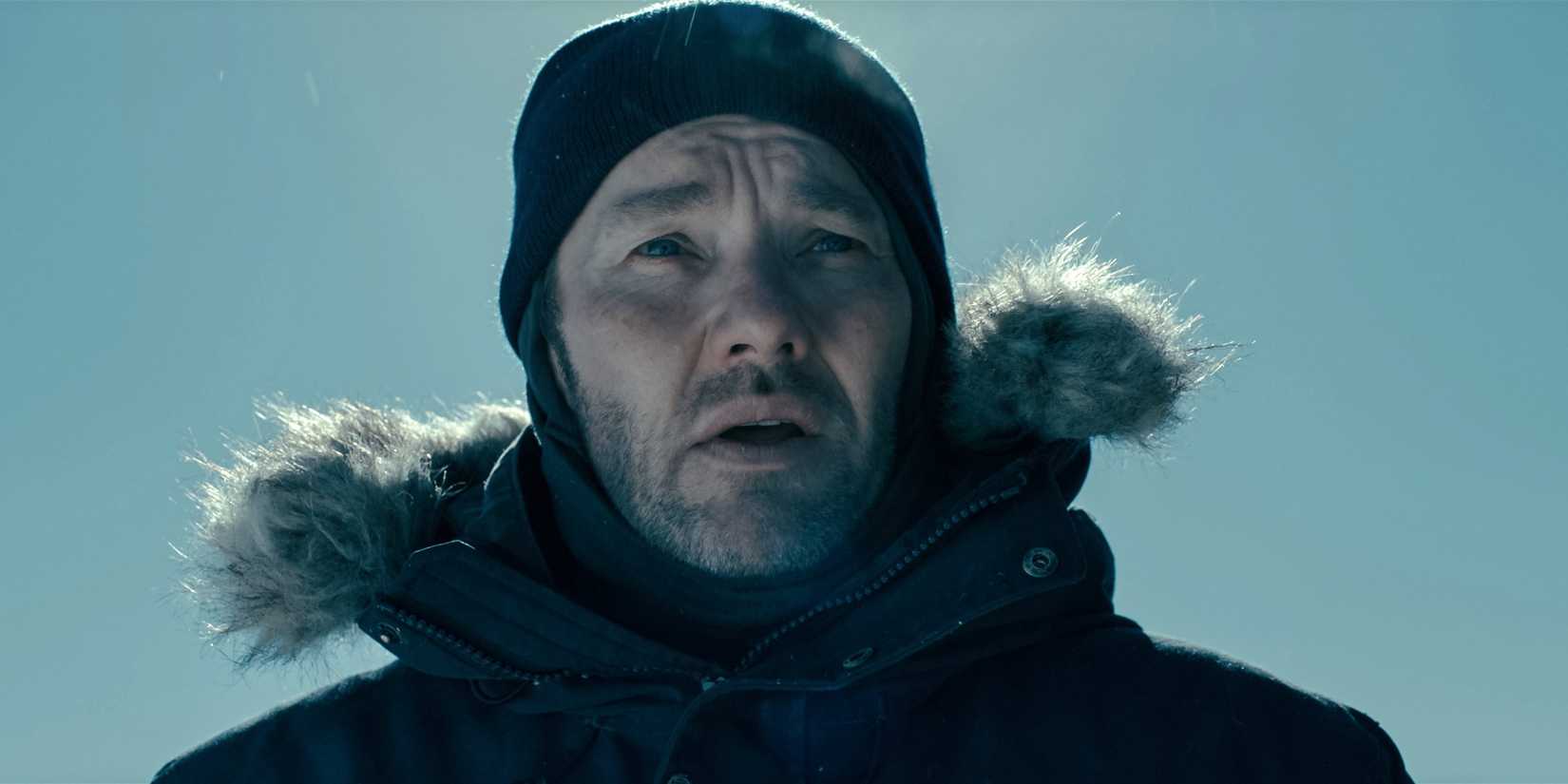 Image via Apple TV
Quantum science takes a deadly turn in Dark Matter. By day, Jason Dessen (Joel Edgerton) is a Chicago physics professor at some unremarkable college. By night, he's a doting husband and dad. However, his life changes when he is abducted and drugged in the middle of the night. When he finally wakes up, he learns that he's living in another version of his life.
The parallel-universe logic in Dark Matter is inspired by the real-world theory of superposition. What initially began as a scientific research pursuit becomes something greedy corporations vie for. When the powerful successfully develop this technology, it's only a matter of time before they use it for personal needs instead of the good they promise.
'Planetes' (2003–2004)
 Image via Crunchyroll
The crème de la crème of space anime, Planetes follows the crew of the DS-12 "Toy Box," part of the Space Debris Section of Technora Corporation. Their job is to clean dangerous space debris from Earth's orbit. Though it sounds like a lowly job, the responsibility they have is tremendous. Even the tiniest speck of debris can destroy a spacecraft.
Planetes is based on a very real scientific concern: the Kessler syndrome. The idea is that when one satellite collision creates debris, that same debris can trigger even more collisions. This results in a chain reaction that causes massive space pollution. However, not everyone in Planetes can handle the responsibility, while some even experience space sickness.
'Years and Years' (2019)
 Image via HBO
Years and Years eerily foreshadows the pessimistic state of current times. Taking place between 2019 and 2034, the series introduces the Lyons, a family of ordinary Britons who collectively face political, technological, and economic instability throughout the following years. Instead of a one-time apocalyptic disaster, the dystopia builds gradually as the crises pile up and conditions worsen.
It's not often that the sci-fi genre uses "the family" as the victims of societal change. The Lyons are neither the government nor the rebels. They're ordinary, middle-class people trying to survive moral decay in a world where people increasingly rely on technology to numb their pain. Meanwhile, sensationalists exploit the chaos to stir up even more division — something that feels uncomfortably familiar today.
'Caprica' (2010)
 Image via SYFY
Intended to be the prequel to Battlestar Galactica, Caprica is set 58 years before the destruction of the Twelve Colonies. Human civilization is at peace across the Colonies of Kobol. The planet of Caprica stands as a proud symbol of technological luxury and corporate influence. However, there is nothing but smoke and mirrors.
Like most civilizations that claim to be the epicenter of advancement, it hides a rotting truth. In Caprica's case, it's inequality, corruption, and extremism. Following a terrorist incident, one man attempts to revive his dead daughter via digital resurrection. However, whether that new identity can survive on data and a virtual reality system is another story.
'The 100' (2014–2020)
Based on the young adult book series of the same name, The 100 is not to be underestimated as another CW teen melodrama. Ninety-seven years after a nuclear apocalypse destroys civilization, humanity seeks refuge in the Ark — a massive space station formed from multiple orbiting stations. With resources depleting, the Ark sends one hundred juvenile prisoners back to Earth.
Their mission is to decide whether the planet is finally livable. But instead of radiation and ruins, the 100 teens are shocked to discover that humanity on Earth is alive. These survivors have built new societies of their own, starting civilization from scratch. But such is the nature of dystopians; these teens are caught up in organized clans and political factions.
'12 Monkeys' (2015–2018)
 Image via SYFY
Loosely inspired by the 1995 film of the same name, 12 Monkeys introduces a reality where humans have gone extinct. The year is 2043 — in the aftermath of the deadly Kalavirus pandemic, Earth's population is nearly wiped out. As for the survivors, they form a group known as Project Splinter.
Their mission is to find and prevent the origins of the apocalypse by going back in time to stop the outbreak. However, the time-traveling system is a little tricky. By transferring consciousness into different timelines, these individuals are in for a real shock when they learn that altering the past can cause serious damage to the future — even more serious than the Kalavirus itself.

12 Monkeys
Release Date 2015 - 2018
Directors David Grossman, David Greene, Grant Harvey, Joe Menendez, Magnus Martens, Michael Waxman, Steven A. Adelson, Mairzee Almas, Alex Zakrzewski, Bill Eagles, David Boyd, Dennie Gordon, Guy Norman Bee, Jeffrey Reiner, John Badham, Kat Candler, Mark Tonderai, Sheree Folkson, T.J. Scott, Kevin Tancharoen
Writers Sean Tretta, Richard Robbins, Christopher Monfette, Oliver Grigsby, Natalie Chaidez, Ian Sobel, Rebecca Kirsch, Michael Sussman, Matt Morgan
-

Aaron Stanford
James Cole
-







 English (US) ·